Africa Adventure With Grandkids II

Part II: Victoria Falls and Vicinity

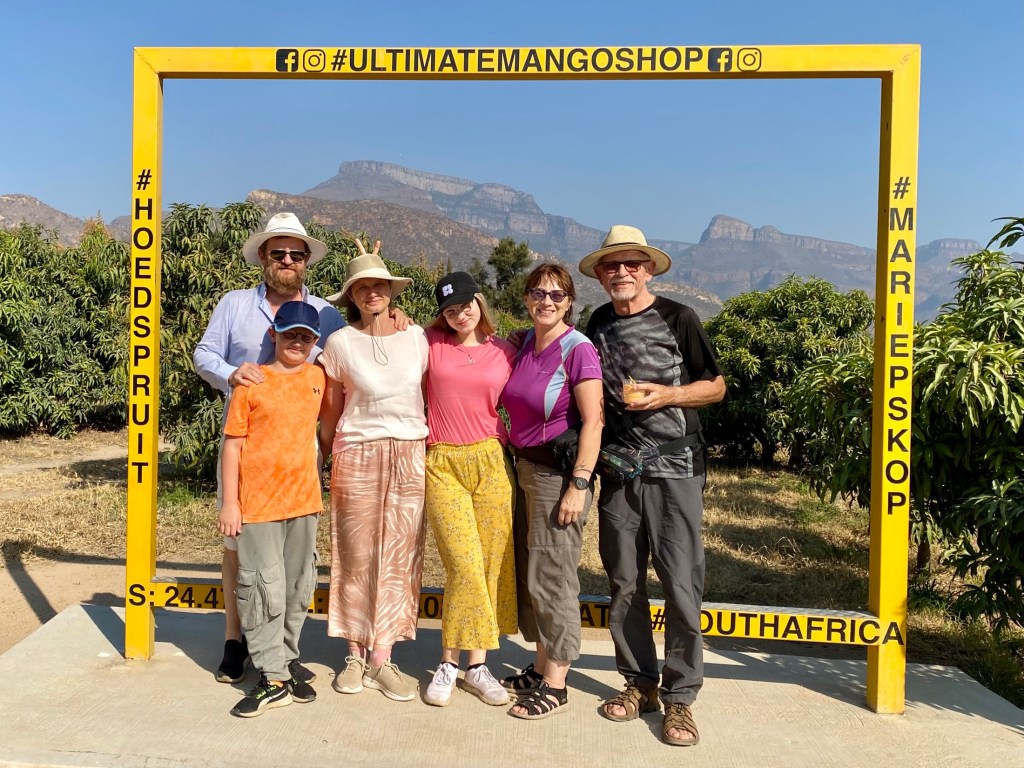
Fam in front of Vic Falls

We are not big on waterfalls, but big waterfalls are something to put on your travel bucket list. Our favorite (so far) is probably Iguazu (must see it from both Argentina and Brazil). We do have great memories of seeing Victoria Falls with our three girls on our big camping safari across Southern Africa long ago and now bringing grandkids back makes them even more special.

It paid off to take a gamble and fly on FastJet directly from Kruger Mpumalanga International Airport to Victoria Falls in Zimbabwe. It saved us a day and a transfer in Johannesburg, but we were nervous until we were actually in the air as they had only one direct flight a day and if that didn’t work out we would have been in trouble.

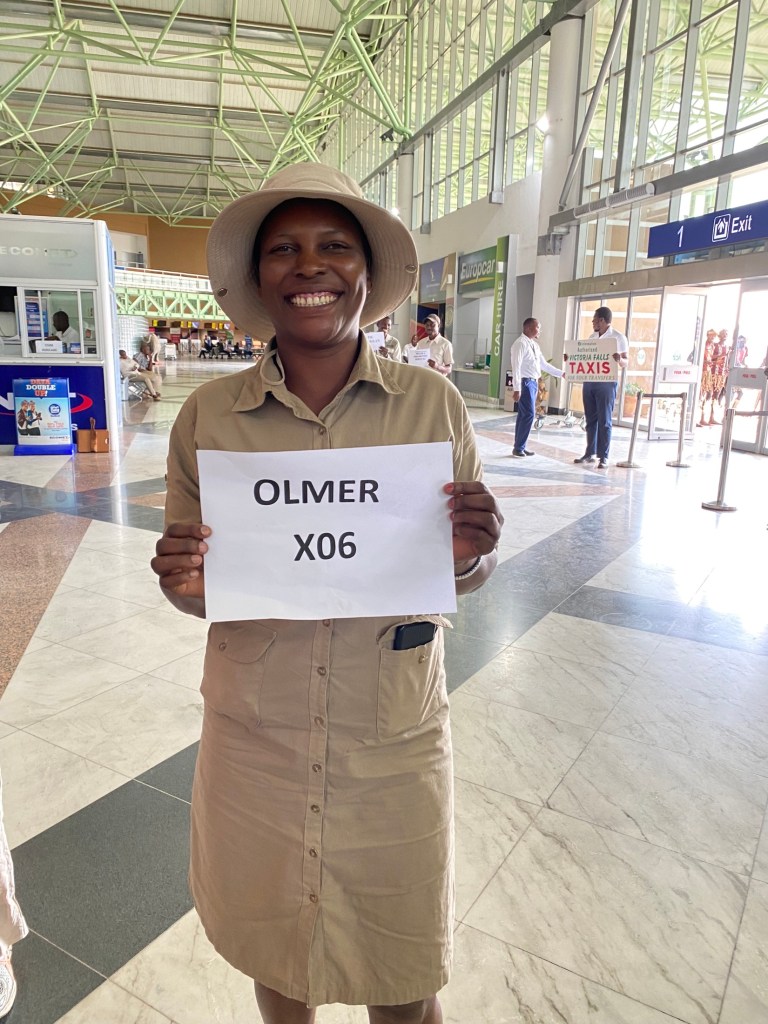
All the worries melted away as we were greeted with a big smile by our local guide Prisca. I mentioned to Izrael, our local agent on our Whatsapp planing exchanges that we try to hire women guides wherever we can and he remembered and delivered. The connection and life information I get from a woman guide is closer and more interesting than what I can get from a man. We also love supporting women who value education and independence. It does often come with a price, though. In high season Prisca only sees her daughter who stays with her grandma in a village far away one weekend every 6 weeks. And that is after an 8-hour bus ride.
While not as cozy and personal as Yvonne’s African Affair we did have lovely accommodations at the Courtney Lodge in a quiet neighborhood of Victoria Falls town.

The lush garden with large trees was enchanting. The kids enjoyed a small pool in the evenings and I relished an hour of peace early mornings with a cup of coffee in the living room…

The two women who created this rare book are very famous for capturing the African spirit before the encroachment of modernity.

indulging in the collection of many classic books about Africa.

So many talented artists and photographers!

Knowing we will spend very little time in our bedrooms we opted for two triple rooms with boys having their own and girls our own. That was fun! (At least for us girls.)

Naturally, Victoria Falls was (or is it were?) the star of the show and we saw them from both sides, Zimbabwean and Zambian. Alas, we didn’t get a chance to see the falls from the sky by repeating the thrilling microflight experience we had on our first visit as the winds were too strong every day of our stay.

A painting of the falls by a renowned artist Larry Norton

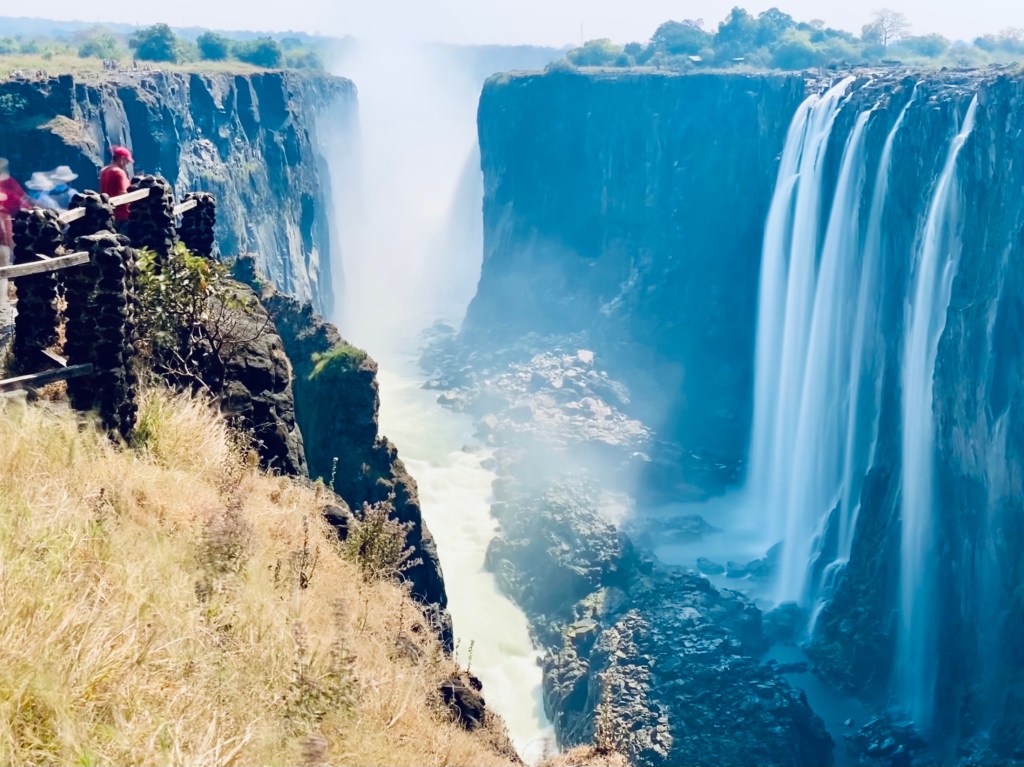
In local languages, the falls are called Mosi-oa-Tunya (= the smoke that thunders) and the white smoky mist is indeed mysteriously smoking up the atmosphere even in the low water season. The visit in the high water season gives you more water not only from the falls but unfortunately also from the sky.

Upon our guide’s recommendation we suppressed our curiosity and quickly walk on the side path all the way to the end of the gorge on Zimbabwean side as to avoid the influx of tourists. That proved to be a really smart strategy as we didn’t have to jostle for the views and photos at the best vistas.

Zambezi River at the Victoria Falls discharges a staggering eight million (+-) liters of water into the gorge every second. Victoria Falls is the world’s largest curtain of falling water, spanning 5,604 ft (1,708 m). Because of the low rain, our curtain is not continuous but we don’t mind and think the intermittent bare rock nicely emphasizes the gushing single strands or groups of falls.

One can get much closer to the water on the Zambian side which is also less visited.
It entails crossing the Victoria Bridge that has border posts on the approaches to both ends, and paying separate entry fees at combined $80 a pop. (Multiply that by 6!) And that is not a day ticket, just a single entry! Should you want to come again for sunset views you will be charged again. Highway robbery, indeed!

To quell the disappointment of not flying over the falls the two guys get a special tour of Victoria Bridge, which for Mirek, a bridge engineer his whole life, is a very special treat.
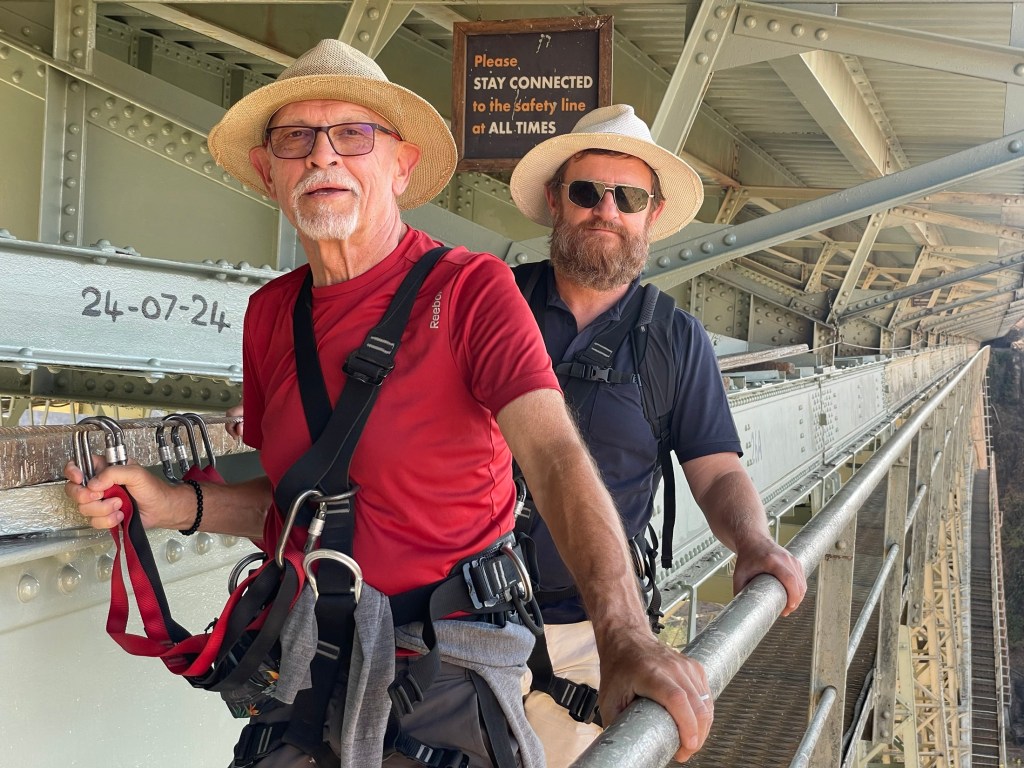
Safely tethered they walk the catwalk and listen to interesting stories of the bridge building

Then they meet us for dinner at the grand dame of hotels: Victoria Hotel.
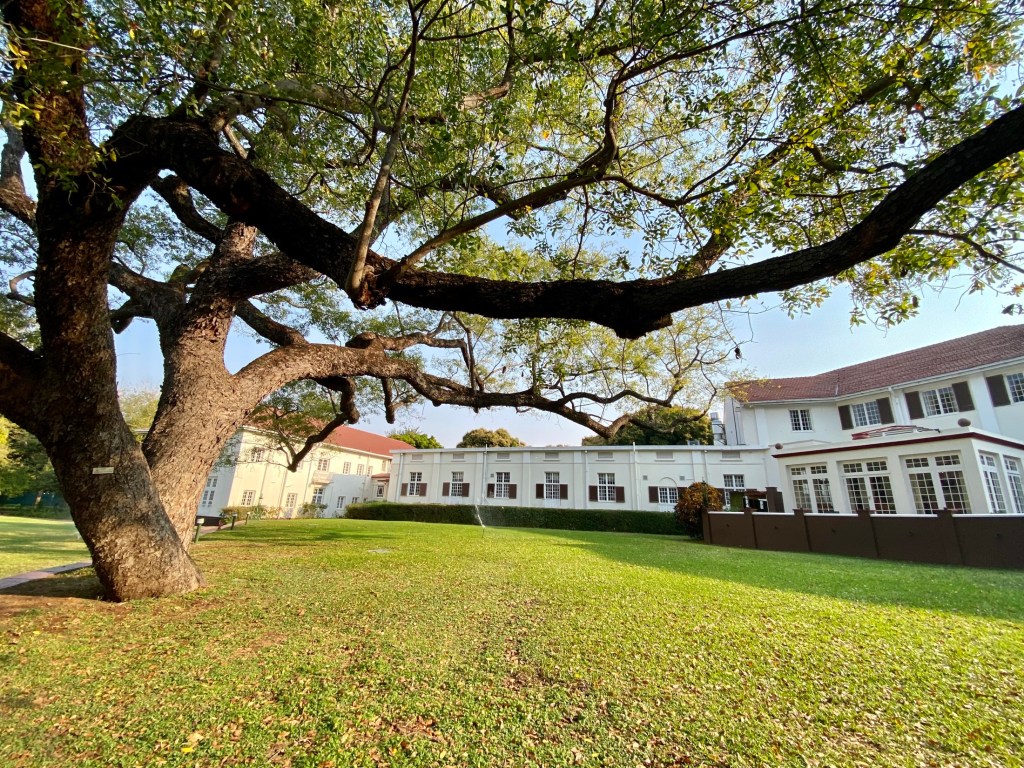
Bygone colonial times with lush lawns and oil paintings of Queen Victoria

Special sundowners, great food, impeccable service.
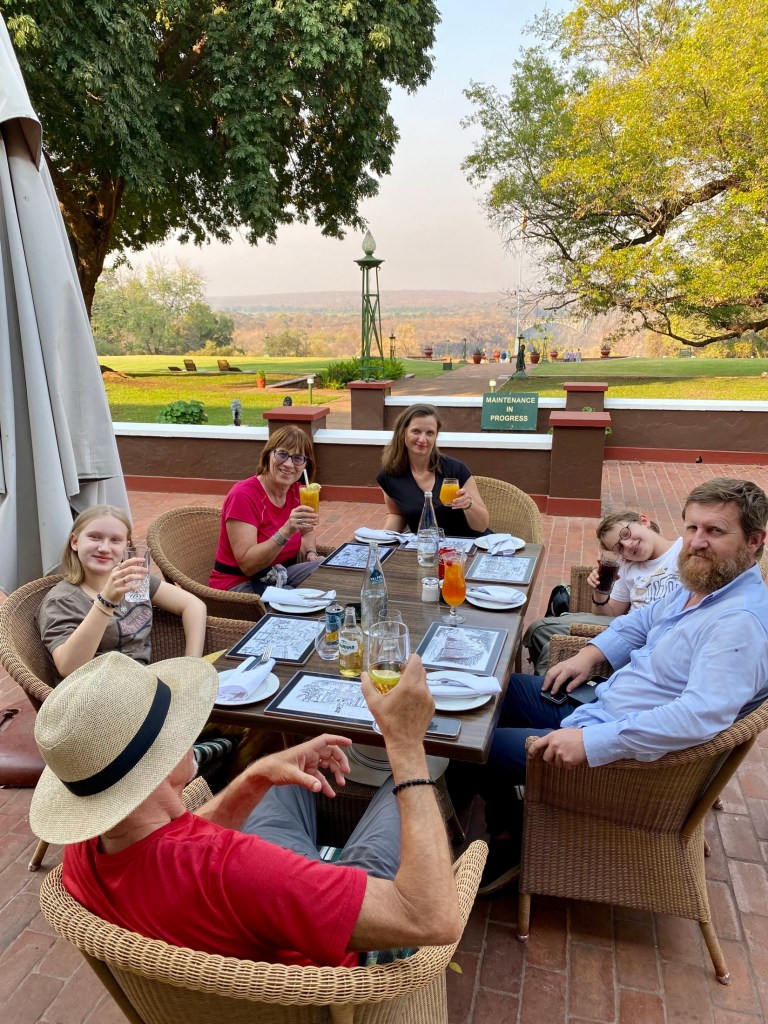
Can you spot the Victoria Bridge beyond the trees?

We have a surprise waiting for us in Zambia. When Izrael hears my son-in-law is missing a rhino to reach his Big 5 quota he arranges a “walking with rhinos” tour.

It is more like disembarking and letting the rhinos walk around you.

We are thrilled to be so close to these very rare and very endangered animals. We are even more thrilled to see two babies and hear of more pregnancies. In all of Zambia there are 11 white rhinos and 9 of those are here. They are heavily protected by armed guards day and night.

We have one more safari on the books, this time across the other border in Botswana.

For something different in the morning we board a small boat and explore the vast Chobe River. We quietly motor close to pods of hippos wallowing in mud, large crocodiles stealthily slithering from the banks into the water, buffalos drinking and Fish Eagles patiently observing from top braches of tall trees. They look very much like American Bald Eagles because they are indeed related, both of the same species of seas eagles.

Grandkids are becoming safari
pros

and in the afternoon we have a last open vehicle safari to see the river from the banks.

Chobe National Park is best know for the extraordinary large population of elephants. There are an estimated 50,000 Kalahari elephants roaming the park and we never tire of seeing them.

There are also a supposed to be lots of lions in the park and our guide knows that the kids would really love to see them. On the way out she whips the vehicle around a bush (and illegally off the main path) and finaly we get to see one. As is the rule, he sleeps, but then rolls over and looks at us for a second before continuing his nap.

We will have to save leopards and cheetahs for another trip. But hopefully, the safari appetite has been whetted well.

We have been asking everyone to hold back on their shopping as we wanted to take everyone to the fantastic Zimbabwe craft market where we bought some of the Shona sculptures on our first visit.
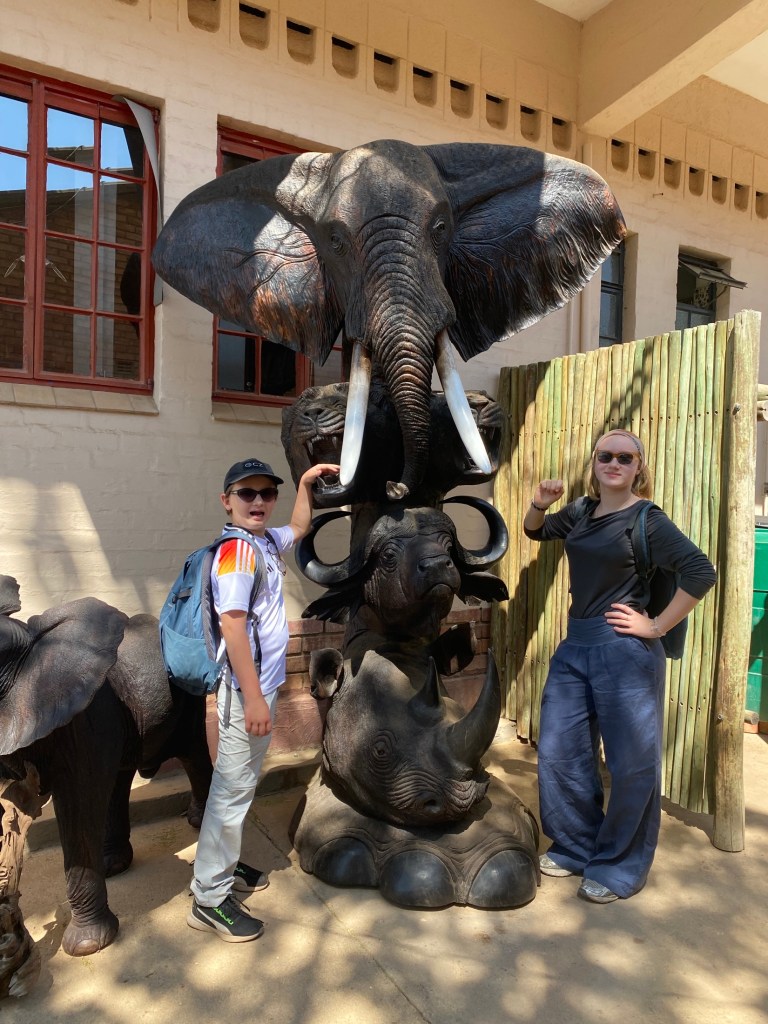
Grandkids are impressed

It is quite overwhelming as there are literary thousands of sculptures of all sizes with vendors/carvers vying for our attention.
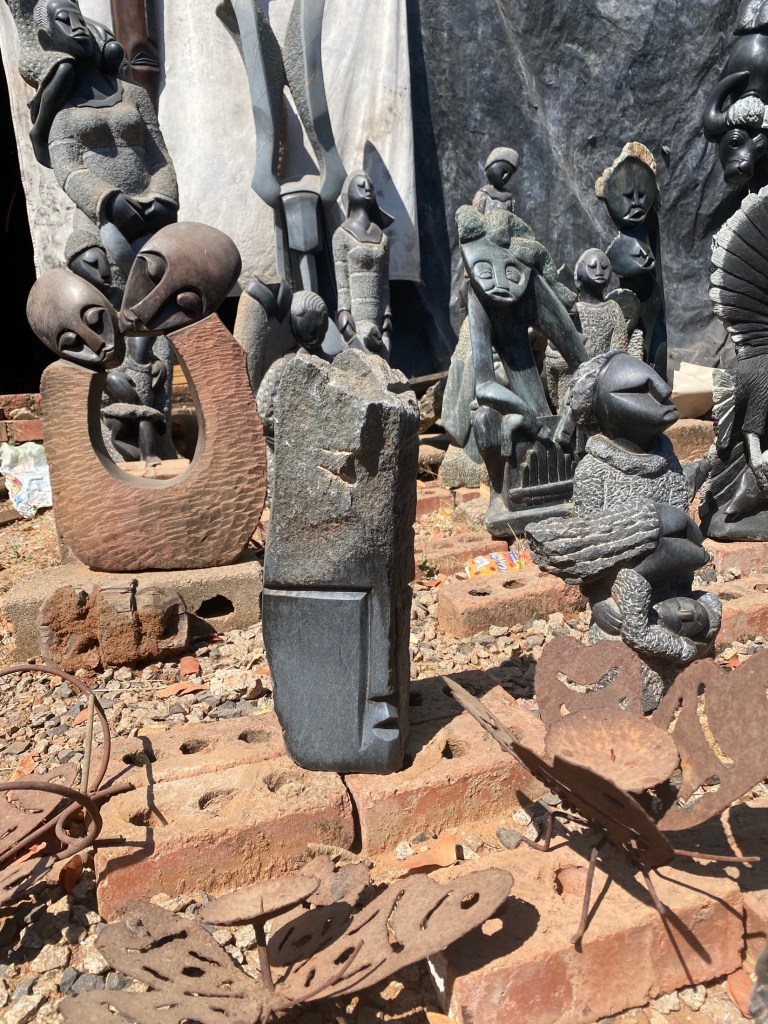
I am so impressed with Lilly. She has enough English under her belt that she has conversations with the guys and they adore her. An older gentleman insists on gifting her a necklace to remember Africa.
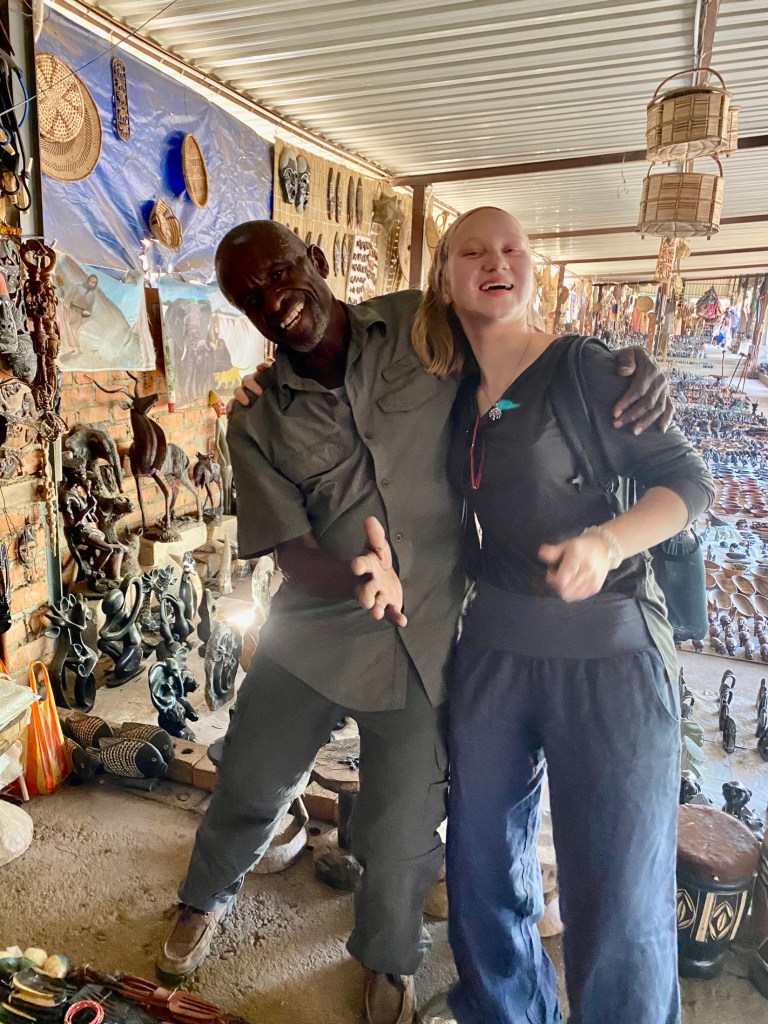
Her Dad is on the hunt for garden sculpture. Luckily we have an empty duffel bag from donations that we brought.
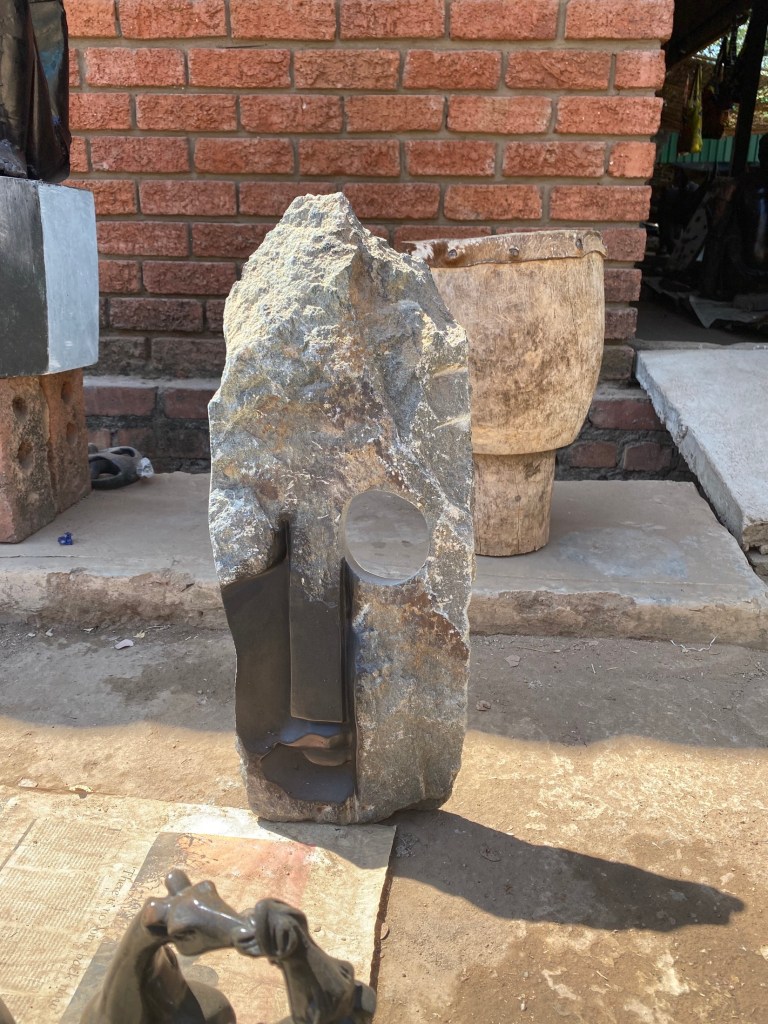
After much deliberation this one is chosen and carefully packed. It gets cushioned additionally by plenty of dirty laundry. And at the airport I do get called back before boarding by the security and dragged to the loading dock. Luckily I can show them the photo so I don’t have to unpack the sculpture. They load it bitterly complaining about how heavy the bag is.
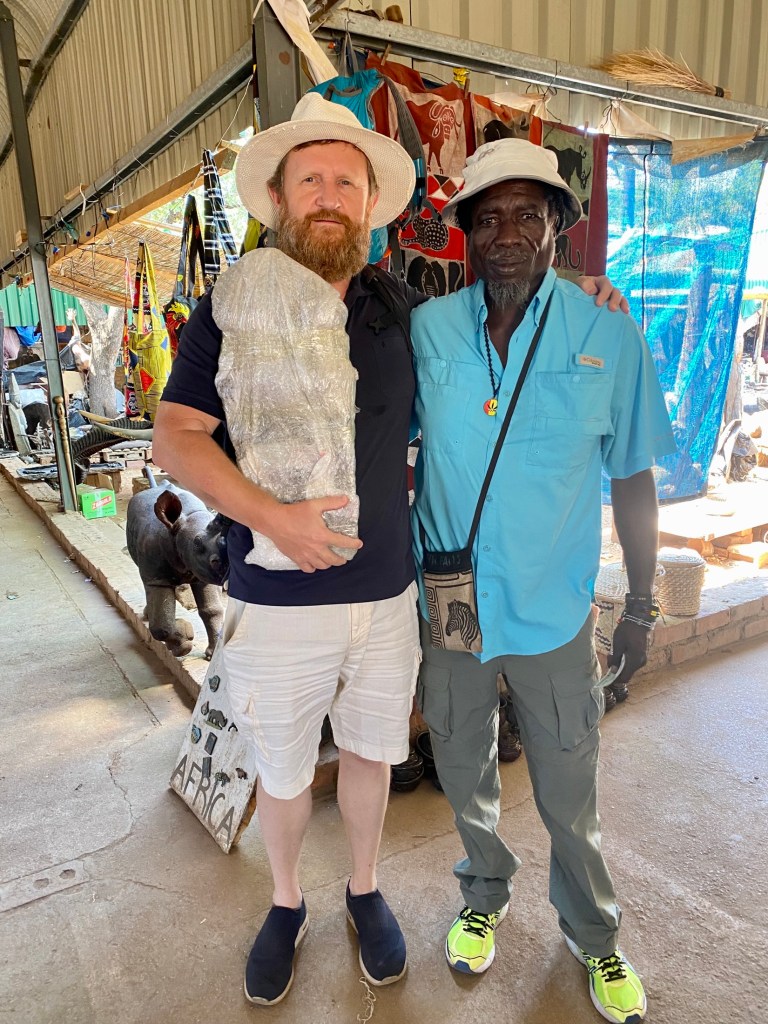
My son in law with the sculptor

The boys are exhausted and go home to pack, but we girls ask our guide Prisca to take us away from the tourist shops to the local market

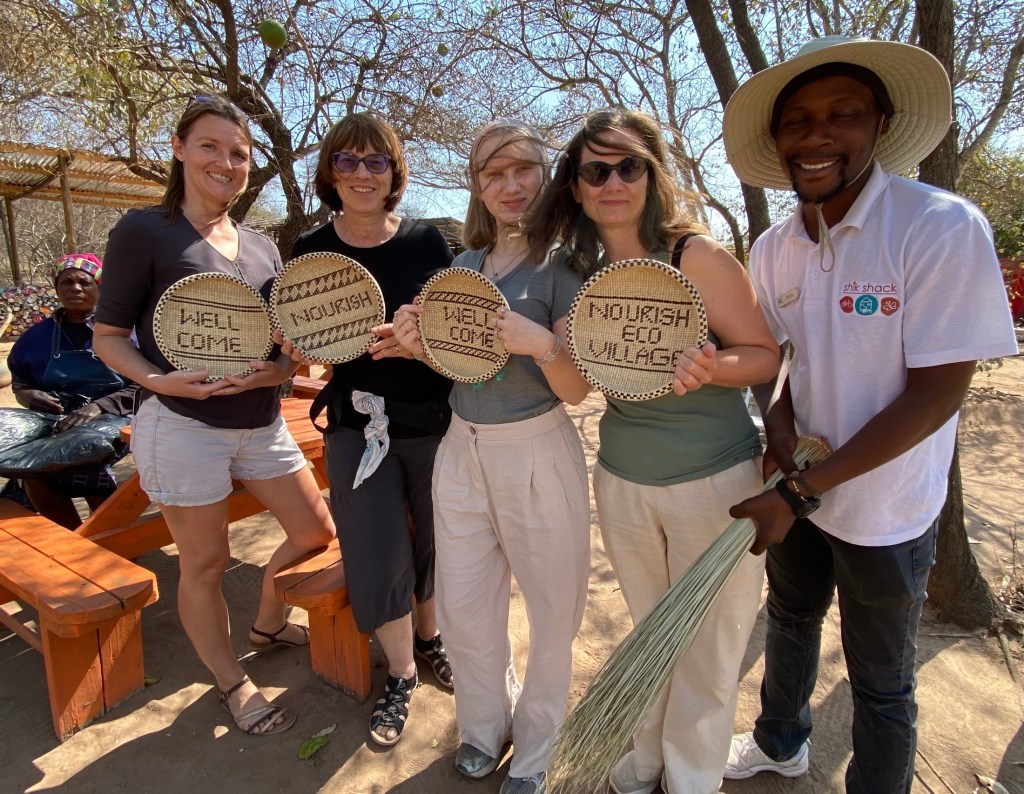
where we buy beautiful handwoven baskets of different shapes and sizes from smiling ladies.
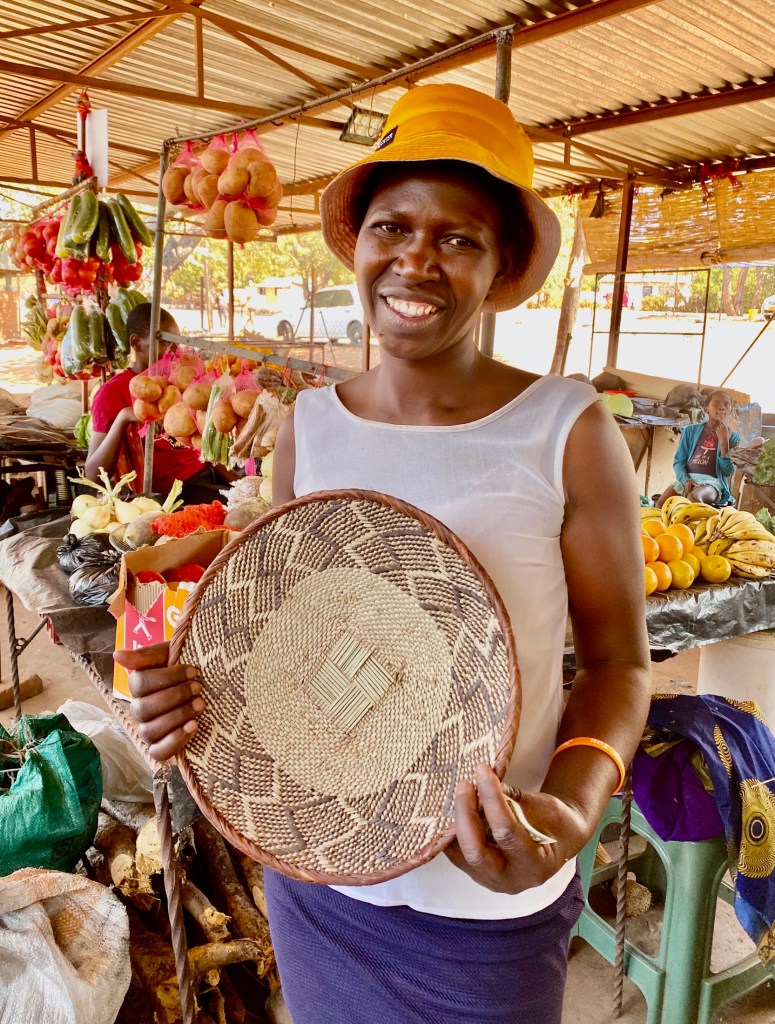
Can’t wait to hang them in their house as a lasting memento of our great African family adventure.

Africa Adventure With Grandkis

Part I: South Africa with Kruger Park

With our grandchildren leaving home airport

The advice for travel with grandchildren was to have as little expectations as possible so as not to be disappointed. Easy to say, hard to counteract the: “It took a lot of effort and money, so you kids are gonna have a good time, damn it!”

So can you really not have expectations and dreams of if not a perfect, at least a great and memorable trip with your grandkids? Much is riding on this mutual experience, beyond monetary sacrifice. You want to build life long memories of grandpa and grandma outside of baking cookies or playing cards together.

You want to ignite in your grandchildren the love of travel and adventure. The appreciation of Nature and importance of the conservation of said Nature. The understanding of human diversity, yet interconnectedness. The recognition and gratitude for the immense privileges you were born with and the responsibility to make at least a small contribution to improving the lives of those less fortunate. Haha, talk about lowering your expectation, eh?!
Did we achieve all of that on our trip to Southern Africa? Time will tell, but we sure tried. For now we are thankful that the grandkids were open, cooperative, engaged and all-around easier than we worried.

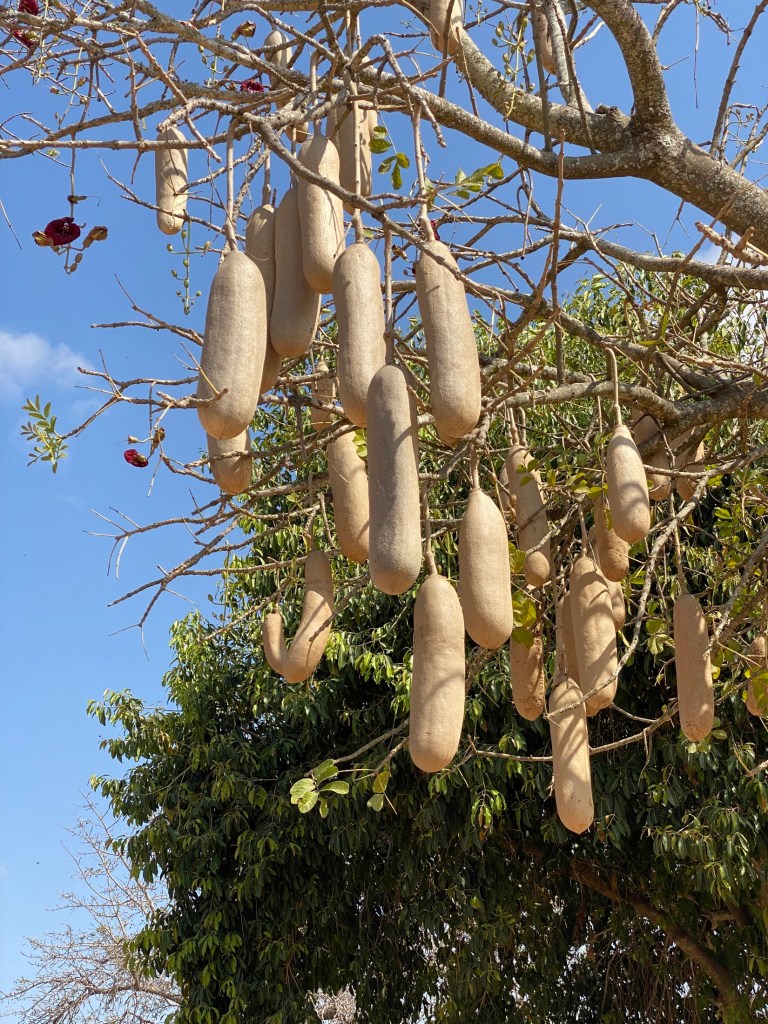
Lilly and her mom admiring a sausage from a sausage tree.
Yes, it can be eaten cooked or fermented, though we never had a chance to try it (yet).

At 9 and 13 Leopold and Lilly seemed old enough to enjoy and remember their first African safari. We were in the middle of an ordinary lazy summer, sleeping late, swimming, kicking the ball around, and they too often clicking on their tablets, when without any warning we dropped a bomb: “We would like to take the kids to Africa. What do you think?”

The kids agreed without batting an eye. Their dad quickly chimed in, “Wait, I want to go, too!” Their often overprotective mom, who doesn’t much like to travel and absolutely hates to fly was left speechless. We knew we would need her permission, but were totally flabbergasted when the next day the news came that not only she would let them go, but she would join us as well.

Truth be told this wasn’t entirely a spur-of-a-moment invitation. Secretly, this idea brewed for a while, especially since special friends of ours, Yvonne and Helmo, who were already twice our fantastic guides in Africa, have just opened a small family lodge close to Kruger National Park. These two first took us and our three girls on a long camping safari across Africa nearly 20 years ago. Then together we celebrated Mirek’s 60th birthday with a fun road trip from South Africa to Mozambique.

Now Yvonne was helping us put an exciting itinerary together, while alas, Helmo was away leading a birding safari in Angola.

For this virgin Africa trip I gathered a comfortable and simple itinerary would be best. We would spend 5 days in South Africa at Affrican Affair Bush Lodge with daily activities suggested by Yvonne and then fly to Victoria Falls in Zimbabwe. Of course, it would be quite unlike Grandma to not immediately start embellishing and expanding the itinerary. Oh, y’all thought you were going on on a holiday?

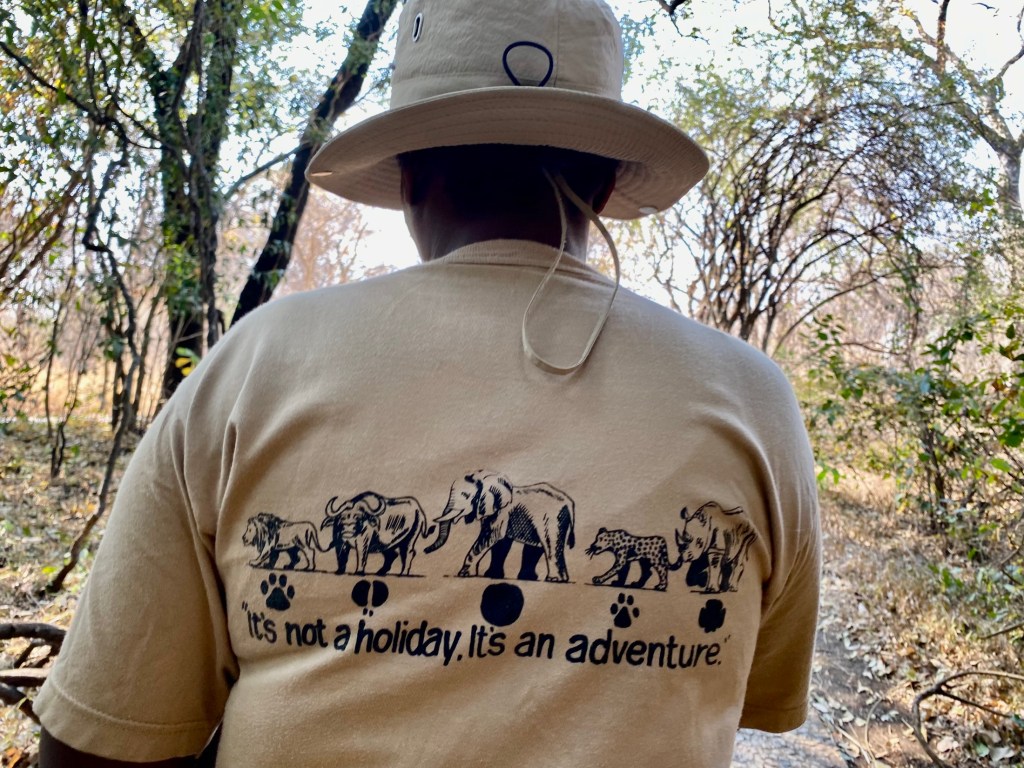
Our guide had it right!

There is practically no time difference, why would we need a rest day? We came to see the wild animals, so you better get up at 4:30 am for a safari not just once, but twice. We have a free morning, why not visit a local non profit organization? It has been arranged, great! Now kids, go through your toys, games and clothes and pack up a duffle bag of donations.

And since Vic Falls are also on the other side of the border in Zambia let’s get a KAZA (multiple entry visa) and cross over to Zambia, too. Would you like more stamps in your passport? It’s only an hour drive in the other direction to Botswana border so let’s organize a safari to Chobe National Park there. Luckily Yvonne recommended Israel, her fabulous agent in Zimbabwe, who was happy to arrange anything and everything.

It has been my tradition lately to print coffee table photo books of our trips so I announced this to the family and asked for contributions: the kids were to keep a short journal every night and move three of the best shots they took to a special folder on their iPhones. Surprisingly without much complaining or much reminding they delivered.

Translation: The best were rhinos, waterfalls, and the boat. The monkey that rummaged in the garbage bin and drank from a hose.

The small lodge was the most perfect place we could have stayed at. The four bedrooms

Bathtub with a view

were arranged around the central courtyard with the outdoor dining table, bbq

area and a small plunge pool. Despite middle of the winter the temperatures unexpectedly soared towards 40C so the swimming suits did come in handy.

As did the puffy jackets and warm clothes for the early morning safari rides.

The main house had a large kitchen, living and dining room and Yvonne spoiled us with wonderful meals. She made sure there were always french fries available for the kids, in addition to some more exotic fare.

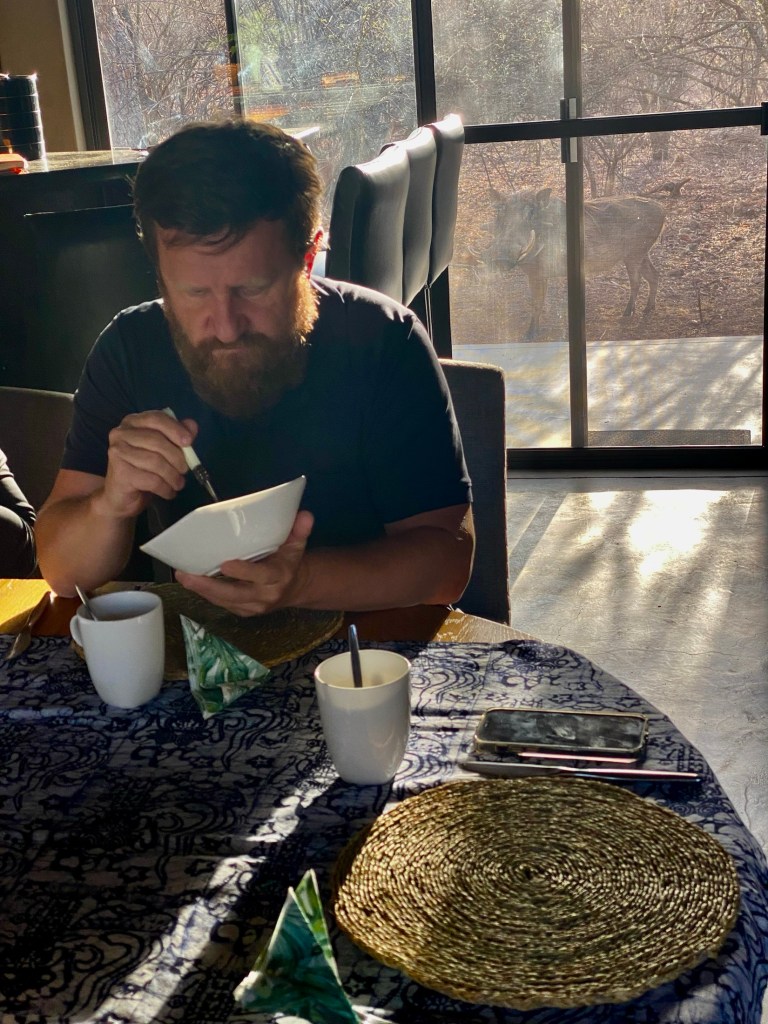
The big glass backdoor opening to the wilderness was the very best feature of our little lodge. As veggie and fruit scraps as well as bird seed was placed outside there was a constant parade of all sorts of animals up close and personal.

A big warthog looking enviously at our breakfast
Duiker and a band of banded mongooses (not mongeese!) by the back door

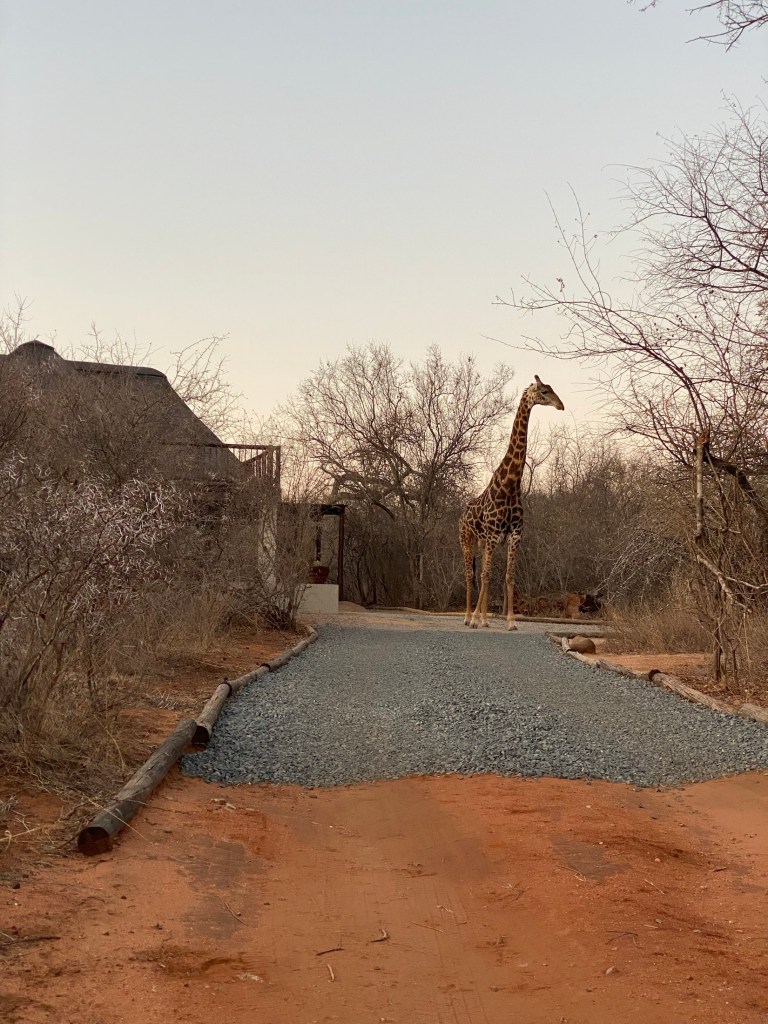
One afternoon we even had a surprising visit of three friendly giraffes who came to nibble on our trees.

As giraffes are my favorite animals this was really a very special treat for me.

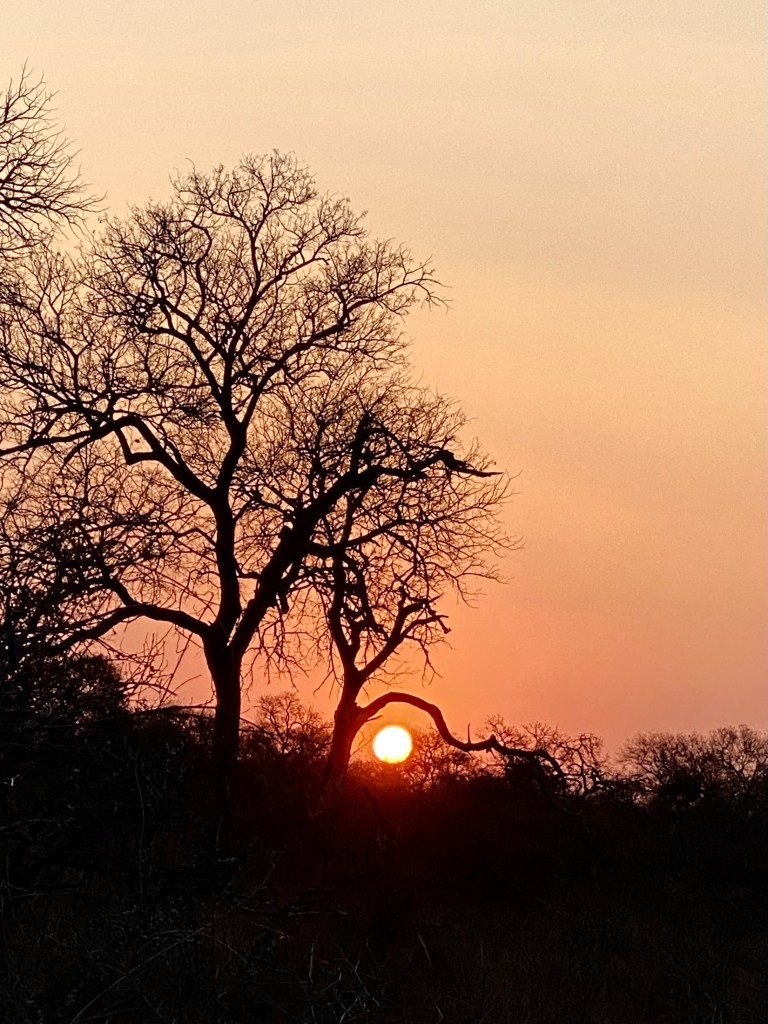
The vivid magic of African bush sunset

The very first evening we happily introduced our family to an old African tradition of sundowners (a sunset accompanied by a drink, preferably alcoholic) by a small pond on the wilderness estate where we were treated to the comical sight of giraffes drinking. Because of their very long legs and necks they have to crouch down knock- kneed. To see wild life on foot is an extremely exciting privilege.

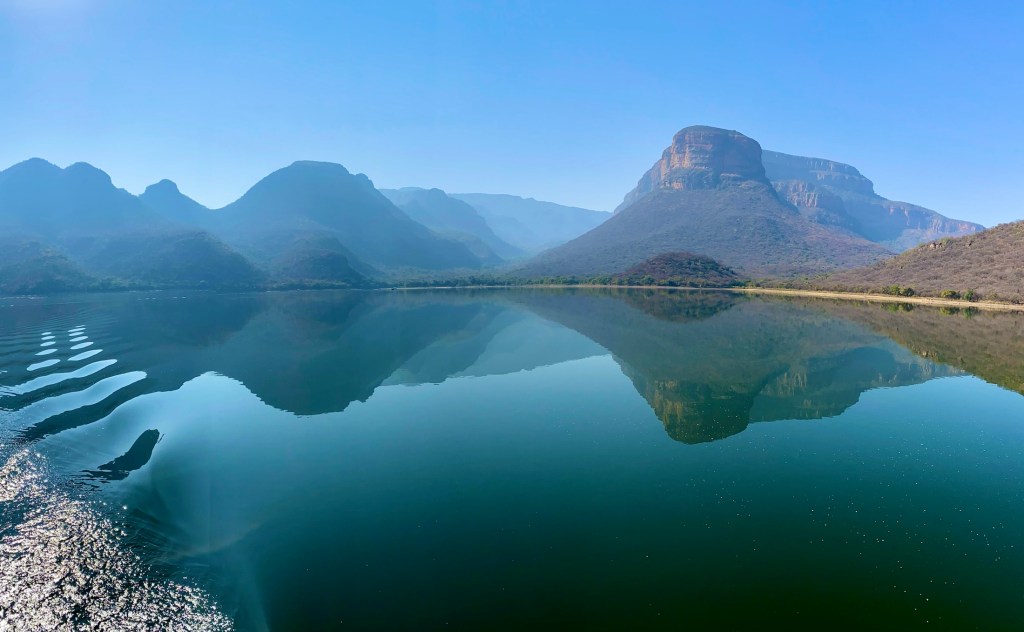
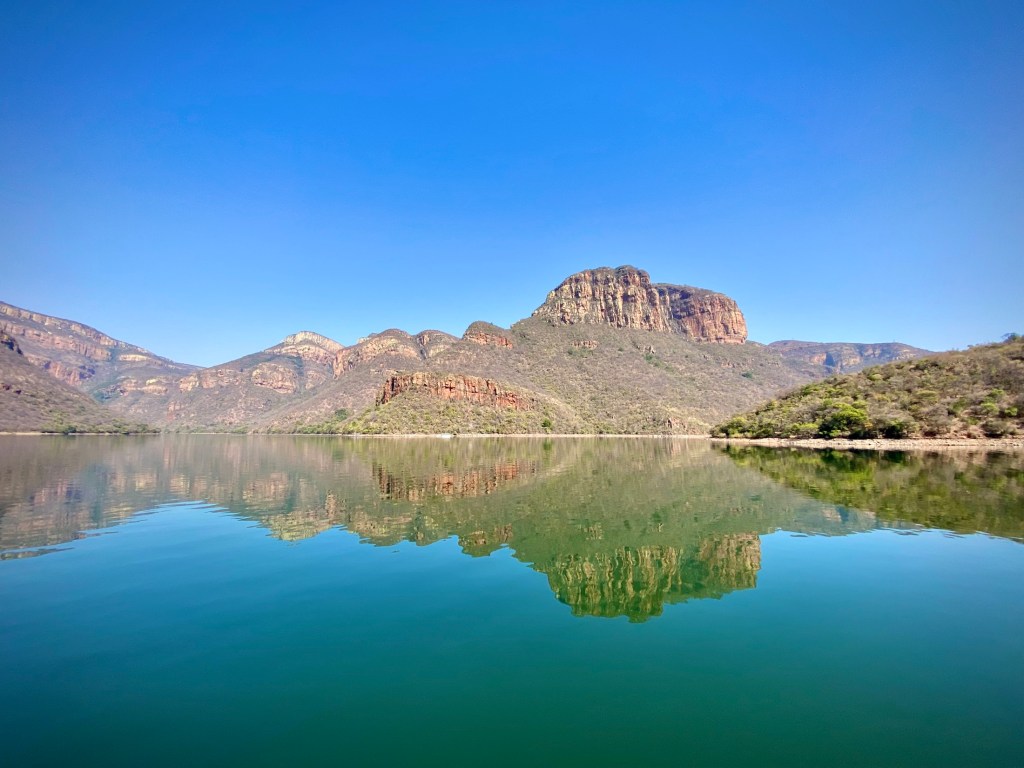
We delayed our first real Kruger NP safari by first taking a boat trip on nearby Blyde River Canyon on the first full day of our stay.

It is one of the largest canyons in the world and one of the greenest because of the subtropical vegetation. A little less green because of the lack of rains this winter.

It was especially fun because we could ride on top of the roof.

A roof platform– a great vantage point

Here the kids were introduced to crocodiles and hippos for the first time. Those firsts were very gratifying to the seasoned safari grandparents. Though personally I still get excited anew on every safari drive.

From tiny to large crocodiles they pretended to be wooden logs

After a delicious lunch and an informative chat with the owner of the mango plantation

Mango flowers are deceptively abundant. Less than 1% produce fruit!

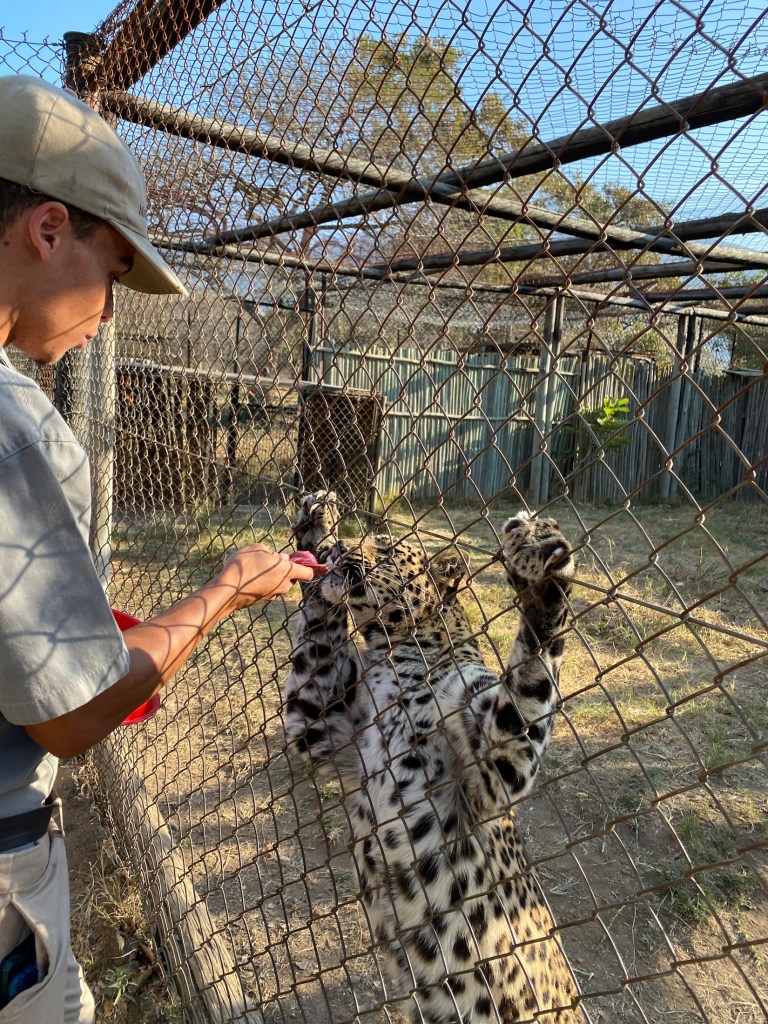
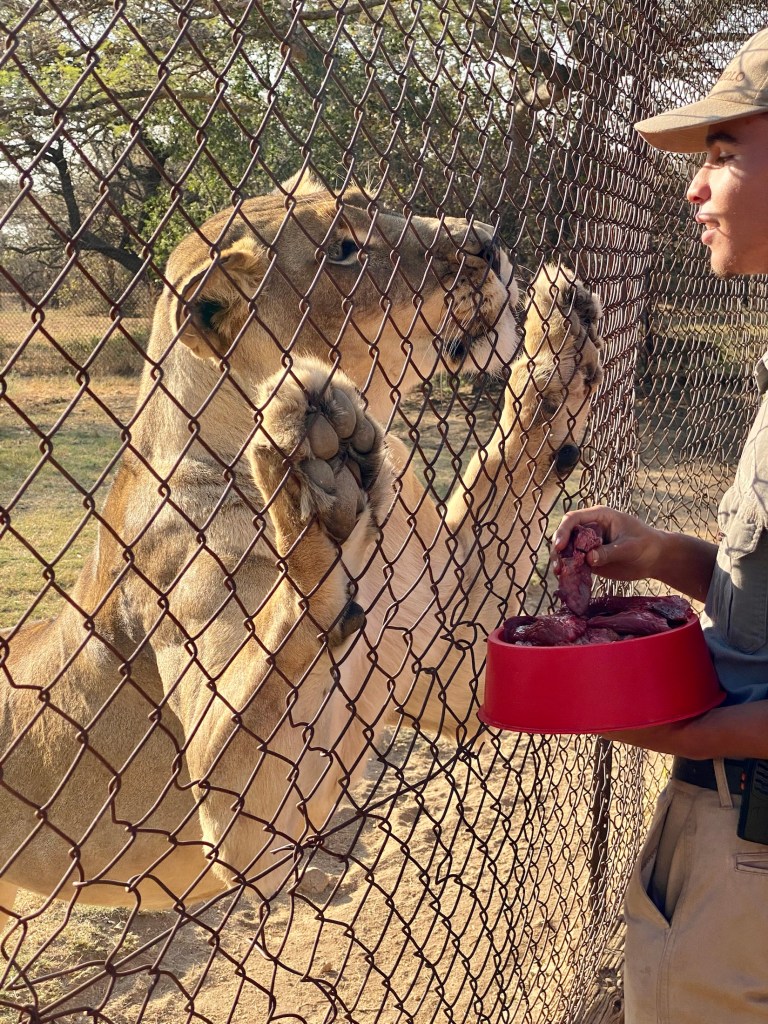
we headed to nearby Moholoholo Rehabilitation Center, where we all learned much about the rescue and protection of animals on an extensive close up and personal tour. It was especially thrilling to observe all the cats as those are difficult to see in nature.
Feeding time

The excitement of the first real safari

was well, real.

Getting up at 4:30 am and driving like maniacs in the dark we were the first to enter Kruger National park that morning and were rewarded by the magical sunrise. Our guide stopped at the side of the road so we could marvel at the blood-red ball bouncing up from the horizon.

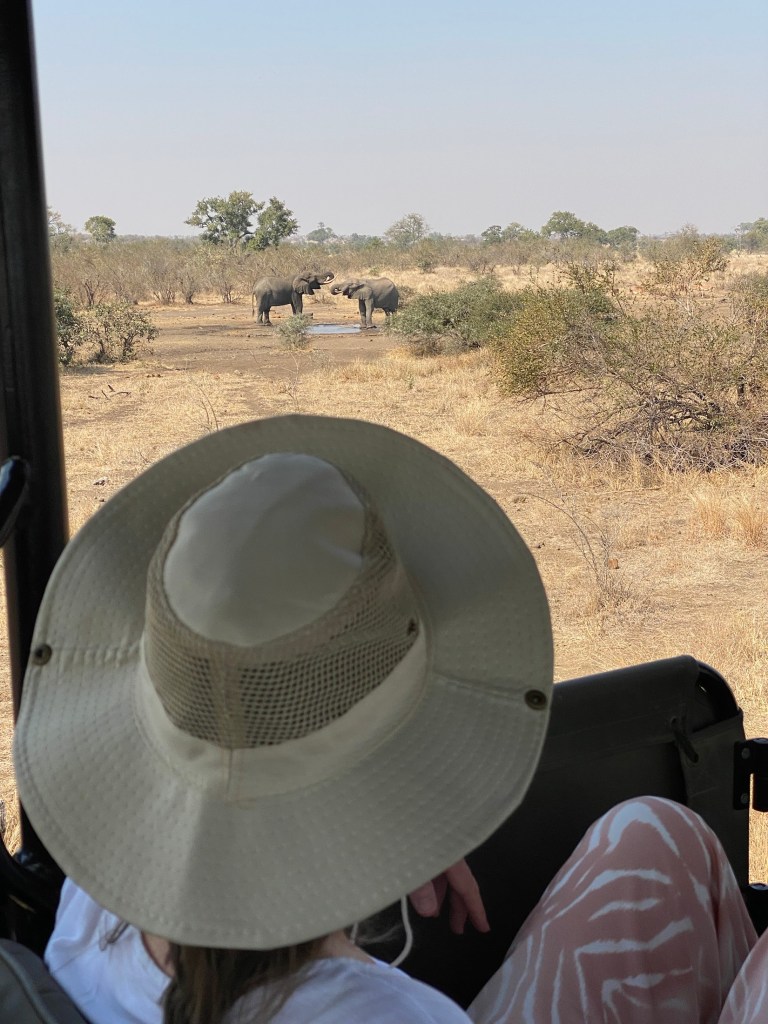
Right away we encountered elephants with their young which elicited many oh and ahs.

Elephants drinking from a small waterhole

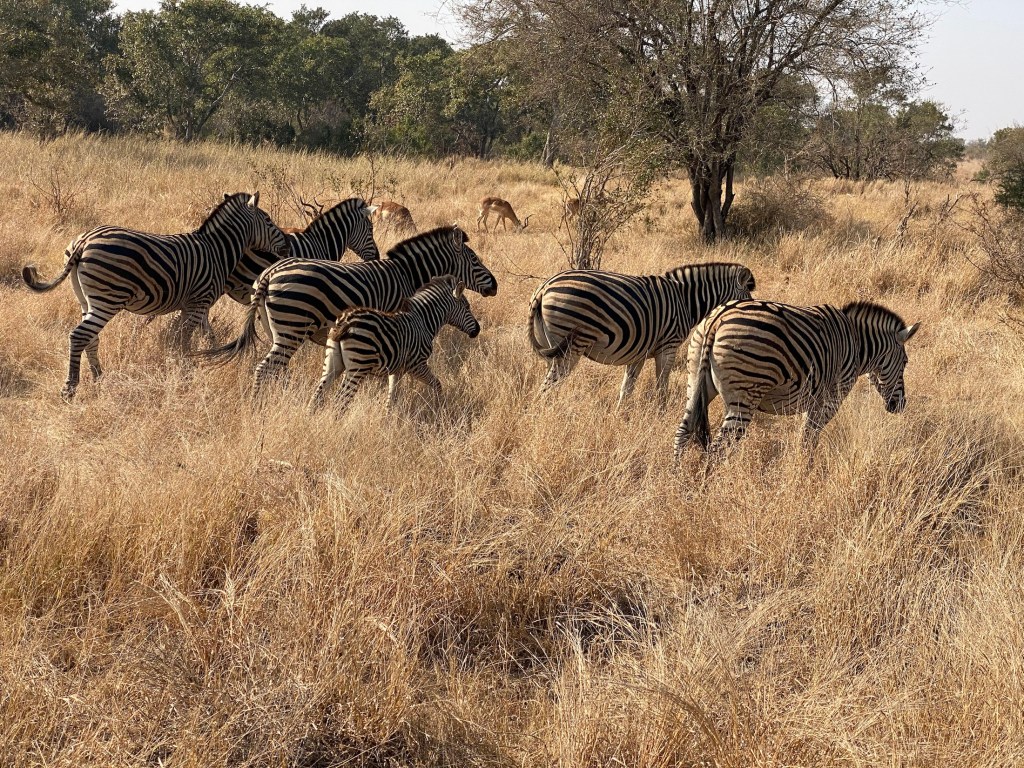
Zebras and antelopes were plentiful

but due to heat and no rain, the cats were elusive. We saw a leopard’s kill hanging up on a high tree branch but were told by other visitors that the mama leopard and her cub were hiding in the bushes by the river with their bellies full.

The second time in Kruger we were lucky to see one rather tired old lion that not very royalty limped into the shade and plopped down for a nap. After all, lions spend on average of 20 hours a day sleeping.

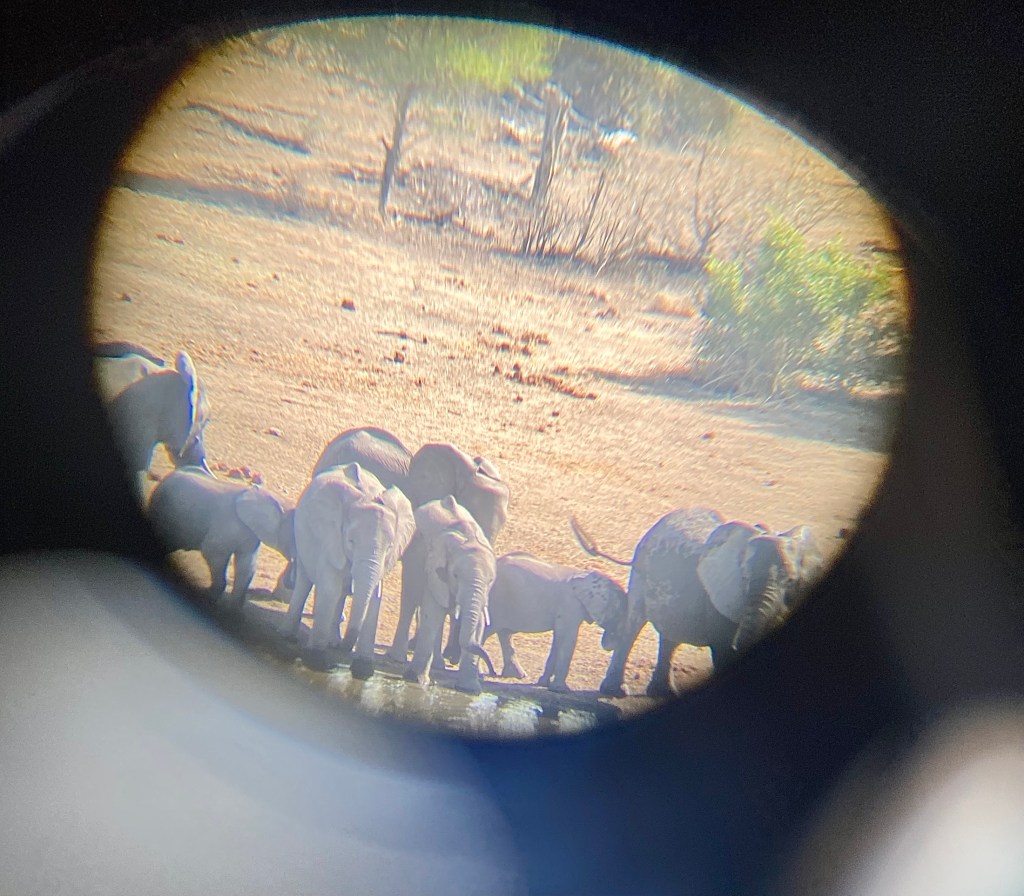
We spent an hour just sitting above a dam observing with and without binoculars the many animals coming for a drink while crocodiles and hippos lazed about. Throngs of kudu, waterbuck and zebras took turns to drink. The best show was put on by a herd of elephant matriarchs, daughters, and babies who marched from the bushes to the waterfront while all the other animals in their path respectfully gave defference.

We tried to overcome the limitations of the iPhone camera by shooting through the binoculars

On another ocassion on an evening safari with more sundowners

Gin&tonic is always a good choice or possibly a Savanna cider

at a nearby private reserve, we had a close encounter with a small group of bachelor elephants having their evening snacks, not entirely happy with our presence. One of them even decided to flap his ears and charge at us.

The shadow of the safari vehicle and people on the approaching elephant

But of course our very experienced guide was careful to hightail it out of his way. Elephants are strong and fast and smart and can easily overturn a vehicle. The destruction of uprooted and trampled trees they leave in their wake is devastatingly extensive.

All in a day’s work our guide clearing our path.

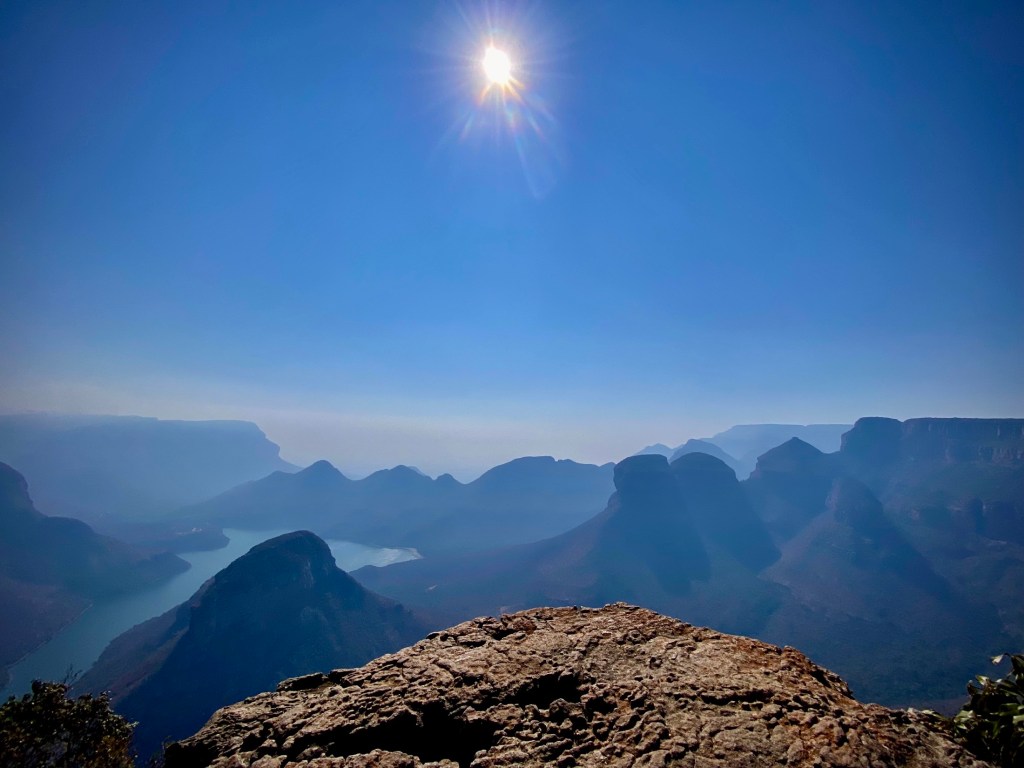
We made another visit to the Blyde River Canyon this time from the rim. It was stupendous from the top as well. Mirek and I reminisced how at our first visit 15 years ago with Helmo and Yvonne the fog was so dense we barely knew the canyon was there.
Now we had dazzling panoramic vistas.

“Look, there is the launching pad where we started out boat voyage the other day.”

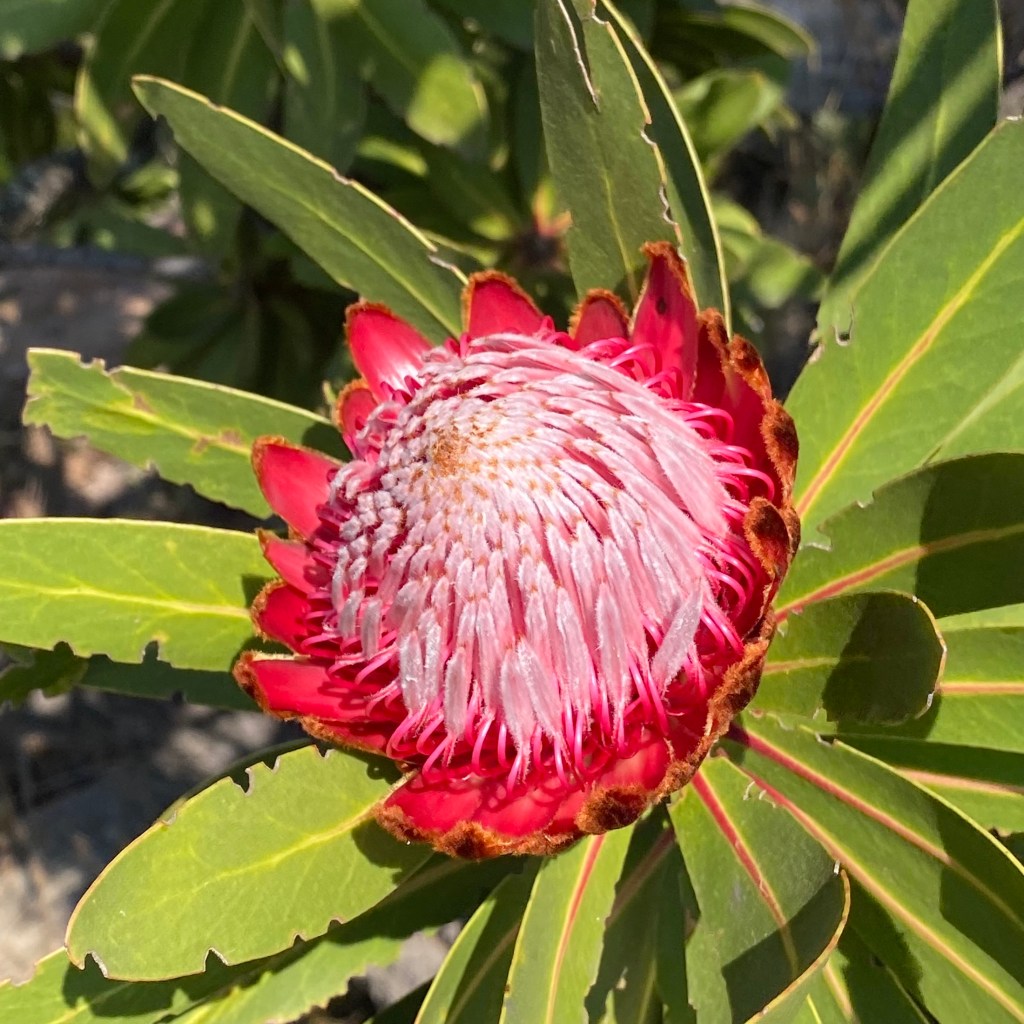
So many new things to enthrall: unknown Protea trees with strange flowers,

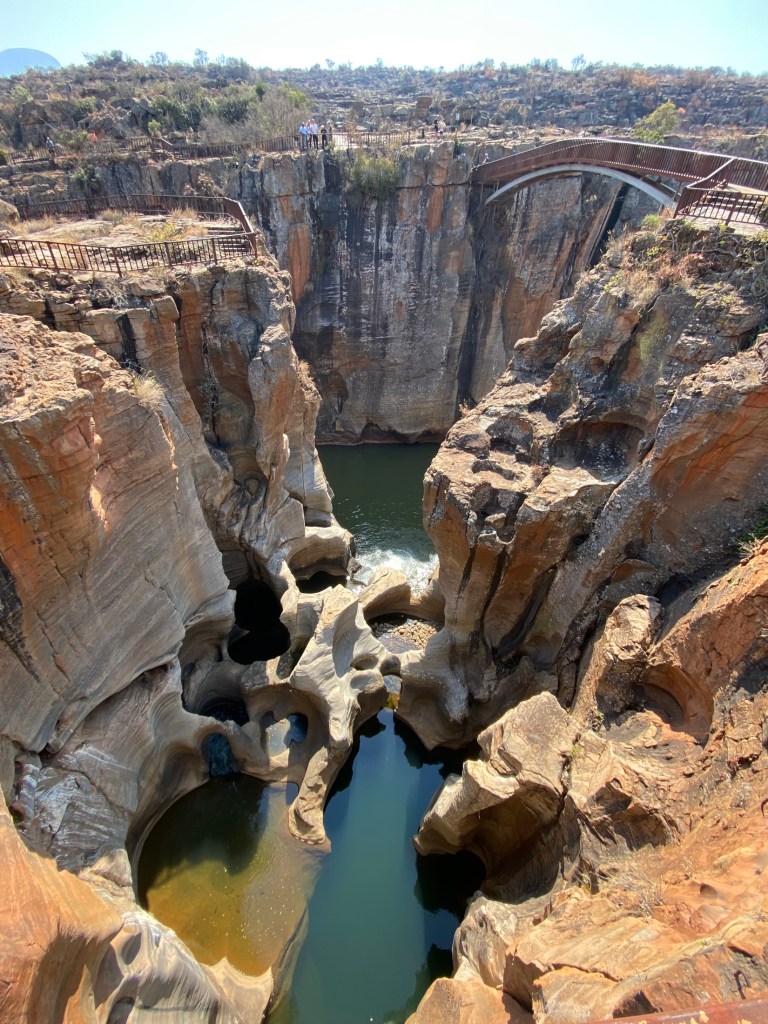
Rock formations at the nearby Bourke’s luck Potholes

and tantalizing colorful handicrafts.

One morning we left the boys to sleep in and relax while the girls took the duffel bag full of donations and drove to the non-profit Nourish where we promised to support their chili growing project.

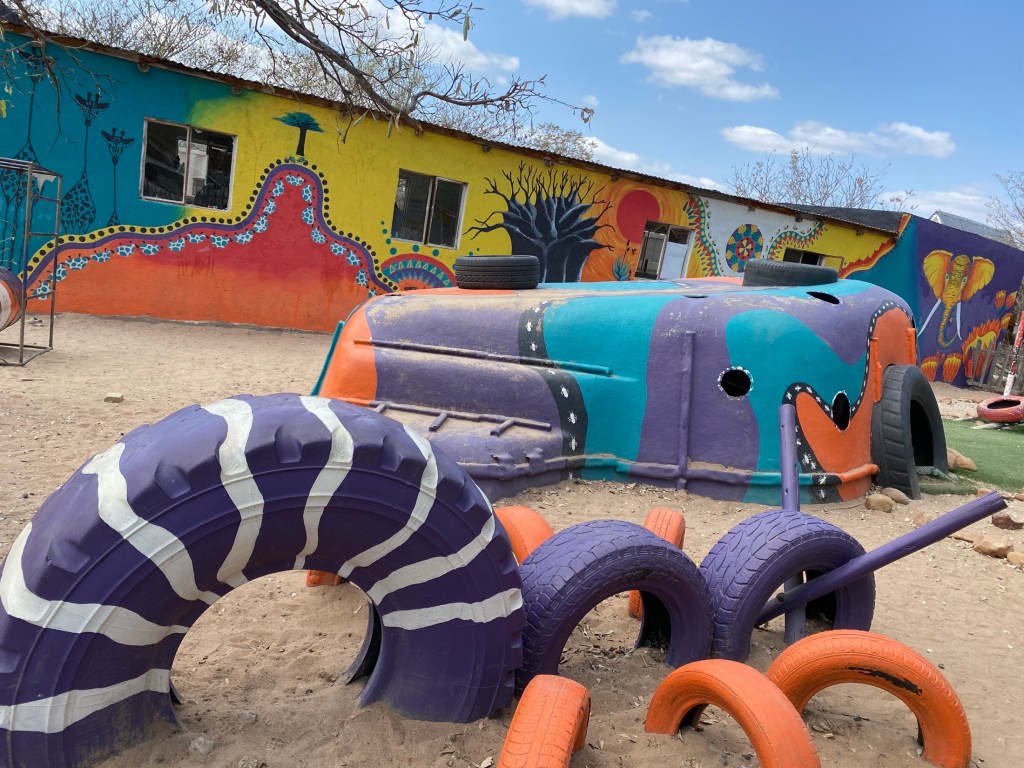
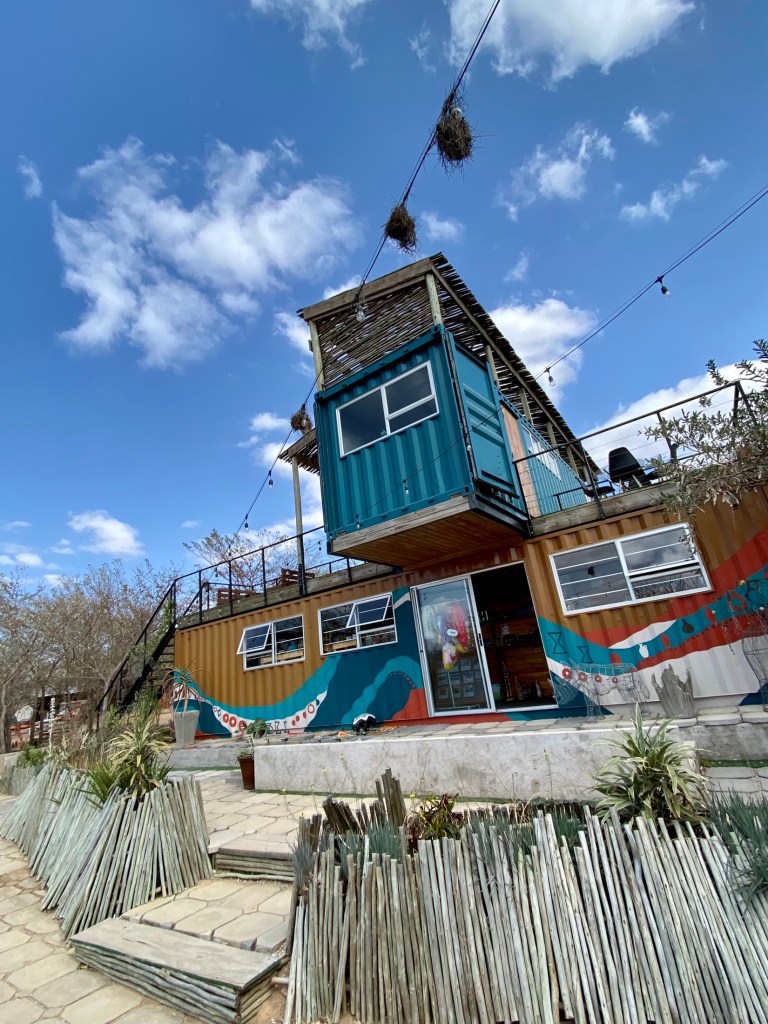
A great upcycling of shipping containers at the site

We were warmly greeted by the young director and shown the many different initiatives helping the local community.

We left donations with the staff to distribute as and when they see fit and were first taken to visit their community preschool.

More colorful recycling at the playground.

The little munchkins showed off with loud singing. We thought our eardrums would burst. The director told us an interesting insight: it is quite common that tots and preschoolers in the villages are pretty much ignored and they oftentimes barely speak when they first join the preschool. Hence the encouragement to be loud and expressive so as to give them a voice.

In true exuberant African spirit everyone was excited to meet us.
Young seamstress and fashion designer
The sweet Nourish cook

We were even invited to the open kitchen.

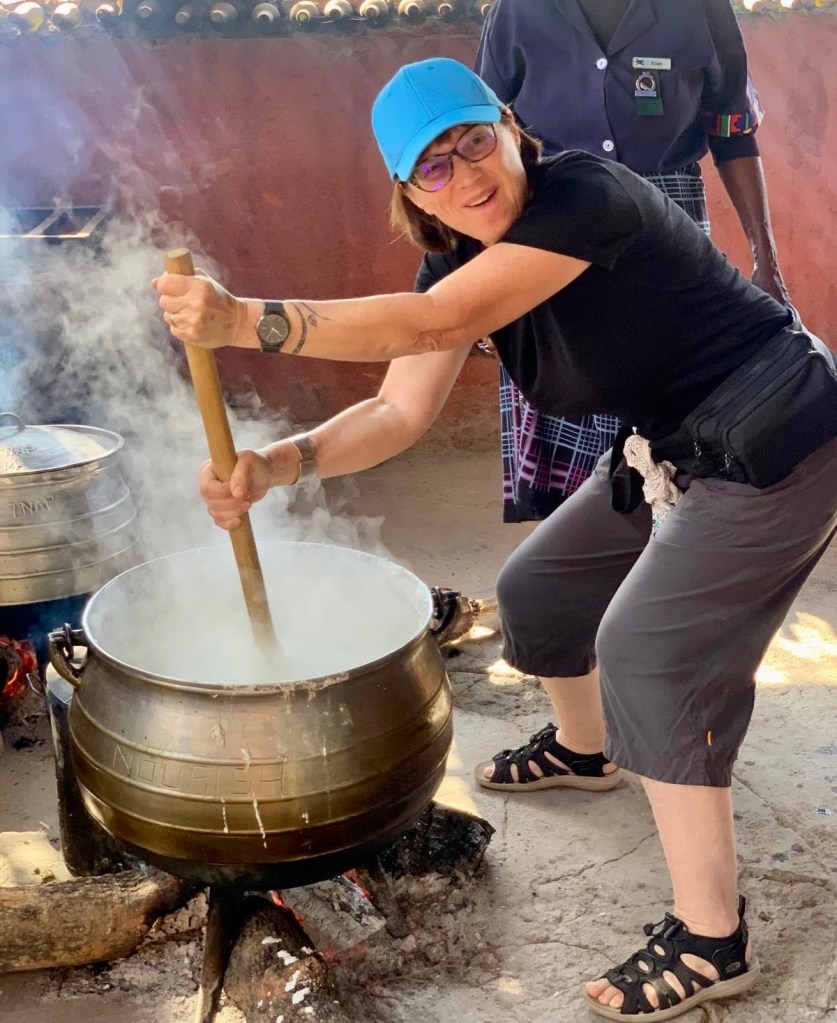
Cooking pap, a staple African diet, a soft porridge from maize or cassava for kids’ lunch

They foolishly let us try our hand at mixing it. You wouldn’t believe what strength it takes to move the large quantity of sticky porridge!

Struggling and thinking what strong arms the cook must have

What was extraordinarily special was that Yvonne and I were reunited with an old friend Tembi, who drove two hours each way to meet us at Nourish.

Tembi looking not a day older, though she is a grandma now like me.

For Mirek’s 60th birthday gift, Yvonne and Helmo arranged the building of a playground at a preschool for children with Hiv parents. Tembi was the director there. When asked what we could bring the children she suggested shoes. We brought a duffel bag of donated shoes from a preschool in our community. The memory of little tots patiently waiting their turn to choose a favorite pair will forever be seared in my heart.

What a memorable and insightful morning this was for all of us!

In only 5 short days we packed in so many sights and experiences. And still managed a few vacation mode relaxing moments. Now let’s hop on the plane to Zimbabwe!

The Tuareg; Sons and Daughters of Sahara

You can plan your travel around interesting natural, historical, and artistic sites, but at the end of the day it is the local people that make or break your stay.

The most beautiful and impressive place can be significantly marred by unfriendly people (I am pointing at you Paris and Barcelona!) yet even a rather average locale can be elevated by welcoming and kind folk.

Mirek with our Algerian Tuareg car mates Youssef and his brother Abass

Luckily Algeria has nothing to fear. The local people we encountered were exceptionally friendly, welcoming and downright thrilled to see us. The few other travelers we met all mentioned in the very first exchanges how warm their reception was everywhere they went.

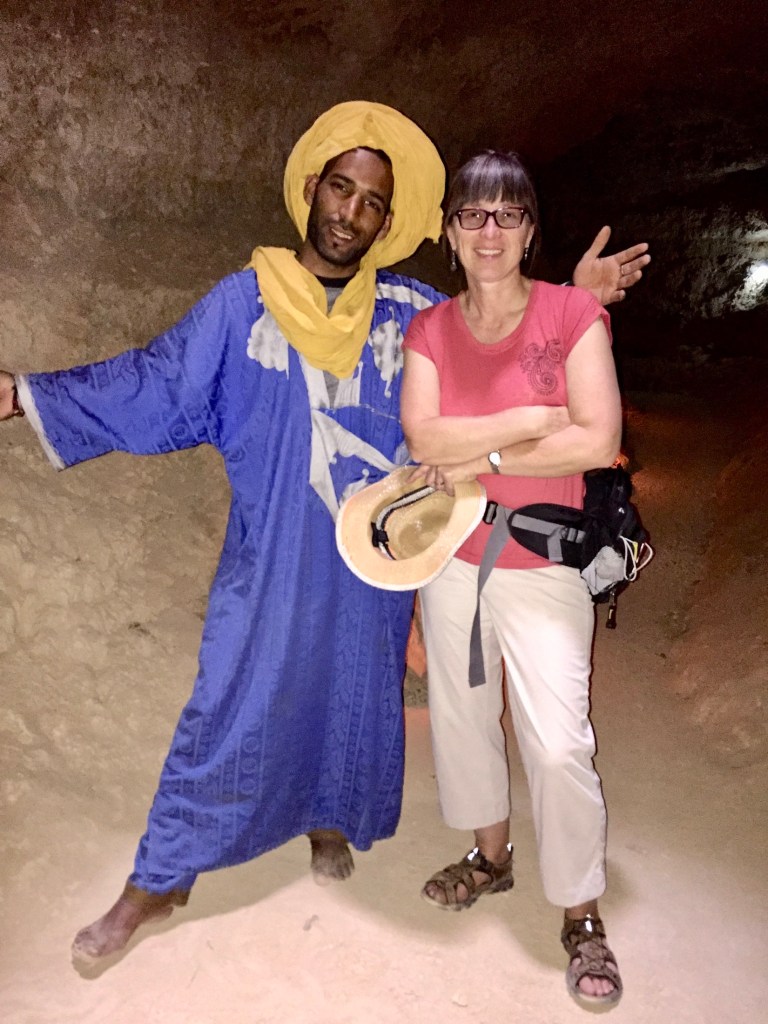
Our unfettered exposure to the local people was a bit curtailed as we were nearly always accompanied by Youssef, which cut a fine and tall figure in various colorful outfits that brought us extra attention in the coastal cities of the North.

Yet repeatedly people went out of their way to express their surprise and delight that we were visiting their homeland. Only Iranians could beat Algerians at the welcome game. There we felt like real celebrities every single day.

Big smiles
And handshakes
And flowers for the lady

While random encounters and exchange of a few friendly sentences are so very pleasant, the advantage of having a local guide with an excellent command of English and willingness to engage in real cultural exchange, sharing opinions, and answering exceedingly more personal questions is very important. Only thus can one get a true insight and at least some level of deeper understanding?

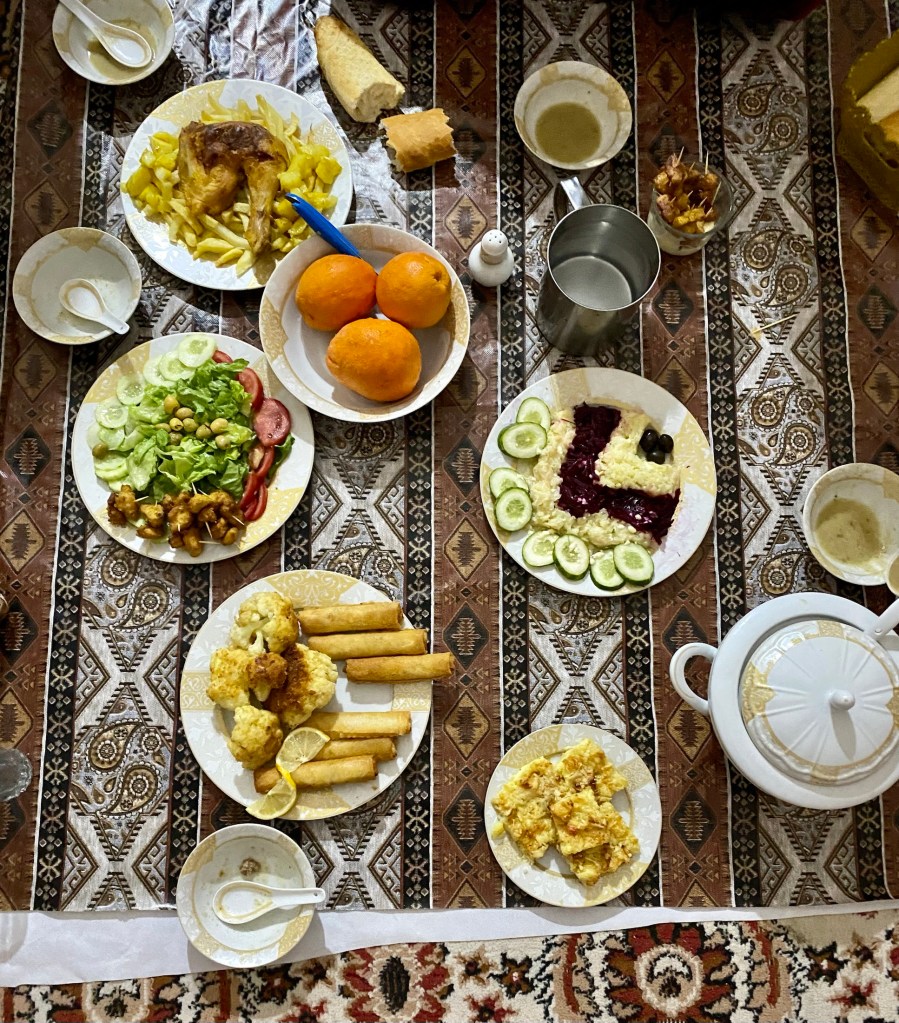
Spending many hours in the car chatting together but also watching the interaction of our desert team taught us a lot about the Tuareg culture. While we were served our own meals, the team always ate from a communal bowl starting their meal with a thick soup.

We were even so lucky as to be invited to Youssef’s home to break the Ramadan feast with the family.

Ladies and gents eat separately in different rooms. Despite the limited language skills ladies always have more fun!

Pictures of children and grandchildren are shared. And designs on hennaed hands admired.

Interesting to note that children are not allowed to eat with adults but are relegated to dining in the kitchen. But a gaggle of giggly granddaughters was encouraged to show their school books and practice counting in English while finishing touches were put on the dinner dishes.

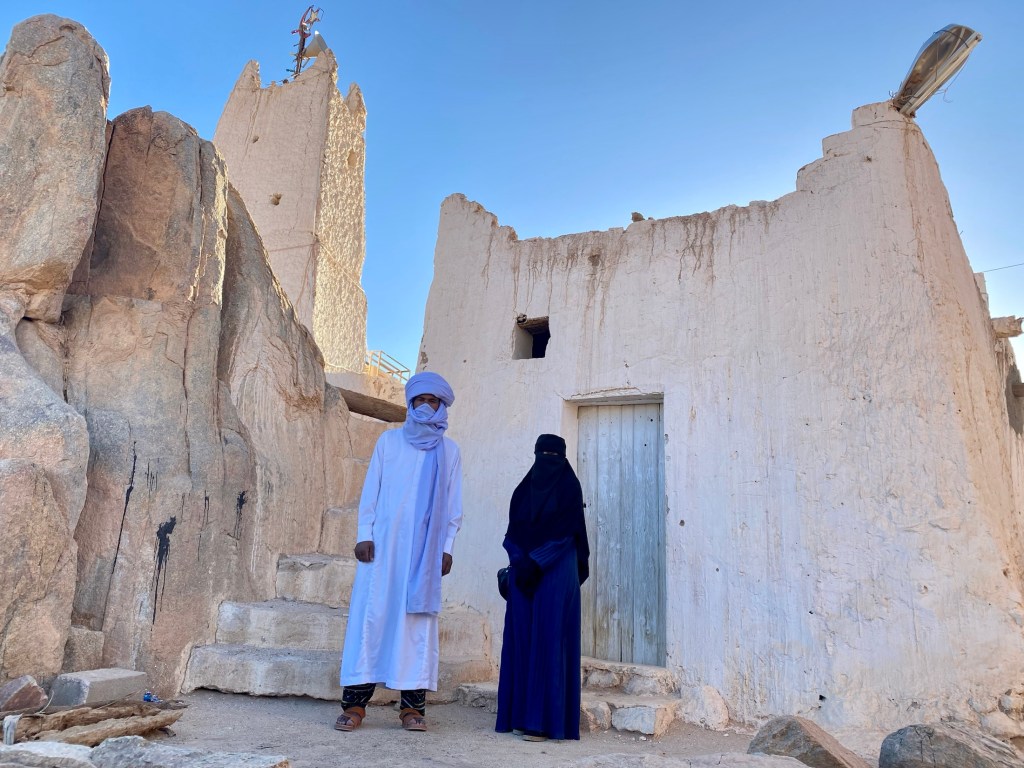
My translator for this occasion was Youssef’s cousin Zahra. Recently graduated from university with a law degree she surprised her cousin upon pick up when she showed up covered from head to toe. He was far from pleased as it is not a Tuareg tradition at all, but a new influence of strong conservative Islamic trends. As a matter of fact in Tuareg culture it is the men that veil their face and women don’t.

Beneath the serious garb was a funny laughing personality

She was very excited to be out and about when we went to see an old ksar in her home city. Seems like she has never been there before.

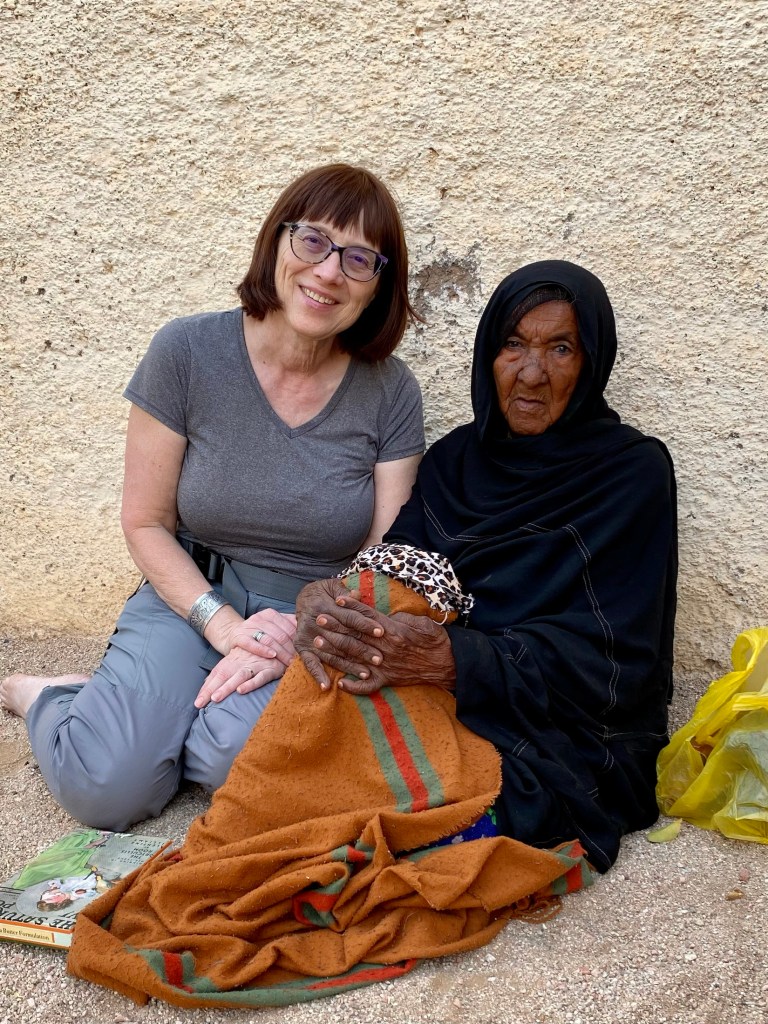
She was also excited to introduce me to her grandmother living across the street. It was sweet to see the close, loving relationship. The elders are still very respected in Tuareg culture, and they will always be taken care of in old age. Youssef also took us to visit his other grandma living in a compound of his uncle.

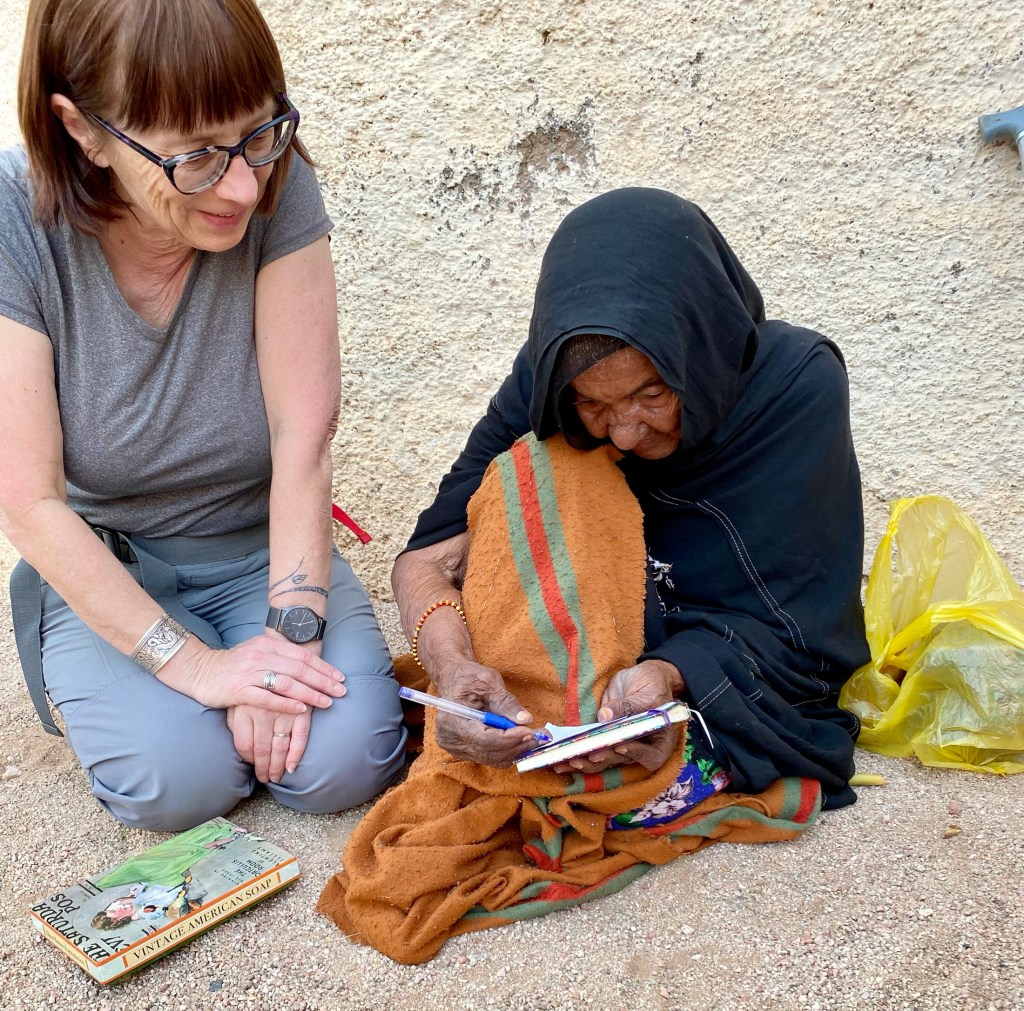
He was proud to tell us that she knows tifinagh, an old consonantal alphabet. We saw an older precursor to tifinagh carved on the walls of some desert rocks and were surprised that nobody could read it or decipher the inscriptions.

Grandma writing my name

Who are the Tuareg? On a grand scale the Tuareg are semi-nomadic herders and traders living in Northern Mali, Niger, Burkina Faso, Libya, and Algeria.

A Tuareg craftsman from Mali at the Djanet market

They are descended from Berbers (=Amazigh), the indigenous population of North Africa and speak different dialects of a Berber language: Tamasheq.

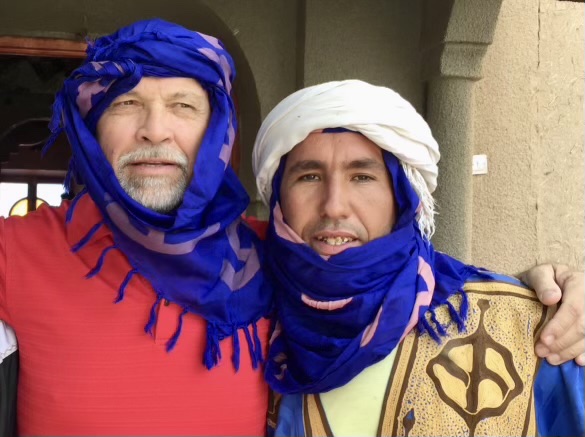
The close cousins of Algerian Tuareg are Morrocan Berbers.

Ksenija with a Morrocan Amazigh April 2016
Mirek and a Berber friend in Morroco April 2016

Though most Algerians are descendants of ancient Amazigh groups who mixed with various invading peoples, of whom Arabs had the most influence, only some one-fifth of the Algerians now consider themselves Amazigh.

There are 4 Amazigh subgroups in Algeria: Kabyle, Shawia, Mʾzabites and lastly the Tuaregs from the southern desert.

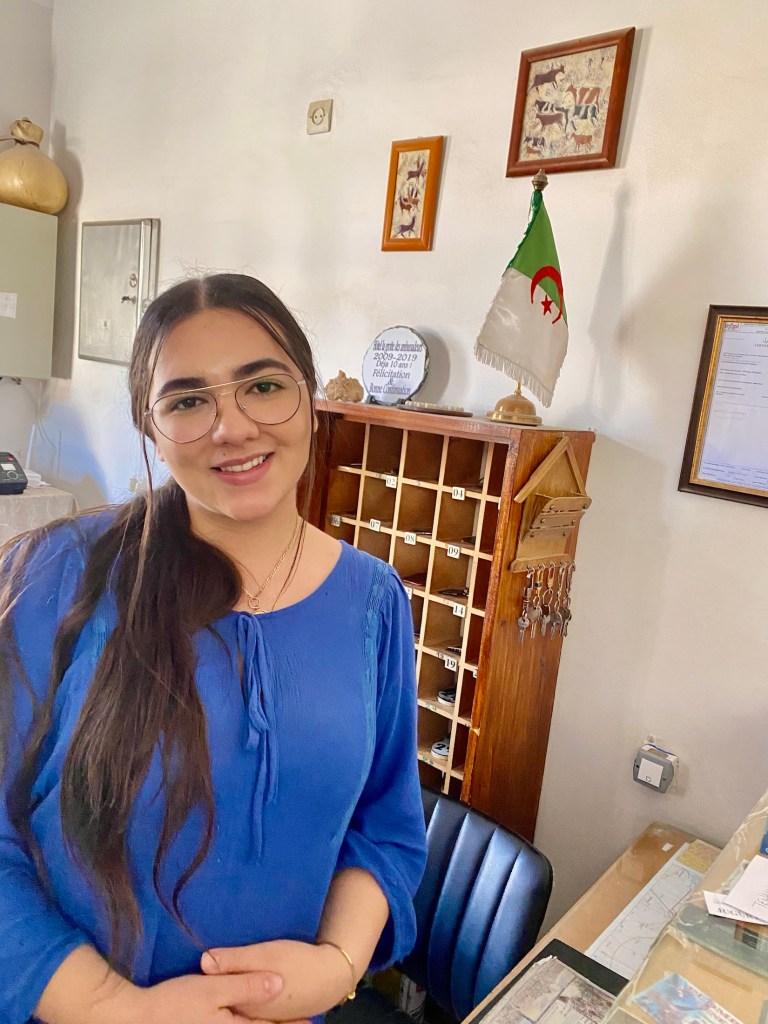
Incidentally the little hotel we stayed in (and gratefully showered in) in between our two forays into the desert was owned by a Kabyle family from the North of Algeria. The lovely daughter Celia (another young woman with a law degree) who often manned the reception was particularly helpful answering some of my more feminine cultural questions. Her English (and French and Arabic) was perfect and she did not shy away from any topic.

Celia’s dream is to start her own high quality travel agency

The Tuareg are also called the “blue men of the sahara” for their traditional blue tagelmust (veil and turban in one). The long and loose gown worn by the Tuareg and the tagelmust were once died blue with indigo and while swetting under the hot desert sun the blue color rubbed off the clothes and into the skin- hence blue men.

We spotted men in gowns and tagelmusts of different colors but alas most younger people now opt for jeans and T-shirts. More convenient and cheaper. Definitely not as charming and attractive.

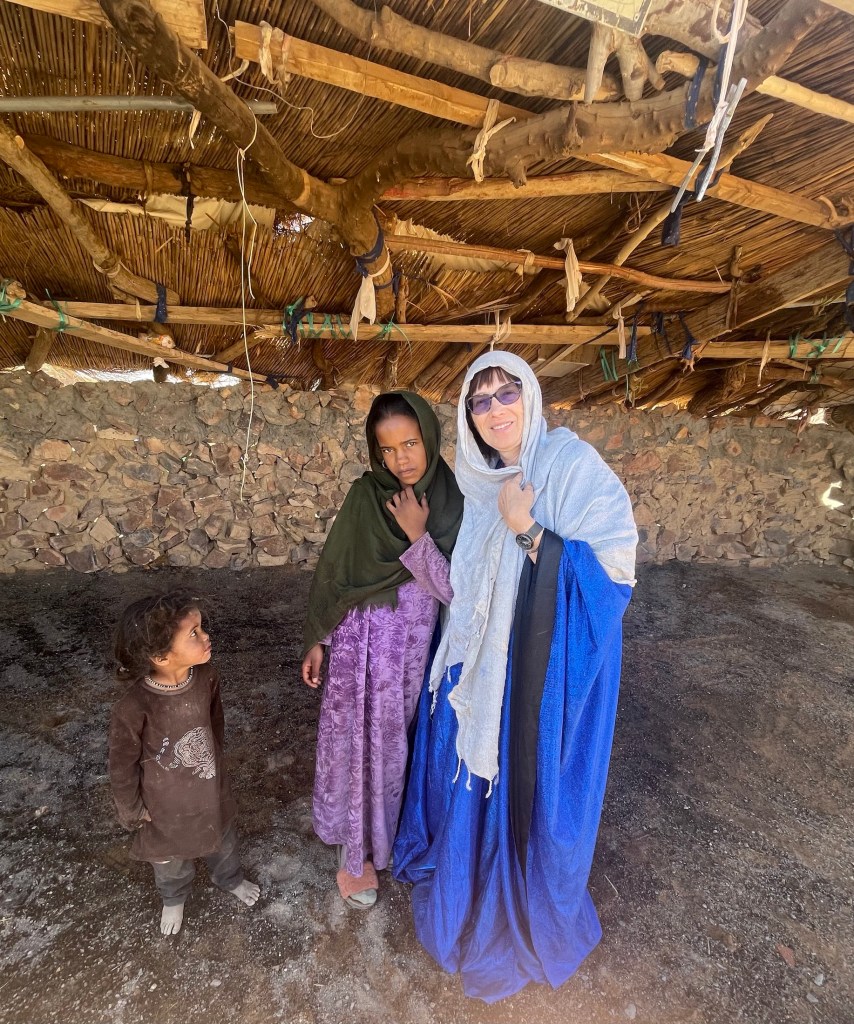
How about the ladies Tuareg fashion? Well, you are in luck as I was treated to a special preview when we visited a remote Tuareg community in Tasili n’Ajjer area.

The ladies of the house, or I should rather say very very poor compound had a lot of fun dressing me up in a traditional costume. The kids were practically dumbstruck to see such sport (… and the dish ran away with the tea spoon).

Yes, cell phones are everywhere even in the poorest places of the world. No one will invest in water or electricity but someone will always put up cell phone towers to make money.

I took advantage of the spectacle and had a few girls join me up on the center stage so we could get some lovely photos.

This very shy girl visiting the settlement from a nomadic family reminded me of the famous Nat Geo photo of the Afgani girl.

The children from this very poor community of former nomads were going to a nice newly built school.

Selfies are the best way to break the ice

But in the desert winter they were very cold so we fundraised (through http://www.lanternprojects.org) to bring them heaters for all the classrooms.

A number of local officials were present

That night we camped in the rock outcrops outside of the village and in the morning one of the local men took us on a most rewarding hunt for secret rock art.

Prehistoric communal grinding flour pits

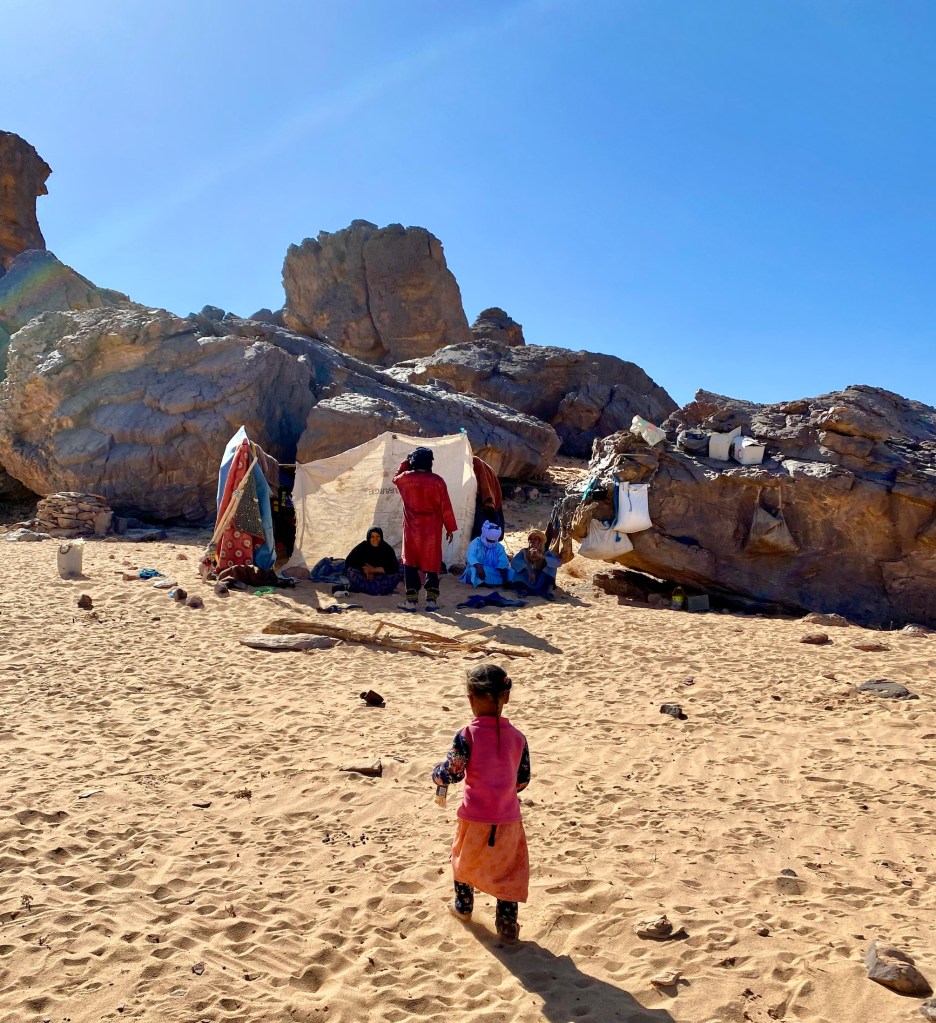
But first he introduced us to his family who was the only one still living in a traditional Tuareg tent. Two to be precise.

They were making a living as goat herders. With encouragement from the government, the rest of the families gave up their semi-nomadic life and struggle very much with no source of income.

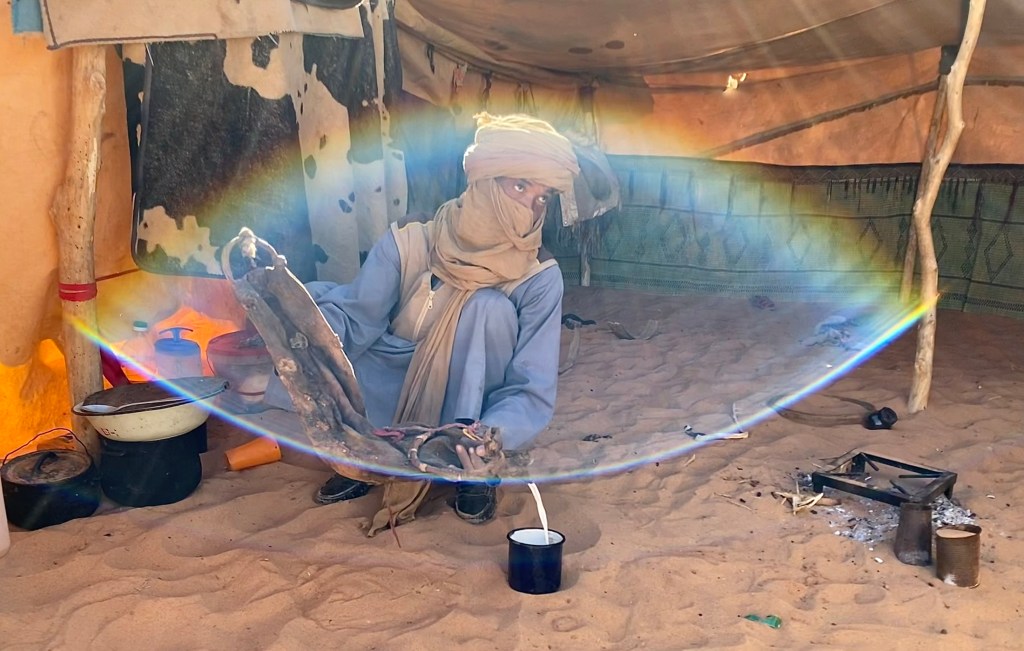
We were treated to an enthusiastic explanation and demonstration of different natural implements.

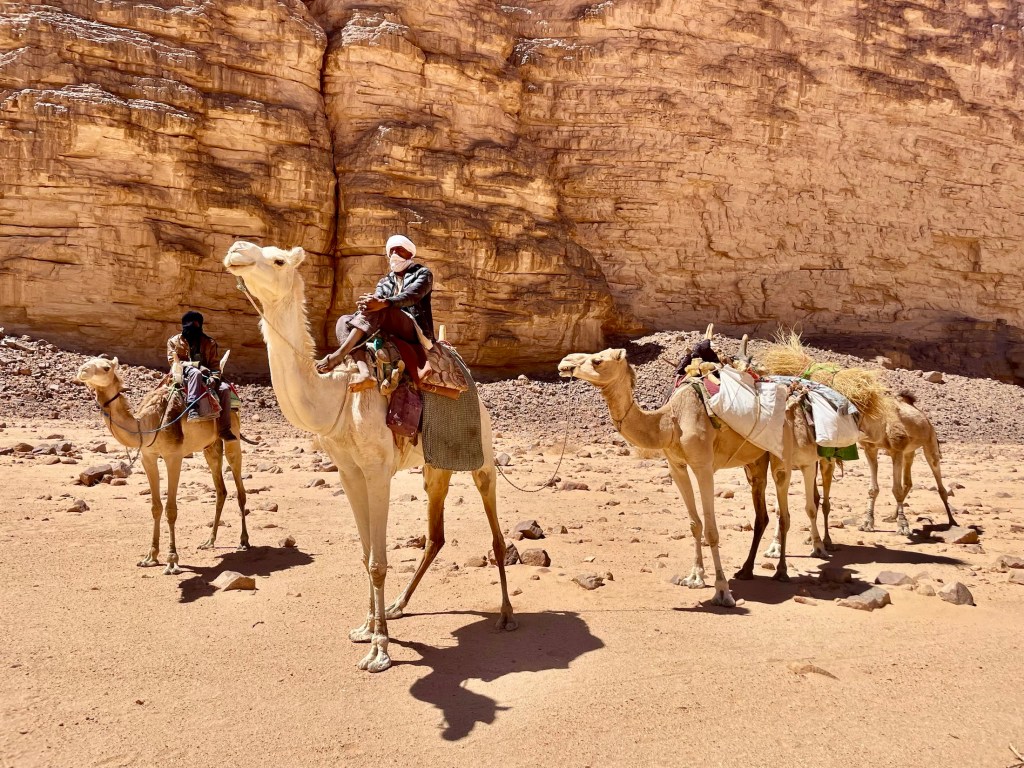
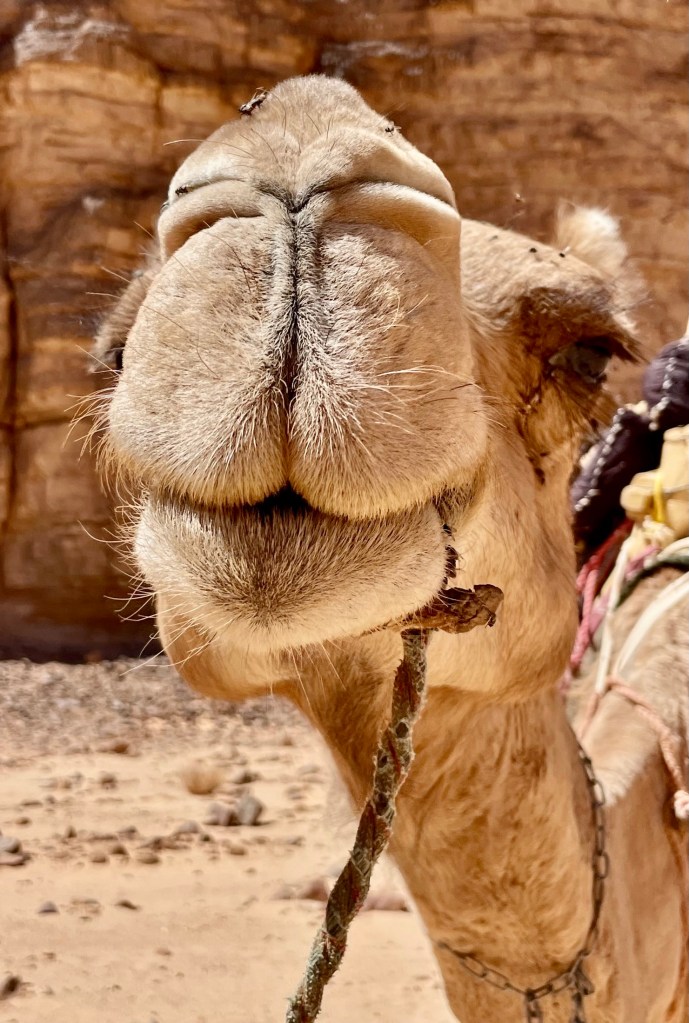
Knowing that most Tuaregs have long given up their nomadic ways this chance encounter with a few camelteers was very special.

Greeting the camel train

Of course, Youssef knew them and had a little chat. They were bringing fodder back home for the animals.

Happy meeting

Soon after we were engulfed in a sea of goats. If not for the sunglasses we would be apt to believe we were teleported back a few thousand years.

Turned out the goats were being taken to market to Lybia for a good price was rumored to be had there.

But they lost their way.

Straight from the Bible. Except for his oil field overalls.

After giving him directions

We pressed upon him some supplies and wished him luck.

We would be remiss to not mention music as a big part of Tuareg culture. The original ancient tradition of music, poetry and dance continues and is celebrated in a ten day festival of Sebeiba in the little town of Djanet where we were based. The festival is held in the month of July, so we will have to return.

There is an everyday tradition of music being played after dinner and around the campfire. Many a young man picks up a guitar and learns to riff the Sahara blues or desert rock (also called tishoumaren or assouf) that first became popular in the 1970s. Every evening on our camping trip our cook Bubba would pick up his guitar and the rest of the crew would sing and clap along.

One evening at a goat barbeque in town we were even treated to a performance of a local Tuareg rock group.

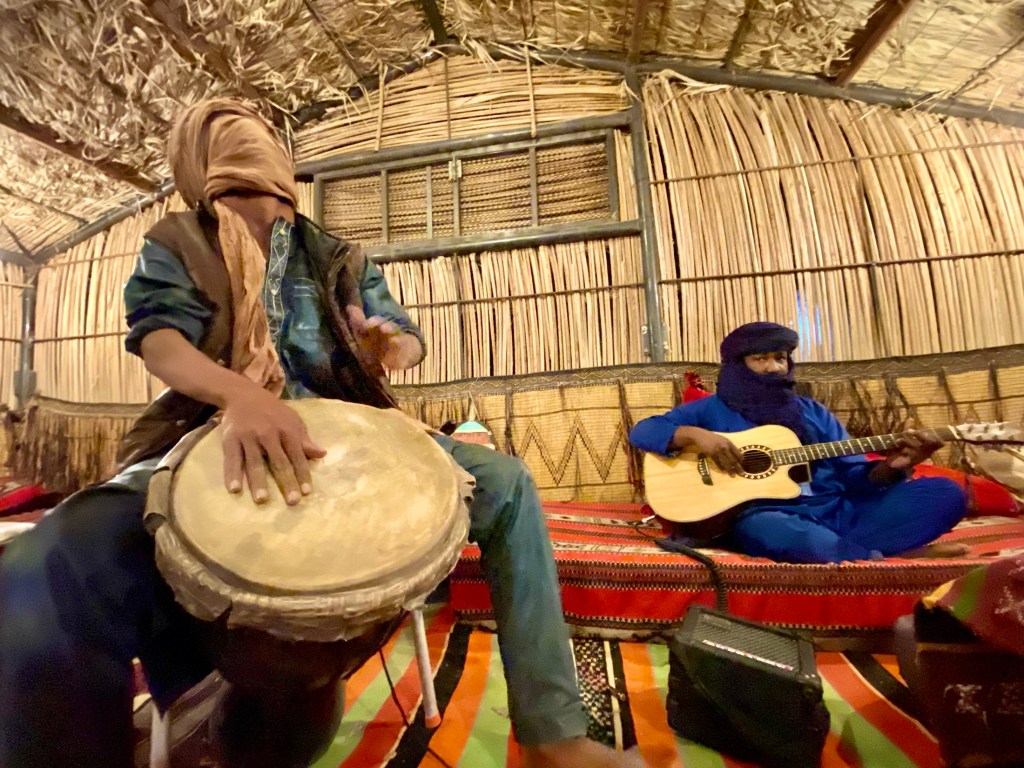
Traditional drum and acoustic guitar
A perfect night on the edge of the Sahara

Until we meet again!