
Frankly, adding four days to the North of Algeria was an afterthought but quite undeservedly so.

While the capital Algiers failed to impress, we found ourselves delighted with the city of Constantine, and very much enjoyed having the excavated antique cities from the Golden Age of the Roman Empire de facto all to ourselves. Save for the knowledgeable and enthusiastic private guides who enlightened us with stories and insights.

The advantage of traveling off a beaten path in a more “affordable” destination is the privilege of being able to meet the expense of a private local guide. Our Youssef traveled from Sahara to the North with us and at each stop had a local guide waiting for us, which definitely made tromping through “piles of old stones” more fun and enlightening.

For a bridge engineer that Mirek was his whole working life Constantine, called the City of Bridges, certainly delivered.

It has barely 8 big bridges compared to Hamburg’s 2,496 bridges, (the most of any city in Europe) or word record Chongqing’s, (more than 20,000 bridges including 105 ultra-large bridges across the Yangtze and Jialing River.)
With its diverse historical bridges traversing the wide and deep gorge of Rhumel River and also spanning many centuries of engineering feats it is definitely a memorable place even for non engineers.

In antiquity, the city was originally called Cirta and served as the capital of the North African Berber kingdom of Numidia. (The very (cousin) ancestors of our favorite Sahara Berbers=Tuaregs)
After its destruction due to one war too many, it was rebuit in 4th century and subsequently named in Latin as “Colonia Constantiniana” or “Constantina”, after emperor Constantine the Great. Yeah, the same dude who gave the name to Constantinopolis (Byzantium – Constantinople – Istanbul).
To make city naming matters a bit more confusing the city of Constanța in Romania is named after Constantin’s favorite half sister Constantia. Their father was surprise, surprise… Constantius I.
But there is another name that is associated with this city and widely painted over the store fronts and hotels and that is of Jugurtha. To our embarrassment I must admit that we were initially somewhat surprised that yoghurt was so widely sold and advertised in Algeria. Finally we were enlightened to the fact that Jugurtha was actually a famous Berber king of Numidia. I kid you not when I tell you that after Jugurtha was murdered in Rome, he was succeeded by his half-brother Gouda. I don’t have his (cheesy😆likeness) but do have his successor Juba I.
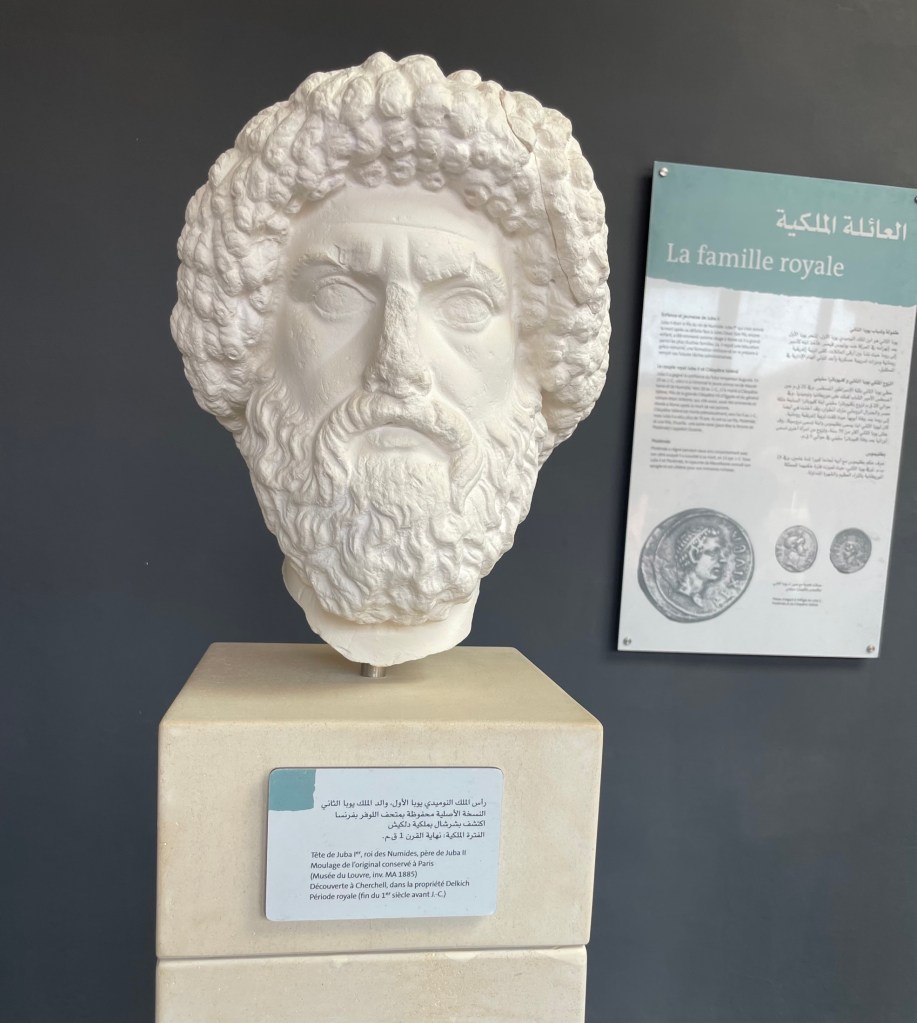
Remember this dude as he is the father of our favorite guy whom you will meet soon enough.
The city of Constantine went through a lot of hands, and many were pretty rough (e.i. Vandals). Romans, Byzantines, Arabs, Ottoman Turks and French all influenced and intermingled with the indigenous Berber population.

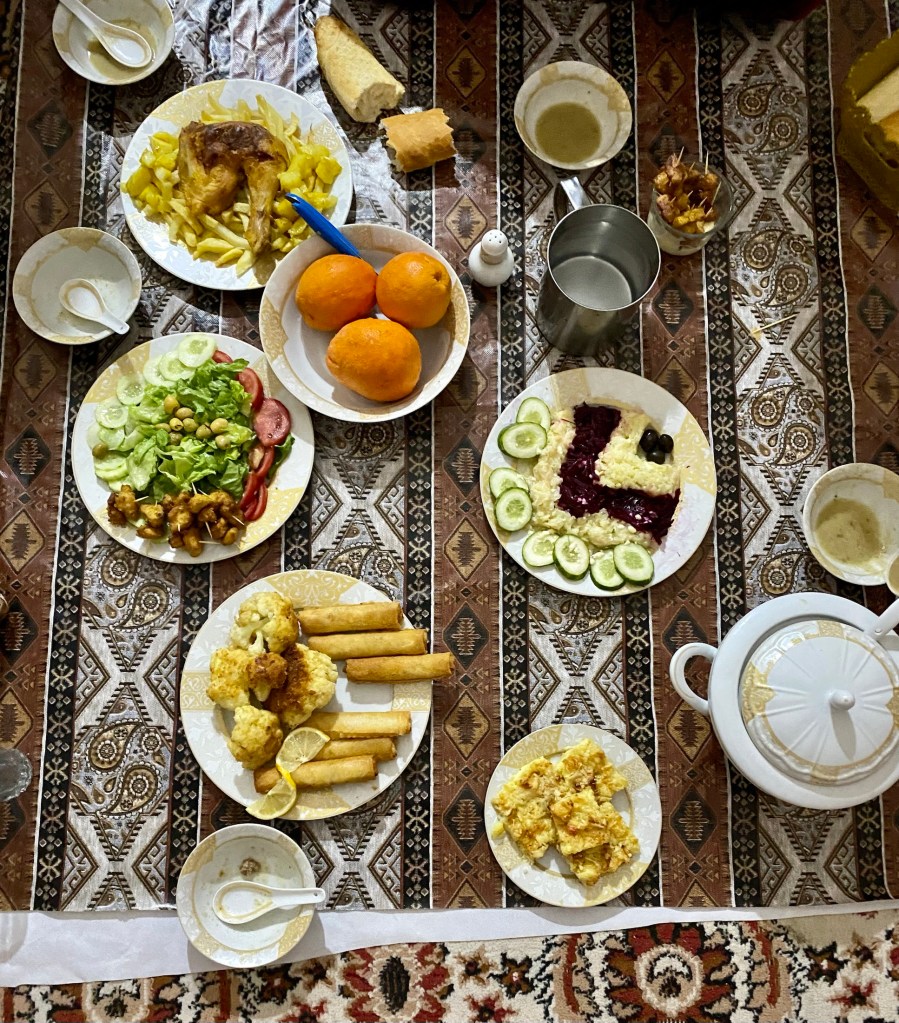
After more than modest accommodations throughout Algeria and limited sustenance of bananas and power bars in the North due to strict Ramadan closures our one night of indulgence in luxurious Sheraton hotel was cherished to the max. Being the only foreign guests we were upgraded and coddled. For hours and hours we indulged in the extraordinary buffet dinner of traditional dishes where all the hotel guests broke their fast and waiters proudly explained their favorite delicacies.

The new Emir Abdelkader mosque we saw glimmering from our hotel’s restaurant terrace was our first stop on our guided tour and very beautiful, especially inside. Abdelkader, 19th century scholar and military leader is considered the founding father of modern Algeria. In line with his scholarly legacy a university was built next to the mosque as well.

At the start the only other people inside were workers changing the dead light bulbs in the chandeliers

and a very meticulous cleaner with a giant, but very quiet vacuum.

Soon a gaggle of little children came in yelling and running around and having great fun. The boys especially wouldn’t sit still
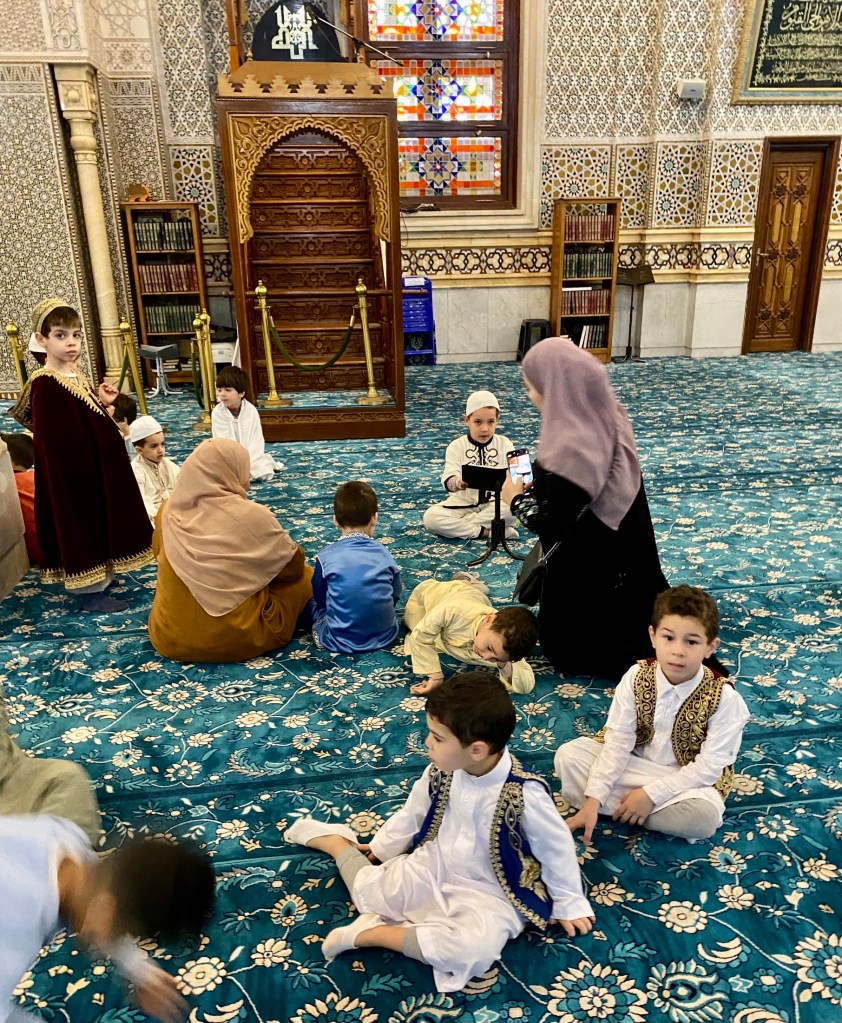
while the girls as usual were more demure.

I just love seeing how we humans are all the same all over the world. That’s what travel does to you, brings the realization that we are all much more alike than different. Unfortunately, it is the politics and religions that estrange us from each other.
Not too far from Constantine is the second good reason to venture North: the very well-preserved ancient city of Timgad.

It is just one of the six hundred that once flourished along the coast of North Africa. They cut across the area from nowadays Morroco through Tunisia and Algeria a the way to Libya.
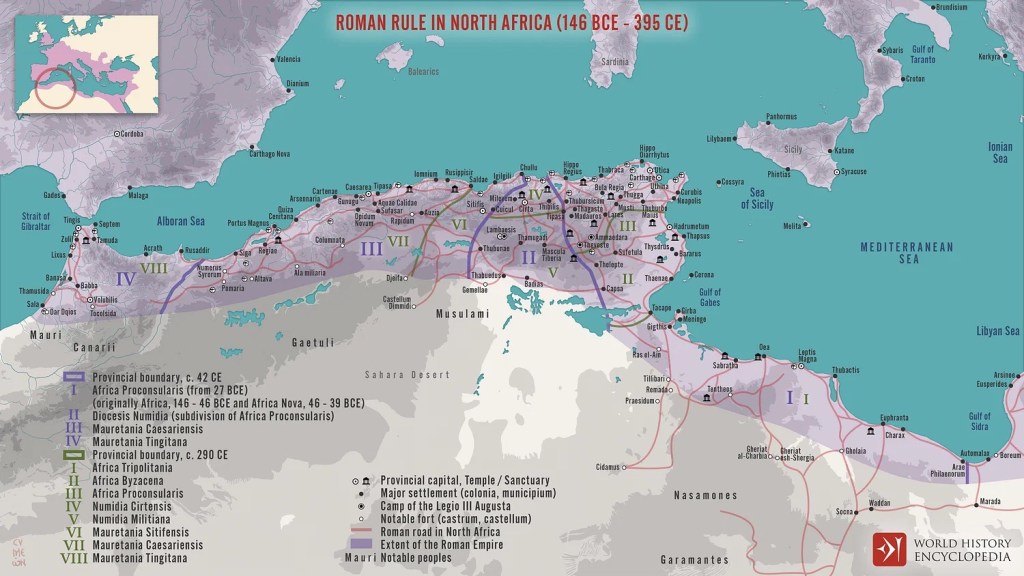
We were lucky to have admired the remains of the Roman ancient days (Volubilis in Morroco and Cartahena in Tunisia) in 3 out of 4 now, but are really bummed we missed the chance to see the magnificent Leptis Magna in Libya while it was still possible. With the current situation, it doesn’t seem likely we will manage it in our lifetime. But we keep it on our Bucket List, just as we did Algerian Sahara for the last 40 years. Except we don’t have 40 years to spare. So, if you are reading this and you are young and have itchy feet do heed our advice: Travel and travel now!
One has to really stretch one’s imagination to visualise this area as a breadbasket of the Roman Empire. The prosperity of of most towns here and to some extent even the full stomachs of Rome depended on North African agriculture. As per Wikipedia it was called the “granary of the empire”, and according to one estimate, produced one million tons of cereals each year, one-quarter of which was exported.

Additional crops included beans, figs, grapes, and other fruits. By the 2nd century, olive oil rivaled cereals as an export item. Despite the incredibly thorough and incredibly ugly urbanization we still passed some olive groves. I was really longing to veer off and stop in one but our guide was waiting for us at the entrance to Timgar and our driver pressed on.
Another big shot in Roman history is Trajan and he has a giant arch named after him in Timgad. Well, when you are the founding father of a city at least an arch should bear your name. The city he named after his mother, father and sister.

The arch together with the whole archaeological site of Timgad, has been listed as a World Heritage by UNESCO.
A lot of people think getting a designation as a World Heritage site means funds from UNESCO. This is not true at all and it actually takes money and plenty of effort to lobby UNESCO to assign the designation to a site. But it does in turn put the site on an honorary list of so far 1,157 locations around the world. It can bring attention and more visitors, but that can on a bad day or a bad year also lead to overcrowding.
Luckily no such worry in Timgad.

Besides a few friendly local families, we had the place to ourselves and nothing was off-limit.

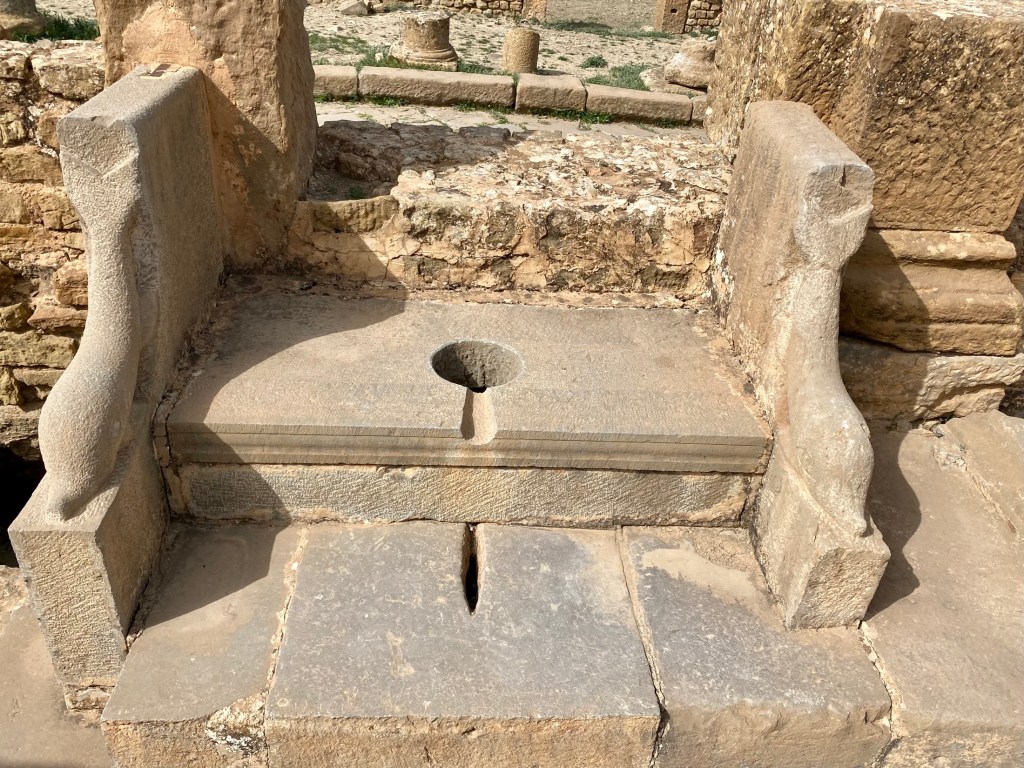
Timgad was founded as a military colony and was originally populated by veterans and colonists. Each was gifted a house along the main road. They also had a large library and a theater at their disposal for cultural enrichment. Cushy retirement, eh?
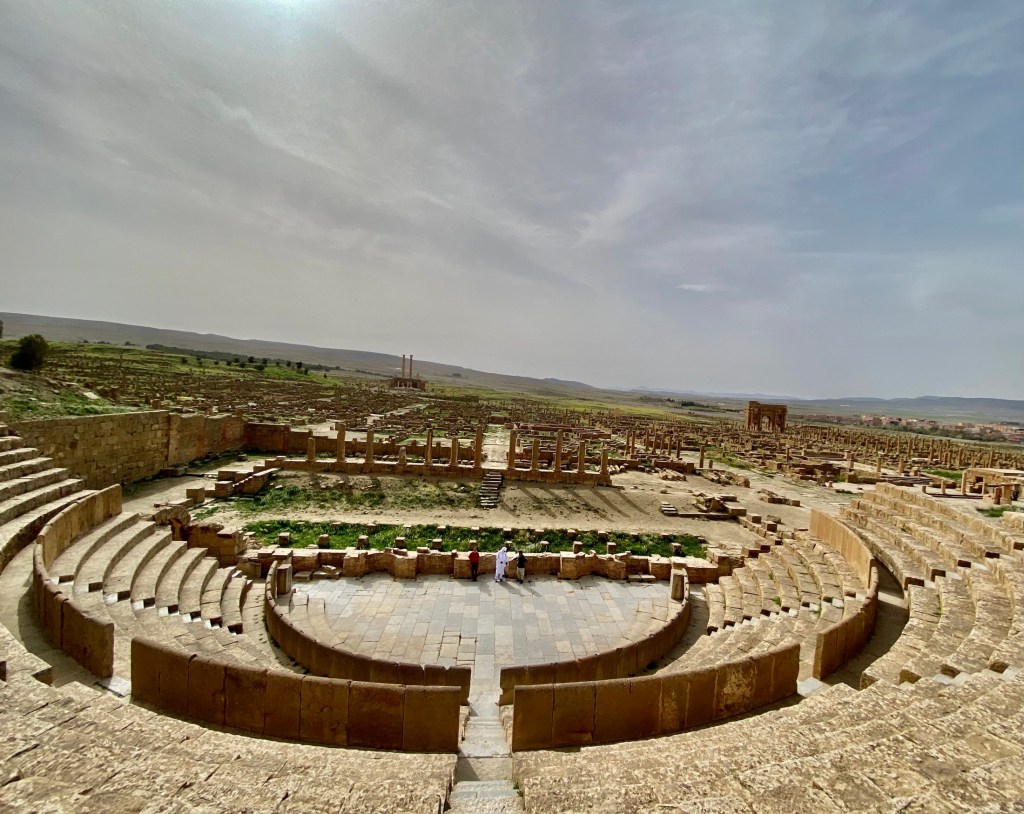
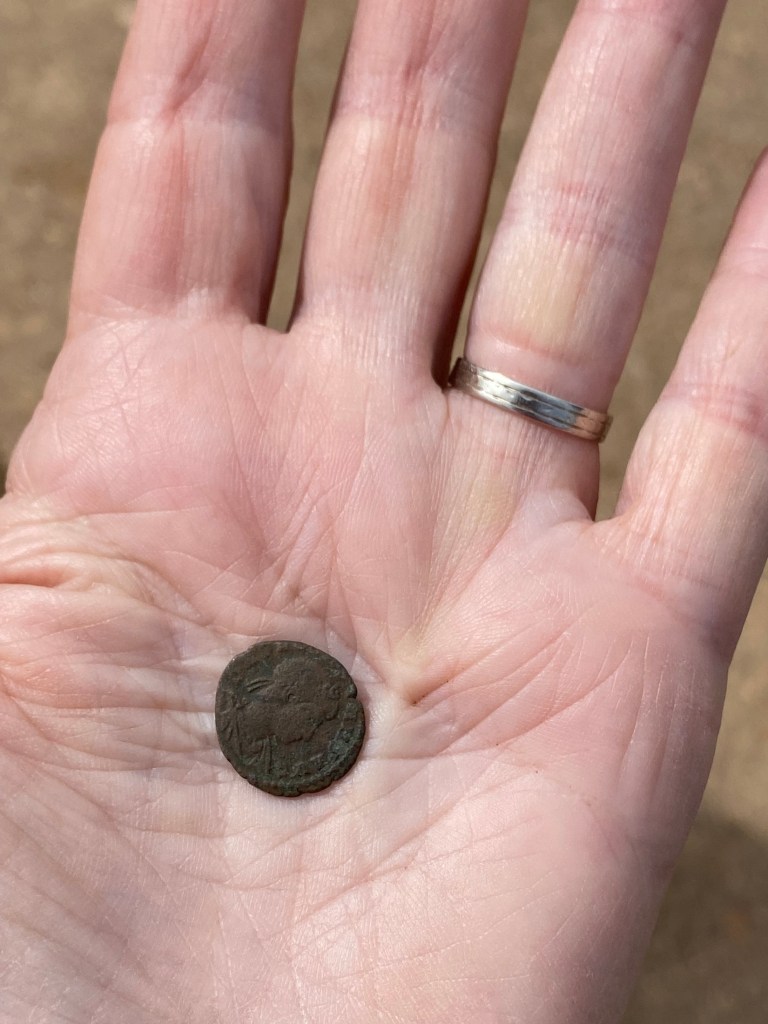
The theater and the city are so well preserved because after the Vandals sacked it and later on the Arab conquest finished the job it was simply forgotten. No plundering of its marble columns or building atop old roads and markets. When French archeologists started excavating they found huge expanses of Roman mosaics untouched, barely missing a single tesserae. These tiny squares were cut from different materials such as marble, tile, glass, smalto (glass paste), pottery, stone and even shells.
A museum was erected right at the entrance to the site with over 80 immense mosaics covering floors and walls.
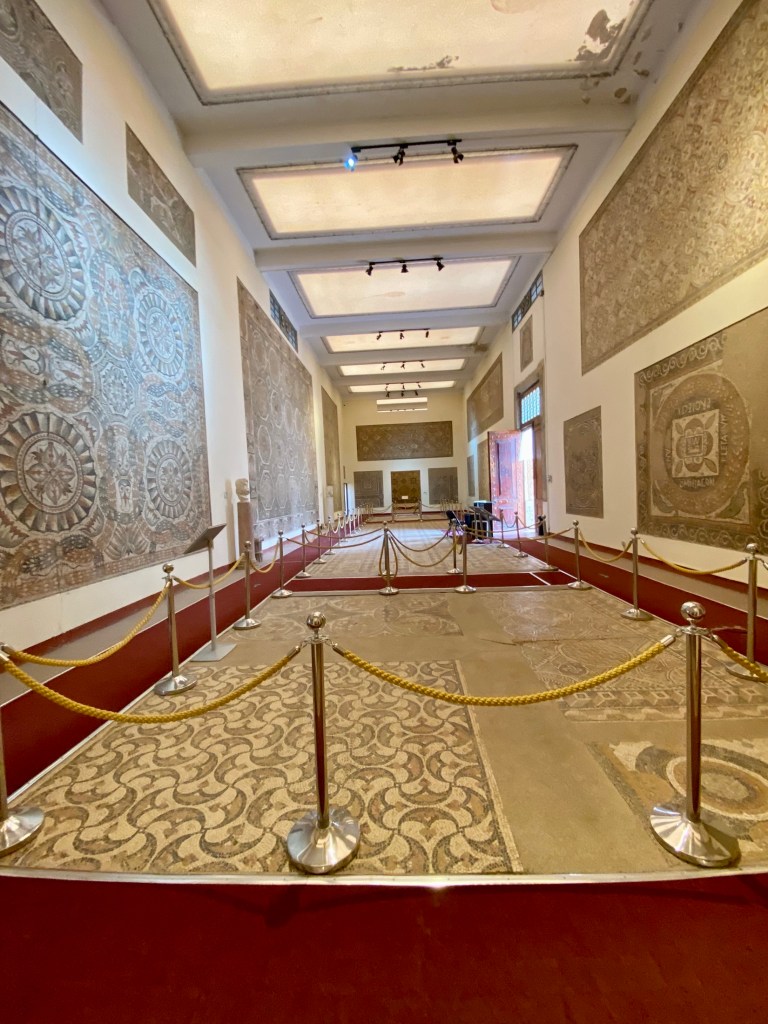
We usually think of floor mosaics but they also covered walls, though cheaper frescoes could replace them if one was thrifty.
From a simple bathroom mosaic in a private villa
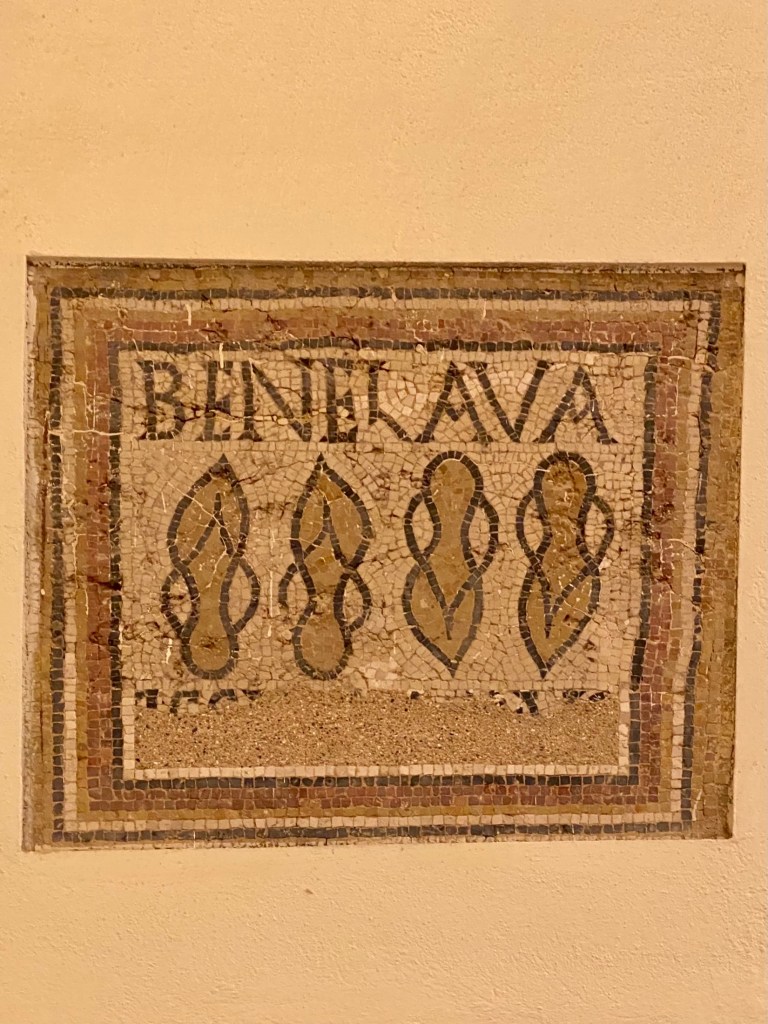

to a large piece with intricate scenes of sea gods and goddesses.
While Timgad was build in the Aures mountains as a bastion against the Berber tribes of the area the second Roman city we visited sits south of Algiers by the sea.
Tipaza (in ancient times a Roman colony Tipasa), is not as impressive as Timgad but as they say: location, location, location.
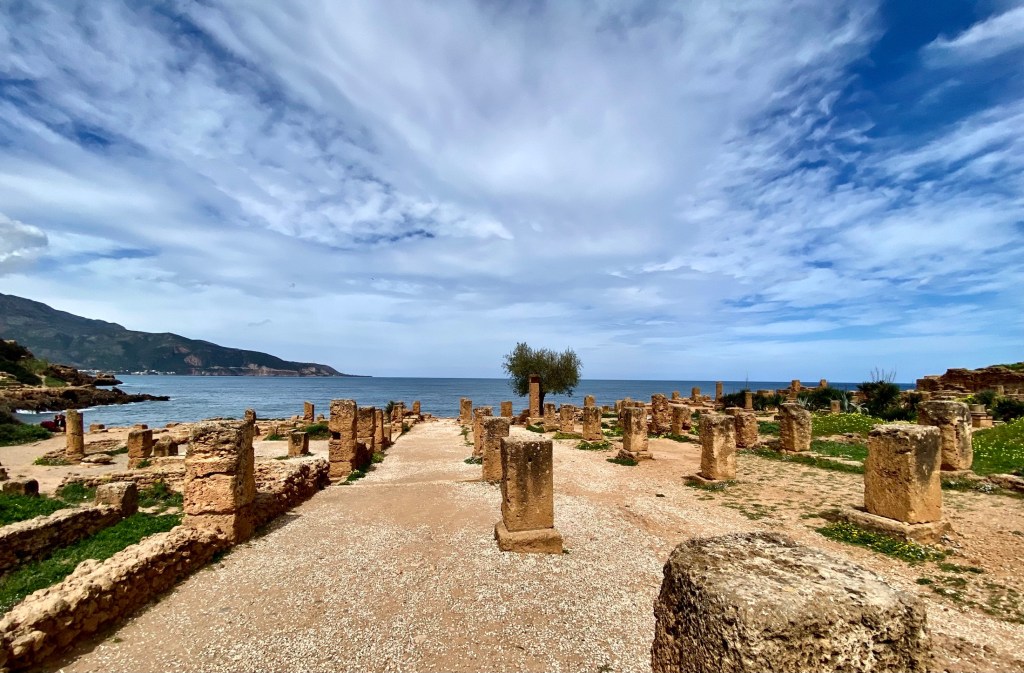
Who wouldn’t want a villa with a sea view?
Our guide here was very hands-on and showed us hidden secrets, ancient graves with human bones peeking through the soil and mosaics still waiting to be excavated.

Lots of ancient treasures lying around just like that ready for the picking.
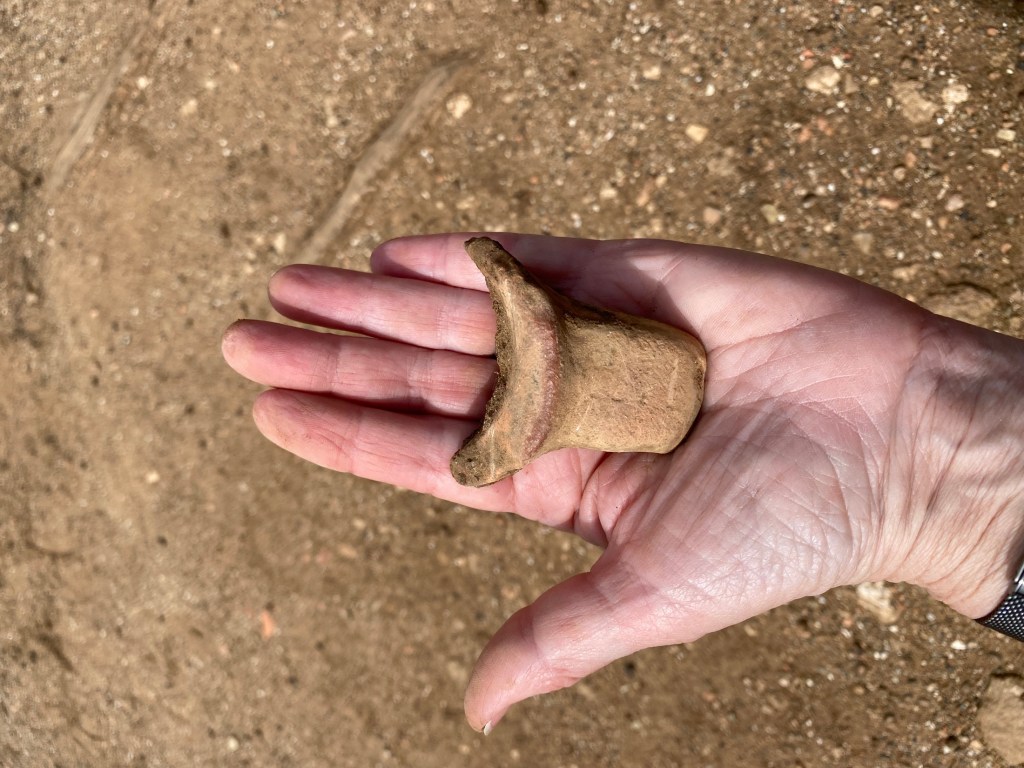
He was offering us a real Roman coin, but as tempted as we were, we didn’t take him upon it. Still, it was very cool to hold it in our hands.
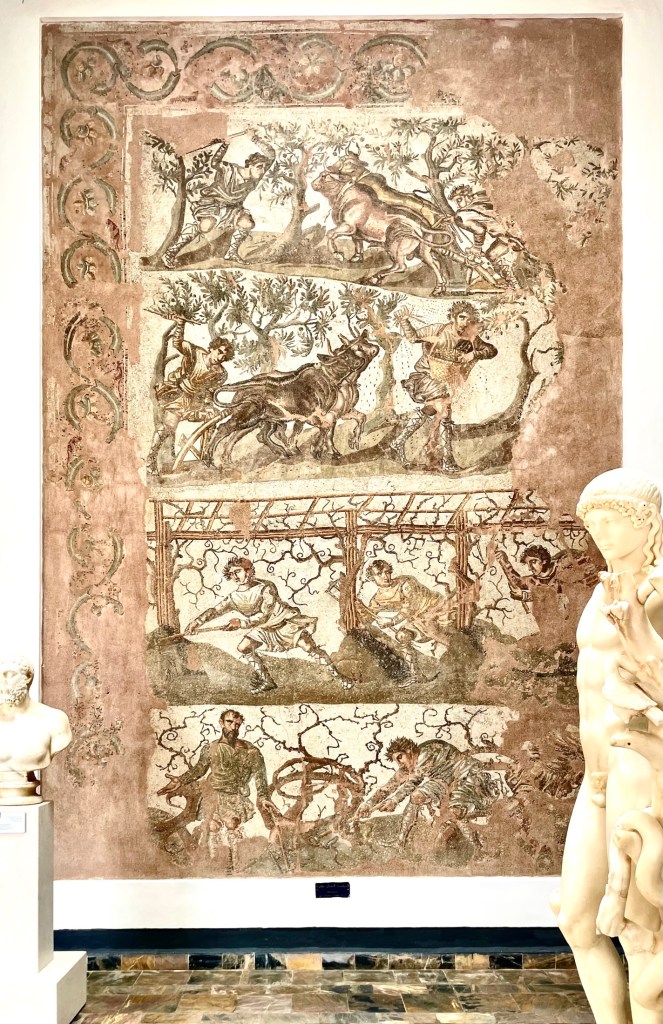
Another gorgeous museum full of mosaics and marble statues was waiting just for us in nearby Cherchell (Roman Caesarea Mauretania). The name of course is in honor of Caesar. The one, the Gaius Julius Caesar. Oh, oh, here we go again! Yes, you might be much more familiar with the Ceaserea in Judea, build by Herod the Great (close to modern day Tel Aviv in Israel).
And there are a whole bunch more including Caesarea Cappadocia, (now Turkish Kayseri) captured by Alexander the Great’s army in his fight with the Persians. Now don’t get me started on Alexander and all the places named after him. He very modestly named more than 70 cities after himself—and one after his horse.
The combo of mosaics and marble statues, one more perfect than the other, was just fabulous.

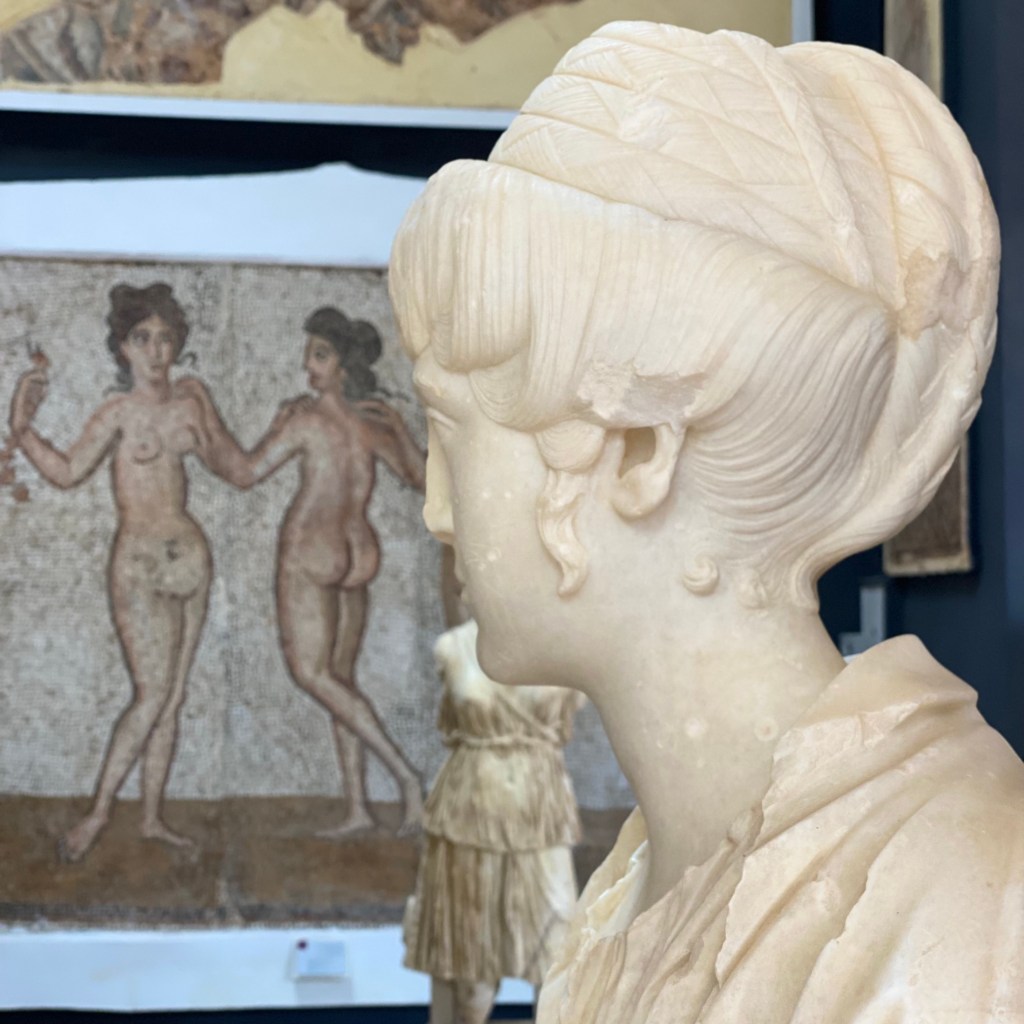
It is two busts I want your attention turned to. Remember Juba I? Good, here is his son Juba II.
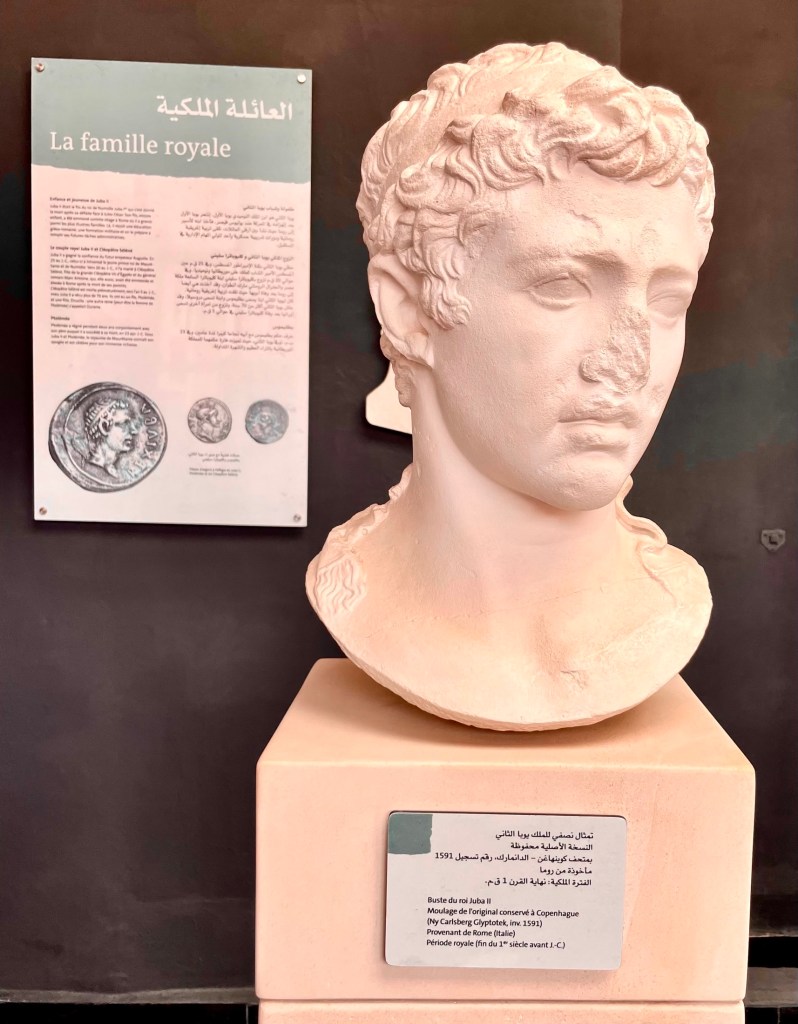
And possibly his wife Cleopatra Selene.

In good old Roman tradition names repeat itself as we have seen. So, whose daughter could this be? Exactly, the famous Cleopatra of Egypt! The last Queen of the Ptolemaic Kindgdom of Egypt.
Is it just me or do you also immediately think of Elizabeth Taylor at the first mention of Cleopatra?

Will you be able to forgive me if I shatter the myth of her sultry beauty? The Greek biographer Plutarch, writing about a century after Cleopatra’s death, came closer to the truth than dear Liz. “Her beauty was in itself not altogether incomparable’”, he wrote, “nor such as to strike those who saw her”, but he nonetheless credits her with an “irresistible charm”. Intelligent and talented, Cleopatra had a gift for making people feel they were the focus of her attention – and that quality, rather than her looks, was her winning trait with Caesar and Antony.
Did you know Cleopatra had a son Caeserion (Little Caesar) with Caesar and twins Cleopatra Selene and Alexander Helios plus a younger son Ptolemy Philadelphos with Mark Anthony. After the defeat by Octavian and consequent suicide of Cleopatra and Mark Antony Caesarion was quickly dispatched (=killed) on orders of Octavian. Octavian was adopted by Caesar and saw Caesarion as a dangerous rival. But he took the other three children with him to Rome and left them in care of his sister Octavia. Who also happened to be their biological father’s Mark Anhony’s wife.
Can you imagine? Thank you brother, like I don’t have enough trouble bringing up my own brats? And now you dump 3 extras and what’s more they are illegitimate bastard kids of my cheating husband! We have no clue what happened to the boys but Cleopatra Selene spend the next 5 years in the noble household on the Palatin Hill. And when she was 15…
Oh, wait, I have to first tell you about Juba II.
His father, Juba I, had been king of Numidia (in the Algerian region north of the Sahara), but had backed the loser in the civil war between Julius Caesar and Pompey the Great. Following Pompey’s defeat, Juba I had, like Cleopatra, died by suicide, and his kingdom, his treasure and his only progeny had all been confiscated by Rome. Like Cleopatra Selene, Juba had been put on display in a military procession: Julius Caesar’s Quadruple Triumph in 46 BC. He had been an infant at the time, and Caesar’s biographer Plutarch described him as “the happiest captive ever captured”.
He too was brought up on the Hill and flourished under the tutelage of Julius Caesar. He learned Greek and Roman and was granted Roman citizenship. Through dedication to his studies, he is said to have become one of Rome’s best educated citizens, and by age 20 he wrote one of his first works. After the murdrr of Caeser he was brought up by Octavian. He accompanied him on military campaigns.
I guess either Octavian was a great matchmaker or he saw a good opportunity to set up two orphans in faraway North Africa in a client state.
Whichever it was it worked out great for Cleopatra Selene and Juba I. They were an extraordinary and powerful couple that ruled together the Kingdom of Numidia and Mauretania building cities and encouraging art and science.
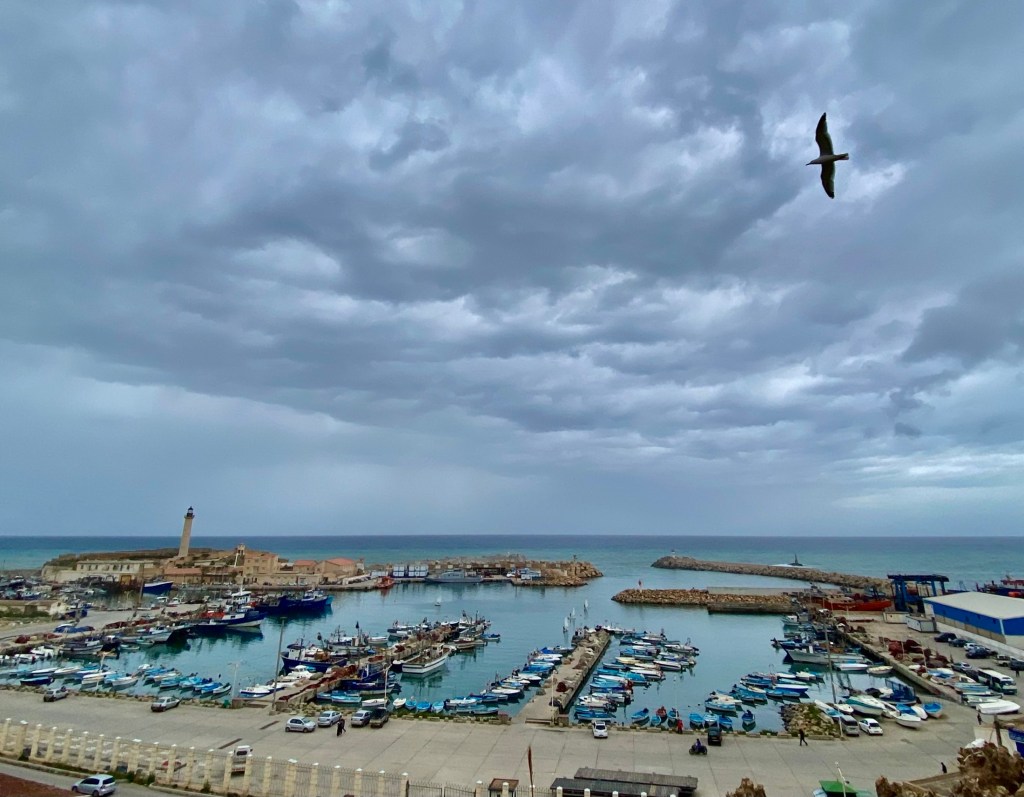
The couple had a son and successor, Ptolemy of Mauretania. Through their granddaughter Drussilla the Ptolemaic line intermarried into Roman nobility for many generations.

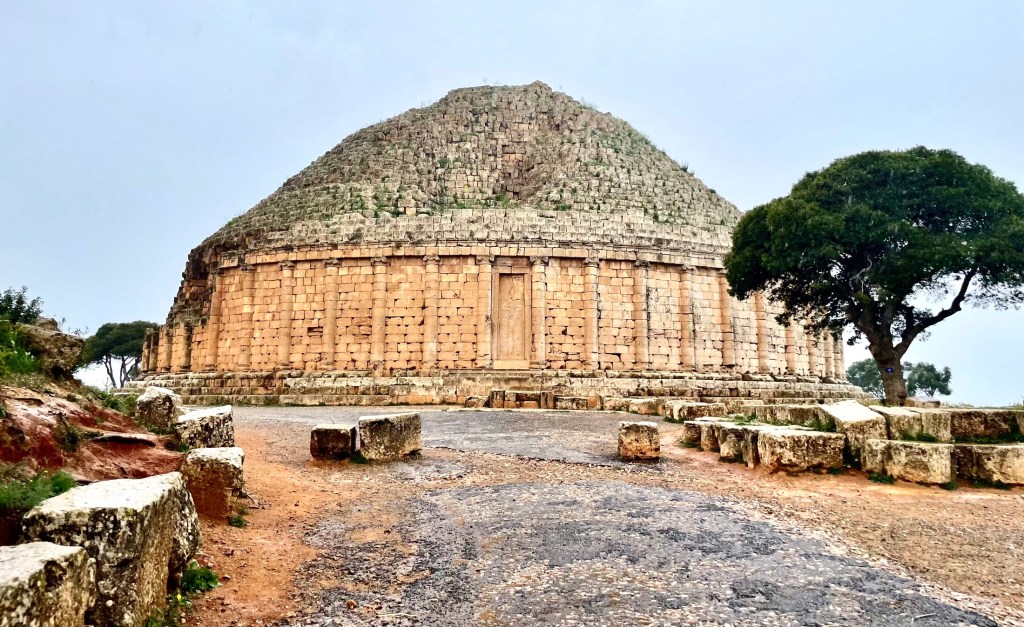
Sadly Cleopatra Selene died young and was placed in a special mausoleum very close to their flourishing city of Casearea. Juba II joined her there in his death.
Doesn’t history come to life when told through the stories of people? I was lucky to have had a fantastic history teacher in elementary school whose enthusiasm and storytelling was inspiring and infectious. To this day I love learning about history and people. Less about battles and wars, more about love and families.















































 Crazy Parents Travel