
You can plan your travel around interesting natural, historical, and artistic sites, but at the end of the day it is the local people that make or break your stay.
The most beautiful and impressive place can be significantly marred by unfriendly people (I am pointing at you Paris and Barcelona!) yet even a rather average locale can be elevated by welcoming and kind folk.

Luckily Algeria has nothing to fear. The local people we encountered were exceptionally friendly, welcoming and downright thrilled to see us. The few other travelers we met all mentioned in the very first exchanges how warm their reception was everywhere they went.

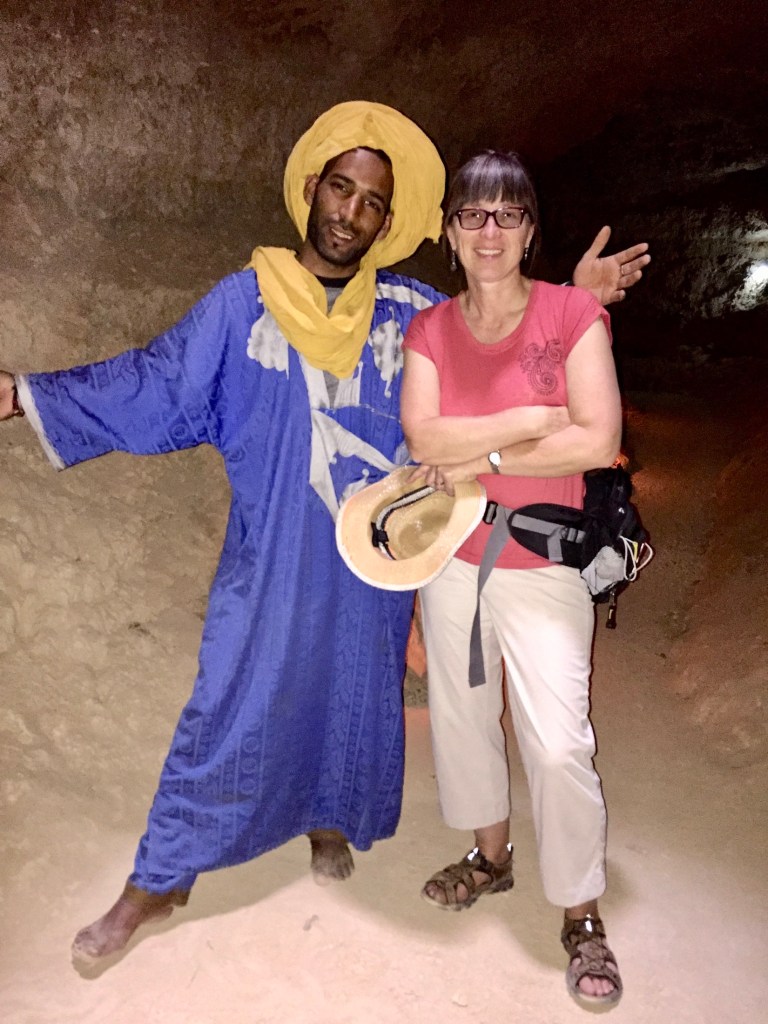
Our unfettered exposure to the local people was a bit curtailed as we were nearly always accompanied by Youssef, which cut a fine and tall figure in various colorful outfits that brought us extra attention in the coastal cities of the North.
Yet repeatedly people went out of their way to express their surprise and delight that we were visiting their homeland. Only Iranians could beat Algerians at the welcome game. There we felt like real celebrities every single day.


While random encounters and exchange of a few friendly sentences are so very pleasant, the advantage of having a local guide with an excellent command of English and willingness to engage in real cultural exchange, sharing opinions, and answering exceedingly more personal questions is very important. Only thus can one get a true insight and at least some level of deeper understanding?
Spending many hours in the car chatting together but also watching the interaction of our desert team taught us a lot about the Tuareg culture. While we were served our own meals, the team always ate from a communal bowl starting their meal with a thick soup.
We were even so lucky as to be invited to Youssef’s home to break the Ramadan feast with the family.
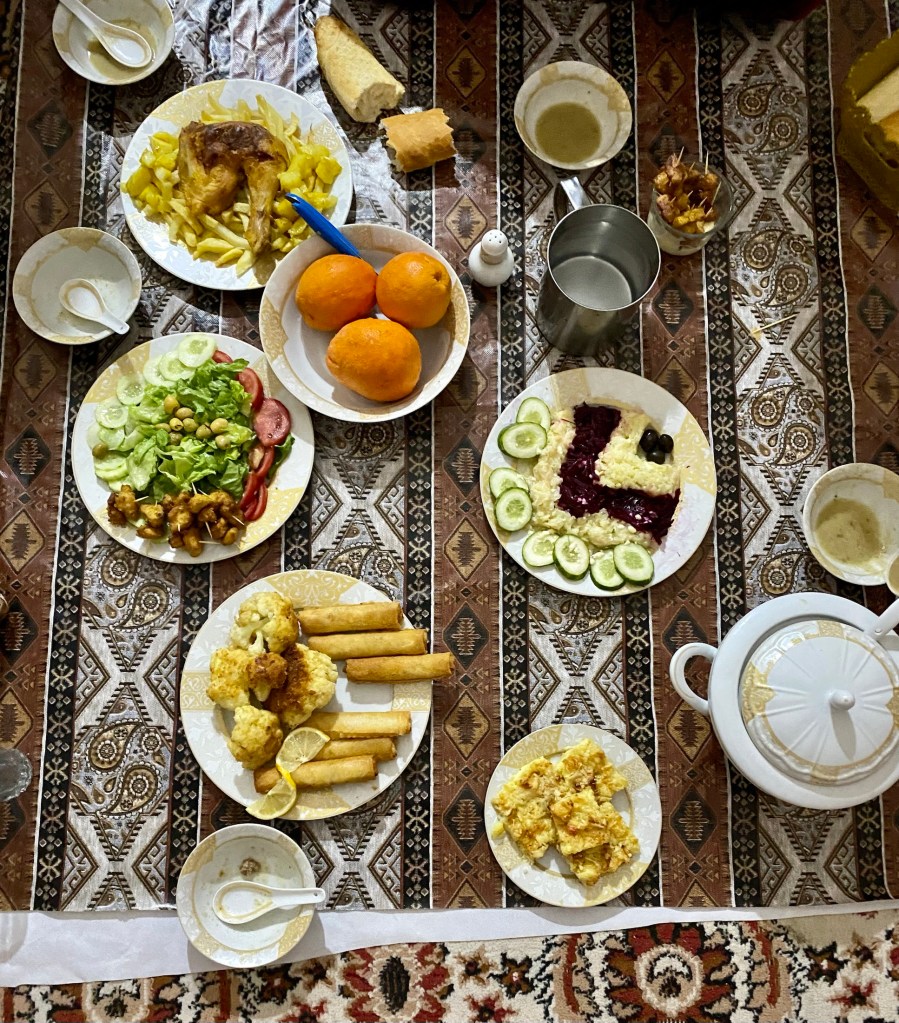
Ladies and gents eat separately in different rooms. Despite the limited language skills ladies always have more fun!

Pictures of children and grandchildren are shared. And designs on hennaed hands admired.

Interesting to note that children are not allowed to eat with adults but are relegated to dining in the kitchen. But a gaggle of giggly granddaughters was encouraged to show their school books and practice counting in English while finishing touches were put on the dinner dishes.

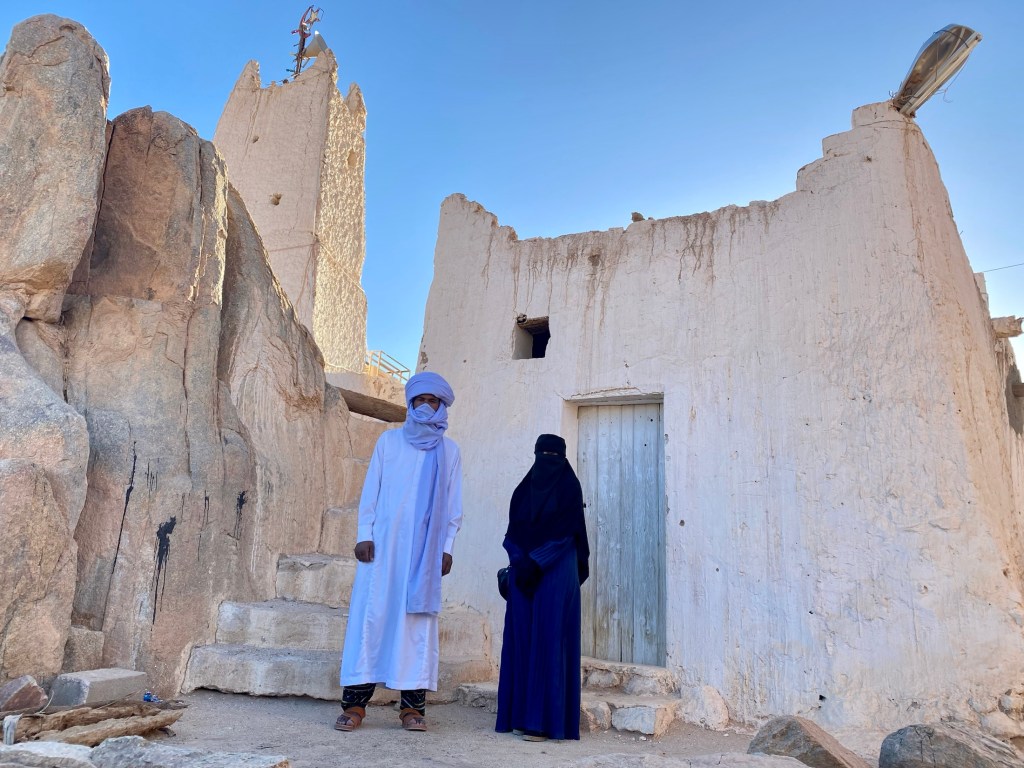
My translator for this occasion was Youssef’s cousin Zahra. Recently graduated from university with a law degree she surprised her cousin upon pick up when she showed up covered from head to toe. He was far from pleased as it is not a Tuareg tradition at all, but a new influence of strong conservative Islamic trends. As a matter of fact in Tuareg culture it is the men that veil their face and women don’t.

She was very excited to be out and about when we went to see an old ksar in her home city. Seems like she has never been there before.
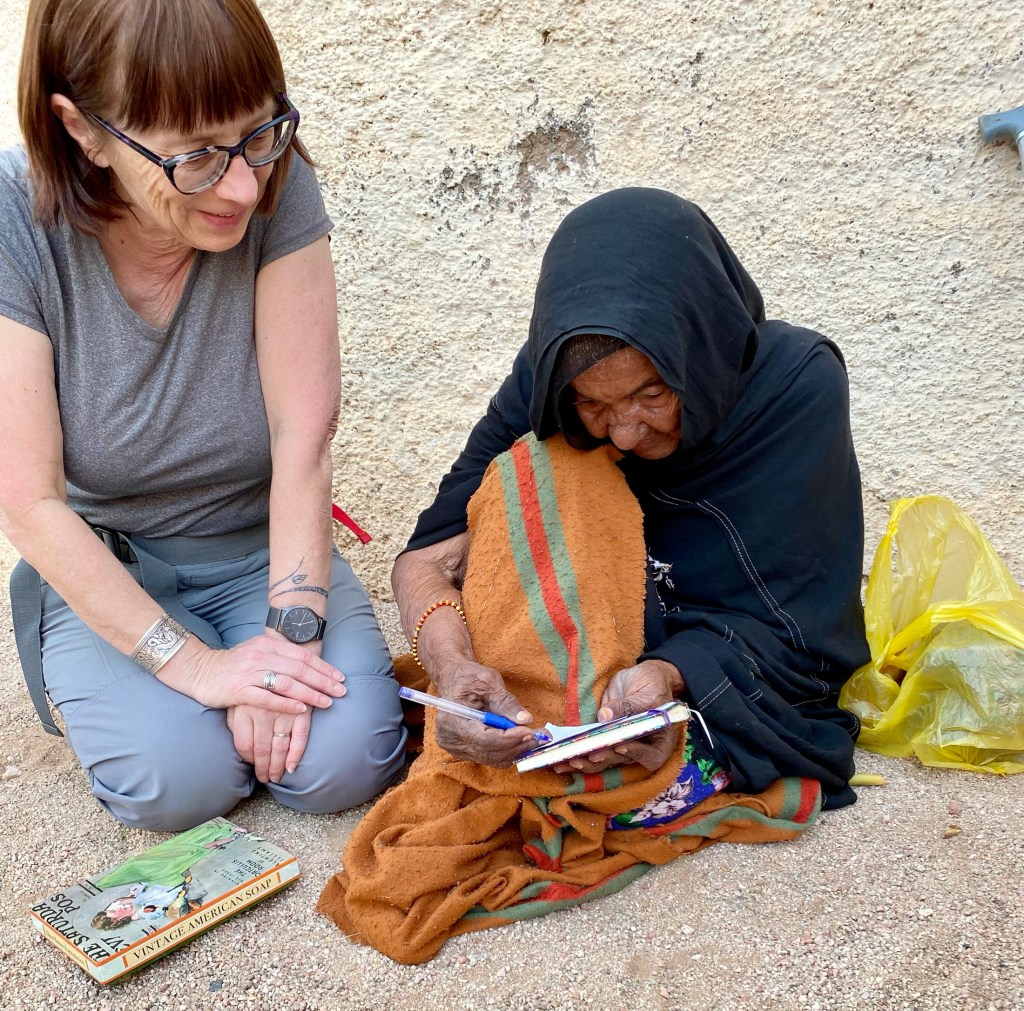
She was also excited to introduce me to her grandmother living across the street. It was sweet to see the close, loving relationship. The elders are still very respected in Tuareg culture, and they will always be taken care of in old age. Youssef also took us to visit his other grandma living in a compound of his uncle.
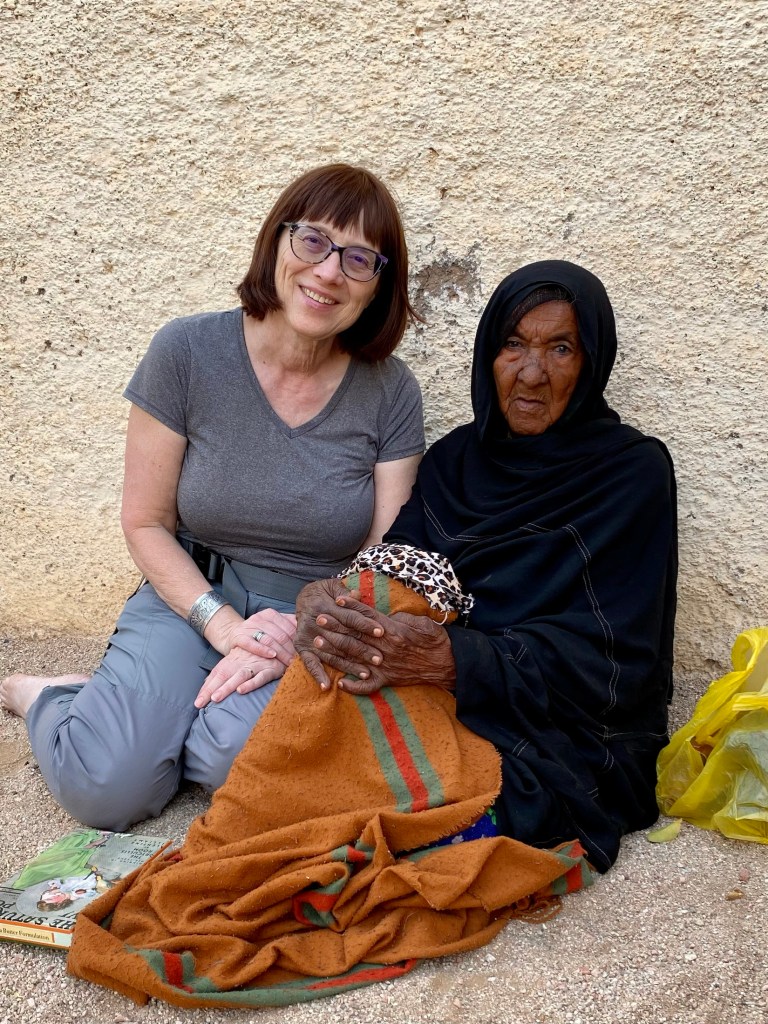
He was proud to tell us that she knows tifinagh, an old consonantal alphabet. We saw an older precursor to tifinagh carved on the walls of some desert rocks and were surprised that nobody could read it or decipher the inscriptions.
Who are the Tuareg? On a grand scale the Tuareg are semi-nomadic herders and traders living in Northern Mali, Niger, Burkina Faso, Libya, and Algeria.

They are descended from Berbers (=Amazigh), the indigenous population of North Africa and speak different dialects of a Berber language: Tamasheq.
The close cousins of Algerian Tuareg are Morrocan Berbers.
Though most Algerians are descendants of ancient Amazigh groups who mixed with various invading peoples, of whom Arabs had the most influence, only some one-fifth of the Algerians now consider themselves Amazigh.
There are 4 Amazigh subgroups in Algeria: Kabyle, Shawia, Mʾzabites and lastly the Tuaregs from the southern desert.
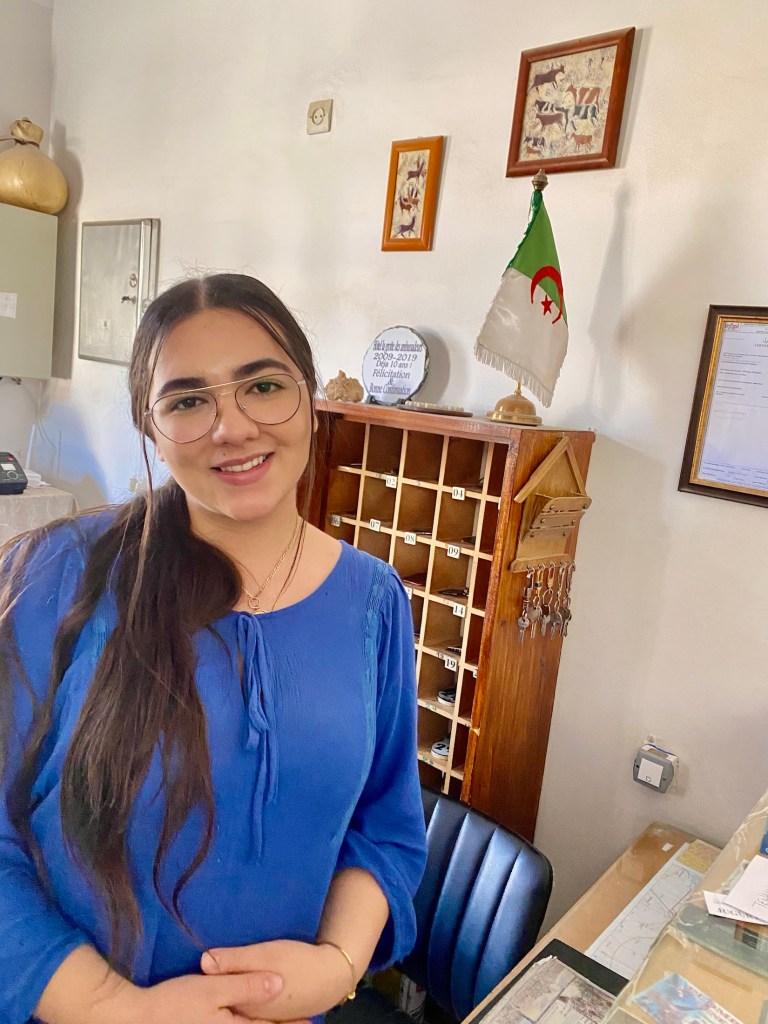
Incidentally the little hotel we stayed in (and gratefully showered in) in between our two forays into the desert was owned by a Kabyle family from the North of Algeria. The lovely daughter Celia (another young woman with a law degree) who often manned the reception was particularly helpful answering some of my more feminine cultural questions. Her English (and French and Arabic) was perfect and she did not shy away from any topic.
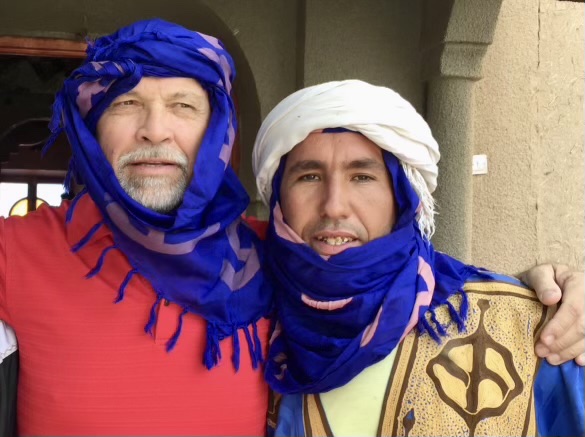
The Tuareg are also called the “blue men of the sahara” for their traditional blue tagelmust (veil and turban in one). The long and loose gown worn by the Tuareg and the tagelmust were once died blue with indigo and while swetting under the hot desert sun the blue color rubbed off the clothes and into the skin- hence blue men.
We spotted men in gowns and tagelmusts of different colors but alas most younger people now opt for jeans and T-shirts. More convenient and cheaper. Definitely not as charming and attractive.
How about the ladies Tuareg fashion? Well, you are in luck as I was treated to a special preview when we visited a remote Tuareg community in Tasili n’Ajjer area.

The ladies of the house, or I should rather say very very poor compound had a lot of fun dressing me up in a traditional costume. The kids were practically dumbstruck to see such sport (… and the dish ran away with the tea spoon).

I took advantage of the spectacle and had a few girls join me up on the center stage so we could get some lovely photos.
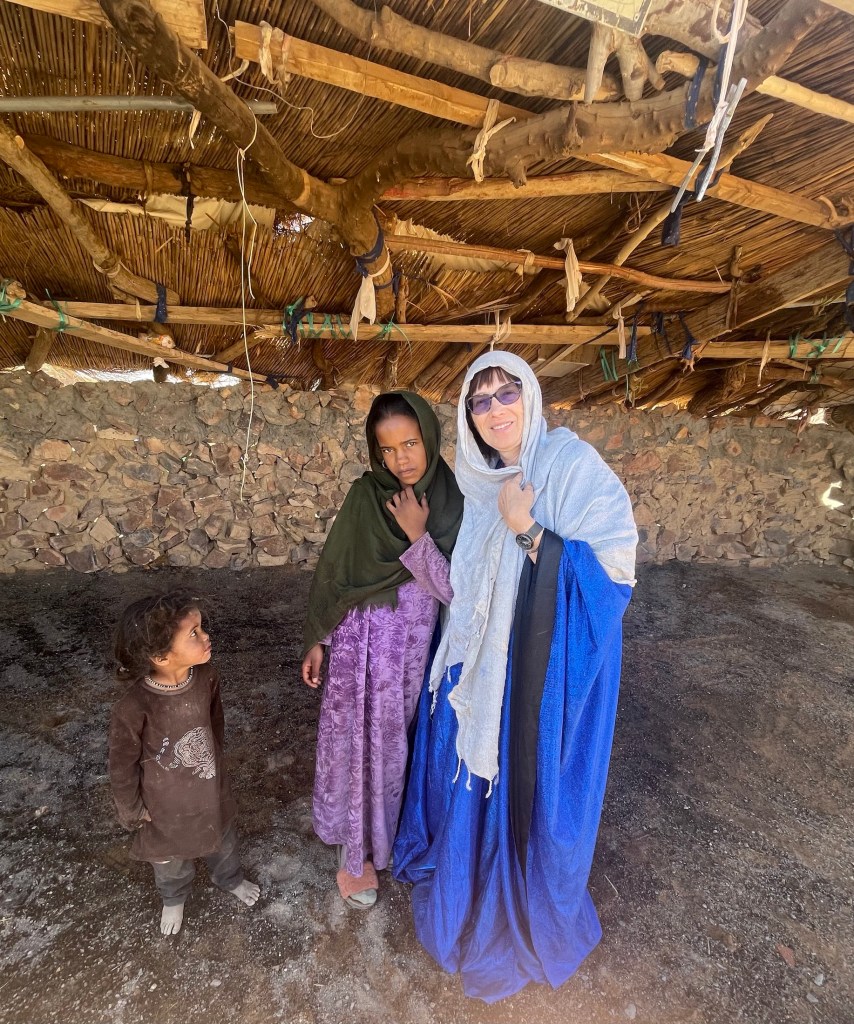
This very shy girl visiting the settlement from a nomadic family reminded me of the famous Nat Geo photo of the Afgani girl.

The children from this very poor community of former nomads were going to a nice newly built school.

But in the desert winter they were very cold so we fundraised (through http://www.lanternprojects.org) to bring them heaters for all the classrooms.

That night we camped in the rock outcrops outside of the village and in the morning one of the local men took us on a most rewarding hunt for secret rock art.

But first he introduced us to his family who was the only one still living in a traditional Tuareg tent. Two to be precise.
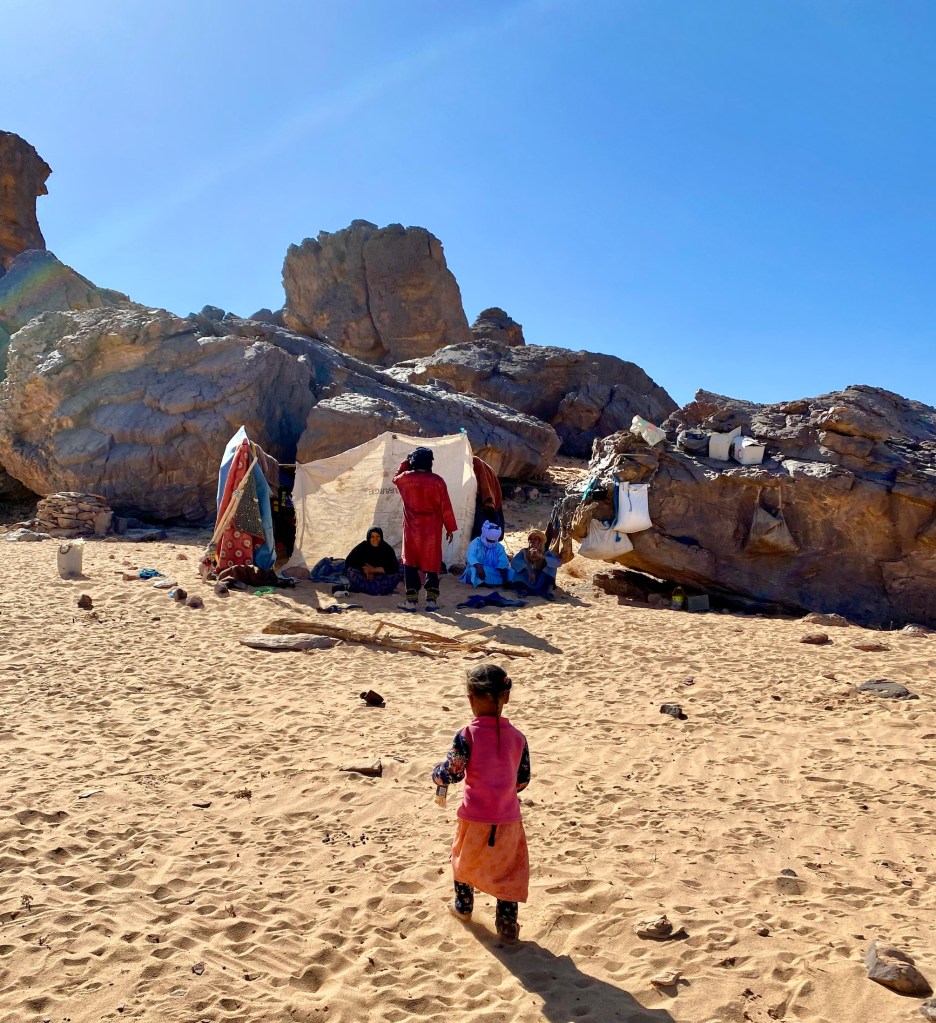

They were making a living as goat herders. With encouragement from the government, the rest of the families gave up their semi-nomadic life and struggle very much with no source of income.
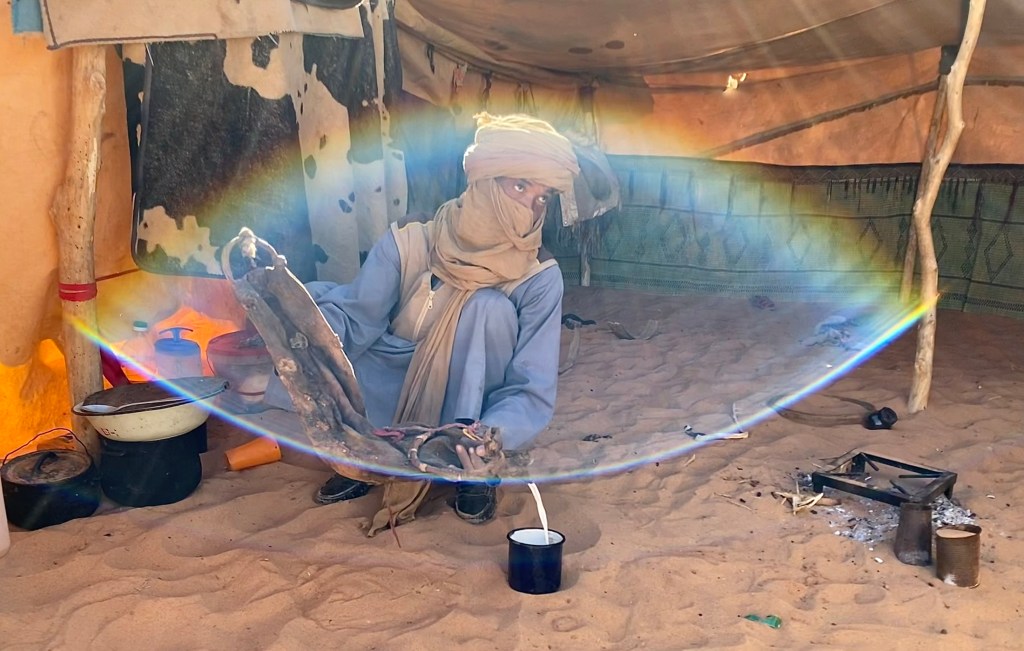
We were treated to an enthusiastic explanation and demonstration of different natural implements.
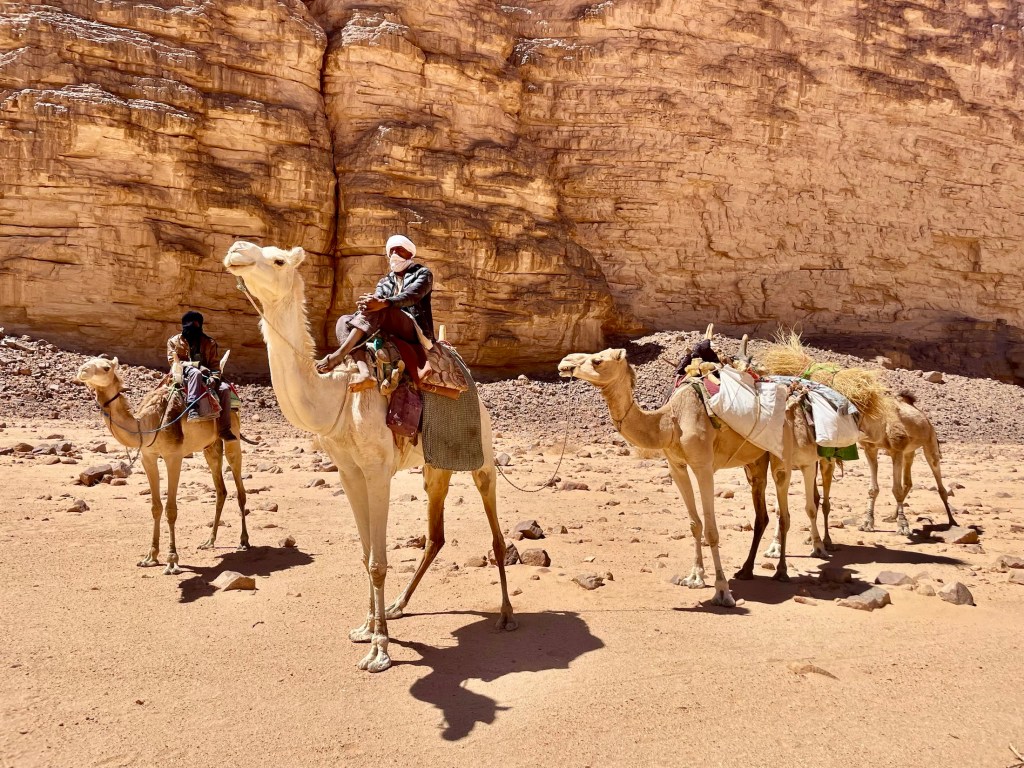
Knowing that most Tuaregs have long given up their nomadic ways this chance encounter with a few camelteers was very special.


Of course, Youssef knew them and had a little chat. They were bringing fodder back home for the animals.

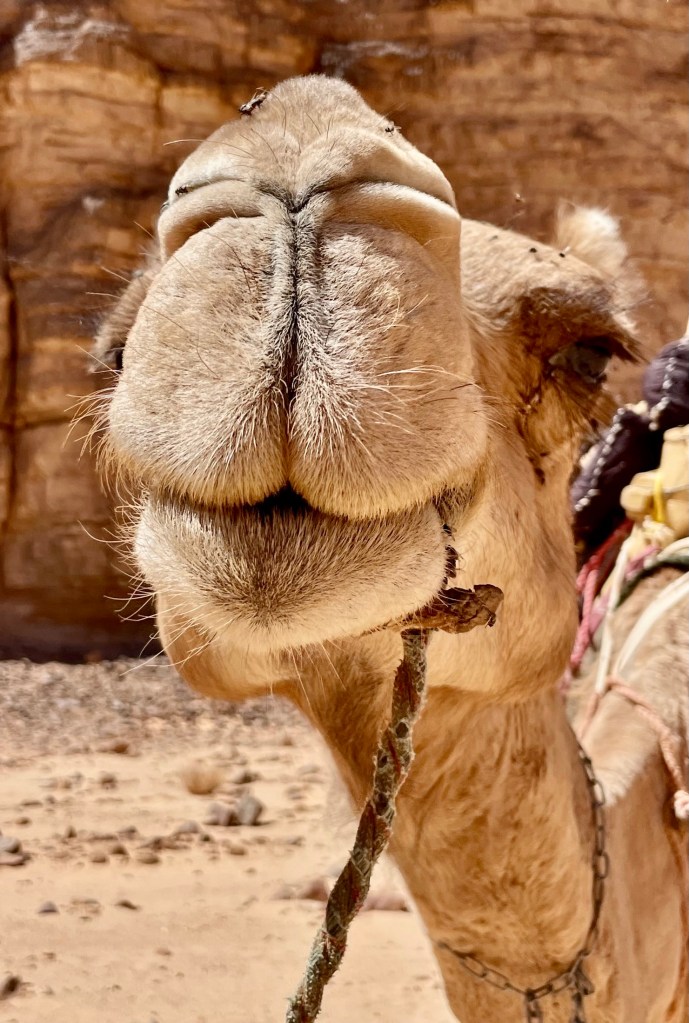
Soon after we were engulfed in a sea of goats. If not for the sunglasses we would be apt to believe we were teleported back a few thousand years.

Turned out the goats were being taken to market to Lybia for a good price was rumored to be had there.
But they lost their way.

After giving him directions

We pressed upon him some supplies and wished him luck.

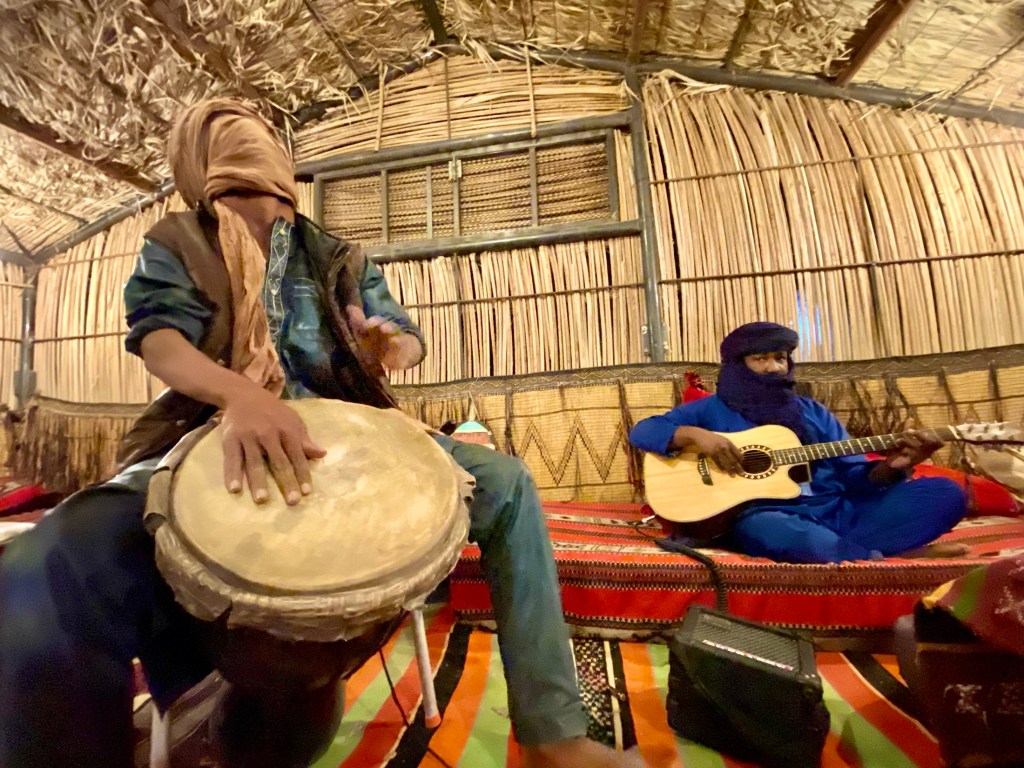
We would be remiss to not mention music as a big part of Tuareg culture. The original ancient tradition of music, poetry and dance continues and is celebrated in a ten day festival of Sebeiba in the little town of Djanet where we were based. The festival is held in the month of July, so we will have to return.

There is an everyday tradition of music being played after dinner and around the campfire. Many a young man picks up a guitar and learns to riff the Sahara blues or desert rock (also called tishoumaren or assouf) that first became popular in the 1970s. Every evening on our camping trip our cook Bubba would pick up his guitar and the rest of the crew would sing and clap along.
One evening at a goat barbeque in town we were even treated to a performance of a local Tuareg rock group.

Until we meet again!
 Crazy Parents Travel