Do do Kakadu

Easy to say, not exactly easy to do. We saved Kakadu National park for the very last part of our Australian adventure. It was the furthest out we could get in Australia and with our interest in native art in general and Aboriginal art in particular no other state could offer more than Northern Territory. So we decided to fly to the capital, Darwin despite the height of the monsoon season. After battling record floods in Queensland for the last few days, we figured it couldn’t be much worse.

Split Rock art near Laura, Queensland

On our way up through Australian East Coast we took every opportunity to learn and dig for information on this art and people behind it. Still, we only scratched the surface. General population does not seem to be highly interested in Aborigines or their art, no matter how politically incorrect this statement sounds. In cases when trying to be helpful, information on the rock art, location or access were not very reliable to say the least, qualified by seasonal factors as they are located in tropics. We stopped at every gallery we could find, but talking to dealers did not get us anywhere, as they seemed to want to protect their lucrative market sources, even as they seemed friendly in some cases, or openly less than friendly in some.

And Australian travel industry is a special chapter of its own. It looks like it is directed more towards mass tourism with pre-packaged tours and individual travelers like us are not very high on their priority list. To be honest we, as a couple are not very keen and adaptable to travel in large groups and let the “collectivist” nature of this industry mold our individualistic preferences related to how, when, where and with whom. The bathroom breaks for two are complicated enough, let alone waiting for thirty to go. Just as with food and booze in Australia, we found that the group tours very extremely expensive. They must pay those bus drivers and tour guides top dollars.  Then, there is a certain peculiarity related to Australian life style that also impacts travel services. Aussies, otherwise very cheerful, pleasant and helpful people, with their rather casual approach and high quality life style would rarely go an extra mile when in service, especially if they are not business owners, but employees only. And if you come to them outside of their paid working hours, you are on your own.

For example, when we burst through the door of the Darwin Information Center drenched in sweat from the short jog in 100% humidity ten minutes before the end of business hours at 3 pm on Saturday, we first had to climb over a chair placed inside the door. It was not there to catch the poor collapsing tourist, but to give a clear message and place an obstacle. Hopefully the bloody tourist will break a leg and an ambulance will take him away before he reaches the counter.  After you manage to get over this first line of defense into a huge, cavernous and totally empty space (with freezing air conditioning- maybe the poor sweaty sod will get a stroke or at least a pneumonia) be prepared to face the “welcoming committee”. Seeing our chair climbing success the government tourist worker launched herself with astounding agility and intercepted us halfway, preventing us from getting even and inch closer to the info desk with introductory remarks,

“We are closing in exactly two minutes. So do not expect more than an answer to one simple question!” No kidding!

At the reception desk of one of the well known galleries of aboriginal arts where we inquired on location and accessibility of rock paintings or seeing indigenous artists at work, we got the following recommendation:

“You know what, it would be better if you drive ther(about 200 miles away) and ask there what you can see and if they are accessible. They should know better! And by the way our art collection is probably much better! Or try the museum.”

So we followed the advice and drove to the Museum and Art Gallery of the Northern Territory. With a few hours still safely before the closing time we were welcomed kindly and informed that all the Aboriginal art galleries in the museum have been closed for renovation, but we were welcome to see the cyclone exhibits for free. If we really insist on art there is an old catalog available in the gift store for 50 bucks.

So we drove to the Kakadu National park 3.5 hours away and stopped at the Visitor’s center. After wandering around for 20 minutes in the deserted halls and gifts center we finally found a khaki clad guy, whose first concern was—Did we purchase the 7 day National park pass yet?

“No, we didn’t and we only plan to stay two days.”

“There are no 2 day passes. But this pass gives you the right to walk in the park and use any of the tours.”

“You mean free ranger tours?”

“Oh, no, we have no free ranger tours now, we are out of the season.”

“OK, then, are there any paid guided tours available? We are very interested in the rock art.”

“Um, yes, there is one, but they only go on Wednesdays and Sundays.”

“Oh, good, lucky us. It is Sunday today.”

“Ya, well, that tour already left. You can wait till Wednesday, you have just purchased a 7 day pass.”

We then spot a poster advertising sightseeing flights. Our eyes light up.

“Are there any sightseeing flights in the area? We are very interested in taking one of them today or tomorrow.”

“I don’t know when they fly but here is their brochure.”

“Sorry, sir, but there is no detailed information here. “

“You are just going to have to call them then,” he suggested.

“There is no phone number listed…”

Reluctantly he then walked to the back and after awhile returned with the number on a yellow sticky pad. We tried dialing it a few times with no success.

“Sorry, sir, but this is an Australian 800 number and our US cell phone would not connect. Would you be so kind to call them? We will take any flight, any time for any price!”

He turned back to the inner office sanctum and came back with another yellow sticky pad. On it was a magic number— 2:30.

“Nothing today. There might be a flight tomorrow at 2:30 in the afternoon, but you have to call them today at 4:30 to check with them again.”

In spite of those obstacles, and thanks to the dogged perseverance of my fellow traveler and wife, we succeeded and saw more than you would have guessed and those two days made Australia such an extra great place to visit.

Kakadu National Park was established only in the late 1970. Wikipedia informs us that it is the the size of Slovenija or half of Switzerland and there are only two sealed roads to take you in: The Arnhem Highway from Darwin and Kakadu Highway from Australian interior, the rest are 4W drive tracks, often flooded.

When we left Darwin on a surprisingly sunny Sunday morning in our little Kia we did not know much, but we had high hopes and a full tank. We learned our lesson when we nearly got stranded looking for the above depicted less well known rock paintings in Laura, Queensland. We limped into a one-handle-only pump station with the empty tank screaming in alarm.

As we turned on the Arnhem Highway we saw what we were going to face. A vast wetland of the Alligator Rivers swollen by monsoons of rainy season, not another car in sight. Why Alligator Rivers? Well, the English gentleman who first mapped the Northern Territory shoreline noticed that the mouths of the river estuaries were infested by animals looking like alligators he saw shortly before on another assignment in Florida. And the mistake was born. Instead of Crocodile River, he named it Alligator River and as he discovered multiple versions of the one, he conveniently named them South, East and West Alligator Rivers! Not very innovative and wrong, but it stuck for good!

So what are we going to do to stay safe from the crocodiles?

Let us make a serious plan and follow it. First, where we can drive, we WILL drive. If we cannot drive any further? Then we WILL walk. If we cannot walk any further? Then we WILL get on a boat. And if we cannot get there by car, by foot or by boat? No problem, my friends! We WILL fly!

We knew there were three locations with aboriginal rock paintings, but only one could be reached in the middle of the wet season.

It is called Nourlangie Rock. And it was worth hiking there despite 100% humidity and 34C (90F) with bloody Aussie flies annoyingly air raiding our sweat soaked bodies. Even as the access to the painted rock outcrops was well signed, not a drop of water nor air-conditioning was provided!!!

Ancient rock art is like modern art. It is open to interpretation. You bring to it your own ideas, you see what you want to see. Some guidance by aboriginal elders is provided, but only some. This may be a creation story, a hunting experience or some other aspect of life. There are many layers from different times painted over. If you were not there when the painting was done, it is hard to know what the story really was. As the traditional owners say: Some rock stories are not for everyone to know, some rock art is sacred and not for everyone to see.
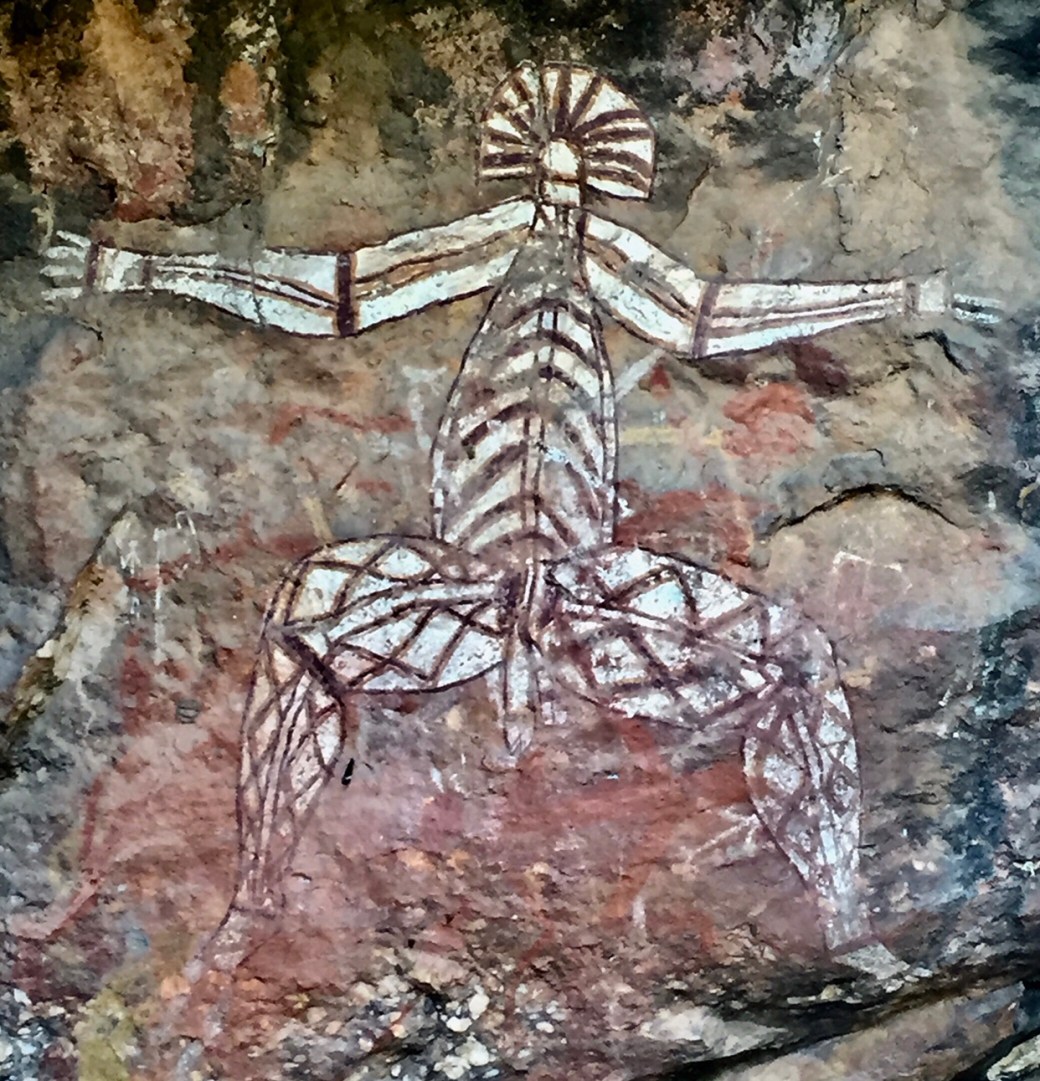
The dangerous spirit Nabulwinjbulwinj who eats females after striking them with a yam. Apparently neither political correctness nor feminism were highly popular among aboriginal artists some five thousand years ago! By the way, pronounce the spirit name Nar-bull-win-bull-win!

Full of artistic impressions and considering the lack of other targets we could walk to, what would be the next item on our plan? If you cannot walk, get on the boat!

We drove a few miles down the Kakadu Highway where Cooinda Lodge lies on the South Alligator River Bank. The decision is made hastily after a short discussion between this expedition participants: Let’s try to get a room and if it works out, they may have a boat to show us the crocodiles of the Alligator River! The fast and shockingly multitasking young South African receptionist helps arrange both in a matter of minutes and we run to catch the nearly empty boat.
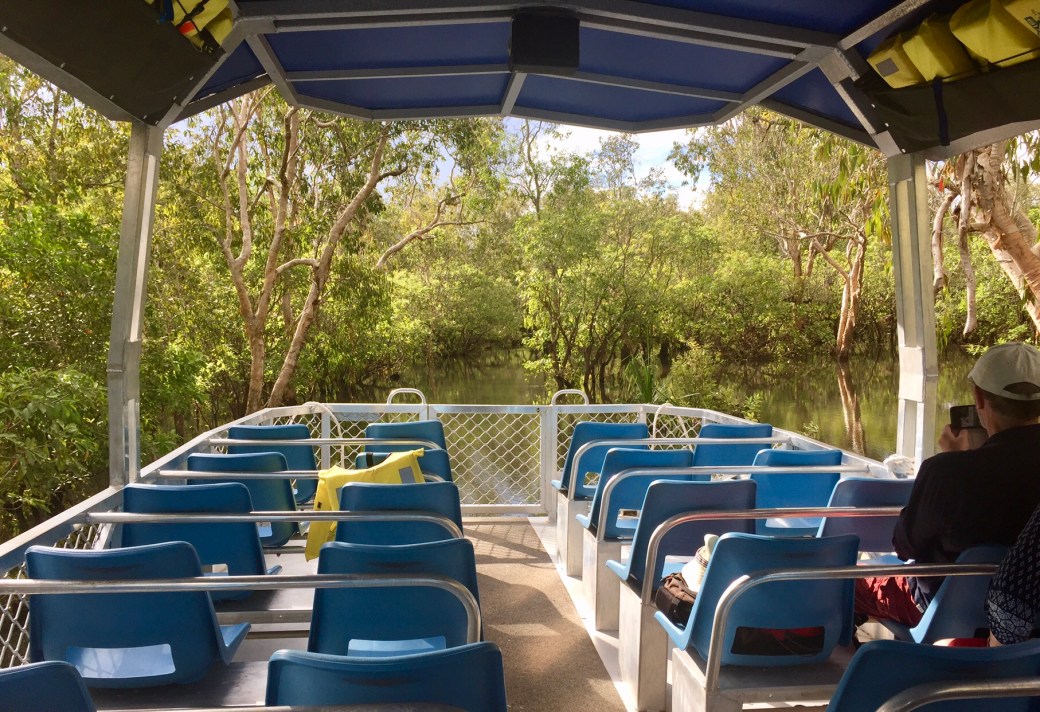
She has walkie talked our last minute arrival and as soon as we jump on board we go towards the sunset and the maze of channels, billabongs, swamps and river arms.
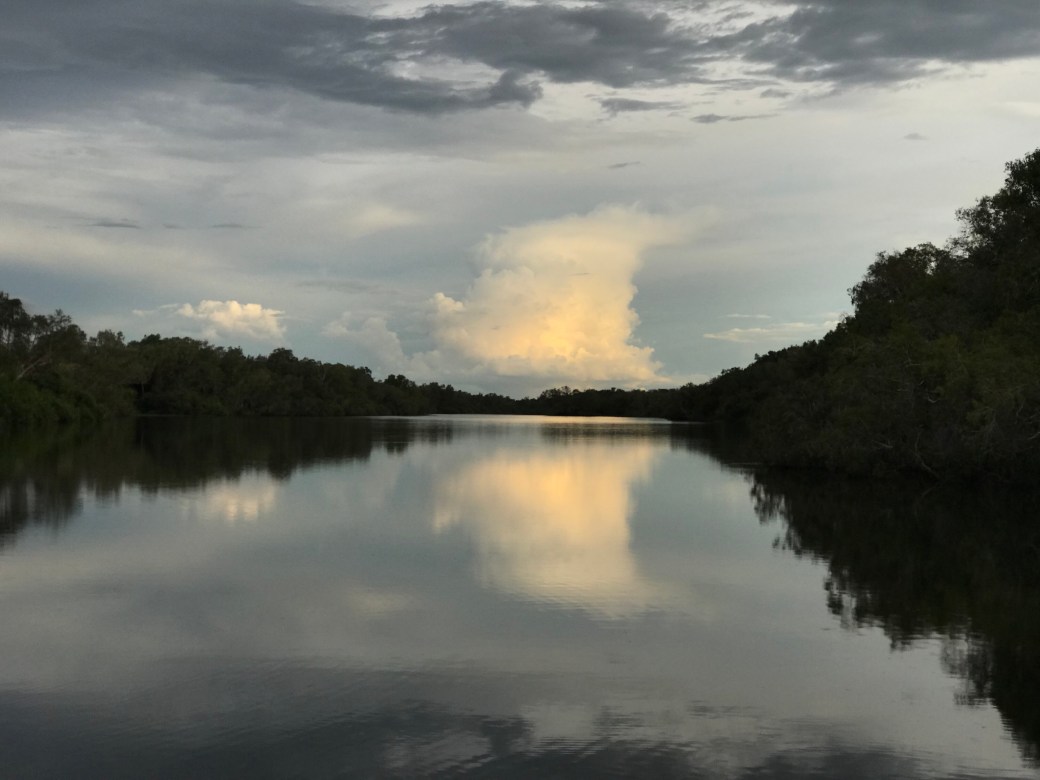
Just beyond the peak of the rainy season the wetland still has plenty of water with waterways lined by paperbark trees
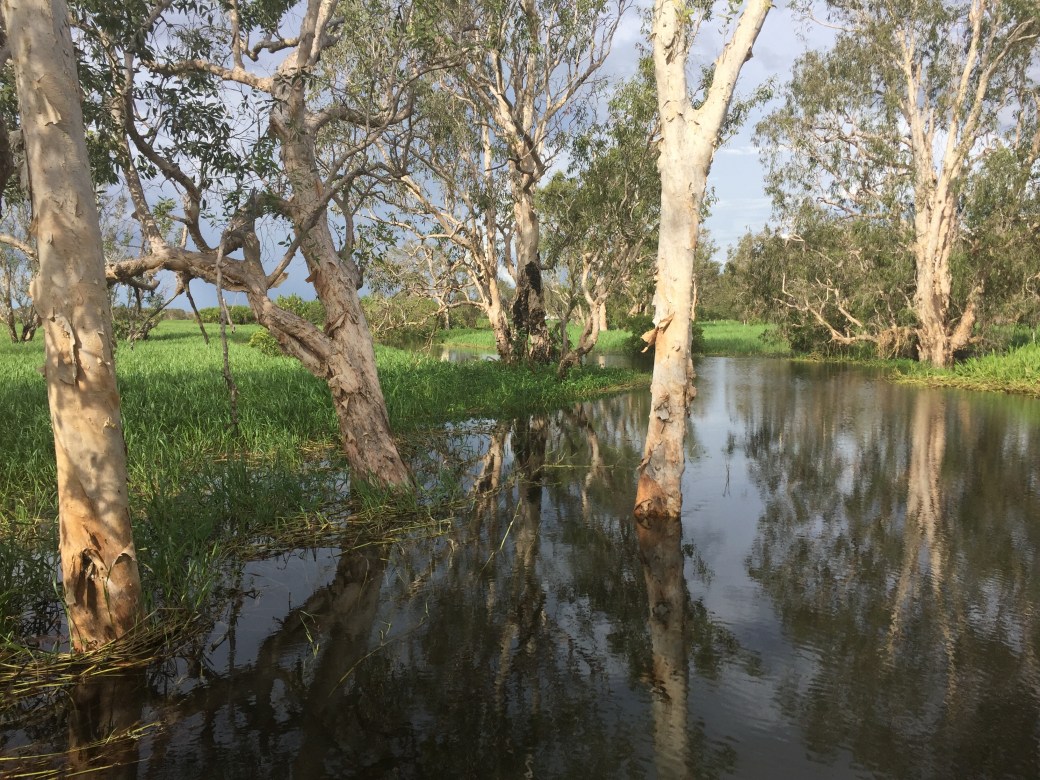
we can occasionally touch with our fingers when we forget the skipper’s warnings not to have any appendages sticking over the edge.

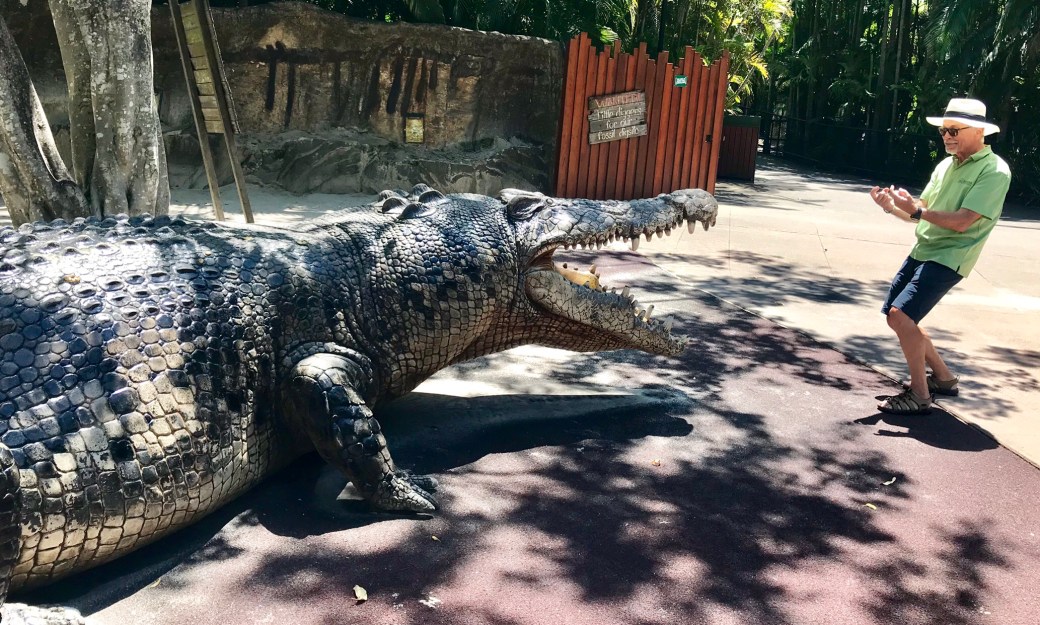
We see the first croc immediately, but he goes under quickly. The next does not leave us waiting for too long. A female by our skipper’s educated guess because of her size of about  2.5m (8-9feet). Male crocs are much larger, on average 4m (13-14feet). It comes with warning not to lean too much over the boat railing as the crocs can jump above the river surface for the full length of their bodies and snap up any part of your body if not all of YOU. This female, contrary to our first crocodile is not shy and cruises around our boat for good ten minutes before we decide to move on and leave her in peace. We are told it is time for the crocks to look for mates.

With the croc off everyone’s bucket list we can enjoy the rest of our ride watching different birds from about 250 species living in wetland, many of them coming from remote places like Siberia, Japan, Korea or China. We are not avid bird watchers, but it is fun to see some unusual ones like glittery kingfishers and especially the fragile looking jacana (called Jesus bird for its ability to walk on the water).

We find a male jacana taking gentle care of his three mini sized youngsters. When the skipper explains the arrangement that the female jacana has of laying eggs and then letting the male incubate her offspring while she goes off to find another guy and repeat the cycle, one of the young men on the boat jokingly comments, “What a slut!”
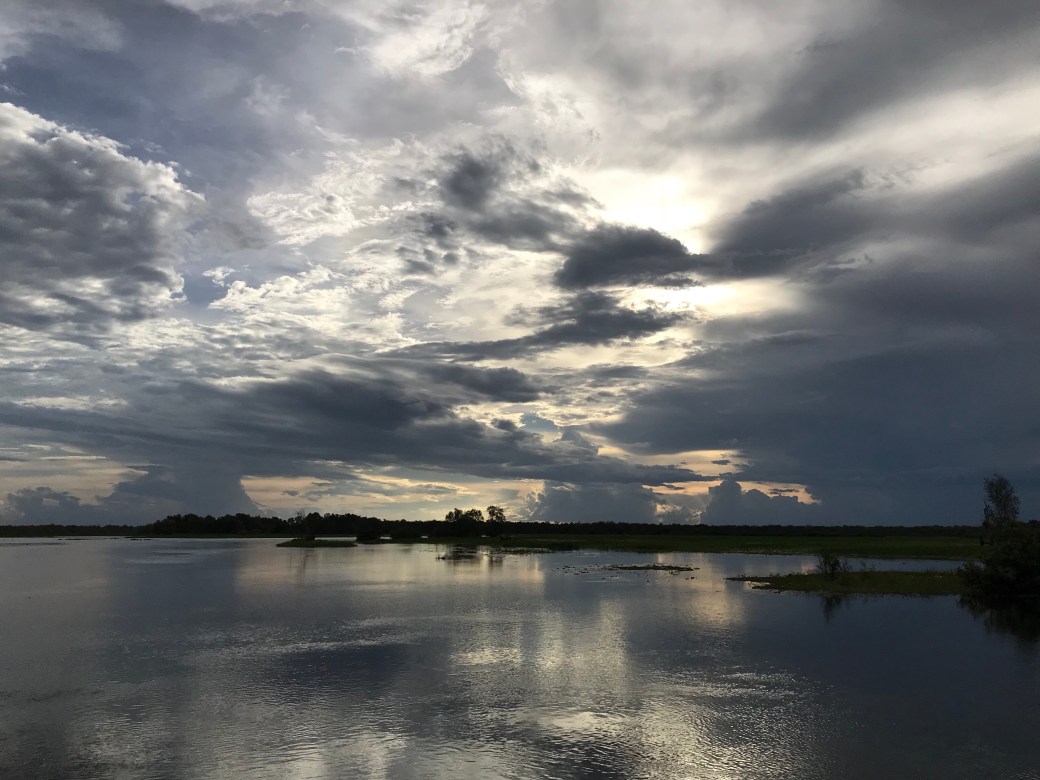
The evening sky with heavy rain clouds is dramatic and the ride back is pleasant with temperature dropping. While pretty tired after an exciting day we decide on the spot to return back for a sunrise boat ride. And in excitement with our good progress we decide to also book a flight over both wetland and Arnhem Escarpment to see places completely cut off during the rainy season.

Tropical night comes fast and it is pitch dark night when we finally get into our Room number 9 and drop dead into our beds. Thank you whoever invented air conditioning.

The morning welcomes us with grey overcast skies, splashing some cold water on our yesterday’s feelings of elation, but what the heck, we’ll see. And here we go again. Big white breasted Sea eagles building a nest. “Eat your heart out, National Geographic,” yells our morning skipper. Then a flock of magpie geese, (roasted on hot coals, a delicacy of my Aboriginal family, says the skipper), and white cockatoos and even black ones. A yellow snake, another crocodile, all a bonus for us. The morning sun plays with the clouds, a misty rain falls down and a beautiful rainbow appears over the wild rice expanse. Just before we reach our landing pier the weather gets worse and rain pours on us as we run towards our room.
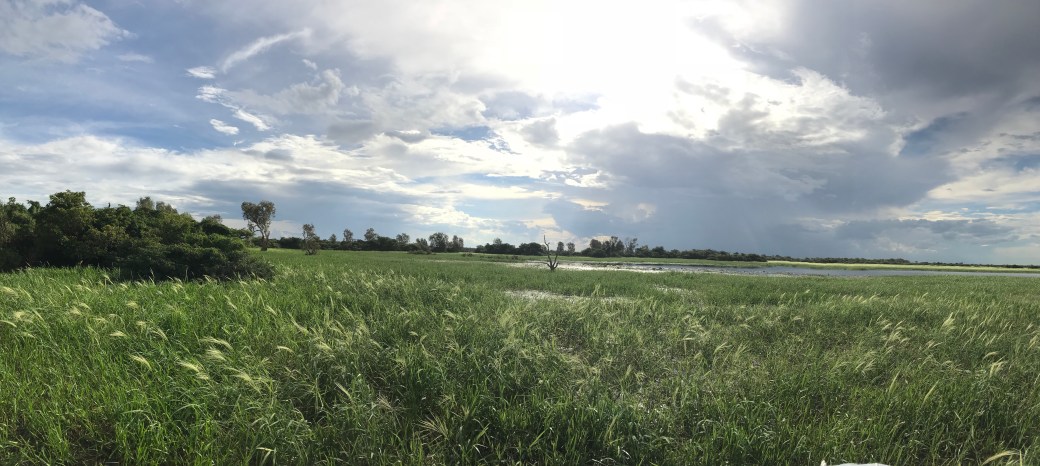
Well, nothing lasts forever, specially not in the wetlands! By noon, the sun is back and we optimistically welcome our pilot Jacob as he arrives to the lodge to pick us up bearing more good news. The weather has been improving, and with spotty showers our flight should be very interesting AND we are the only passengers in his 8-seater!!! It may be one hour early but there is nobody to wait for, so we jump into his van for a short ride to the landing strip where his plane waits for us.

Everything is very informal, he checks only our weight, short introduction about our plane and souvenir bags (called souvenir bags, because if you barf in them, you have to take them home as a souvenir) and we are in the air…

I can hardly believe how short can one hour be! After quick zigzag into elevation safely from the wetlands barely above the sea level our pilot takes us straight to the biggest 4 waterfalls dropping from the Arnhem Land Plateau.  He circles 2-3 times over each and they are all spectacular.

Full of white roaring water tumbling down the magnificent red rocks. A reverse view, instead of craning our necks looking upwards from the base as we have done so often in New Zealand, Tasmania and Queensland, we are now looking down.  And they are all ours. The biggest of all,  Jim Jim Falls is inaccessible by land till the dry season in the Australian winter (our summer).
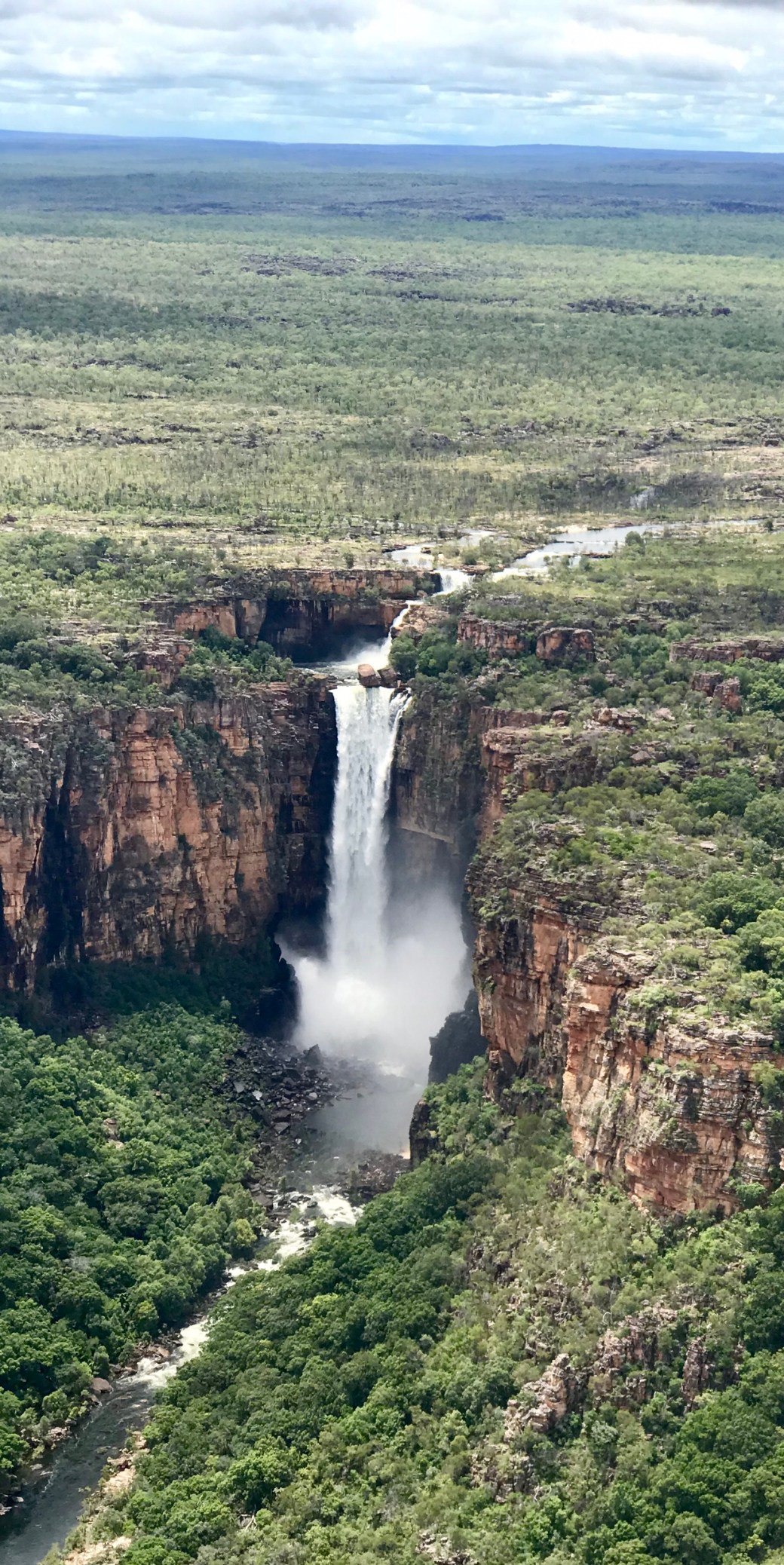
After the completion of the waterfall presentation for the remaining 15 minutes we get a beautiful flight over the green and blue wetlands that we had explored on the boat just a few hours earlier.
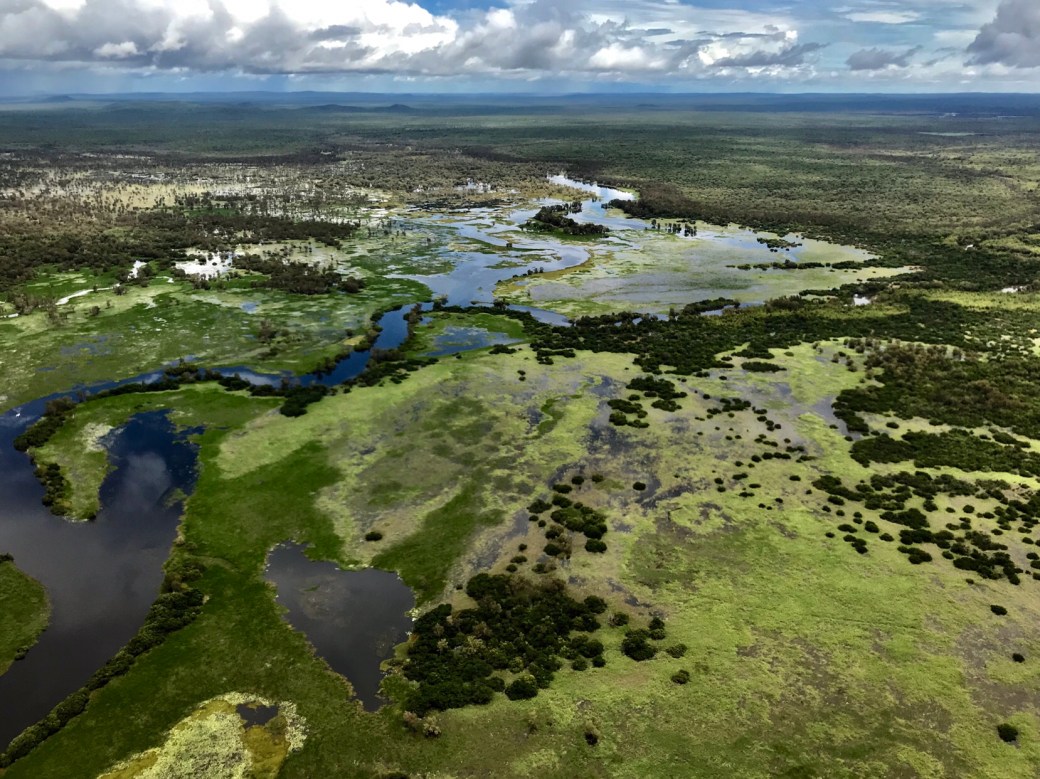
Getting off the plane, short ride to the lodge, handshake with the pilot, buy a cold drink from our favorite South African receptionist, before jumping into our car for the return ride to Darwin. We could not spend the last two days in Terra Australis any better.

Kangaroo Visit

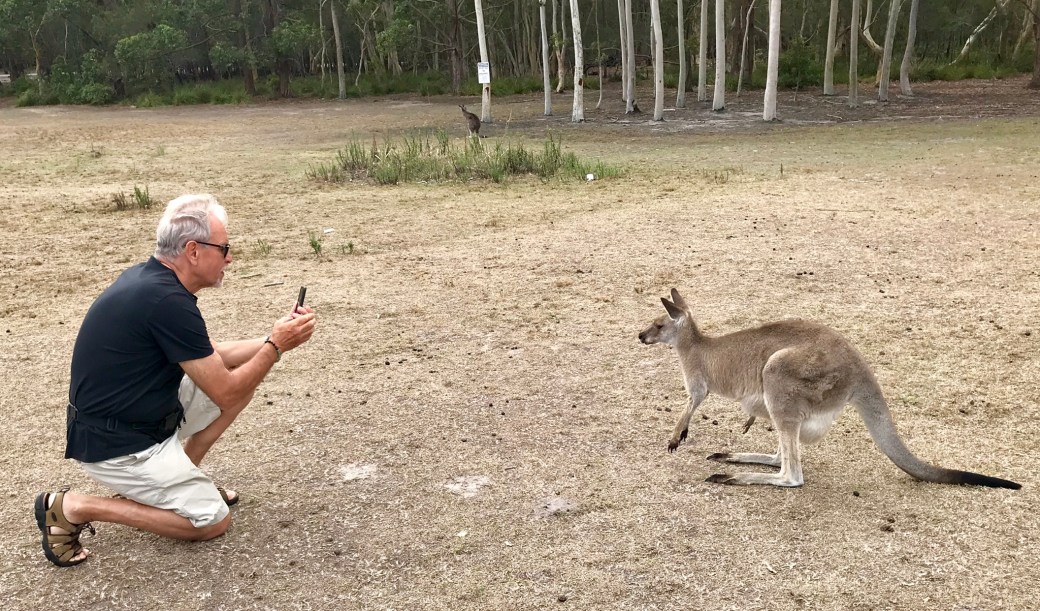
“Oh, hi, you made it! Coming right over…”

“Uh, wait a minute, I got a little itch.”
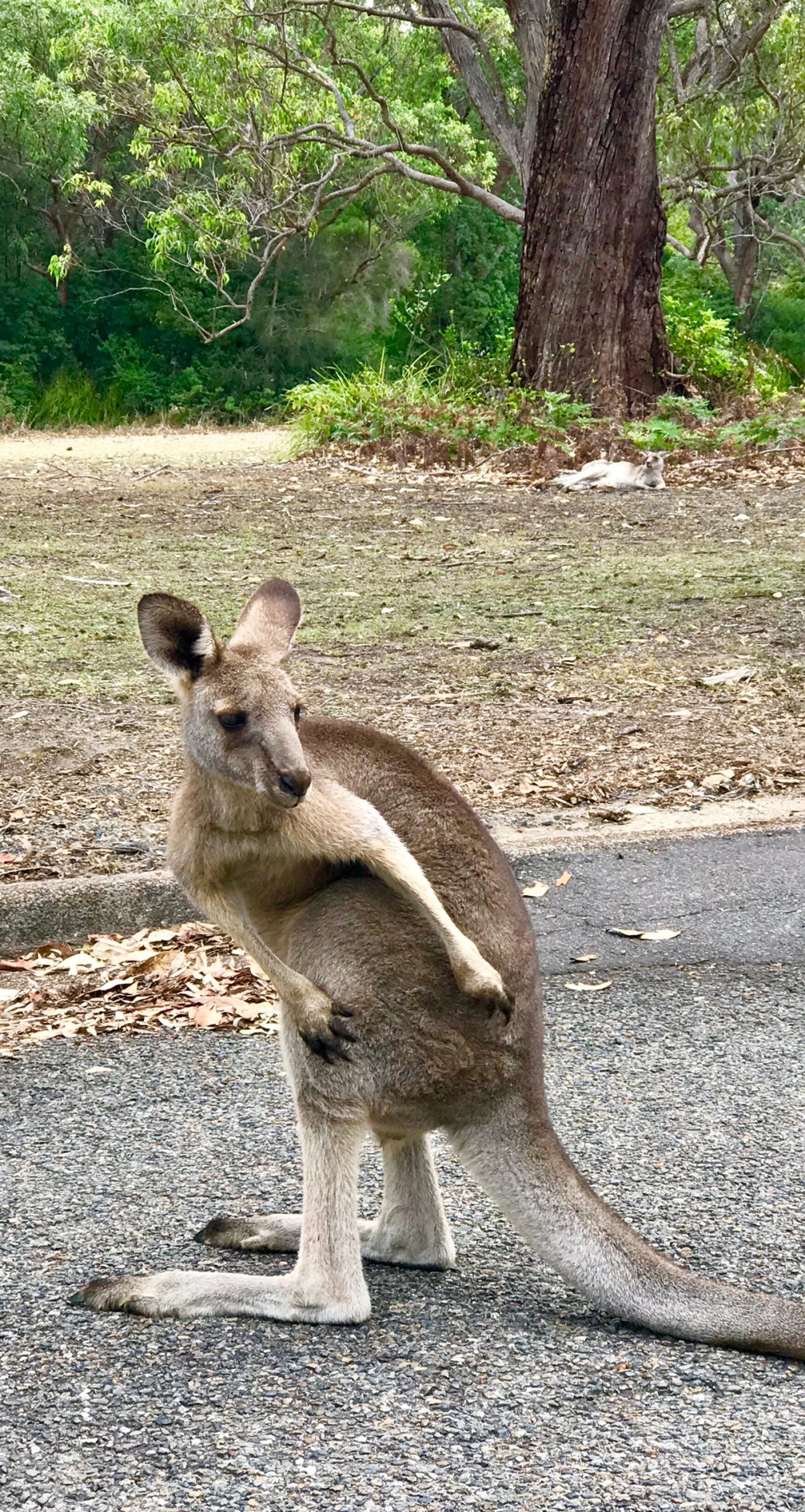
“Ah, all better now, coming…”

“Hey, nice car!”

“Why don’t you park? Never mind the sign, I took care of that!”
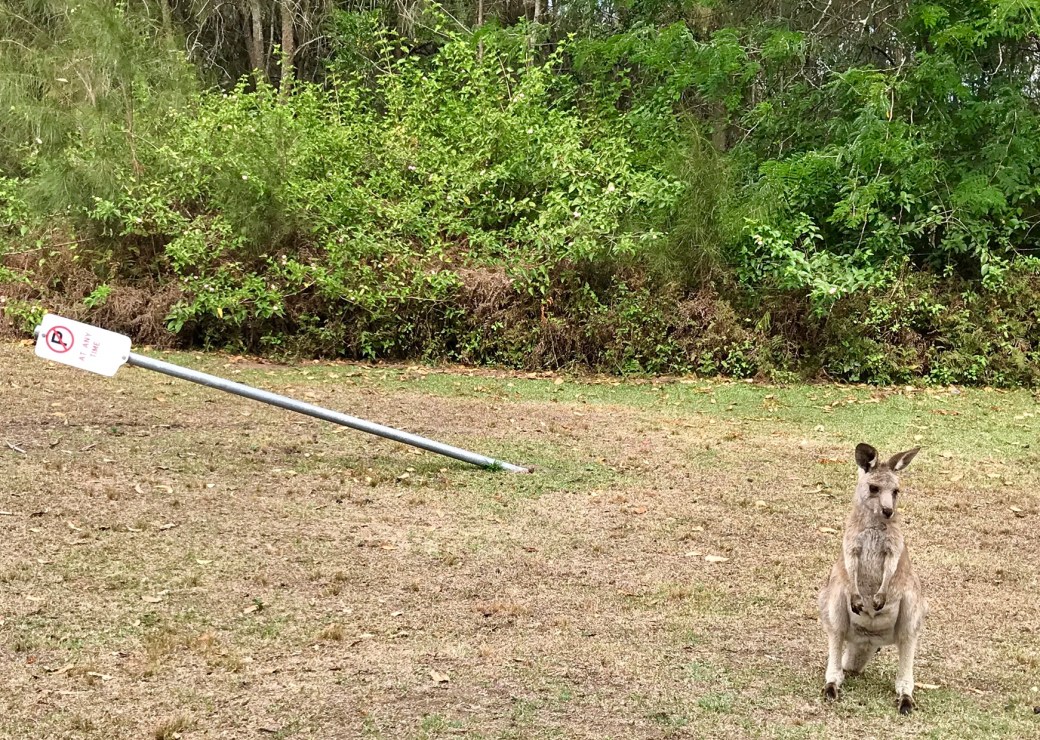
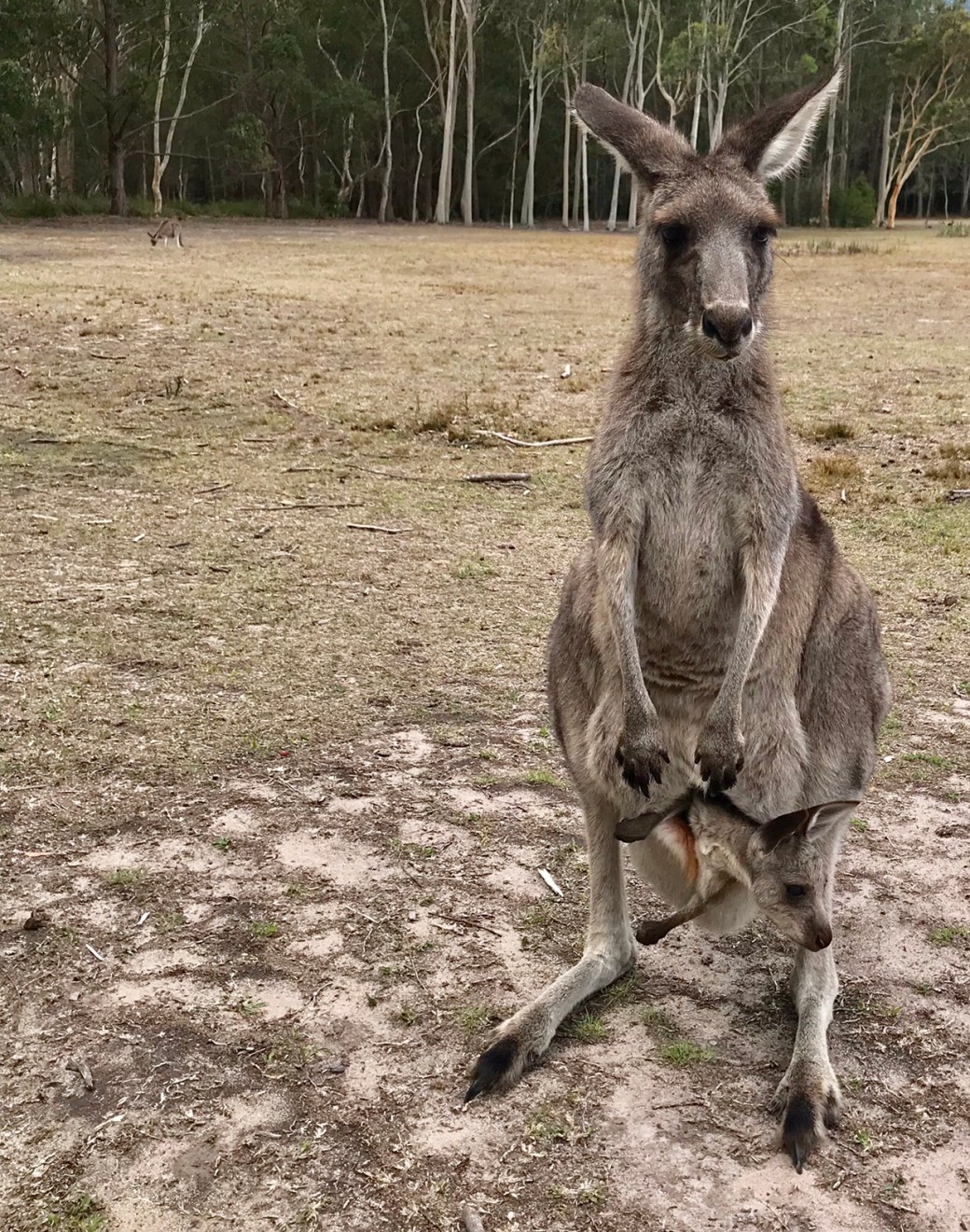
“Let’ go visit my mom and younger sister. But she can be a little bit shy sometimes…”

“All safe now in mom’s pouch.”

“Here’s grandpa. He is not that much fun. He retired a while back and now just lies around the house all day long.”
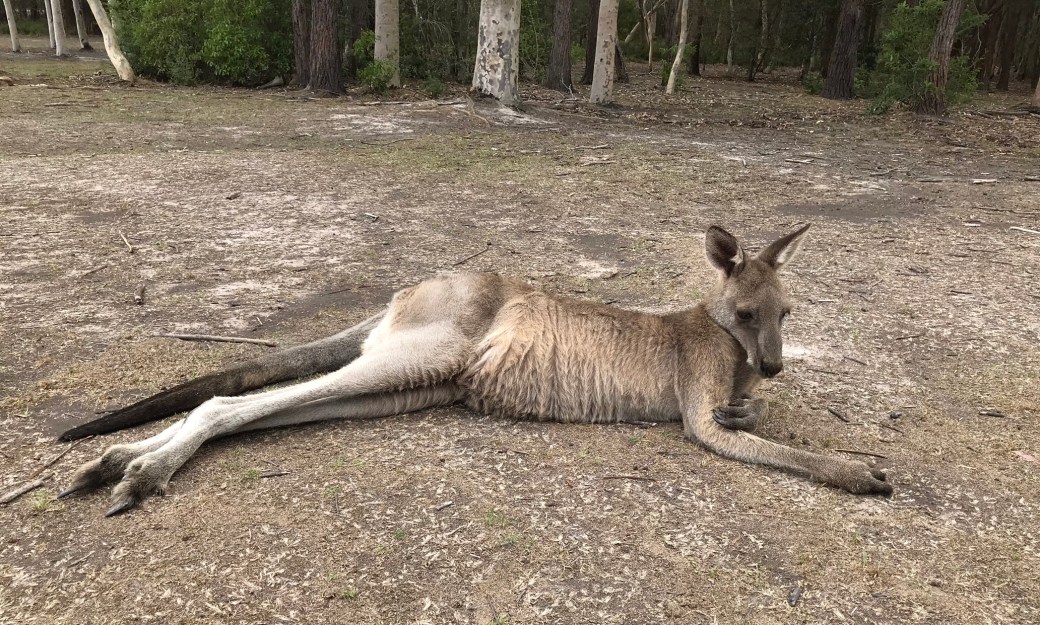
“Even Grandma can be a bit hard to get going.”
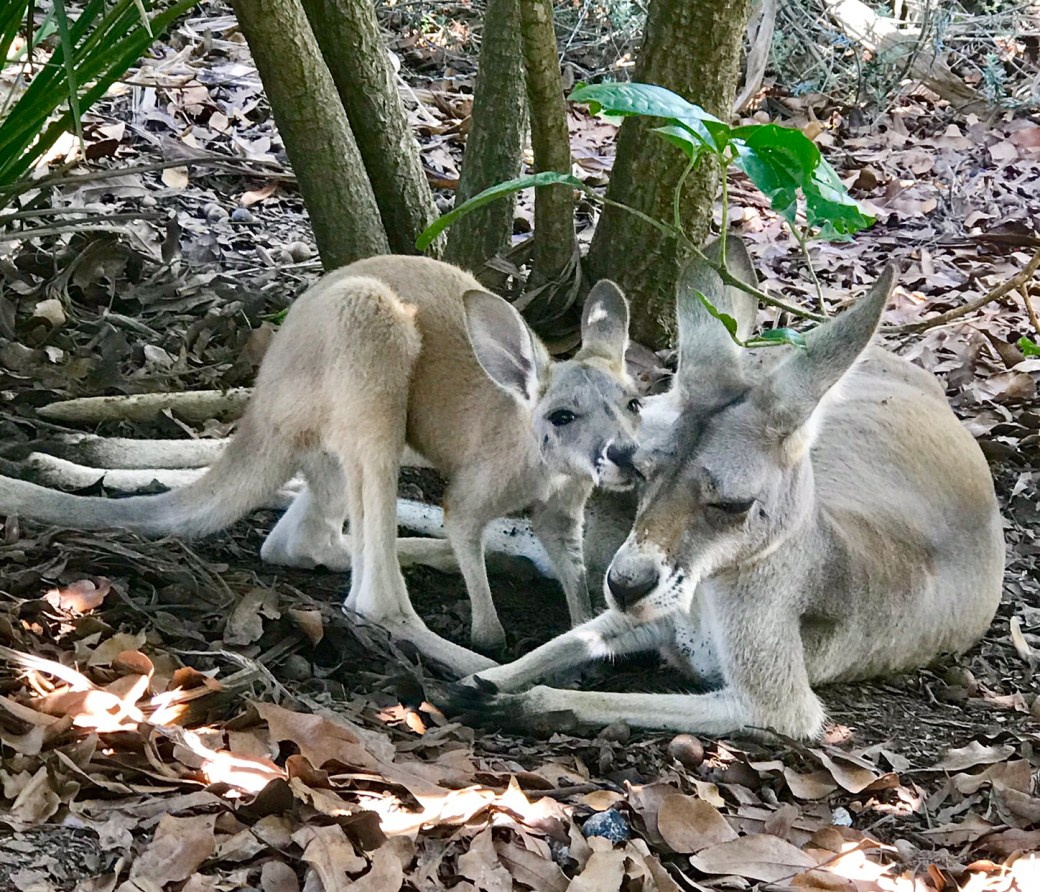
“But I like to make new friends!”

“Come see me again, soon will ya!”

Koalas, Kangaroos, and Kookaburras, oh my!

“Kookaburra sits in the old gum tree-e…” Do you remember this old children’s song? I can’t get it out of my head since I saw my first kookaburra here in Australia. Well, in total I have only seen two, but they are really, really kool, oops, I mean cool.

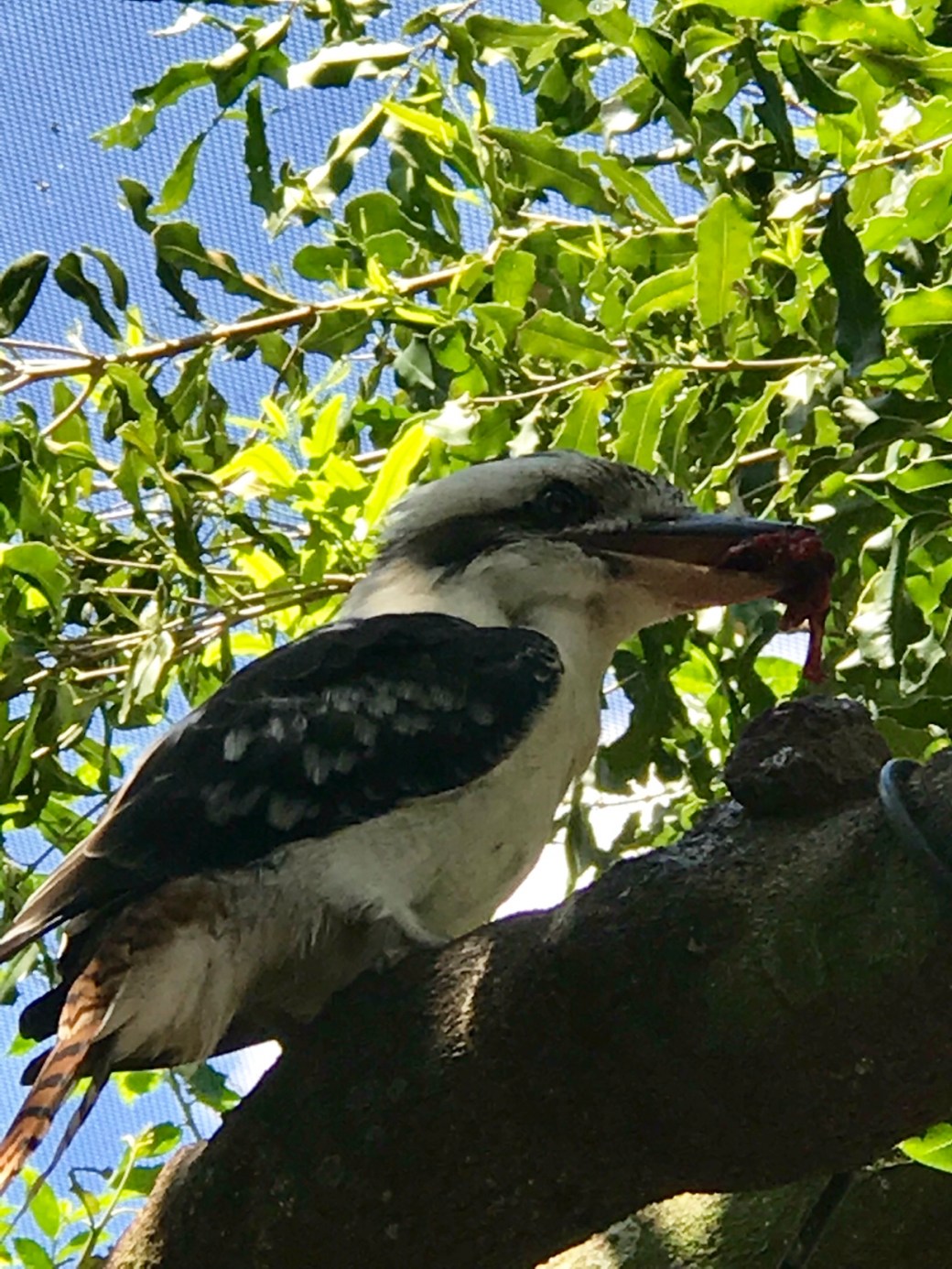
Interestingly, to keep herself cool and hydrated, kookaburra needs drink no water, she gets all the liquids from her food. Both times I have seen kookaburra close and personal she was eating (it is a she, don’t you think, kookaburra must be a she, though, now that I think of it, the songs says it is “king of the bushes”, bummer). We were sitting on a deck overlooking a lake with the nice Airbnb hosts who cooked us an Aussie dinner with the best bbq steak ever, when a young kookaburra alighted on the nearest branch. I am not a birdwatcher and my species recognition doesn’t go much beyond the difference between a pigeon and a sparrow, but I knew instantly it was a kookaburra. Must have been those Mother Goose illustrated kids books. While I was making all sorts of excited noises the hosts nonchalantly took a piece of steak and put it on the railing saying,

“Usually it will eat out of our hand, but tonight it might be a bit nervous with strangers around.”

Australian Lana

The second time I encountered a kookaburra, a young ranger called Lana at the Australia Zoo was attempting to entice her to eat pieces of mice by throwing the bloody carcasses into the air towards her stubby beak. Either Lana was very bad at throwing or kookaburra was not happy with the menu choice.  I was eagerly waiting for her to laugh out loud at Lana’s feeble attempts but I guess it was not a Laughing kookaburra after all, but one of the other four subspecies. Only after numerous attempts did she denigrate to catch a piece and chew it with a bored expression.

Australia Zoo was our first and last attempt at being mainstream tourists. Paying homage to Steve Irwin, the founder of the zoo was part of my willingness to dish out a large amount of money for what turned out to be an annoying Disneyland rah-rah animal show infested morning. You might remember the late Steve Irwin aka Crocodile Hunter from the kids show Animal Planet. His was the antithesis of the old slow velvety voiced National Geographic programs and his approach could be a bit over the top showman like but he certainly succeeded in getting many kids (and their parents) excited about well, all sorts of animals. Just like at the airport where you have to get through the gauntlet of perfume and electronics shops to get to your gate, at Australia Zoo you you have to get through the souvenir shops and photo cutouts and stamp your coin stations and buy your extra personal animal experience to get to the real animals. All the while listening to annoying kids songs singing about famous Steve who was not just a great naturalist but also the best dad in the world because he cooked dinner ever single night for his family. While with the other hand wrestling snakes and crocodiles in the wild, I am sure. When I mentioned this to our Australian friends the blame fell squarely on his wife, now his widow. (Steve died of a rare stingray sting to the heart while filming a documentary).

“You know, she is an American and she brings in the American idea of entertainment. Now as a widow she capitalizes on the memory of her late husband and brings in her kids to seal the deal.”

In the middle of the Zoo is a huge arena where numerous times a day an educational show is performed. I would put the emphasis here on the show with some educational facts thrown in. It is full of eager young people who have perfected their routine of teasing and feeding crocodiles or birds of pray all to the loud upbeat music. And now ladies and gentlemen, boys and girls, let’s give a big hand to the leaping crocodile…

Indeed under the leadership of Mrs. Crocodile Huntress the Zoo has more of a themed park feel now, making millions of dollars with shows and entertainment.  It is staffed with hundreds of very young, safari uniformed people, some walking around with koalas so excited tourists like us can pet them.

Sam and koala

I have a hard time with that whole concept of treating wild animals as pets and am not entirely sure it is good fun for them at all. I think wild animals should not be touched for our fun but for their benefit only, like brushing out a matted fur or scratching or scrubbing a turtle shell in rehabilitation facility to get rid of the itchy algae. I agree with Coustou’s philosophy of “Watch and don’t touch nature”. Personally I am not entirely against Zoos, I believe they can play a vital role in educating the public about the animal world and promoting conservancy. Especially when they are well designed with large enclosures and especially if they have an added component of research, breeding of endangered species or rehabilitation. And lastly why would only the rich be able to see the animals on expensive wildlife safaris?

Before I conclude this slightly annoying rant, may I bring your attention to a somewhat unrelated animal topic that I also feel strongly about? No? Too bad, it is my blog 😉

RIDING ELEPHANTS. Just— don’t. It is not good for their spine, in fact it is really bad for their spine. Unless you are a trained mahout and you sit right behind the elephant´s neck. I am ashamed to say I have ridden elephants a number of times (in fact I can assure you that sitting in the “howdah” with the iron railing is very uncomfortable) until I was enlightened to the painful practices of training elephants for tourist trade. So yeah, take that off your bucket list.

Now that we have that sorted out let’s go back to cute cuddly koalas.

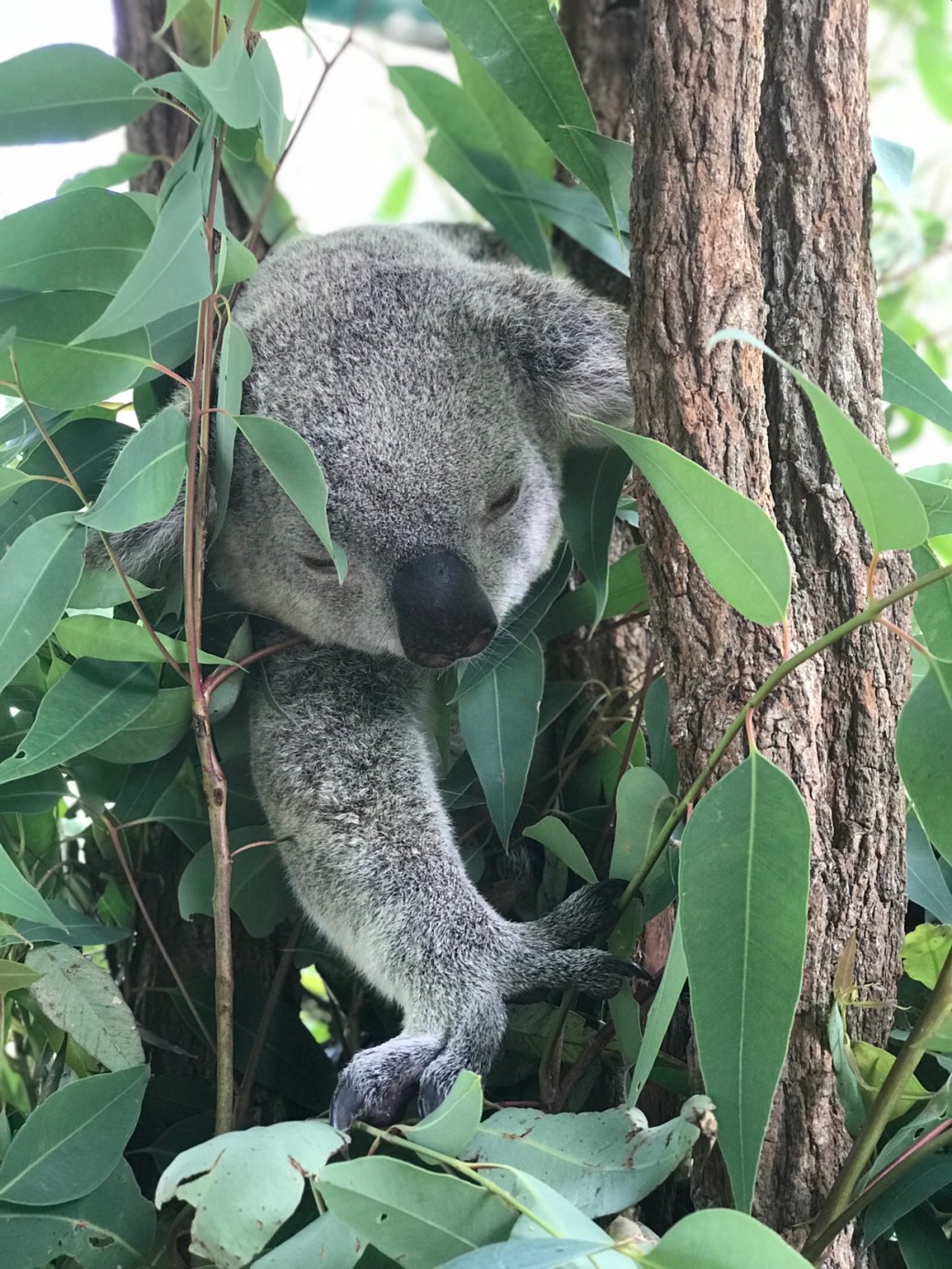
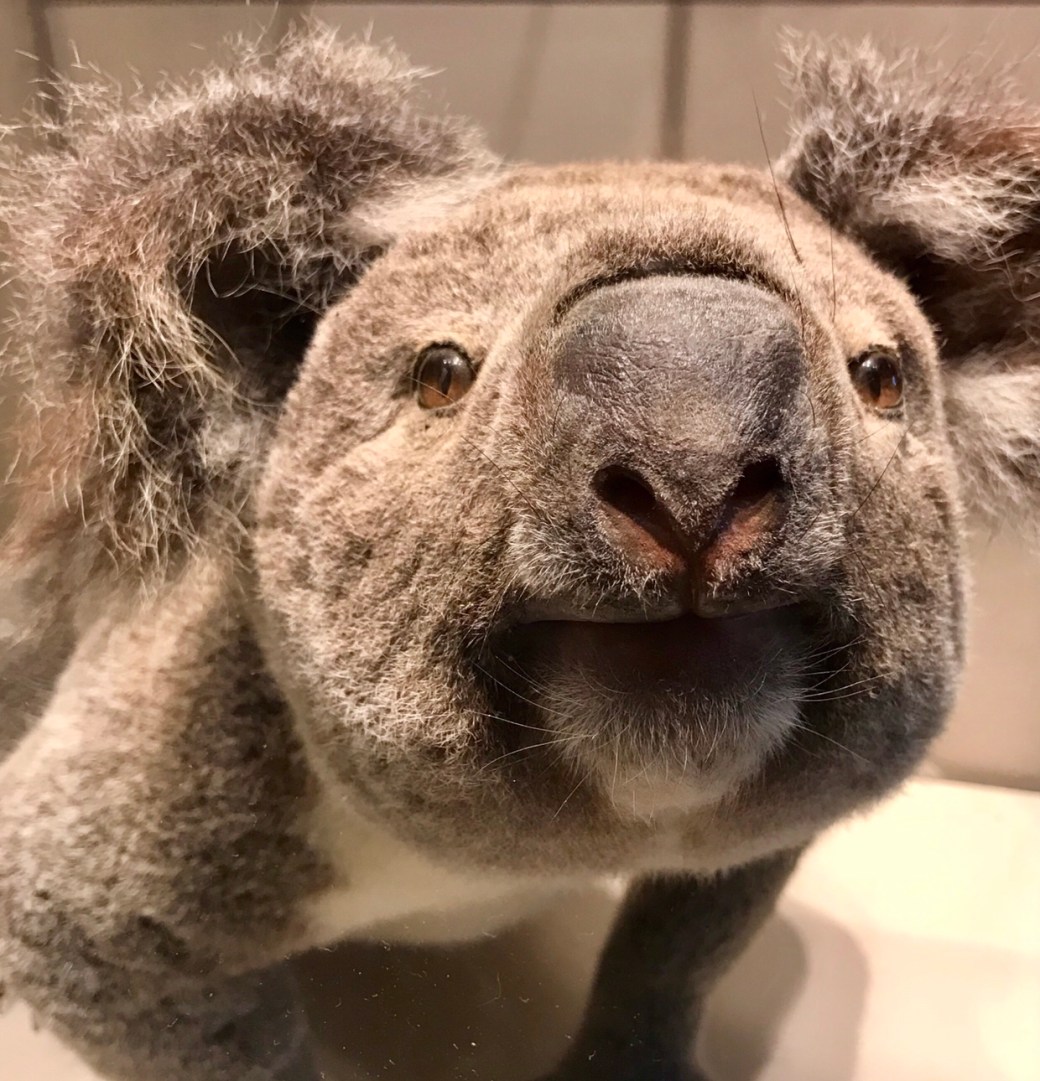
These cuddly koalas actually have very sharp claws (to hold on to the trees while sleeping or climbing, of course) and they scratch. But while they are not exactly cuddly, they are in fact cute. Very, very cute. Koala bears. Teddy bear cute. Except they are not bears at all, they are marsupials and mama koala carries her young baby joey  first in her pouch and then on her back for a year.

They are quite difficult to see in the wild as they live mostly up in the trees. They spend about 20 hours a day snoozing to conserve energy, gained from chewing eucalyptus leaves only. Sometimes they do come down and they are not very fast on the ground and if they cross the road they can and do get injured or killed by cars.

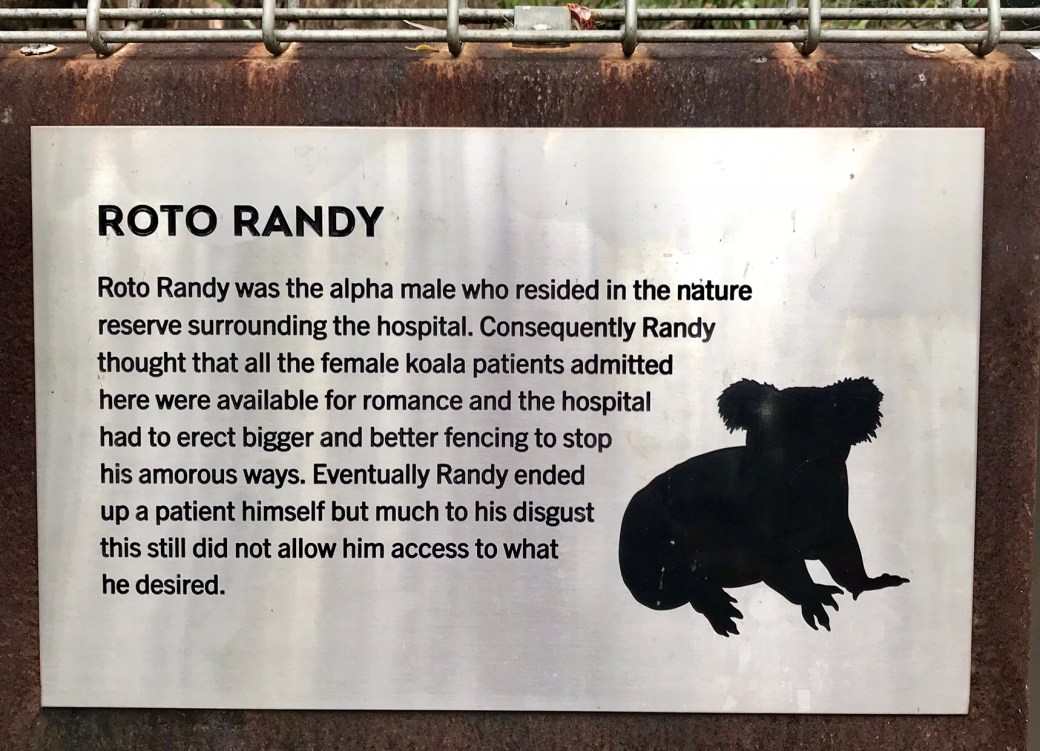
We had a nice visit with some recovering koalas in the Koala Hospital at Port Macquarie. Some cute koalas and interesting stories, too.

Poor Randy

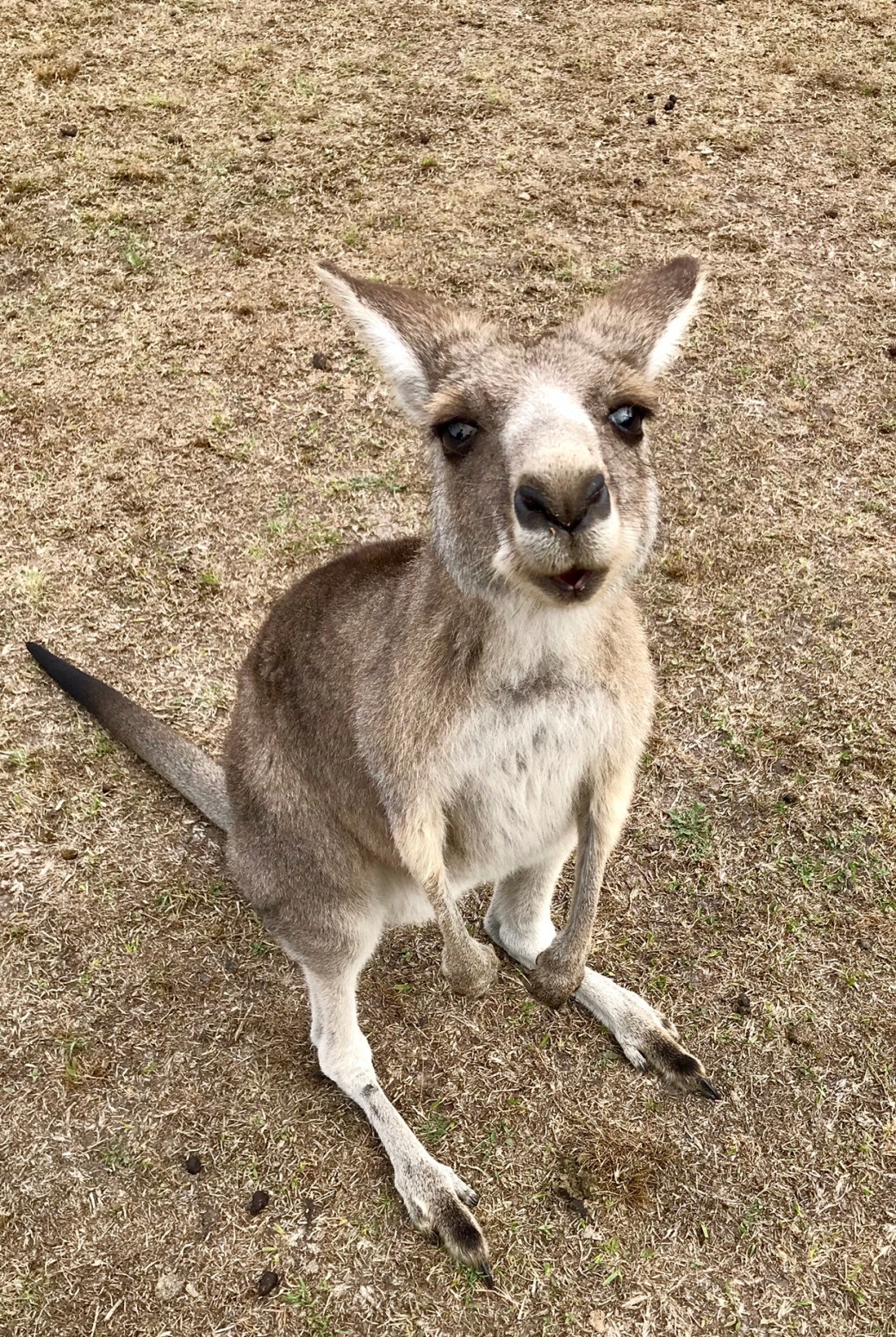
Now hop-pity hop on to kangaroos.  Nah, this post is long enough. Hop on over to the next one.

Follow me, matey!

Sharks, Crocodiles and Other Killers

Wouldn’t you like to jump on the plane when you see photos of those breathtakingly beautiful EMPTY beaches and come to Australia right now?

Like this one we ended on a few days ago in our attempt to reach the end of the paved road at a place called Cape Tribulation. A beautiful expanse of fine sand, firm enough to walk on for hours, temperature about 85F (30C) and water probably the same. Why do I say probably?

Well, before you drop your pants and submerge your sweating body into refreshingly balmy tropical Coral Sea, you will be well advised to put the breaks on your excitement and think twice, as I did, and obediently stay away from water!  In Far North Queensland (FNQ) as it is true for most of Australia, there are sharks in the water year round and you better swim only in places protected by a safety net preventing sharks to get close to you and taking a bite! Or in the absence of nets at least a beach guard to help pull you out of Jaws. Unfortunately, attractive Bay Watch boys and girls you remember watching on TV are not stationed on those far away, empty, gorgeous beaches.

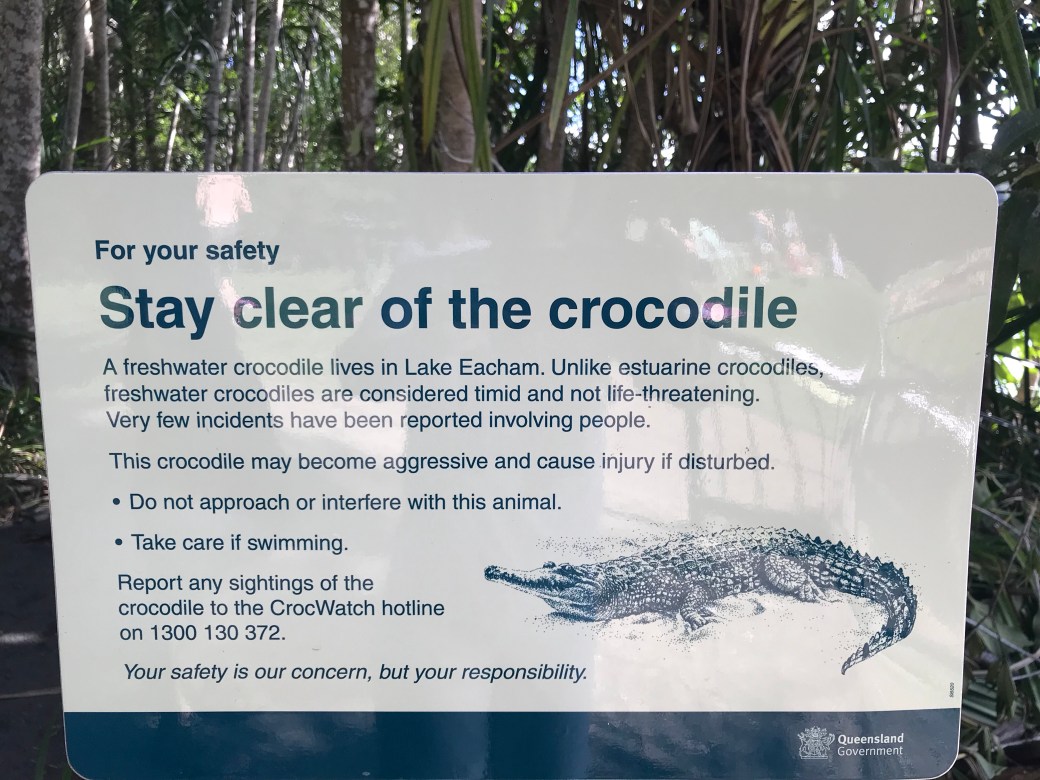
There is more to take under advisement in the FNQ. There is another attractive animal to face off with here any time of the year. Before you hit the beach you may first have to jump over this yellow warning sign reminding you

of the presence of this pretty scary shark competitor in the battle for survival-the crocodile!

Not good, my friends, not good unless you are Crocodile Dandy!

But I am not done yet. If you come to FNQ in the very attractive winter season in the Northern Hemisphere, you will find another addition to the year round team of sharks and crocks.

Almost invisible, the size of barely half of your thumb nail, non-scientifically named jelly fish Marine Stinger.

Unfortunately in addition to its rather laughably sized body it comes packaged with ten feet long extremely poisonous tentacles.

This scary jellyfish has been responsible for more deaths in northern Australia than sharks and crocodiles combined! How did this creature make it to the top of such proud statistic? It takes victims by wrapping its tentacles around the unsuspecting prey like me or you. Then it injects its venom through small receptors along the tentacles and you would know soon if not immediately, through terrible pain what is the severity of its attack. Your pain correlates directly to the amount of the tentacle that touches the skin. But pain is not all you can expect. In addition, the venom attacks your muscles around the lungs and heart. As a result, paralysis of both these organs is the main cause of death in untreated cases.

Fortunately it is just seasonal! You should know that all recorded deaths caused by marine stringers have occurred between October and May.

Come on over in our northern summers. You will face just crocks and sharks!

Enjoy your swim, mate!

And after you exhaust all your beach options, you decide to take a stroll. On the far end of the beach you see a man sitting on the chair enjoying the peace and quiet.  Safely away from the edge of water and out of reach for crocs, sharks and stingers. A wise man enjoying his time on the sun with a book? But as I walk closer I see the man wildly waving his hands.  Is it a friendly Aussie hello? Is he beckoning me to come closer? He is frantically waving his hands around his head and upper torso now. I quicken my step. Perhaps he needs help? As I approach, I yell, “What’s wrong, mate?”

“Damn those bloody sand flies!” he yells back and desperately slaps himself on the back.

Anywhere You Hang Your Hat

The last few nights at home in my own bed I awakened repeatedly to the pitter patter of the rain. Cozy and grateful as always for a dry roof over my head I wondered: Will I miss this on the road? Am I crazy to leave my home for a year? What idiot would voluntarily do so?

While I don’t have answers for the later two, I can say truthfully that I don’t miss my own bed, my own home. Perhaps it is because we have been lucky, with one or two exceptions so far that the places we hung our hat at were unique, warm, and most downright friendly.

Cute hot water bottles in New Zealand

After spending over 100 nights a year in business hotels Mirek was more than happy to accept alternative accommodations. Somehow it has fallen to me to pick the places we stay (on division of labor on the road in a later post) unless they are redeemable points hotel bookings. But those are few and far between. In the first month of travel we only stayed in Hilton hotels twice: one night in Queenstown and one in Christchurch, where we had to leave at 4 am for the airport anyway.

Whereas a night in Hilton or Marriott has always been a huge treat and a saving grace for us when traveling in Africa especially, in the The civilized New Zealand the ineptness and the uncaring attitude of the staff made it annoying to say the least.

The simplest place we stayed at was a youth hostel at Milford Sound (the only available place to stay) and we had one of the best dinners of venison there with great international team of young students-happy foreign quest workers.

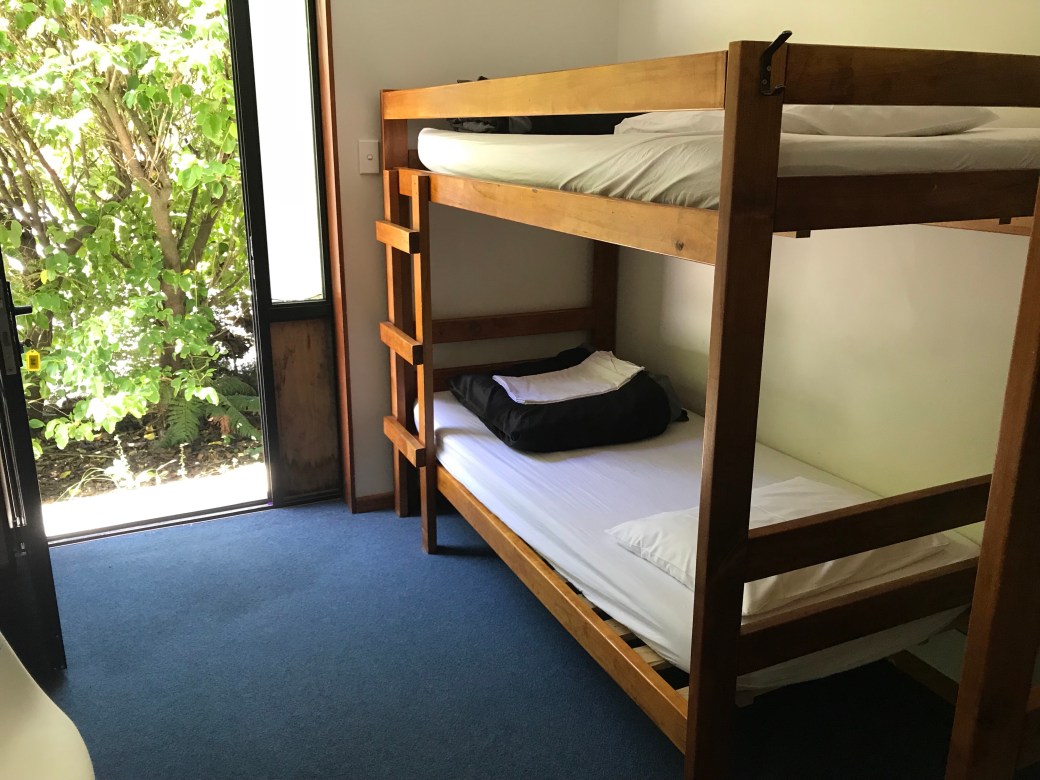
OurHostel beds

As with general travel, in accommodation it is the people that make all the difference. And our stays have had some exceptionally warm people welcoming us into their homes. The sweetest memory comes from driving a long way from the airport in Christchurch down south to stay with Servas hosts Stan and Marion. They have been sending us welcoming and informative emails from the first contact and now we were communicating through texts (thanks again, T Mobile, for free international texting and data). It was soon clear that the drive will take longer than Google maps initially predicted, so we were going to be late for dinner. “Don’t worry, we will wait for you,” came the reply. Just before Dunedin, the last big town before our final destination, a new text came in: “There is a fire in Dunedin and the freeway is closed, you will need to take the alternative road by the sea.” We kept the conversation going while we were stuck in the detouring traffic, watching the thick black smoke on the horizon. When we finally made it to the house in the last light of the evening, Stan and Marion were waiting on the porch for us. It was like coming home to your parents after a long time away.

We mixed staying with Servas members in New Zealand with Airbnbs and homes of friends and even friends of friends. In Australia we did not have a chance to stay with Servas members because of the rule that one can be a guest exactly two days. You know the saying: Guests, like fish begin to smell after three days. With strangers two might be the limit. With Airbnbs the opposite is true, many have a minimum stay requirement of two or three days, because it is not worth it financially to send a cleaning lady in to change sheets and clean the whole place after people have only stayed a night.

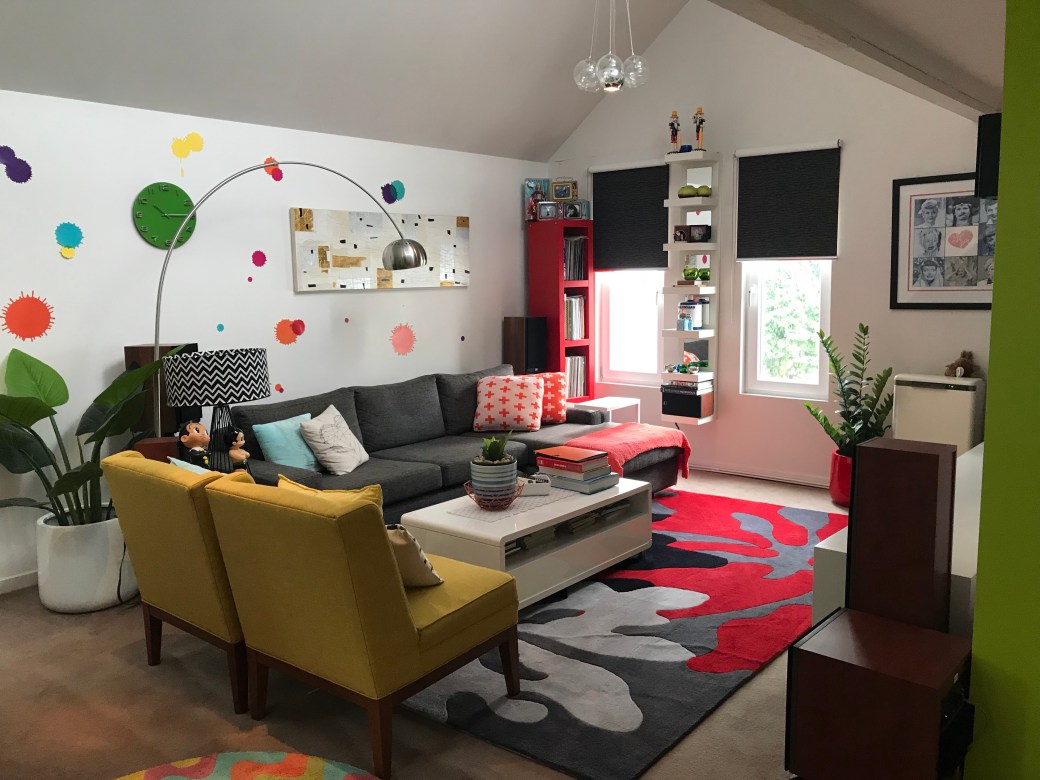
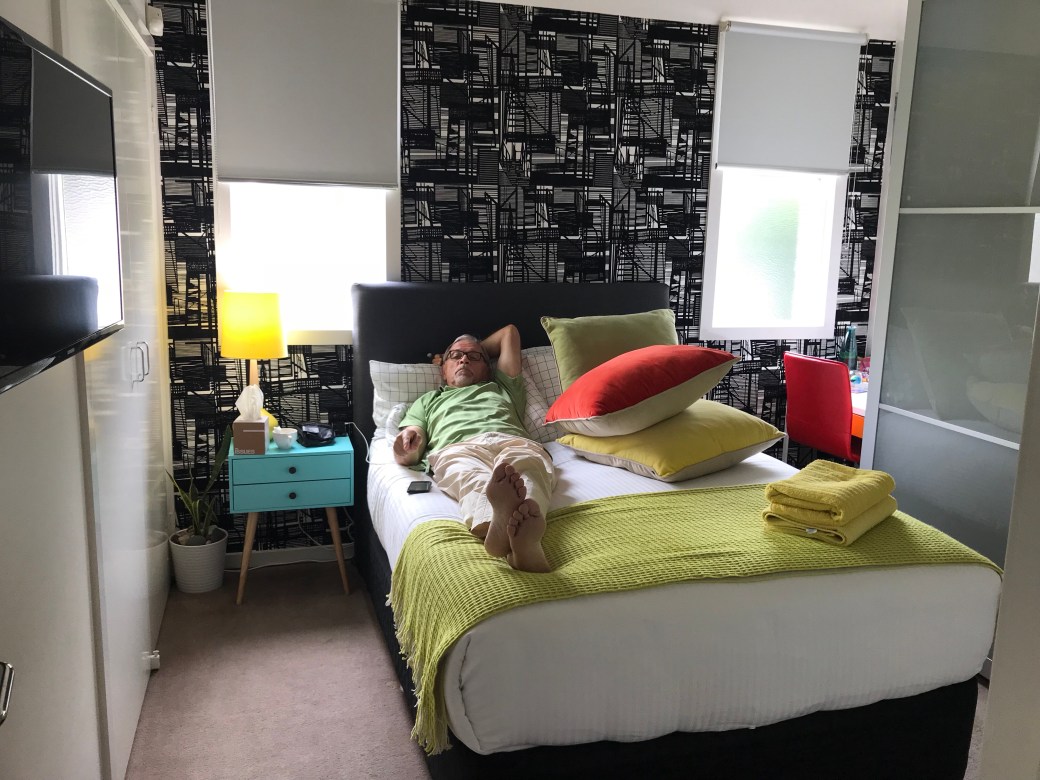
Ourcool Airbnb in Melbourne

We had a few one night stands on side trips or drive throughs, and a few one week base stays. It is good to mix and match. We did find that after a month of changing places every two days and being on the road continuously with early mornings and late nights on the go, even we crazy travelers, always packing in too much into a day,  appreciated some heavy rain that forced us to stay put. I never thought I would pray for bad weather on vacation.

Visiting family was one of the major incentives to revisit Australia. For a few days we stayed with Mirek’s second cousin Nadine and her teenage daughter Olivia. We had only met Nadine once before, when she herself was a teenager 32 years ago. That truly was coming home to family. Both her and Mirek have very little extended family so it was quite exciting to share family histories and recollections. We even brought scanned black and white photos from great grandparents. Sweet Olivia was so excited she made us promise that we will have a reunion every two years somewhere around the world. She was going to get a summer job to save the money for travel. Indeed, on our last night out for a celebratory goodbye dinner she boldly asked the owner of the Italian restaurant if she could work for him. “As soon as you turn 15, darling, come back,” he said with a big grin.

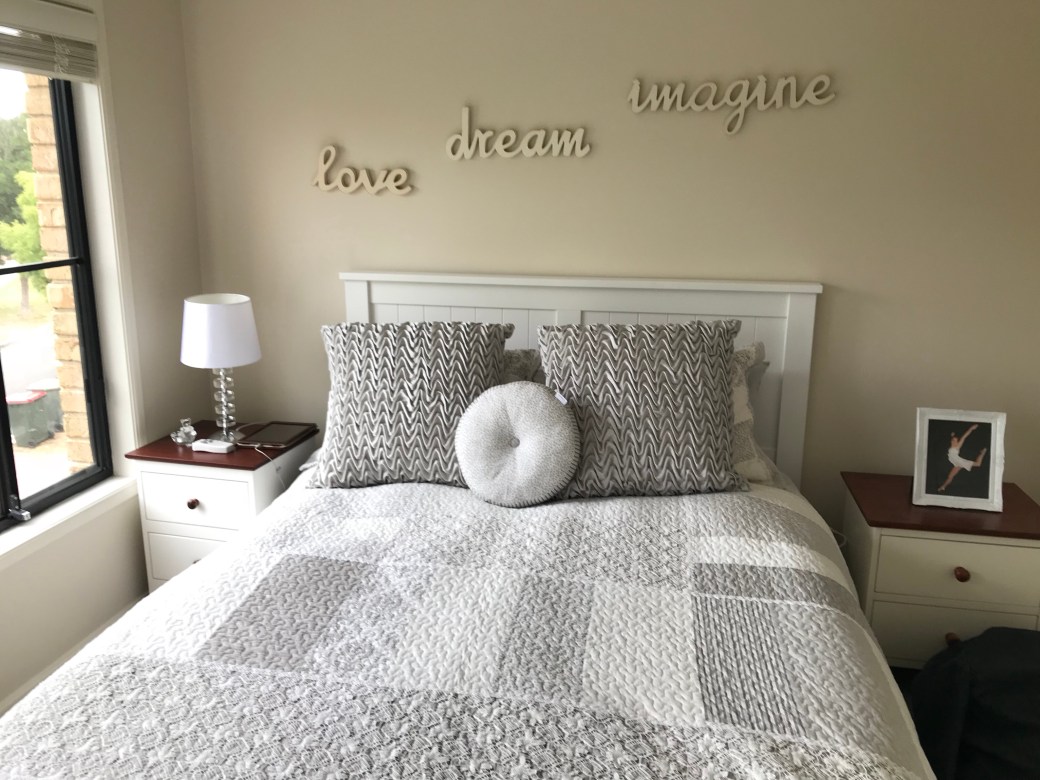
Olivia’s ballerina picture in our guest room
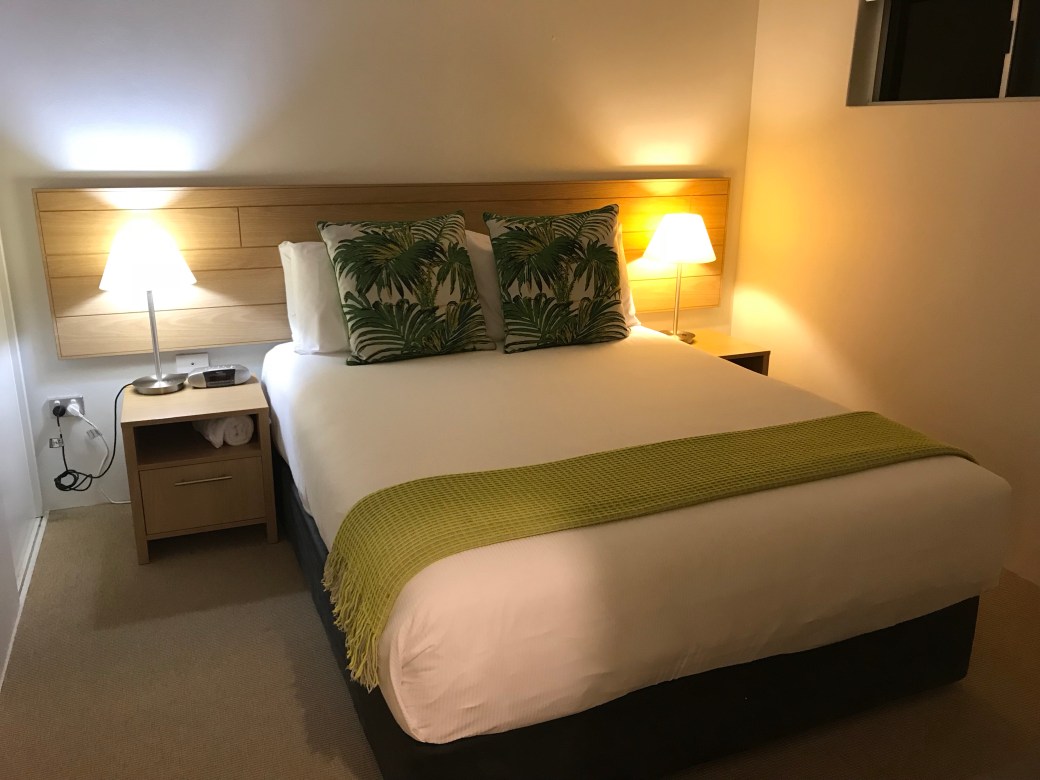
Up North in Cairns we spent a week with Mirek’s first cousin Claudine and her partner Leo. We have never met Claudine in person, though we have a long history with her with our kids and her kids keeping the connection by visiting us and them in Australia and US at different times. Many emails and photos have been exchanged planing the kids escapades so when we finally met in person it was like we have always known and loved each other. We spend the first and last night with them but we decided another week on top was too long for two busy people each running their own demanding business, and we took a time share exchange with a resort apartment for a week.

Our time share apartment

Because of the heat and humidity we knew we needed a well functioning air condition. We were also excited to be able to reciprocate inviting our relatives to our place for dinner. Welcome drinks with Claudine and Leo

Eating out is fun for the first couple of weeks on the road, but it quickly becomes burdensome and in some instances a source of strife. When hungry some travelers easily become cranky. (Yeah, you!)

While booking a hotel, especially a familiar brand is easy, choosing the right Airbnb home can be a long process, especially if you easily get bogged down looking at pretty pictures and reading reviews. I used to do that, making long lists of favorites. On the road I do not have that luxury and sometimes I have to make a last minute reservation, so I have become better at choosing the right place. To narrow down the choices I use filters. Firstly I only ask to see homes with Superhost status, those will all have only 5 star reviews. If the area is inexpensive I choose Entire place, if expensive Private room. Then I choose 1 bed (so we don’t end up with two twin beds) 1 bedroom, 1 bathroom (making sure that there is no chance of a shared facility with either host or other guests. Airbnb is becoming very savvy in giving people an easy way  to perfectly meet their needs with lots of boxes to check. While I don’t care if the place has a TV or hair dryer, I certainly appreciate having wifi, free parking, washer and drier and especially air conditioning. Breakfast is a bonus, even if it is just toast and jam or cereal.  It gets you on the road fast in the morning and prices in restaurants are really high. Cousin Claudine who owns a restaurant says it is because they pay their staff high salaries (20-25 AUD $ for waiters) and even the farm workers are paid well, so raw cooking materials are expensive as well.

After you have read Airbnb listings for a while you also quickly understand the kind of host you will have. The way they write the description of their place, the way they lay out their house rules and communication guidelines, you get a feel for the people. Are they just doing it to make some extra income on the side, or are they genuinely excited to meet new people and will go out of their way to make them feel welcome and help them out. Those are the people that put a lot of thought in their hosting, from beautiful decorations to extra snacks, maps and guidance. It is worth taking a little bit of time and reading guest reviews. With a 5 star rating they are of course going to be very positive but you will still get a sense of what they stay was really like as people write of their experiences.  Some of our hosts were indeed as fantastic as other guests have written and this is a lovely bonus for an inexpensive home away from home.

As a young woman I used to travel on a non existing budget, hitchhiking and sleeping outside in a sleeping bag or in cheap camps in a small tent. As a young couple we used to travel on a very tight budget, sometimes ending up in shitty rooms, hot and mosquito infected. What we have now on our trip is a veritable luxury.

Home is where you hang your hat and unpack your luggage.

And listen to the pitter patter of the rain, grateful for a dry roof over your head.

Australia’s 10 Beautiful Beaches-More Pictures, Less Words

For those of you, who don’t read (you know who you are), here is a perfect post about our drive from Sydney to Brisbane.

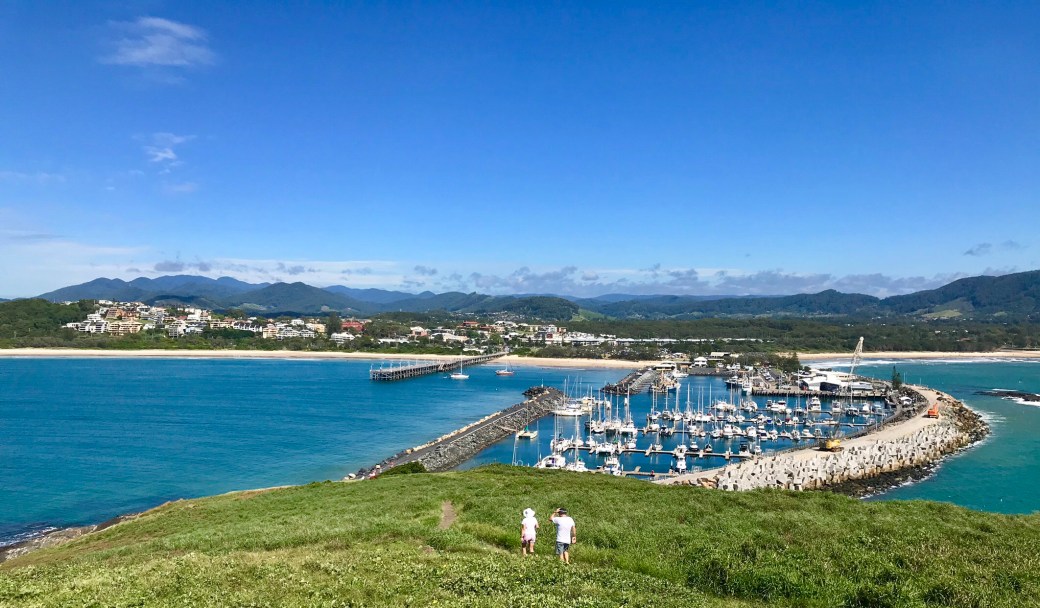
No, we did not go to the famous Bondi Beach, but we discovered many other wonderful spots on the way.

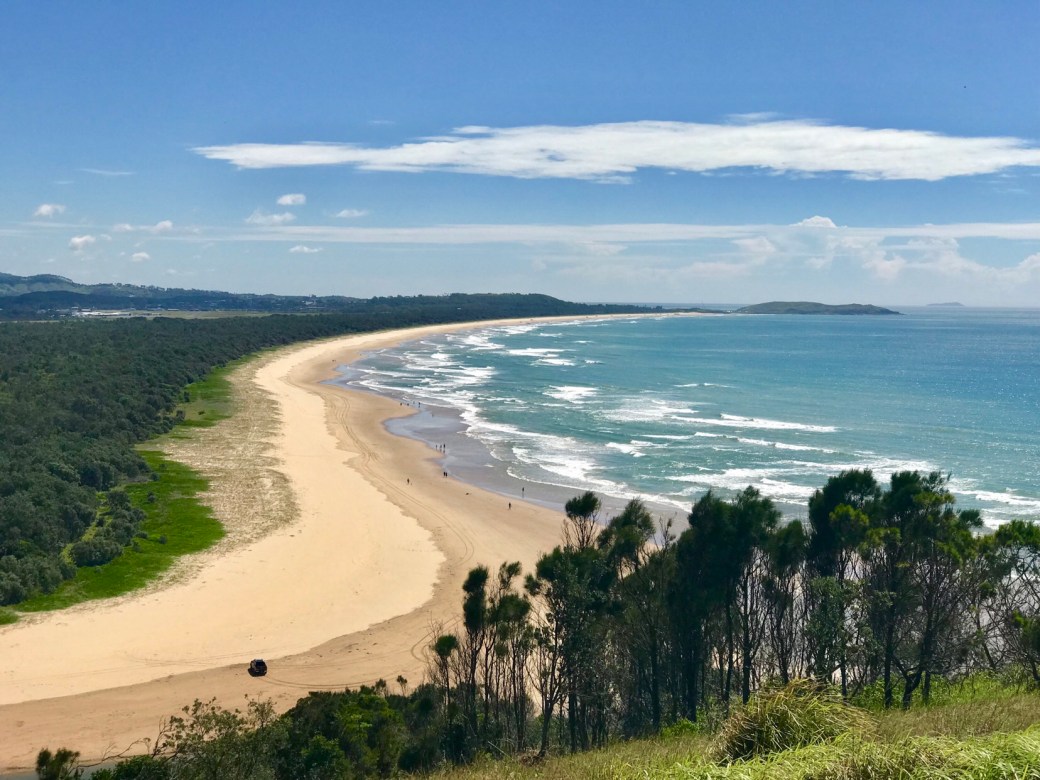
There were Grand Beaches, with sand and surf going on forever

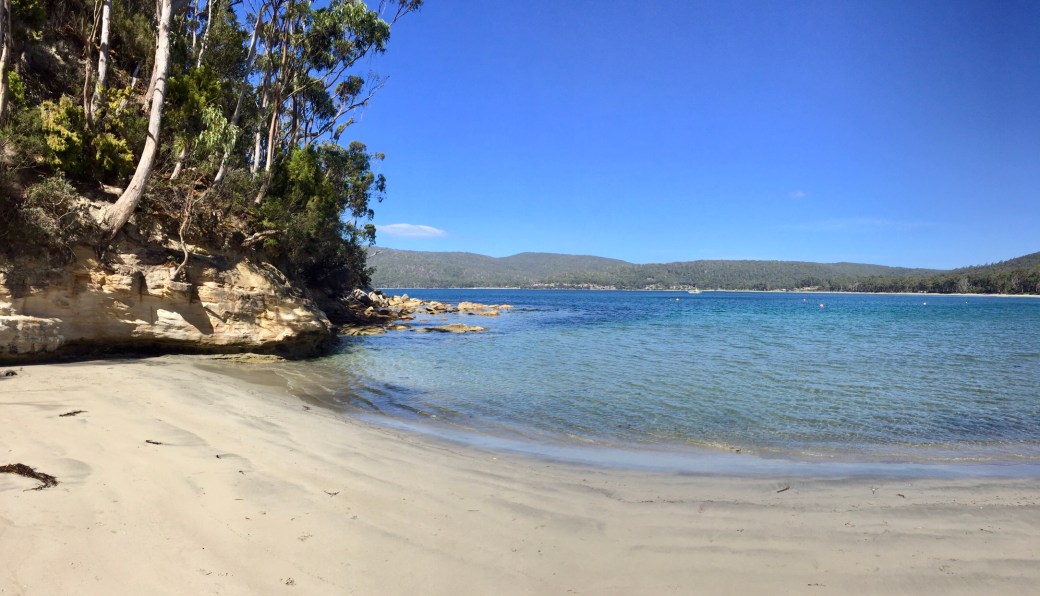
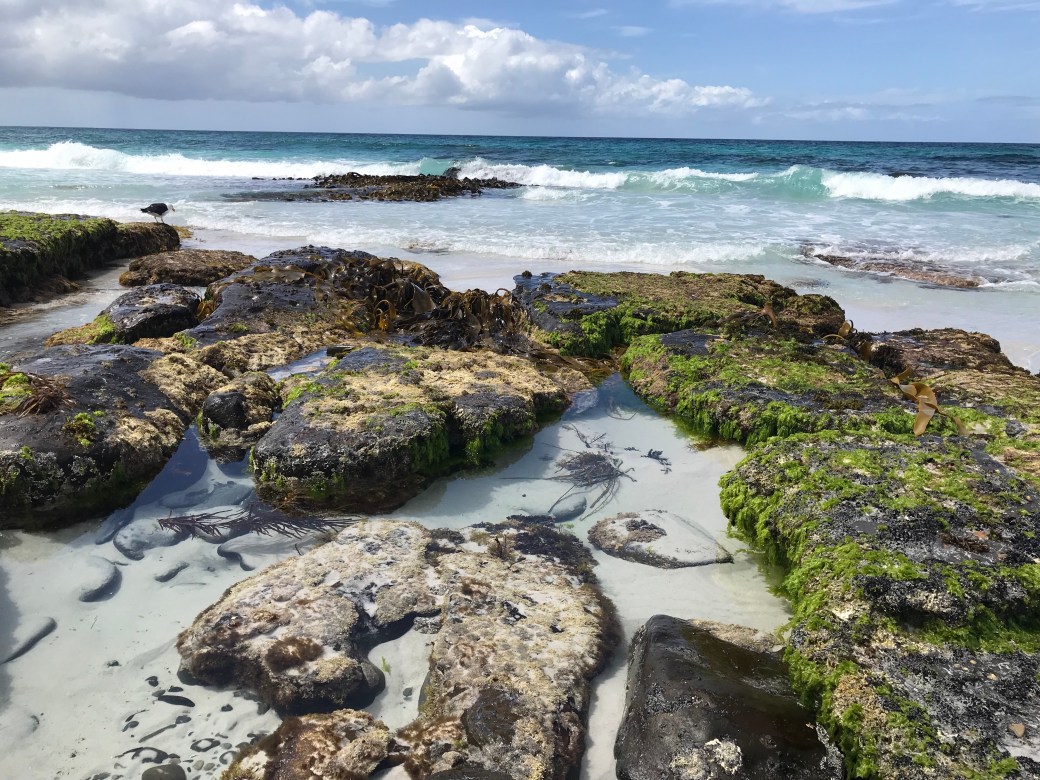
and Small Beaches— little gems with algae covered black rocks
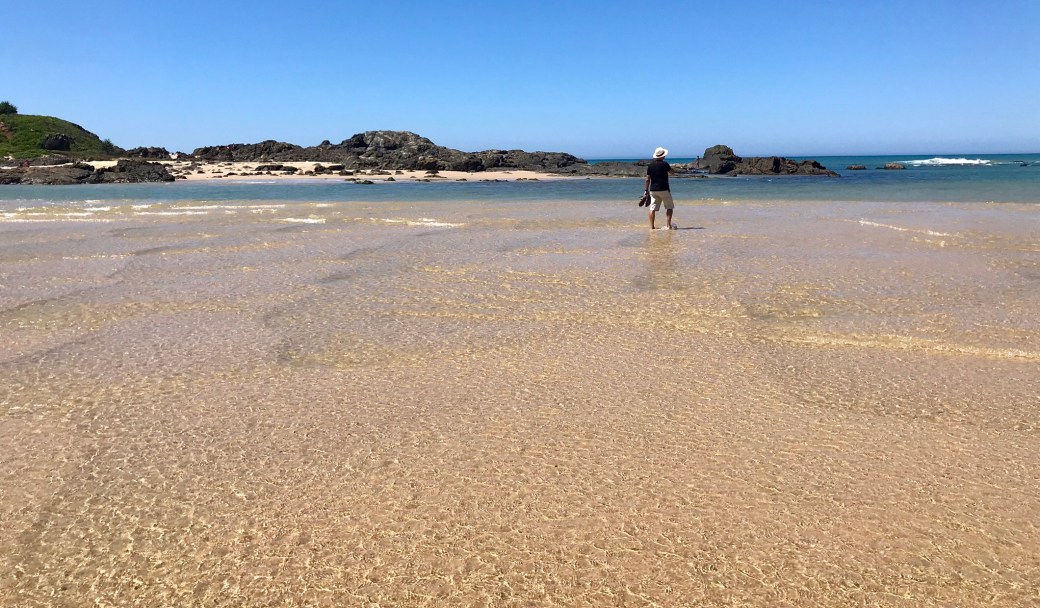
and sun kissed Walking Beaches

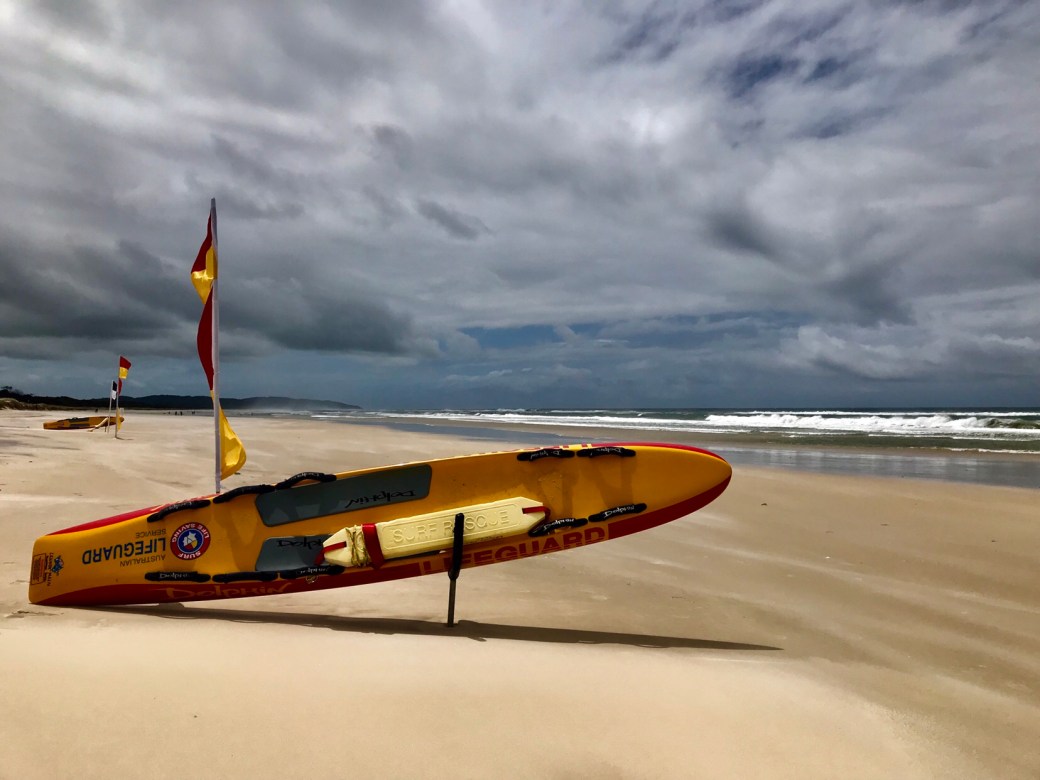
Very Windy Rain Clouds Threatening Beaches with flying sand
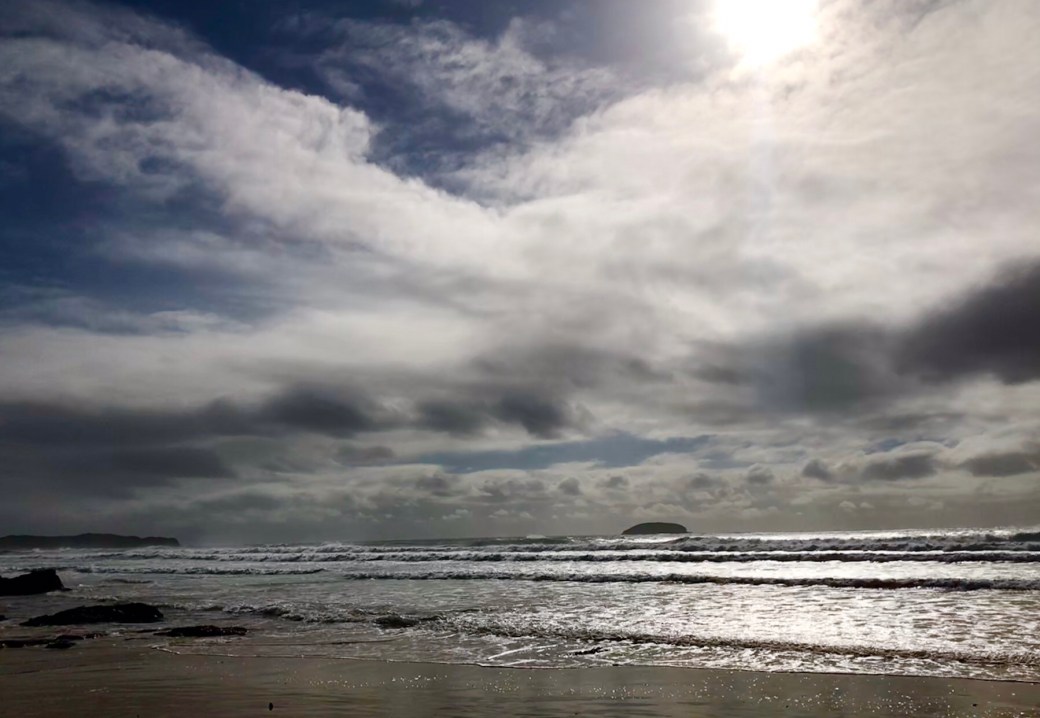
glittery Silver Beaches

Surfers Beaches

very Photogenic Beaches

Dog Beaches

some were Safe Harbour Beaches

but all were Safe Beaches.

What is your favorite beach and why do you like going to the beach?

Guess, Tasmania

Discovering Tasmania’s past

In my formative years I struggled between my love for bridges and my interest in history. Finding the right balance was not achieved until well into the third decade of my life, well beyond the timeline in which any decent male should find a way to make a living and equalize his duty with an appropriate hobby for the rest of his life. Only after I found my partner for life, an educated art historian, our breakfast and dinner discussions were properly balanced, until the engineering aspects were brought to a minimum. Our travels always included both— spectacular engineering feats and historic places. My wife’s excellent writing capabilities improved my writing and kept my engineering exposés in check. Through her vicious editing I hope to avoid becoming too boring, though sometimes I have to follow her simple advice, “Just forget it!”

Tasmania is an incredibly attractive subject for me because it represents Australian story in a nutshell. You can trace the roots of European/Anglo colonization of Australia from early Discoveries and into first settlements as a British penal colony through developments in Tasmania.  Here my interest in history was well satiated with the interests, policies and deeds of European powers.

Barely an hour’s flight from Melbourne, Tasmania seems hardly more than an afterthought in the context of the whole Australia. Today it has a population of only about half a million with almost half of that number living in its capital— Hobart. Hobart is the third deepest harbor in the world, making it a natural point of entry to Tasmania from anywhere else, which nowadays is almost always just from Australian mainland. It is a pleasant city of single family houses made of red bricks or wood with low pitched roofs, giving it a feel of a quiet, small English town with neat gardens and grocery stores and occasional fish and chips establishment sprinkled in between.

We found ourselves well adjusted after a few peaceful days, sleeping late until the laughter and cries of children walking to school woke us up. Then we spent our leisurely late breakfast chatting with our host Jenny, going through the list of items such as my kids, your kids, my grandkids, your grandkids, how does the garden grow, where to go today and what to see tomorrow.

Drinking and planing with Jenny and her neighbor

And how much is a litter of gas? Wait a minute, what? Oh, you call it petrol… The same routine followed our dinners, but discussions were deeper with the help of good Tasmanian wine or whiskey that Peter, Jenny’s husband, provided in good measure. My family skeleton in the closet, your family skeleton in the closet, who is your PM, what kind of a (crazy) guy is your President, how is your health care functioning, what is the cost of your education, and what are the unspoken issues of the convict and Aboriginal history of Tasmania.

As a boy I spent days reading books about travelers discovering islands, mountains, rivers, lakes, tribes, and establishing trade routes to bring all the exotic products to Europe. So please bear with me and digest a few (for me) interesting facts of Tasmania. Soon after Europeans sighted a new land in early 1600s and named it Terra Australis Incognita (Unknown Land of the South) Tasmania was discovered, if we can really call it “discovered”, as it was just a brief sighting thanks to bad weather, by, guess who— Abel Tasman, of course! What Tasman saw as a promising anchorage before the upcoming storm prevented him to land, he named, you guessed it, Storm Bay.

Da Famous Bay

Some twenty years after Pilgrims started in earnest their colonization of North America, Tasman discovered many places down under in southwestern Pacific, and gave them his name. But not this Island. As a great navigator but even greater politician he named it after his financial patron Mr. Van Diemen, then Governor of Dutch East Indian Company. He called it, guess what— Van Diemen Land. Thus Tasman tried to entice the Dutch, but they did not follow upon Abel’s discoveries. They probably saw more monies in the Spice island and others in the East Indies than in this cold Island in the middle of nowhere.

Therefore Tasmania had to wait for almost fifty years for the first real visit. This time by a Frenchman, Bruni D’Entrecastaux. This gentlemen paid more attention and realized the true potential of this island. Monsieur D’E… knew that Tasman tried to land in a beautiful bay, but in the best French tradition he made a navigational error. He went to bed after a good dinner, likely accompanied by good French wine and his crew got his marching orders wrong. When he woke up, he found his ship on the well protected western, instead of stormy eastern side of what was a small island off the coast of the Van Diemen Land. Thus while sleeping soundly he discovered a wonderful channel leading his ship safely to Hobart Harbour. He celebrated his major historical accomplishment by naming the island, guess what— Bruni (after his first name) and the channel, you guessed it,  D’Entrecastaux Channel. You cannot be too modest at the time of great discoveries, wouldn’t you say so? And who knew the great inventions and discoveries in the history of humankind can be made while sleeping in your cabin?! Why don’t they teach this method in schools anymore?

Turn the pages of history by another three quarters of the century and you will find in the vicinity of this bay which both Tasman and D’Entrecastaux did not land on, the most famous seafarer in the Pacific Ocean’s history, Captain Cook on his Second Voyage.  Well, guess what, he didn’t make it either. His HMS Resolution got separated from the sister ship Adventure, guided by captain Tobias Furneaux. Furneaux was the one who set his anchor here and renamed the bay after his ship— the Adventure Bay.

He described the bay in his log in such glowing terms as an excellent anchorage for resupplying vessels (fresh water, kangaroo meat, berries!) that all his followers in South Australian waters, including me, were more than keen to stop here. Captain Cook finally stopped here and watered his Resolution during his Third Voyage.

Limited kangaroos, plenty of berries

I have followed Cook to quite a few of his landing places in the Pacific. The Cape Perpetua in Oregon, the Cape Kidnappers on New Zealand and the Waimea Beach on the island of Kuaui, Hawaii, where he was ultimately killed. But none of the places Cook blessed with his presence saw so many famous seafarers in the history of Pacific Discoveries as Adventure Bay.

Let me mention just one more. As the first sail master on the Cook’s Third Voyage, a guy named William Bligh landed here. If any of you know Captain Bligh, it is thanks to the Bounty mutiny, which put him into a small boat with his 20 loyalists and let him find a way to survive. But he was a survivor at his best. He made it to Timor and then back to England. After his naval career ended he was appointed Governor of New South Wales, whole of Eastern Australia. His appointment? To clean up the corrupt rum trade in Sydney! We visited Sydney lately and let me tell you, after seeing the wild street parties during our weekend there, we could quickly determine Governor Bligh must have had an impossible task. No wonder it did not take long and the new Governor had another mutiny, this time called the Rum Rebellion, on his hands and was swiftly deposed by Sydney rum lobby. As an ex Governor he was sent to ponder upon his unpopular actions to, guess where—the Adventure Bay!!! And Sydney partying could go on ever since.

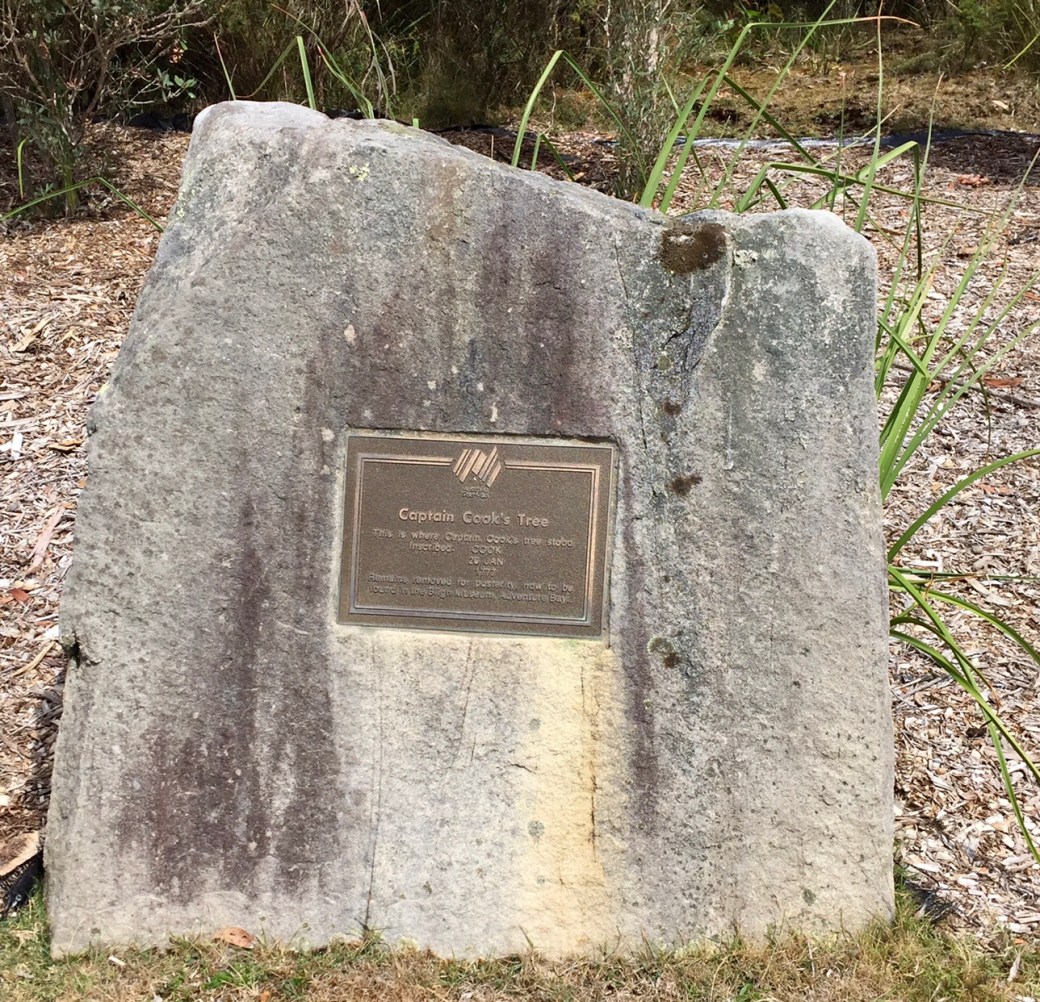
I could not wait to visit the Adventure Bay. It was quite important for me to see the place I encountered so many times in my reading. It grew in my mind into a monumental location. As it happens in life, it turned out to be quite an unassuming place, of immense natural beauty nevertheless, but without any reminders of those glorious times. Finally, after searching the dead end road to Adventure Bay I discovered a small memorial brass plaque mounted on the rock, marking a place where a tree with Cook’s name and date of his visit stood. It was some 241 years and 16 days later that I made it.

A small museum nearby, barely the size of our living room, keeps the remains of the Cook’s Tree.  With it also a huge treasure trove of documents on the Pacific Discovery period, as well as the heroic attempts to reach South Pole with Scott’s, Amundsen’s, and Shackleton’s memorabilia. If you are a history buff like me, please allocate more time for your visit. It is worthy, and the entry costs just AUS$4 for an adult. If you can prove you are senior enough, a discounted entry of just AUS$3 will get you in. Unfortunately no photography is allowed on the premises. Very bitter to digest.

Well, the Adventure Bay was just one of the birthing elements in Australian history. Those Discovery Voyages opened the continent, then only sparsely populated by local Aboriginal tribes. There was never a mass migration of Europeans to Australia on the scale we witnessed in North America. But still Anglo culture dominates Australia and the question is, how did it happen?

Here’s the story: After the end of American War of Independence Britain lost the place to send its convicts from over crowded British prisons. Specially the repeat offenders, who qualified for extra harsh treatment. The British government addressed this issue by simply shipping those dangerous convicts to different parts of Australia, claimed by Cook for the British crown. Tasmania built the largest prison with maximum number of convicts— over one and half thousands at its peak in the late 1840s.

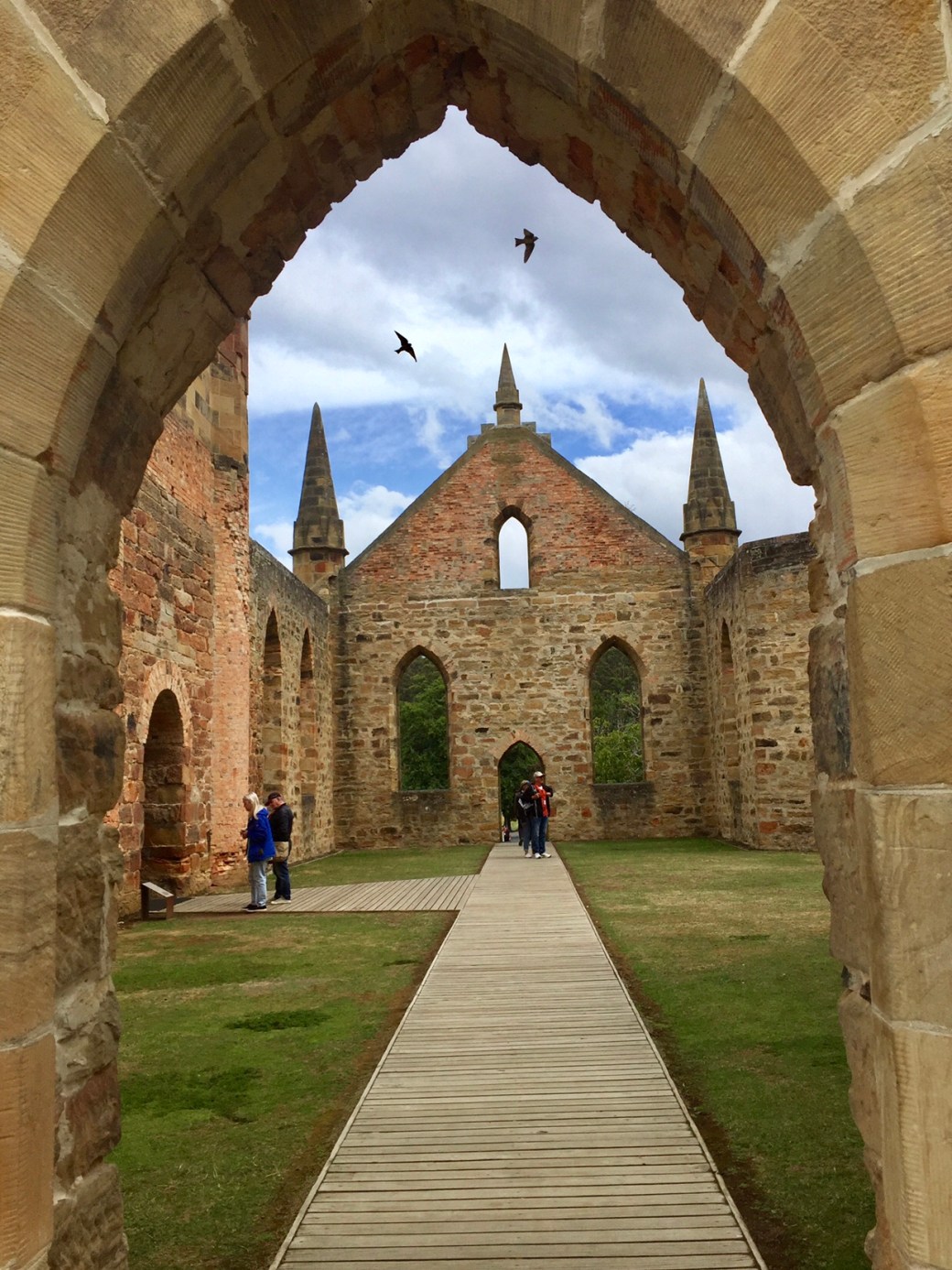
Port Arthur prison ruins

The place chosen for the prison was barely thirty miles east from Adventure Bay as the crow flies on Tasman Peninsula, a piece of land connected to Tasmania proper by less than one hundred foot wide isthmus called Eaglehawk Neck.

The isthmus protected by dozen or more chained vicious dogs created a natural environment for a fenceless prison, now the World Heritage site – Port Arthur. Together with (largely exaggerated) stories of shark infested waters around the Peninsula, it was an ideal place to limit convicts’ appetite for escape. Still, there were attempts through this no-man dog land. One convict tried to flee wearing a kangaroo skin and he hoped that hopping through the dog line could bring him to his freedom. It worked until one of the starving soldiers (you can imagine how bad the diet of the soldiers must have been, too) decided to improve his food supply by fresh kangaroo steak. He lifted his rifle and to his surprise, you guessed it, the kangaroo yelled, “Stop, I am not a kangaroo!” That was the end of the escape attempt and poor chap was convicted to 150 lashes. With extra points for his creativity. When he lost his consciousness, the punishment was temporarily postponed, until convict’s injuries were found by the prison’s doctor “healed” to such extent that the rest of the punishment could be completed.

Port Arthur was a model for a well run prison and many penal reforms of that time. Very quickly it became largely self sufficient, making money for its own operation by digging coal, logging (some of the gum trees logged then had trunk circumference of 24 feet, unheard of today, and more than three ships with timber were leaving Port Arthur for Hobart a week) , and also ship building. Putting underage convicts, some merely boys, on a separate island Point Puer and teaching them trades was another first and a successful model for prison reforms in the whole of British Empire.

The Guard Tower built by the Puer boys

The logistics of running large penal colony was difficult and it was a sort of prison for the soldiers guarding Port Arthur, too. You keep wondering how did they feel and if the difference between convicts and soldiers was really that great. For example out of more than one hundred soldiers only 14 were allowed to bring their wives. All prisoners were males only. Female convicts were sent to a separate prison closer to the capital of Hobart or they were sent out to farms to help the farming families. Fourteen women among one thousand plus men must have created very interested dynamics no matter whose wives they were.

My feelings coming here were certainly mixed. Why would anyone want to crawl through an abandoned prison? What may have been normal treatment of convicts then, is seen as a terribly cruel punishment now. But we were time and again encouraged to go and as we descended from the beautiful Visitor Center into a park like setting with a lovely rose garden and behind it well preserved castle-like ruins of the prison with the blood of convicts carefully washed and sanitized, it felt almost a pleasant place to spend a Sunday afternoon!

The Rose Garden

And next to it the remains of the church where convicts were summoned to mandatory Sunday services, reminded me of our trip to St. Andrews in Scotland, and its own very romantic ruins. The only part missing here was a golf course! “It must be a joke! Is this really what was supposed to be one of the most cruel prisons in South Pacific?”

The remnants of the church, destroyed by fire
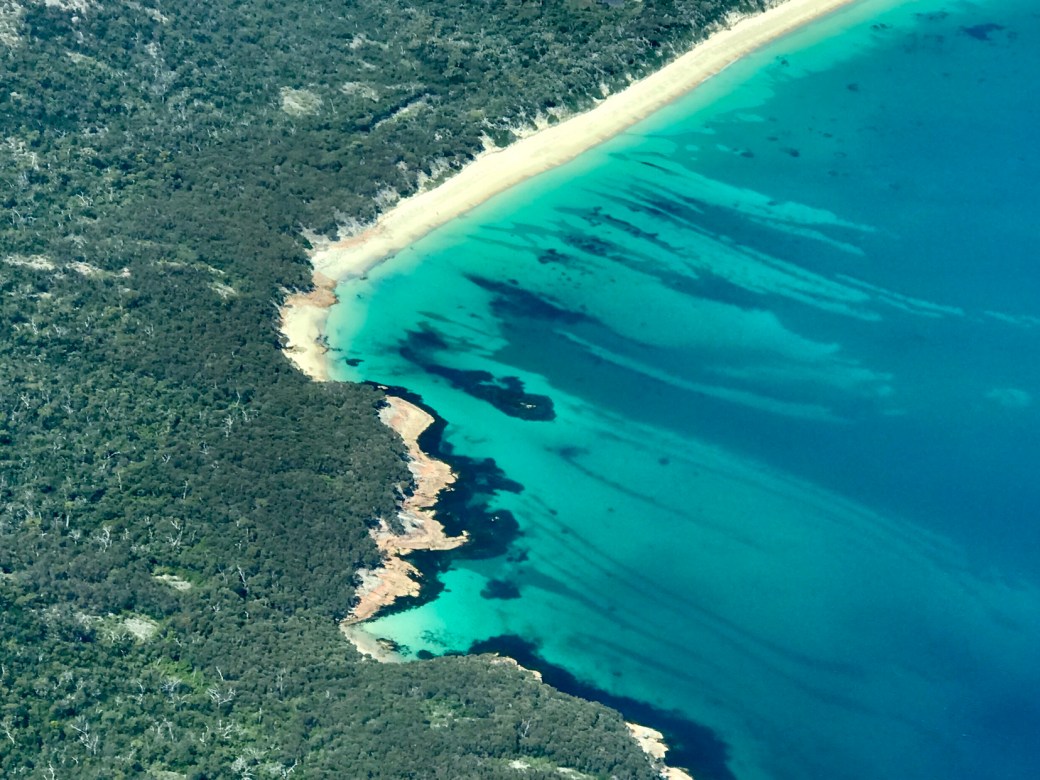
And what happened to those prisoners surviving the long terms served in Port Arthur?

In the best judicial intentions everybody was then free to go! Guess where? Anywhere they wanted. How? Well, that was their problem! But returning to Motherland on the River Thames was rarely practical. While convict transportation tab for a trip to Australia was picked up by His Majesty’s Government, the return ticket was ex-convict responsibility. So they stayed and found another ex convict female and because they were lacking, often a local Aboriginal woman. And here we are! No wonder that many (the scientific estimates supported by DNA testing put that number at 74%!) Tasmanians can track their pedigree as descendants of those early convicts. Are they ashamed of it? Not at all! Some of them may be silent about it but many others carry their convict roots as the Red Badge of Courage! After all, it really took some guts and perseverance to make it in those early times.

There is another sad chapter of the Port Arthur story. After proclamation of the World Heritage Site and becoming a major tourist attraction another defining moment in the young history of Australia occurred on Sunday morning, April 28, 1996. A young Hobart man armed himself with three high powered firearms and ammunition and then drove to Port Arthur. During the rest of that sunny afternoon and following night he killed thirty five (35) people! Only then he was captured by police.

A vigorous discussion followed which was marked by strongly held views on both sides.

Does it sound familiar?

Because of this single terrible event the Australian people said never again and the Government passed new gun control laws, that are among the strictest in the world. And, guess what— they never had another mass shooting again.

You have to admire those Aussies.

A Tiny Taste of Tasmania

“Oh, you are going to Tassie,” (as the Australians lovingly call their biggest island), “it is just the best, it is so beautiful…”

“Well, I have never been personally, but you will just love it.” This was a universal response when we told people we were heading for a week of travels in Tasmania. We actually have not met any Australians who have been to Tasmania, but we agree with all who told us it was beautiful and yes, we loved it.

There are many diverse, interesting and beautiful places, from moss covered forests with tallest tropical trees in the world, to trout stocked streams and rivers, cheerful vineyards and lonely lighthouses, but our perfect Tassi day was all along and up the East Coast.

After so much driving around New Zealand we were happy to base ourselves in Hobart, an easy decision for we had an open invitation from friends of a friend to stay with them. We worried about overstaying our welcome but we quickly made close connections with Peter and Jenny. How could we not, for we had a shared experience of raising three daughters and loving travel. Every night we lingered after dinner to all hours of the night comparing travel and parenting notes, chatting, discussing and solving world problems. Day trips to the farmer’s market, secret waterfalls or the (in)famous MONA museum in the company of locals are just the best way to learn about and experience the country.

But we knew we could not leave Tasmania without paying a visit to Port Arthur (you will surely hear about this place from Mirek) and the Freycinet Peninsula. Forewarned that a rain storm will hit sooner or later we jumped in the car and drove away chasing the sun. Our luck held, but as we approached the Freycinet National Park we realized the magnitude of the area (and the many stairs leading to the view points and beaches) and the long way we still had to go before the night. Luckily the perfect solution presented itself. A flight over the peninsula in a small Cessna was advertised on the side of the road and in a split second we made a unanimous decision to veer off and take a chance.

The young pilots in smart uniforms welcomed us with big smiles. Perfect day for a ride.

“Will the weather hold?”

“Most definitely. A plane just left, but will be back in 45 minutes. Why don’t you check out the Friendly Beaches down the road and come back in a little bit.”

The Friendly Beaches were indeed friendly. Or perhaps we should call them friendless as there was barely a soul in sight. There were miles and miles of the finest white sand, so fine it squeaked under our feet with every step we took.

One of the Friendly Beaches

Seagulls and seagrass

Excited, we returned to the plane and with some trepidation watched the young pilot push it into place.

Getting into position

“Um, how old are you?

“Twenty four, but don’t worry, I have 10 years of experience. I started flying at 14.”

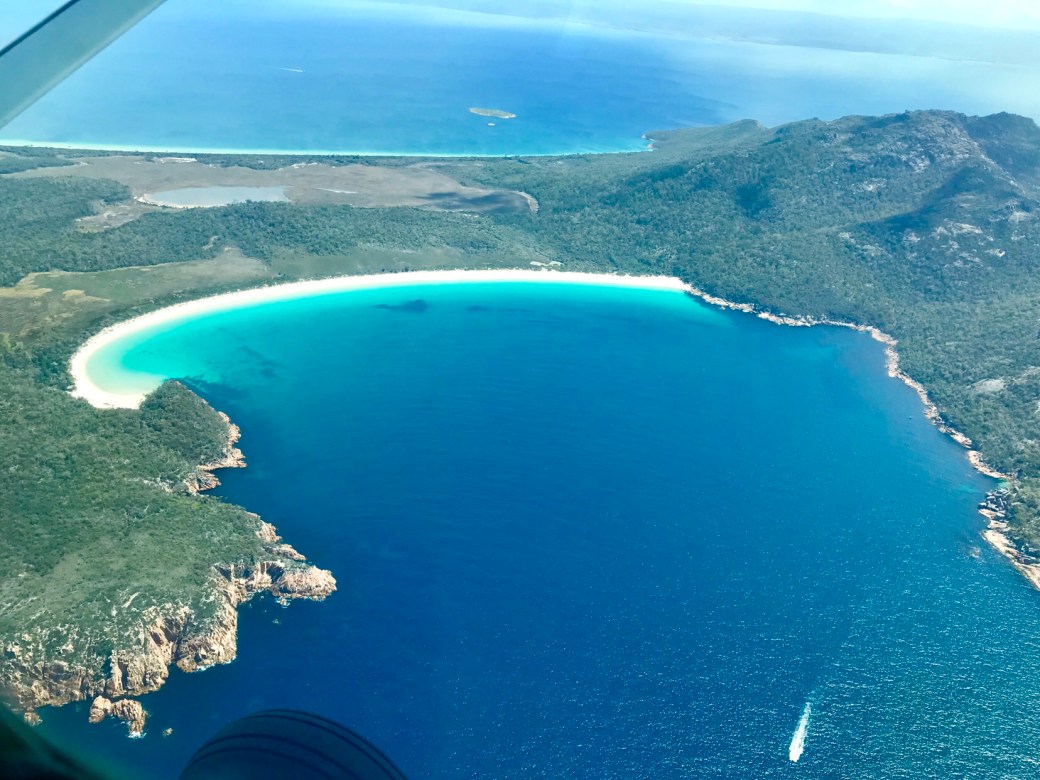
And off we went into the still blue sky and soon our eyeballs were popping out of our sockets. One after the other the overwhelmingly spectacular sights of the granite rocks and the many beaches,

including the world famous Top 10 Beaches of the World worthy Wineglass Bay. What is so cool about this beach is that it will stay unspoiled forever; it will never have a hotel built on its sand as it is in a national park. It also gets very few visitors because it takes many hours of steep walking to get to it and then back again.

Wow, wow, wow!

“Do you ever get tired of the view?” we ask the pilot.

“No, how can you, just look at this! On a sunny day like this I am up here four or five times and I love it!”

We came back within half an hour and landed over a flock of elegant black swans. As we walked away from the plane a small echidna, a visual cross between an anteater and a hedgehog ambled across the grass.

After a quick reinforcement with a plate of oysters and a bowl of mussels we continued our coastal drive north to the Bay of Fires.

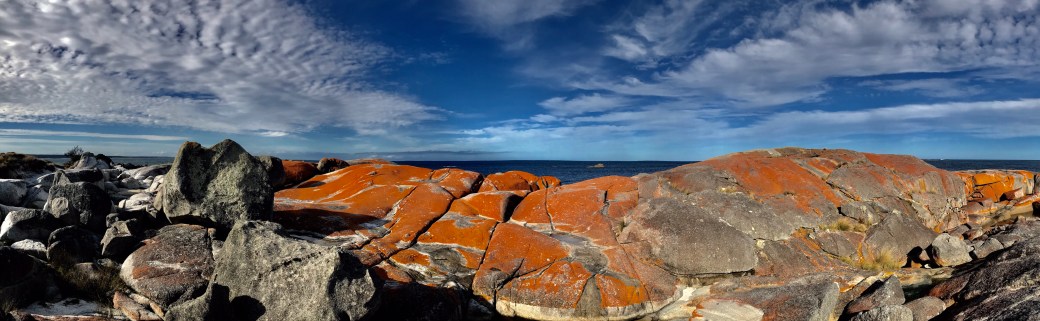
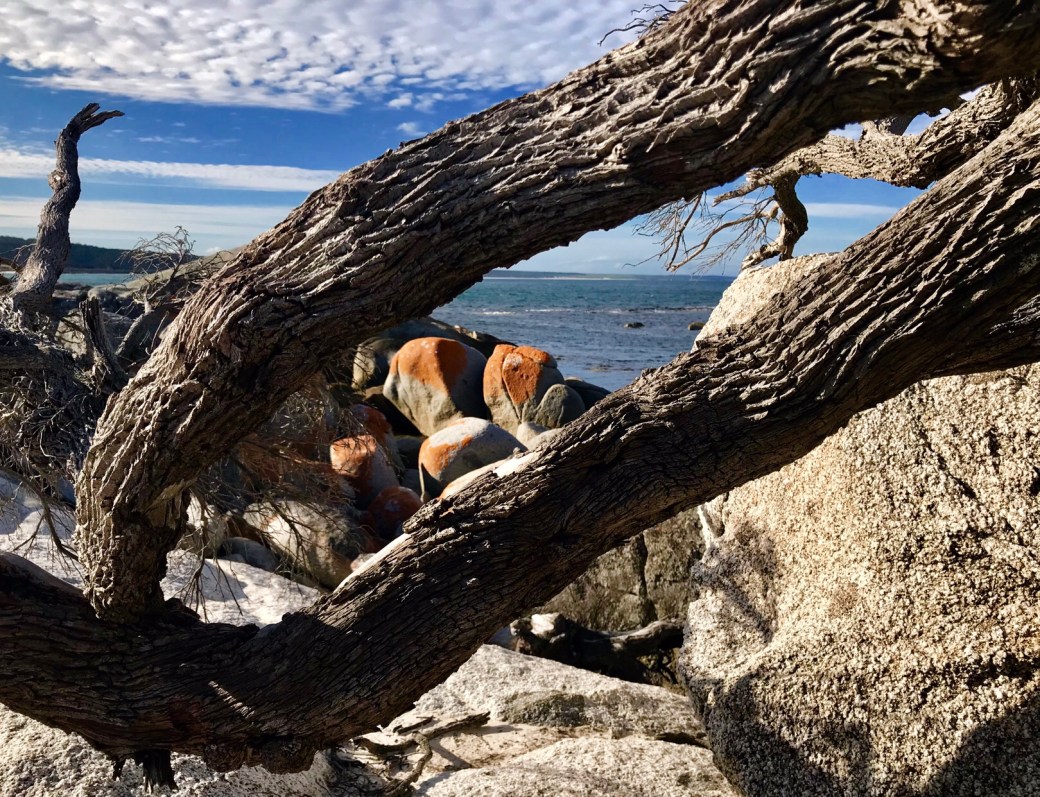
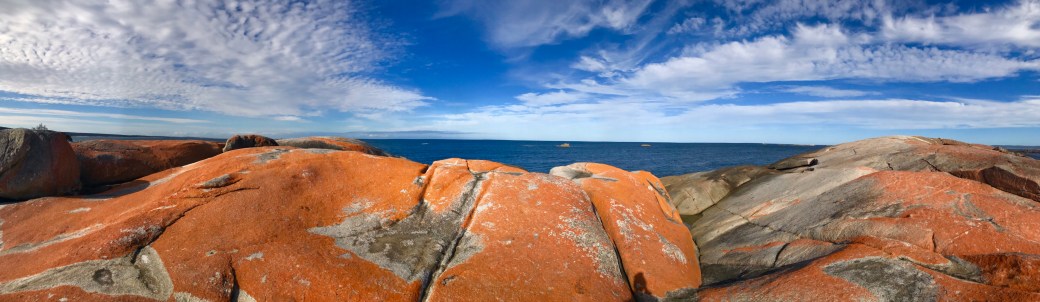
It got its name from the fires spotted by the first white explorers in the 18th century, but it might as well have gotten the name for the spectacular orange hued granite rocks strewn about. In the late afternoon sun they indeed glowed as ambers. The origin of the color is just a species of lowly lichen but in force it makes for a spectacular showing. We went from bay to bay, never tiring of taking photos.

Then the gathering clouds sent us a message to get going inland, for we were to spend the night close to Launceston, the second biggest city in Tasmania. But to get there we had to cross the Blue Tier Forrest Reserve with narrow windy roads.
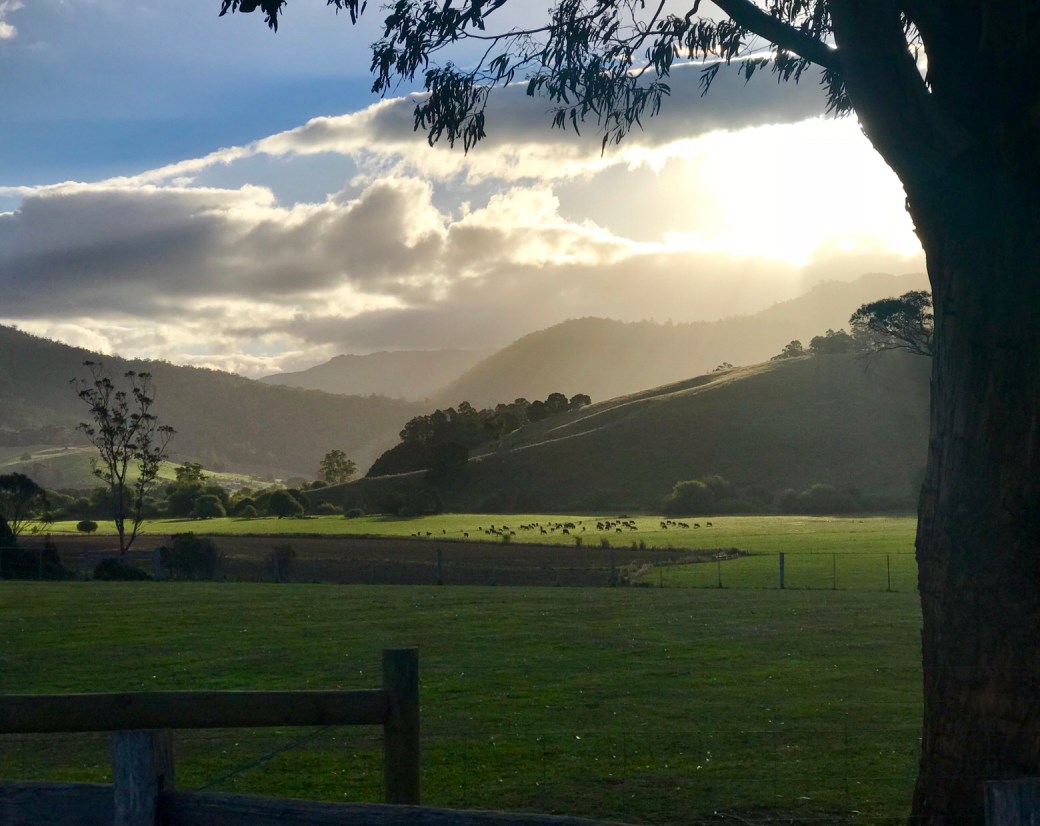
Desperate for some sustenance we veered off our forrest course to reach a green valley of Pyengana. (Population 123). We might as well have stepped into a mystical Irish vale with a pub at the end of the road. We stepped out just as the sun broke through the thickening clouds to illuminate the cattle grazing far off in the emerald grass.

A stampede of four light chestnut horses took our attention away from the cattle. One by one they came to say hello and sniff our hand. Really, what else? A leprechaun?

The old Pub in the Paddock, licensed since 1880, was empty save for a couple sitting in the corner nursing a glass each. “The kitchen is closed,” announced the bar tender, “but you can always get a pint of beer.”
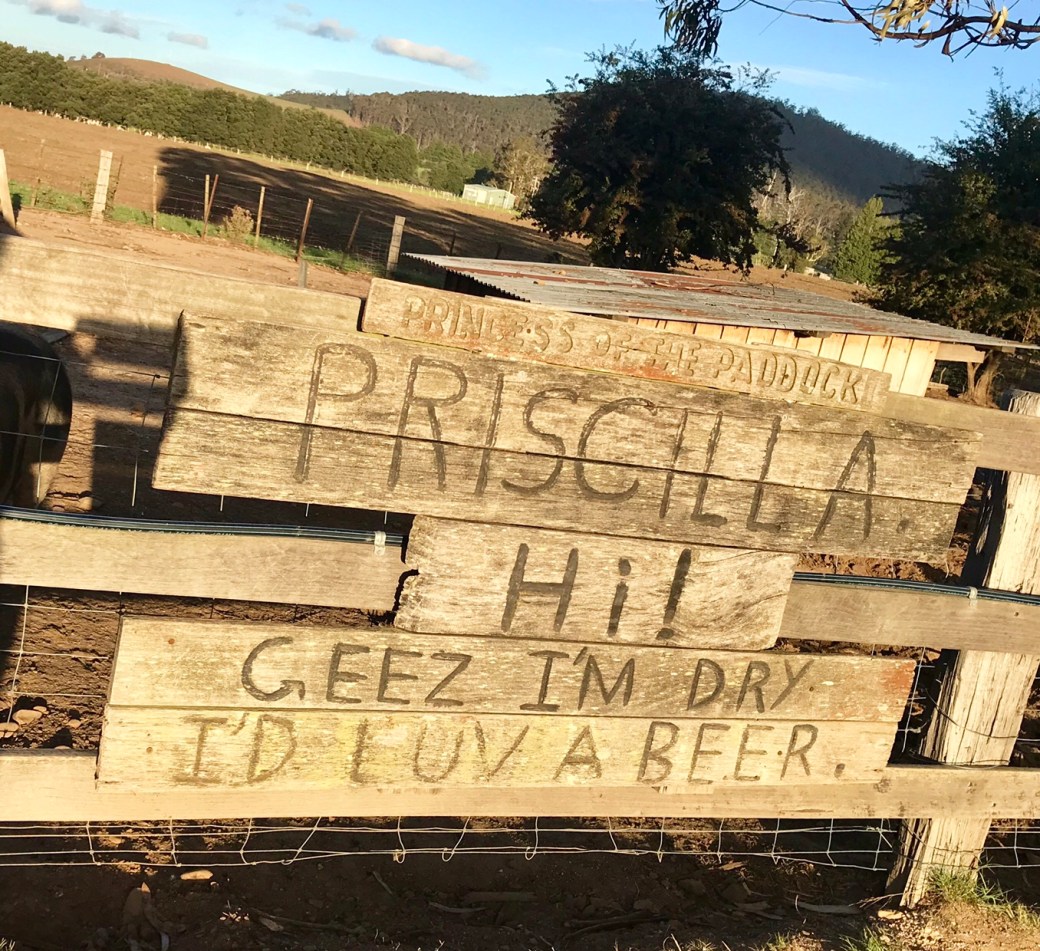
So we each got one and sat down.

“Would you buy one for our pig?”

“A beer drinking pig?”

“We actually have three now.”

“What are their names?”

“Priscilla I, Priscilla II and Priscilla III.”

“Like in Priscilla, Queen of the Desert?” (An old Australian movie and musical)

“Nah, Priscilla, Princess of the Paddock.”

So we bought a special watered down version of beer for the Priscillas and watered them before we left for the last part of our drive.

Priscilla I, II or III?

We got to our studio apartment at Jack’s B&B in the dark. Not a single place in the small town was open, except for the liquor store, but good old Jack, moonlighting as a local school bus driver, had our mini fridge and pantry stocked with all sorts of goodies. He waited up for us, warming up the kettle.

As we sat down to tea the skies opened and the rain pelted down and never stopped until noon next day.

Cultural and Other Shocks in Melbourne

If we ever hopped that our one year of travel would give us plenty of time for physical and mental rest and more breathing room for writing, the beginning of our third week dashed our hopes completely. How could we possibly think that a transfer from pastoral peace of New Zealand’s South Island into the hectic urban tempo of Melbourne’s cultural hub would be easy?

Everything started with a very, very early flight from Christchurch. Getting up at 3 am and after four hours being disgorged onto lively streets of Victoria’s capital was unsettling, to say the least. We booked an Airbnb in the Fitzroy area, a very hip, if a bit grungy area, full of vegetarian and vegan restaurants with horizontals surfaces decorated with clever quotes and/or graffiti. We picked this particular Airbnb for the hosts— a gay couple who have a record number of 5 star reviews and offer a legendary breakfast. Seeing that we were novice, albeit absentee Airbnb hosts ourselves, we wanted to learn from the best. Indeed, the initial warm and extensive internet communication culminated in a personal reception worthy of long lost friends. Pastries, double cappuccino, metro passes and a long chat proved that the original concept of Airbnb where strangers shared a home, friendship and travel advice was indeed a good one. This was compounded by enthusiastic welcome from their dog Jordan, a fluffy ball with a stylish cut and color.

Jordan and Mirek bonding

Sufficiently reinforced we braved the sticky warm weather of Victoria’s late summer on a long reconnaissance walk through Fitzroy. We found temporary shelter in a small gallery of the National Trust where we first came face to face with the modern Aboriginal art. Maybe it was a combination of the freezing air-conditioned air with the huge canvases of boldly colored organic forms, but we felt like we were smacked upside our brain. I was first introduced to this unique art form as a ten year old boy when my visiting aunt from Australia brought me a painted boomerang. The vivid colors and the white dots surrounding the kangaroo set me to dreaming of other places. Was this the beginning of my obsession with so called “primitive” art? The prehistoric rock paintings in the caves of Lascaux, the Sulawesi hand prints, the animals of Namibian San people—they all call to me with an old faintly familiar power. The Aboriginal paintings are even more attractive as they are created now, fresh and vibrant, connecting the ancestral past with the civilized present. There is a commonalty of shared tribal roots, but also individuality of each regional group or particular artist, the best quite easily recognizable for their unique style.

Elated we continued through the Downtown Districts ending by the Yarra River banks.

And there I innocently stumbled into a trap prepared in close coordination with a man neither of us has ever met before, a cousin of a friend of a friend called David, otherwise a theater producer for Melbourne Arts Center. By then I was toast and ready to collapse, but David’s embracing, warm personality and the cold Aussie beer he pressed into our sweaty hands at the Art Center’s watering hole, saved me. Rejuvenated with refreshing bubbles in our veins we embarked on a behind the scenes tour of the spectacular complex with the best private guide we could have wished for. David had been working at the Performing Arts Center for more than seventeen years and no door could stay unlocked as long as we wanted to know and see what was behind it.

Ksenija with David admiring the glass painting at the Center (obviously inspired by the Aboriginal art).

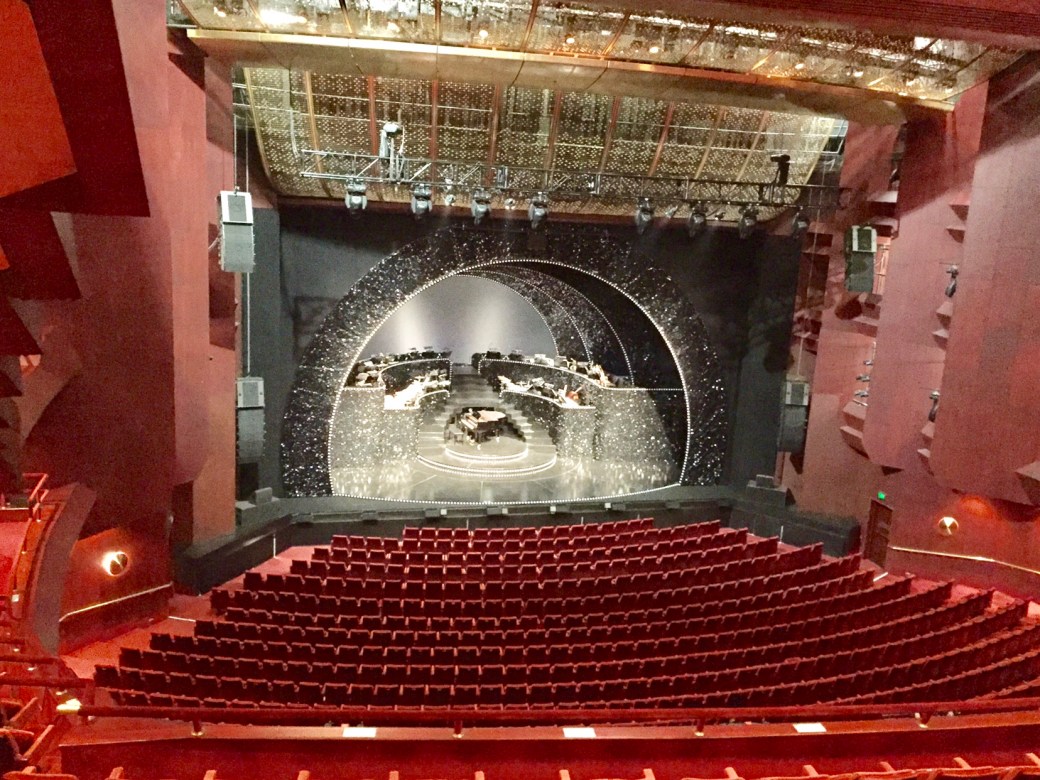
This included the patron’s emerald gold meeting room with two Oscars (for the movie Camelot) left casually standing on a small table and the conductors’ private rehearsal room with an ink portrait of Yehudi Menuhin. The Center has three auditoria, the largest, with the capacity of 3,400 orange velvet seats, used for symphony concerts. The other two, one medium sized for 2,400 spectators and one small for 440, we also got to see in their full theatrical glory during the shows on the two consecutive evenings we had in Melbourne.

The set of Dream Lover

In the medium size venue we attended a more traditional show called “Dream Lover” about the life of pop singer Bobby Darin. If you are in the similar age bracket as I am, and most in the audience certainly were, I do not have to waste my and your time reminding you of the titles such as Mack the Knife or Dream Lover or Beyond the Sea. You probably hear the music in your head right now. What was surprising was that this show was still sold out after having been performed daily for more than three months. But Melbourne cannot be a place full of just old farts like me, right? There must be younger people going to the theater here! And you bet there are!After our extensive tour David took us to the staff cafeteria where we were introduced to the director of the show David was producing and then he ushered us through the back door to one of the last performances of the touring Irish troupe called “Riot”.

And here surrounded by a rowdy young crowd, I was completely unprepared for the cultural shock. Living the better part of my heterosexual adult life in San Francisco, I slowly, steadily got well adjusted to living side by side with gay and lesbian humans beings, without thinking too much about them, except for supporting their equal rights. I do not want to walk on the thin ice of political correctness here or being nice without being honest. Honestly. But in my busy world/life I do not remember of ever thinking or let alone encountering any transvestites!

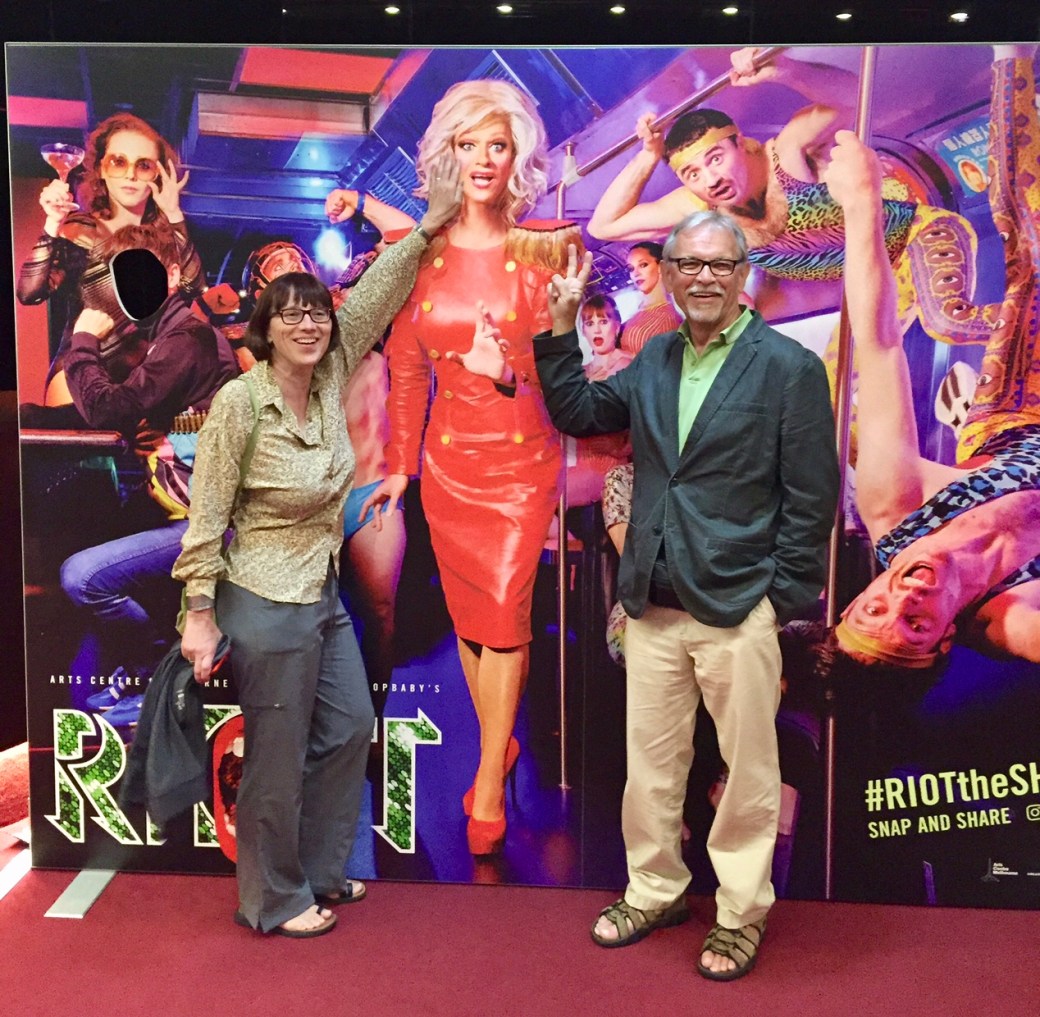
The main star of Riot was a transvestite with original name of Rory O’Neil,  going by the stage name of Panti Bliss. Naturally tall he/she dominated the show. Not just because of additional help of 8-inch high red heels in which he effortlessly strutted on stage and floated smoothly down stairs and aisles to interact with people in the audience, occasionally sitting in their laps. I am afraid my English was not good enough to catch all of his/her comments/jokes/critiques/political commentaries. But Rory’s/Panti’s monologue on destiny and his/her childhood dream of becoming Farrah Fawcett was the top performance of the evening. He/she implored everyone to follow our dreams even if they are as outrageous as becoming Farrah “Fucking” Fawcett. Funny, witty, hilarious, moving. Strangely, I did not know if I should be laughing, screaming, or crying. What the heck is going on with me?! I came a long way, baby. I was mesmerized by a transvestite! I liked and felt for him/her. Yup, she is now Farrah “Fucking” Fawcett even for me and for the rest of my life!

After the show, standing in front of the poster with Farrah “Fucking” Fawcett in the lobby of the Melbourne Art Center.

Still full of impressions, it did not feel right to just go home. We waited for David and joined a few of his friends at the Art Center’s bar for a night cap. A few glasses of local champagne. It tasted like sweet prosecco and felt like a cold shower. It helped. It seemed that we were all touched by the depth of Panti’s performance. Our conversation quickly strayed into human interactions and the pain humans can inflict on each other. We talked about the Australian gay and lesbian citizens finally, just recently, gaining the right to marry. We talked about the terrible treatment of Australian Aborigines by white settlers, usually a sensitive topic. I brought up the incredibly well done exhibit in Wellington Museum on the battle of Gallipoli, the best war exhibit I ever saw. Their larger than life and true to life figures or real people in the war and the animation of what different types of artillery shrapnel can do to human body or what pain an attending nurse feels reading the letter home from a soldier who perished in the trenches reduced me to tears. Very uplifting end of the day, indeed.

And then it was time to go home. Our home away from home, our charming, lovingly tended, disgustingly, spotlessly, you can eat from the floor, clean AirBnB, with the level of cleanliness we aspired to for the last 30 years, but never achieved in our own home. Dropping to our bed physically and emotionally exhausted and being woken up by the beautiful smell of bacon the other half of our hosting couple is preparing downstairs in the kitchen.

Life is good. Bacon is followed by freshly pressure steamed macchiato. More sugar, please.

And morning breakfast talk:

“How is life, guys?”

“Good!”

“Are you getting married guys?”.

“Why?”

“Because you can now, can’t you?”

And then comes the story of death threats sent from Indonesia by a Muslim couple upon discovering during their recent stay that their hosts were, after all, a gay couple.

“We are scared!”

Humans will never change.

Milking the Cows

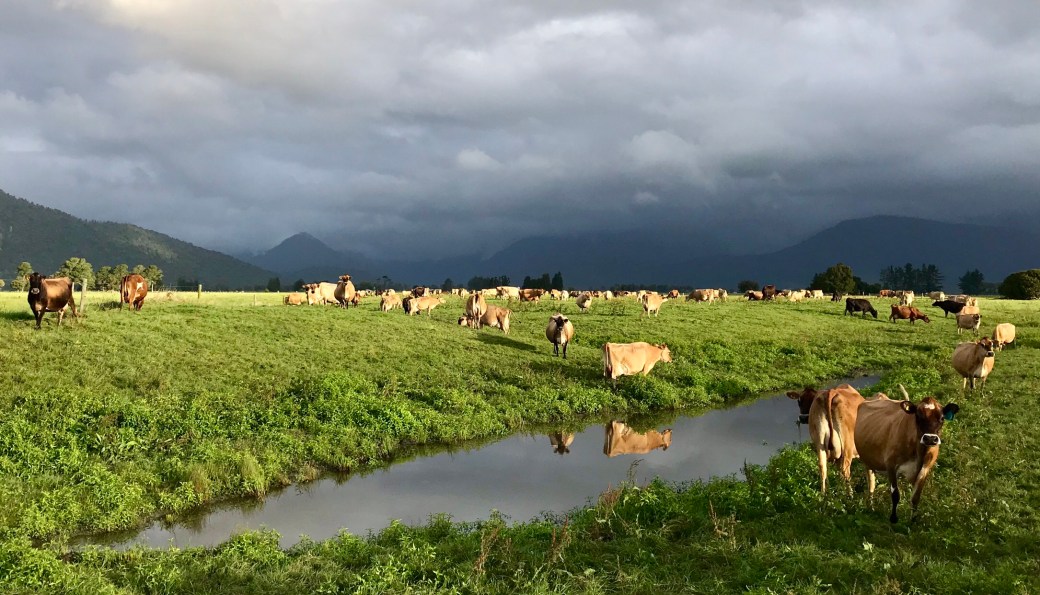
Just to be fair to the cows-another significant element of New Zealand economy in general and export in particular, we had to spend time learning all about milk production. To do this well we decided to live on a dairy farm for two days. Sheep may be white and fluffy, but cows are velvety long lashed beauties.
The only expertise I personally bring to this venture is the fact that when I was a little boy my grandpa had 4 cows, whose milk and butter I enjoyed in abundance. Also, currently the mother of my son in law has 120 milking cows on a farm in northern Bohemia and I love popping in for her wonderful home cooking (duck and dumplings in particular). Visiting her cowshed makes for an excellent desert after an exceptional dining experience.

The dairy farm we stayed on lies on the West Coast (the Best Coast as the locals are quick to point out) of South Island, the opposite side to the East Coast. I am emphasizing this redundant fact for the enlightenment of those of you who have never been to New Zealand and may not know how different the climates can be.  Guessing from the sheep farm on the East Coast I wrote about, you might have a mistaken idea that there is plenty of rain on New Zealand. Not so. While Eastern flatlands farmers constantly struggle with drought in the shade of the Southern Alps, the West Coast farmers could easily complain about more than plentiful rain throughout the year with over one hundred (yes, 100!) inches of water a year. Despite the over abundance of rain, the moderate climate allows for keeping the cows outdoors 24/7 year round. No pampering with comfortable housing with air-conditioning such as you can find frequently in horse stables of California.

Thanks to the rainfall, the pastures on the West Coast are lush and cows are removed from their evergreen grass supply only twice a day for milking rituals in the early morning and evening. This slows down to three times in two days at the end of every summer when the cows fall pregnant and the season of lower milk production starts. Morning and evening milking then alternates with just one noon milking every other day. That is the happy day when every dairy farmer can sleep in in the morning and jump to bed early, if he is not particularly interested in weather forecast on late night TV news.

The farm of my interest milks about 200 cows, not very big by NZ standards. It produces about 2,000 liters (500 gallons), completely filling a stainless steel vat with 4,000 liters (1,000 gallons) storage capacity on a regular day. In the vat the milk is cooled down to 4 deg Celsius (about 41F) as prescribed by the dairy factory for further processing. Everyday after 9pm, and I mean 7 days a week no matter what holiday may be in order, a large truck with a trailer arrives. The milk train is a huge vehicle whose combined milk load can easily reach 30,000 liters!

I tell you, you do not want to meet it on the narrow roads and predominantly one-way bridges of sparsely populated West Coast. The speed limit for ALL vehicles on the road is the same, but forty tones of milk on the wheels barreling down in the opposite direction makes you feel pretty small and rather irrelevant in your rented Mazda.

On arrival to the milking area, truck driver empties the milk vat into his cisterns, but only under certain conditions such as the milk has to be cooled down to at least 7C. The samples of the milk are taken and later analyzed for many things such as fat and protein content and presence of bacteria. The farmer is paid not for the volume of  milk (so cheating by pouring additional water into the vat does not help the poor farmer at all) but for fat, protein and bacteria content. The more of former two the better, more butter and cheese will be produced.

The more of bacteria obviously not so good; too much could mean complete rejection of the whole load. From the marked samples they know which farmer’s milk spoiled the lot and he is financially responsible. That’s the day you appreciate paying your insurance premium on time!

And if the milk truck and trailer does not show up or the dairy factory can not accept the milk? Well, too bad for the farmer! Last week when the cyclone from Tasman Sea hit, the local dairy factory lost its power supply for a day and stopped accepting milk from local farmers. So some of those chaps had to pour out all the milk on their farmland, losing their daily production.

But how does the milk get into the vat?

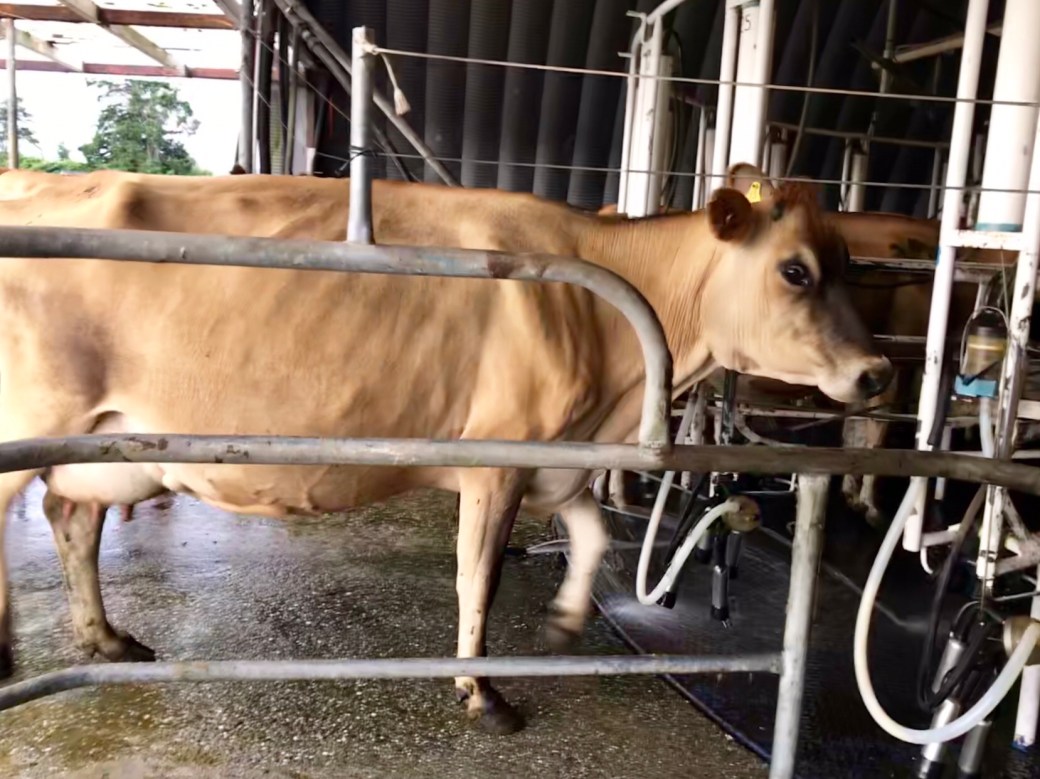
Without barns for cattle housing, the milking area is the only roofed place on the farm with the exception of a few dilapidated shelters. Those are senselessly protecting various pieces of the farm machinery against the elements, even as they have been deserving of the junk yard a long time ago. In the milking area stands a carousel with 28 cow platforms revolving slowly. Adjacent is an uncovered corral—a staging area where all the cows are herded to by two dogs.

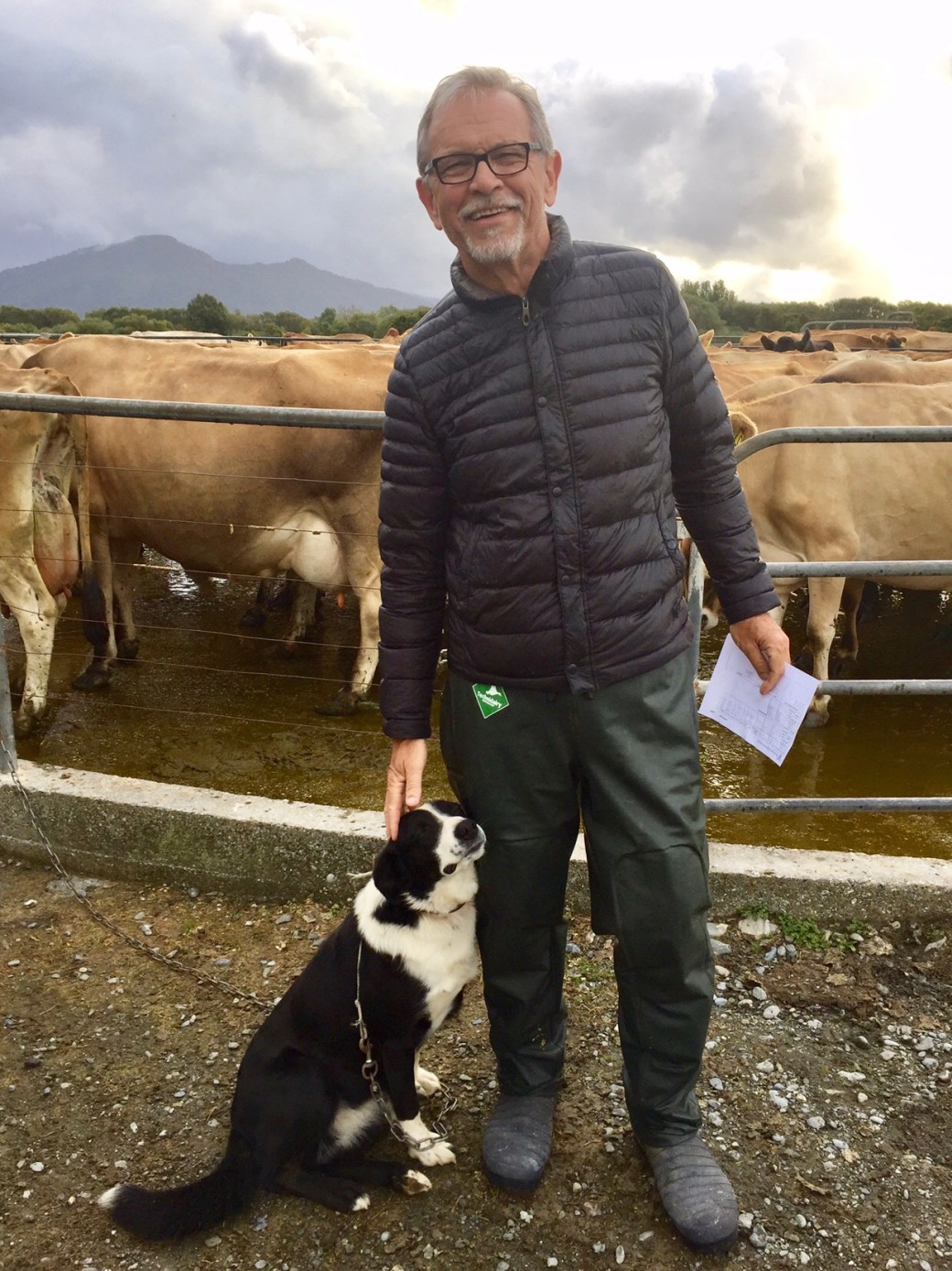
With the dogs guarding the corral’s entry gate the cows can only push on through a small opening leading into a narrow corridor bringing the cows one by one to the carrousel.

What a great idea! Who doesn’t have the finest memories of being on the merry-go-round as a kid? This cow merry go round was an invention by a New Zealand Thomas Alva Edison, and combines the everyday fun recreational activity with the ever important production of white liquid gold, bringing the country heaps of foreign currency.

At this point of the milking process the farmer’s only assistant/part time employee/sister connects each cow to a milking machine so she can join her other 27 friends for a fun carrousel ride while the vacuum relieves her of her heavy load of milk. After a 360 degree ride to its terminal point, there or even before, if milk stops flowing, this poor animal gets disconnected and she backs off slowly, 20 liters lighter, and follows another narrow corridor to the green meadows. There she continues in her duties for the queen and country, chewing as much fresh grass as possible.

Where is farmer James in this activity? Well, he supervises everything. Checking if the dogs bark properly and in the right direction, so cows behave well. Supervising his assistant/part time employee/sister attaching all the cows to the elaborate piping system and makes sure all milk is sucked into the vat! If something goes wrong, he grabs a screwdriver and does not stop until milk goes where it should go. You can imagine not many words are being used in the best Anglo-Irish tradition even if I include occasional barking of dogs in overall communication. And even the dogs stop barking after discovering the soft spot in my heart for the best friend of humans.

“It is out of the question” shared farmer James in one of his longest speeches, “to become emotionally attached to any living creature in dairy business!”

“The moment you lose your focus, the quality of milk suffers and you are doomed!” He nailed his point.

The moment his four-legged assistant got wind that I am the one week link in this organizational structure, he sat down next to me and started licking me for the rest of my stay, damn the milk, the cows and the farmer!

And as for the cows? In my follow-up inspection of the troops they also showed a certain level of affinity towards me. Of course, as I said, I am NOT an expert, but I kind of felt  they, too, looked suddenly happier!