
 It pains me to admit it, but we went to Moldova for all the wrong reasons. With one important exception – drinking excellent Moldovan wine in situ.
Ever since Republic of Moldova became an independent country I wanted to go. It sounded really cool to go to a country that nobody I knew has been to and nobody really knew anything about. It only took us 28 years to make it there. No rush, though! To this day Moldova, the poorest country in Europe, is also the least visited country in Europe with only 11,000 annually recorded visitors from abroad. 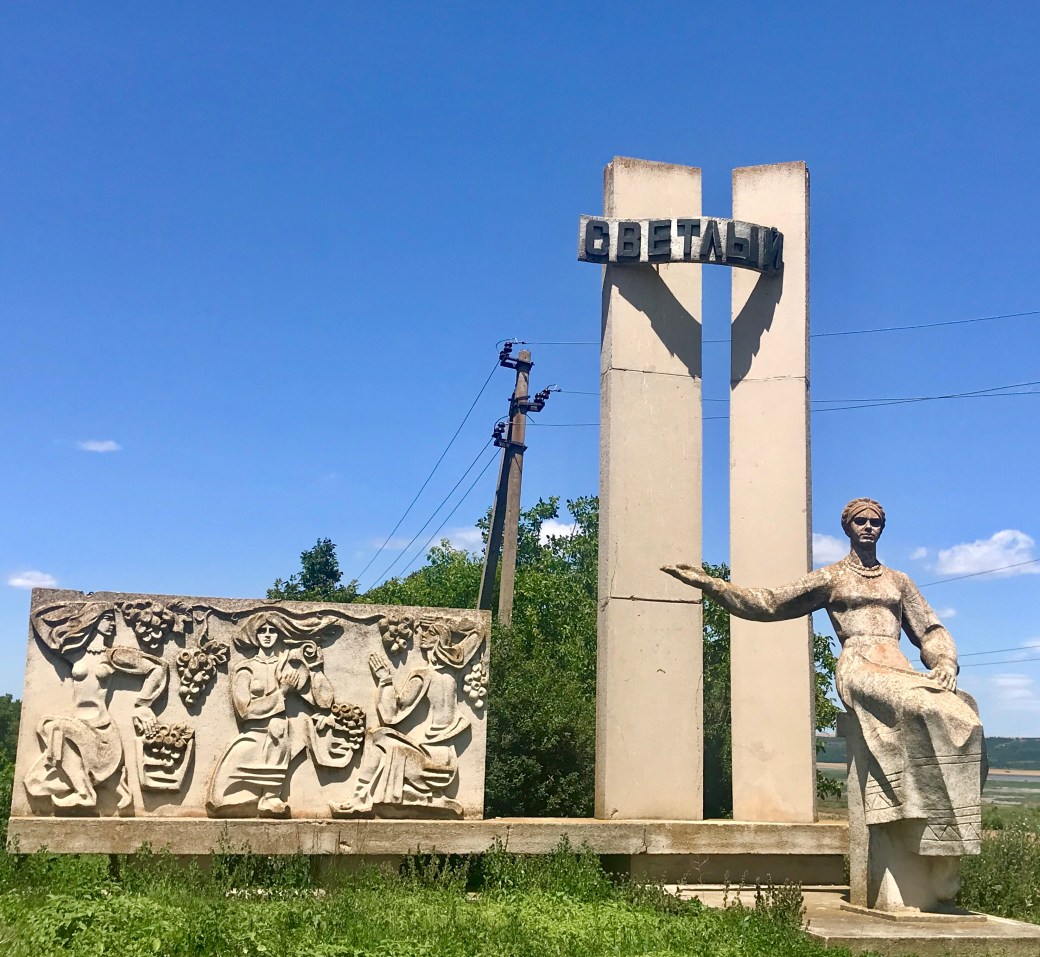 A while ago the ex Soviet Republic gained notoriety as the unhappiest country in the world according to World Values Survey. Why would one want to go to the most unhappy country? I just refuse to believe that statement! As always I question authority and the hyped up news titles. There is no way it could be more unhappy than say war torn Syria or Yemen.
OK, it truly, really isn’t. But we certainly were the most miserable travel couple the day we arrived. It was not so much the wait at the border crossing, where in total chaos we kept being yelled at in Romanian and Russian by other miserable car drivers, it wasn’t so much getting lost and more lost on badly signed and even worse maintained roads,  nor was it the lack of any reliable information from anyone we asked, it came down to a terrible case of food poisoning that kept us on our knees half the night in our otherwise very lovely boutique hotel. There are small graces you might appreciate, if you get a moment between bathroom runs: having your own en suite bathroom is one, and having a nice clean bathroom with cold tile where you can lie down before you muster the strength to climb back into bed, another.
  The receptionist was very kind and happily moved us to another unbooked room for an extra night so we could recuperate.
Once we did somewhat, we stumbled around hot as hell capital of Chisinau (Chișinău/Kishinev) in search of an air conditioned coffee shop.  In better shape we could have seen most of the main sights in just about half an hour. They are all centered around a small park with a Nativity Cathedral, a tiny Arc de Triomphe,
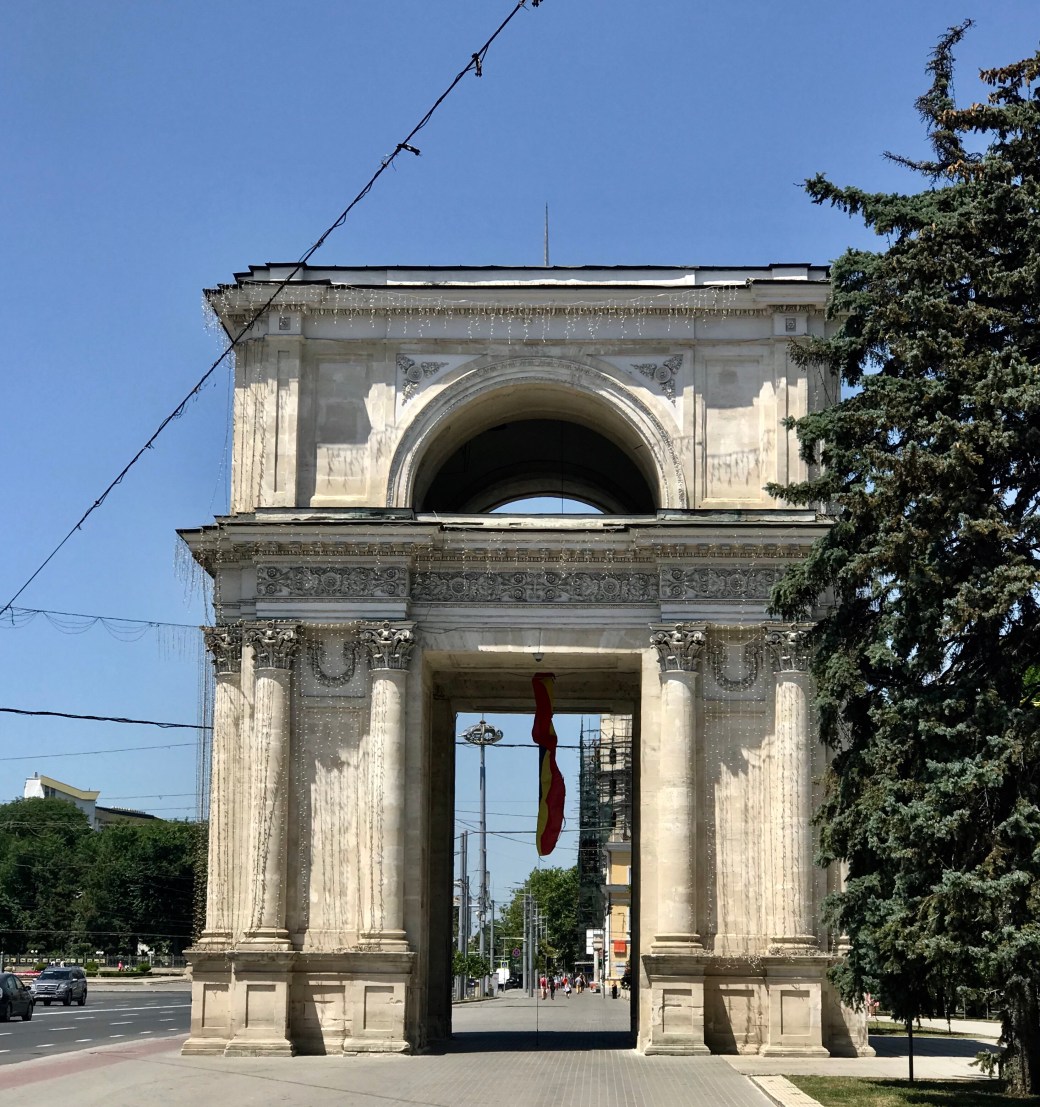 and a statue of Stephen the Great, a Moldovan prince who resisted Ottoman rule. There are a few other spruced up neoclassical buildings around, surprisingly bedecked with European Union flags.
  While some are trying to get out of EU, some are desperate to get in.
Of course my husband can’t help but notice all the other architecture, the reminders of his Soviet overshadowed childhood. And there is plenty to notice: blocks of Soviet-style buildings and run down apartment complexes running each and every direction.
How about getting out of the capital and into some historical places? Supposedly a short drive from Chisinau there is an old monastery of Orheuil Vechi. A short drive becomes a long drive, because:
– A our hotel receptionist has never been there and he doesn’t have a car so he doesn’t know which road goes there
– B our Google maps doesn’t work here and Maps.me takes us the wrong way, which is the short way that brings us dangerously close to the border of the renegade Transdniester Republic. Oops, there are some guys in strange uniforms at the crossroads. In our rudimentary Russian we ask, “Moldova da?” and they nod. Then we say: “Orheuil Vechi kuda?” and they point to the road. As we drive away we spy a lone (abandoned) Moldovan tank in the bushes. These were definitely not Moldovan soldiers. Wondering if there is an invasion in the works we continue through a village and after consulting with a farmer turn back and take an unpaved road that brings us to another village. We ask some people parking a car, but they are Ukrainian tourists that just arrived. We find the garden of a Homestay restaurant with some young Polish guys. They have no clue where the monastery is, but they are happy to share their booze if we would like? 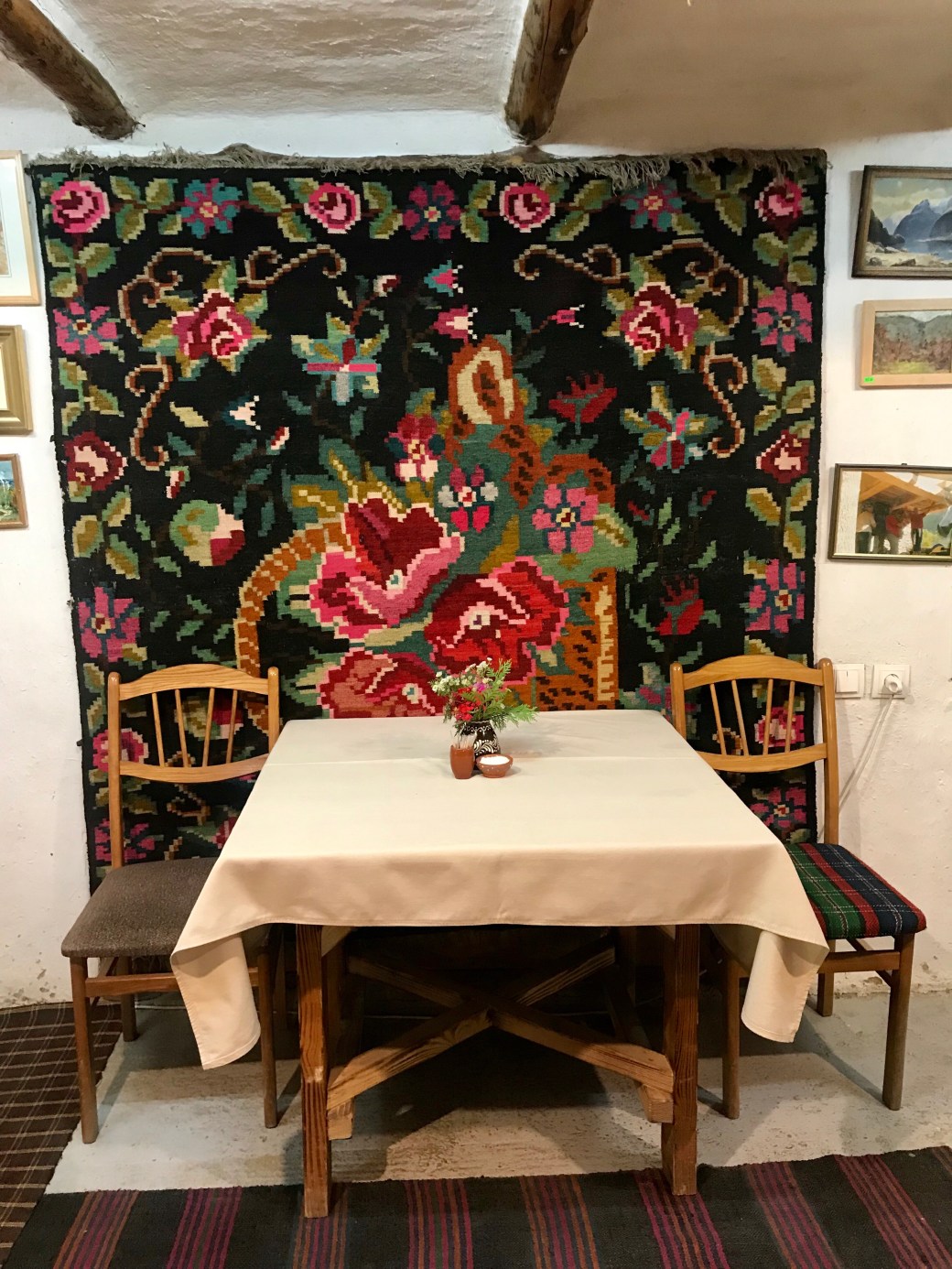 Don’t bother asking the cook, they say, she doesn’t speak anything but Moldovan. Luckily there is a Moldovan family eating lunch inside that lives in Denmark and they tell us in perfect English that the monastery is just around the corner, but we will have to park the car and walk up the hill. So past the old cemetery
  we walk up the hill until we find some stairs leading into a tunnel of sorts and into the dark cave lit by some sputtering candles. Monks have dug this underground sanctuary in the 13th century and the old monk mumbling prayers in the corner looks like he might as well be from that time. He is barefoot with long gray hair and beard and an old black torn habit.
 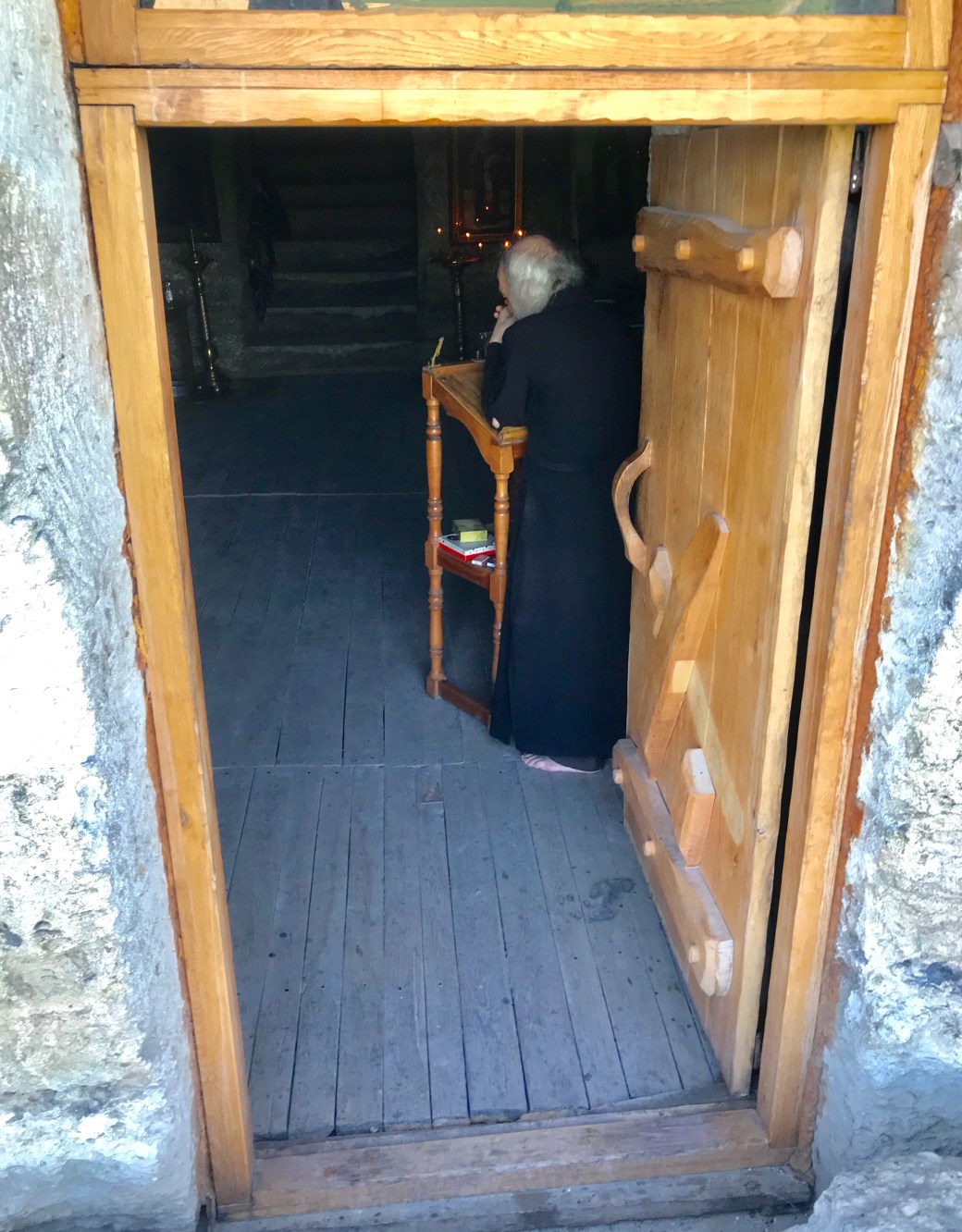 He scares the bejeezus out of me. I walk out to the ledge above the river and I scare myself looking into the wooden window frame
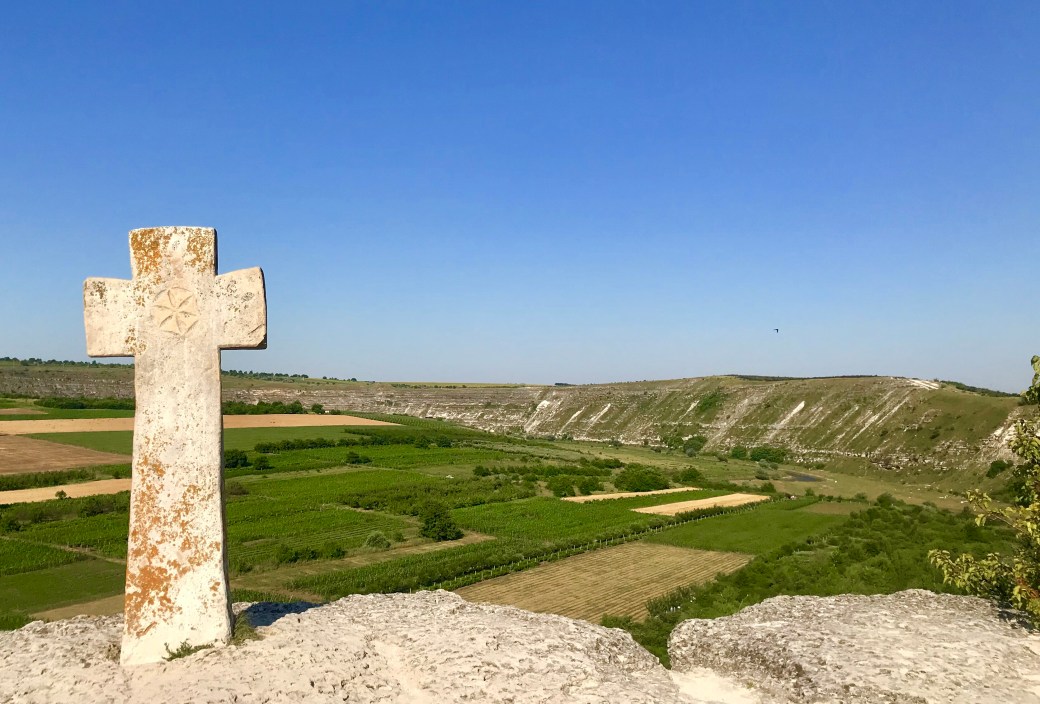
 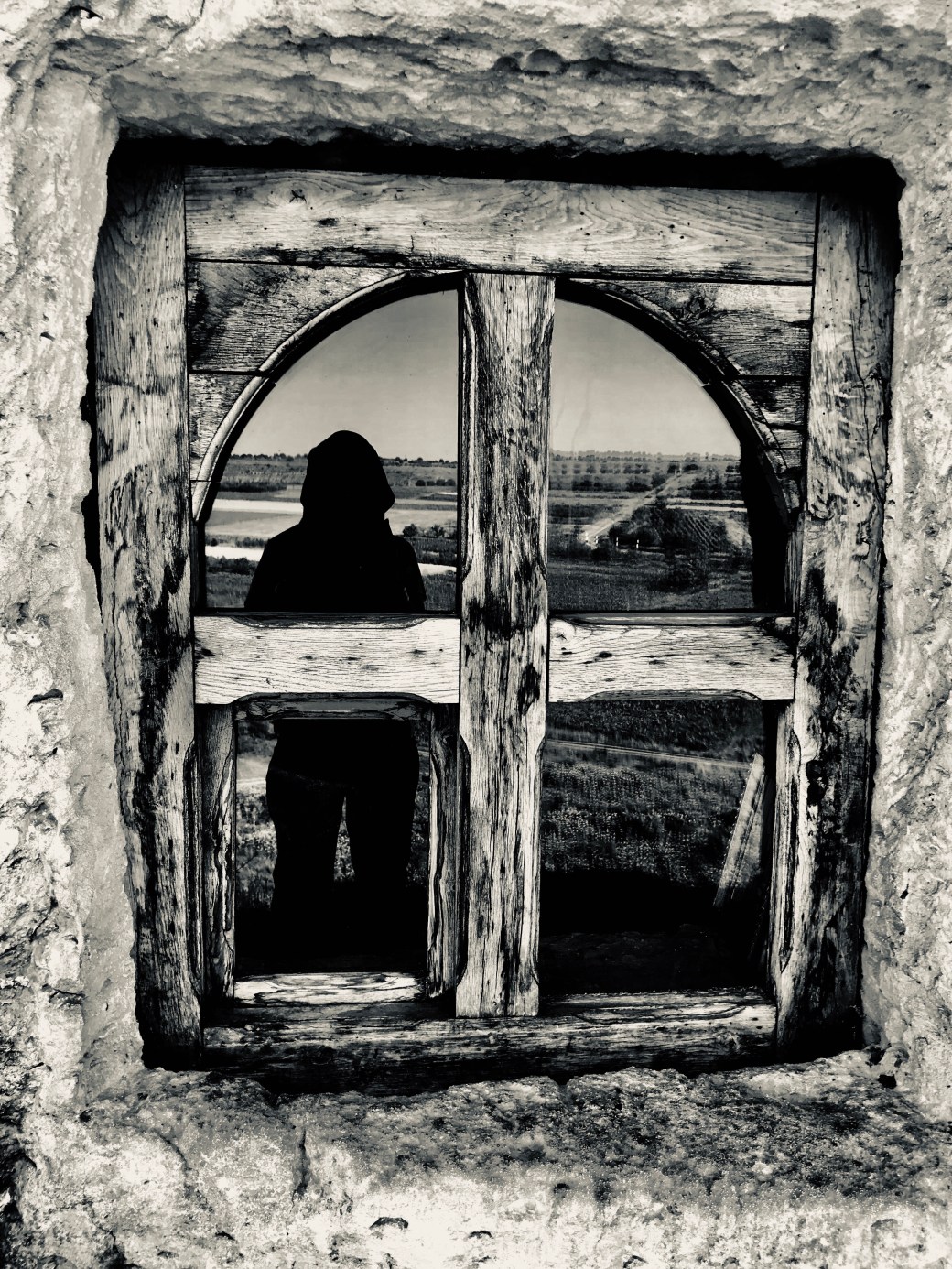 It all has a rather pagan feel and when I look at the stone cross I notice the carving of the sun, a pagan symbol of death and rebirth in nature, that often appears on wooden buildings and traditional embroidery.
  The new main church is more festive
  and the nuns less scary.
  Still, we are ready for some earthly fun! WINE!
One thing Moldova is known for is wine and even more so wineries. The two big ones are Milestii Mici and Cricova. The former brags with a Guinness Guinness World Record for storing the biggest wine collection with a whopping 2 million bottles in total and the longest wine tunnels in the country, with a total length of 200 km. The later, established by Stalin, is the producer of Moldovan sparkling wine of choice for all and any celebrations. Russian President Putin celebrated his 50th birthday here. Perhaps he was not quite satisfied with his fête as in 2014 Russia imposed embargo on Moldovan wine. Well, it was really in retaliation for Moldova making moves towards joining the European Union. I wonder if Putin still keeps his collection of wines there? His wine is in good company as German Chancellor Angela Merkel, ex-US vice-president Joe Biden, Belarus President Alexandr Lukashenko, Ukrainian President Petro Poroshenko and the Romanian royal house all have their own private collections at Cricova. Keeping politics and organized tours aside, we decide to visit the oldest winery, a small establishment Chateau Purcari.  It is supposedly the best Moldovan wine and after drinking it, you can just stumble upstairs to your boutique accommodations. It is said that Queen Elizabeth II still regularly orders the 1990 vintage of their famous ruby red.
As per usual in Moldova information is lacking and while online reviews all mention a tortuous long road to get there, no one mentions which way to get there. Maps.me gets us in trouble again! We head southeast from the capital and past the airport the road deteriorated pretty fast. We decide we will go the longer way seeing that that road on the map app is bigger. It will bring us through Bender, the last city on the Moldovan bank of Dniester River. The river should be the de facto border with Transnistria or officially Pridnestrovian Moldavian Republic, recognized only by three other mostly non-recognised states of Abkhazia, Artsakh (known also as Nagorno-Karabakh) and South Ossetia.
Oops, there are some guys in strange uniforms and this time they have a ramp closing down the road. This time our rudimentary Russian and pointing to the map and mimicking drinking wine gets us nowhere. We are told in no uncertain terms that we need to turn back. Scary to think these militiamen control swaths of Moldovan territory. What stops them from rolling on towards the capital?
We ask the question of the team restoring a small church in a nearby village. 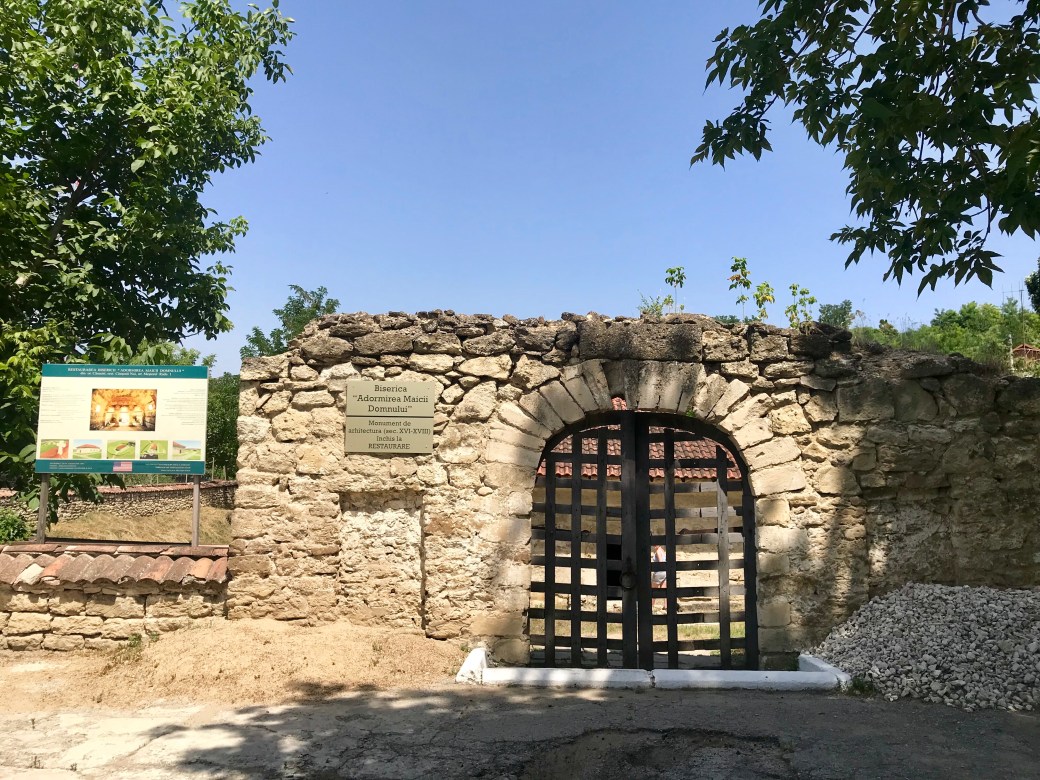 “Uh, we are Romanians on a short term project here. It’s a bit scary and all in all the conditions are really tough here. But come see the restoration in progress. Just no photos inside.” It is the American $$ at work, and painstaking work it is restoring the damaged frescoes.
“Why is the church dug into the earth?”
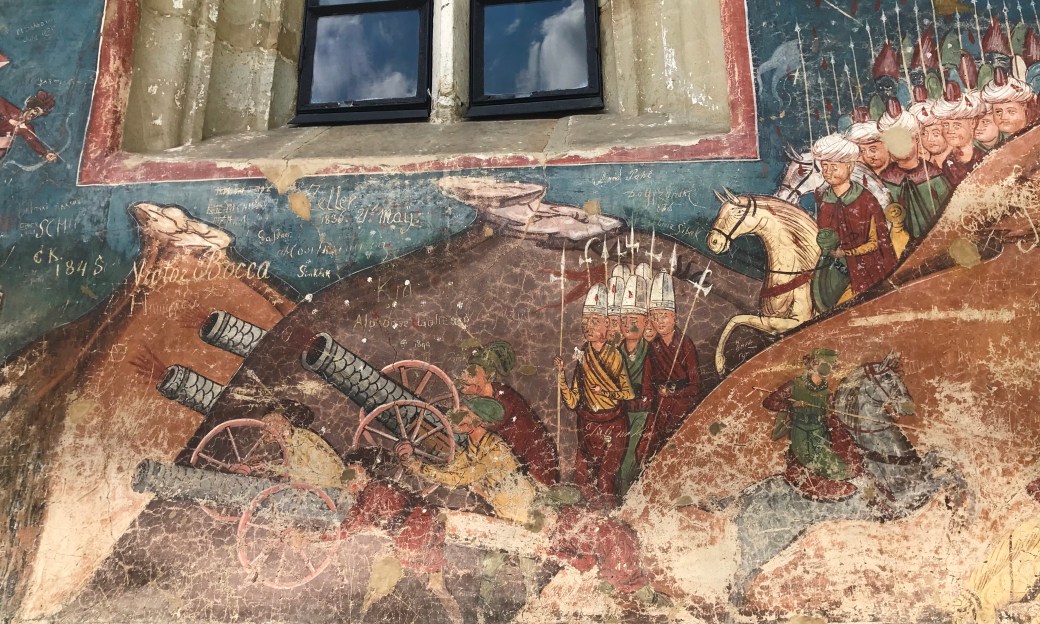
 “The legend says the church was built during the rule of the Ottoman Turks and they would only give permission if it was no taller than a man on a horse. So they had to dig down.”
There is another interesting legend that says the Turks stabled their horses in the church, only to find them all dead in the morning. They believed the saints on the walls have stricken them dead, so they gauged out their eyes on the frescoes.” A very nice story but certainly not universally applicable to thousands of damaged frescoes all over the Balkans.  When we finally arrive at the winery, we are relieved, but the welcome is far from warm. As much as the winery seems to look to the West in design and technology, the staff still lives in the Soviet East with their language skills and attitudes.
Luckily our sommelier and winery guide is a friendly and funny chap. It is only his first week on the job and what he lacks in experience, he makes up in enthusiasm. After a short tour of the cellar, originally built by monks in the shape of a cross
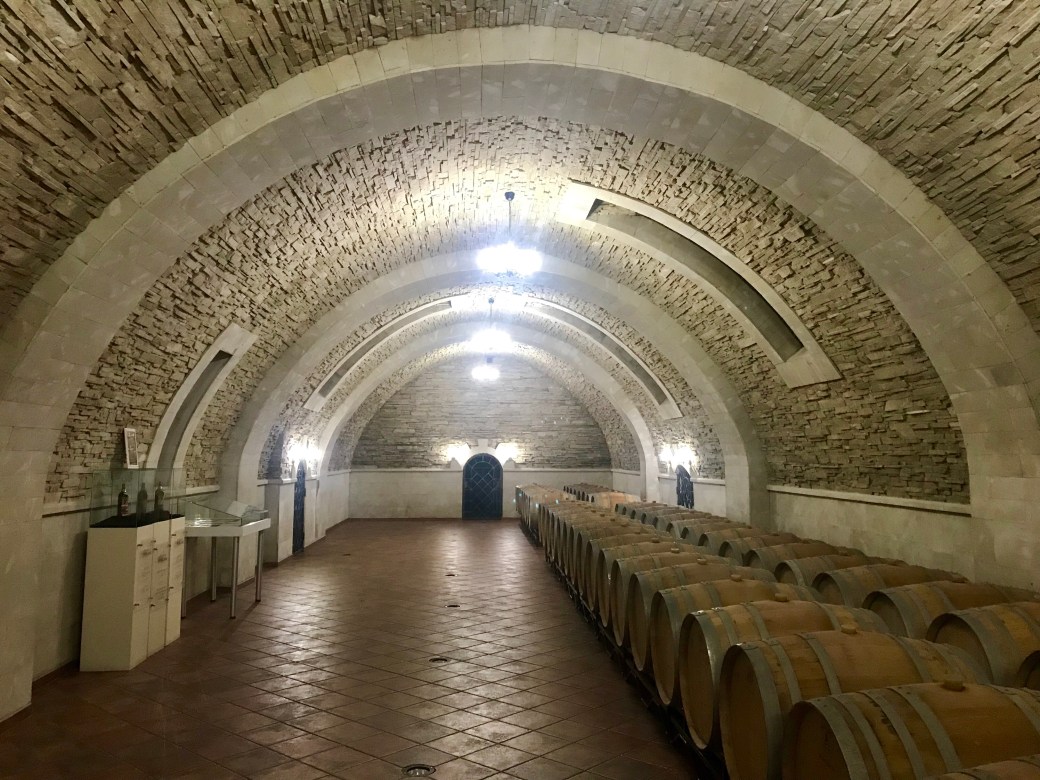 the tasting fun begins.
 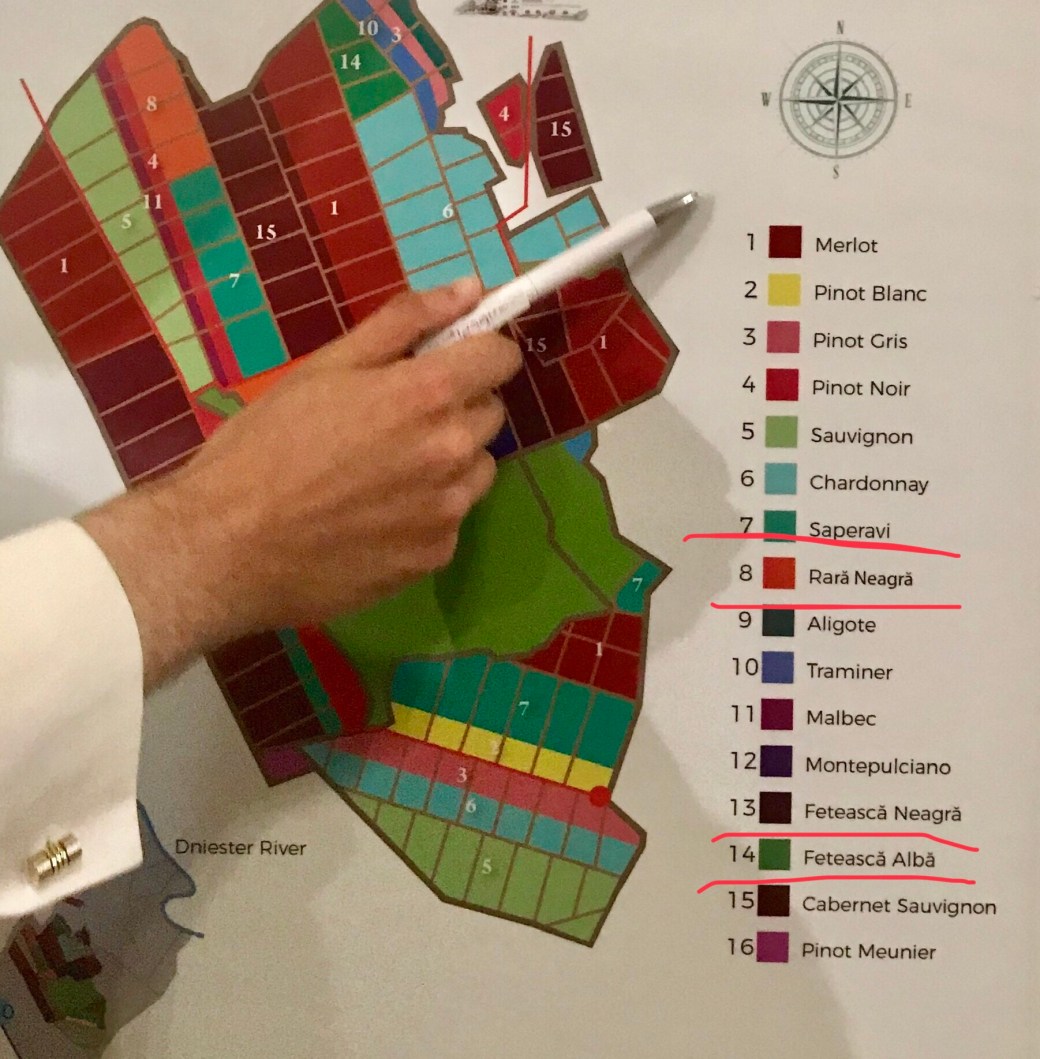 I am, as usual, particularly interested in the local varietals of wine like Feteasca Alba and Negra. I am surprised to find an old friend from Caucasian Georgia here – the Saperavi.
It is the most unusual tasting I have ever done in my drinking history all over the world.  Here the sommelier not only pours you a taste, but drinks with you. Yes, I say drinks, because we are not only taking a sip, and nobody spits, but you drink the quarter glass or so. As the time goes by the amount of bottles mounts.
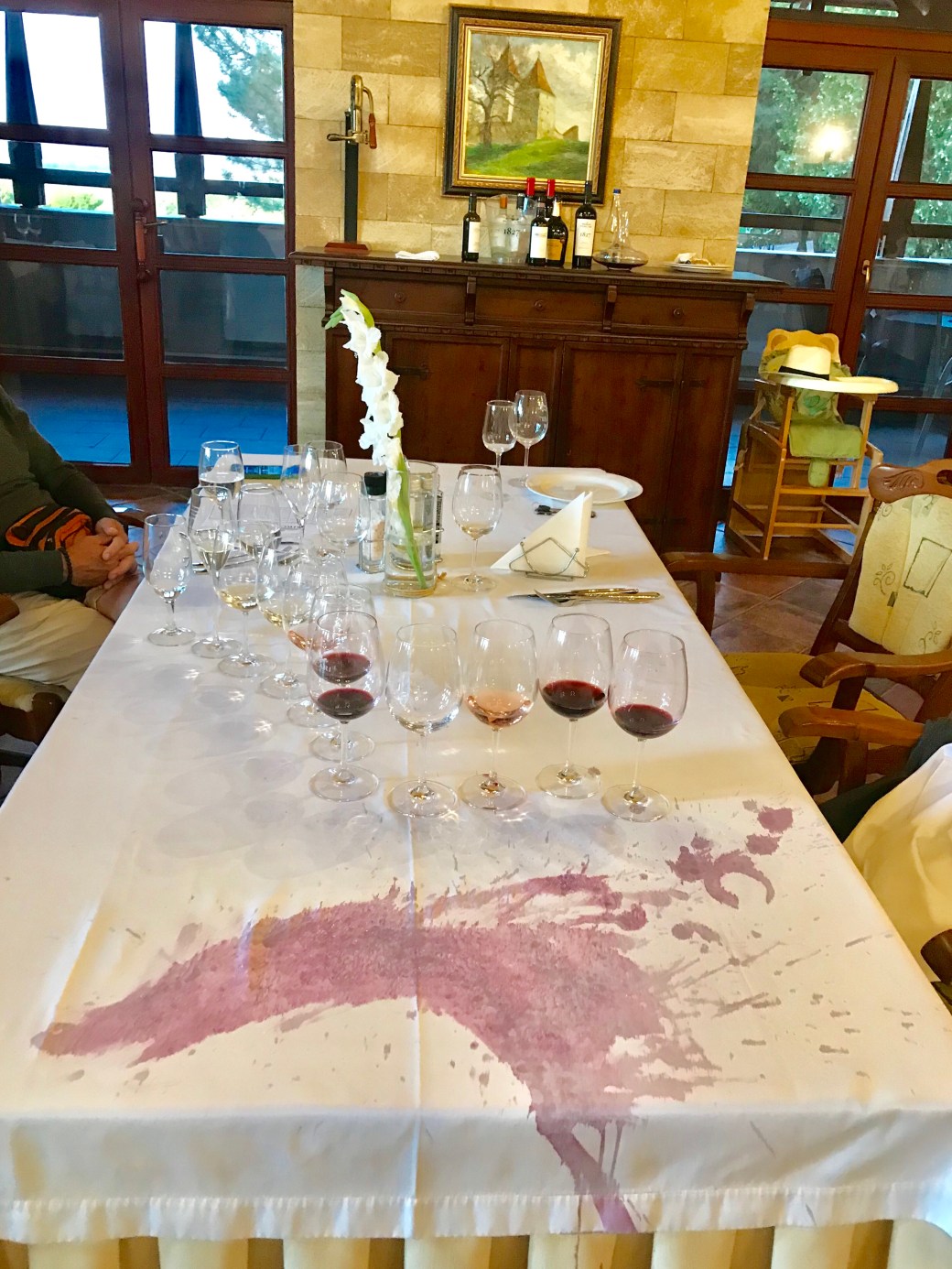
 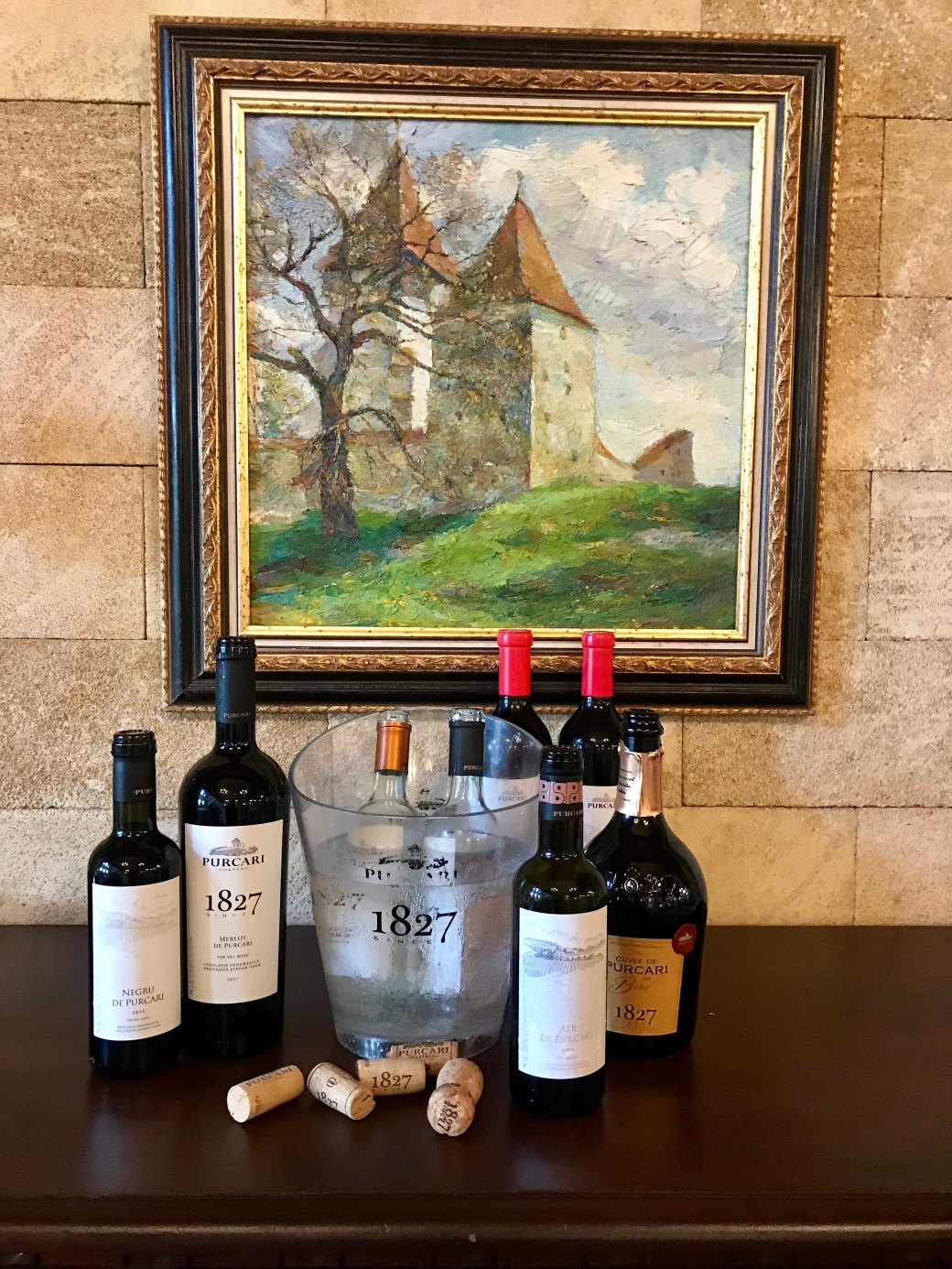 The mood becomes more exuberant. A bottle is rejected because the cork doesn’t smell quite right, the server is yelled at because she has not uncorked the reds on time to let them breath sufficiently. It all culminates in a grand sweep of the sommelier’s arm that knocks over a glass. The one sober participant, my non drinking husband, valiantly jumps in and starts spreading the salt over the spill to save the tablecloth.
  We end up with quite an artistic rendering on the white canvas.
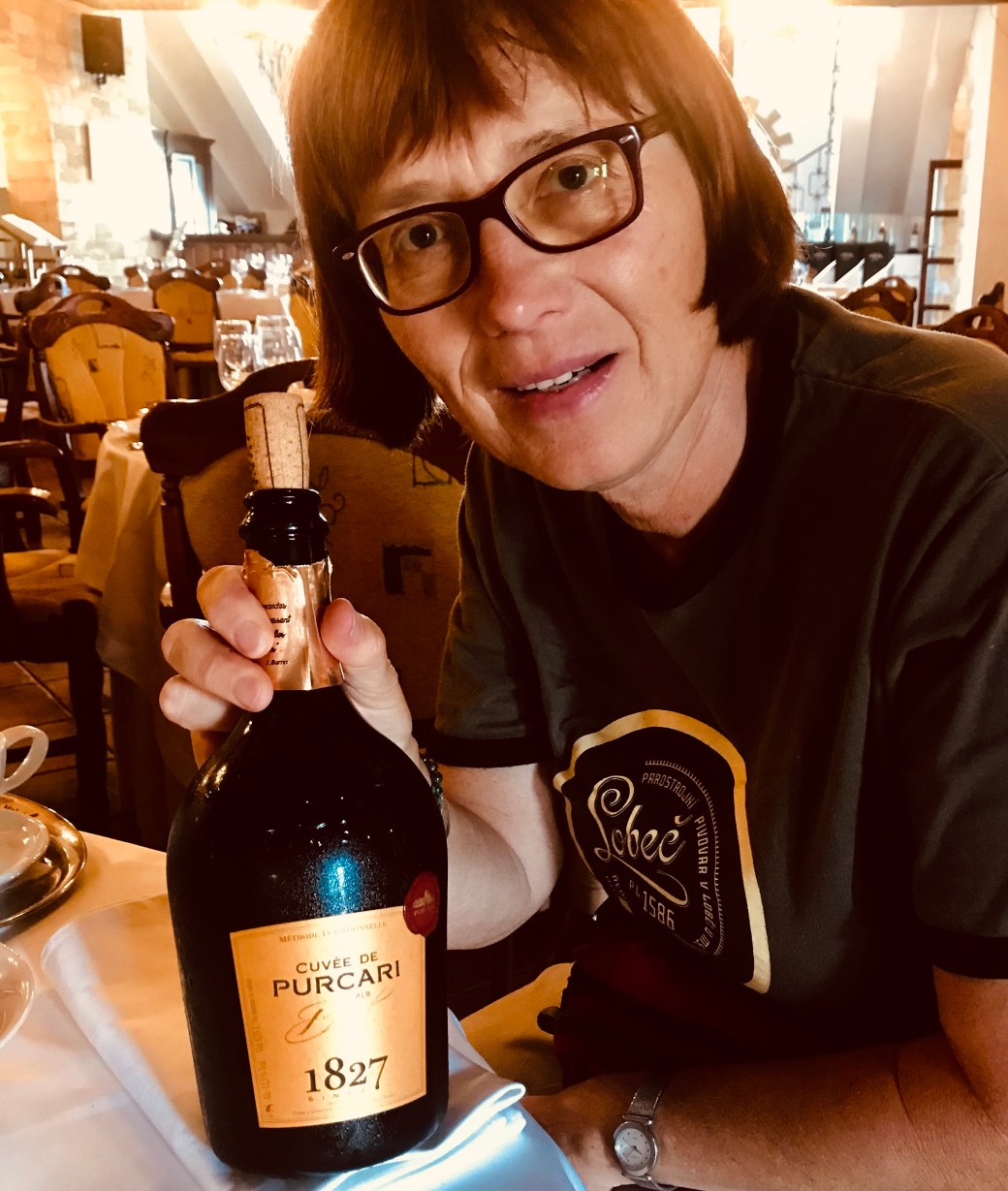
  I learn that after the tasting the customers are supposed to take home the bottles with the remaining wine. I just grab the bottle of the sparkling white, it will do great for a mimosa for the next day’s breakfast.
  After breakfast we say goodbye to the vineyard
  turning north. It is a small country with largely untouched countryside.
 There are vast fields of sunflowers and stretches of freshly plowed blackest soil we have ever seen. There is barely any traffic so even on bad roads we can cross Moldova in a day and get to the northern border with Romania by the evening. Just beyond those traffic signs is the border crossing.
 At least now we know what we can expect. Information is king. Nowhere more so than in independent travel.
 we slipped into Romania. On small country roads, only occasionally passing a horse and cart loaded to the brim with fresh hay,
  we sped towards a tiny village of Plopul on Sfante Gheorghe arm of Danube. There we had arranged for a private boat tour and a stay at a restored traditional house. The house was absolutely charming in its authenticity and simplicity
  except for a crucial detail: it did not have the promised air conditioner. With mosquitos descending with the evening we hightailed it out of there. “No worries, there are plenty of other accommodations on Booking.com,” I said as we turned towards the bigger village of Murighiol. “I am not booking anything until I see it,” my husband was adamant.
 With the secure knowledge of the air conditioner humming away in our drab room and an introduction to excellent Romanian dark beer
  I was able to join in the festivities with a few rounds of kolo circle dance. Afterwards I transferred my enthusiasm to killing some nearly frozen mosquitos on the ceiling of our room. Do you know what is the most effective way of their extermination? You take a bed pillow and you throw it up at them with all your might. Compared to a hand or actowel, the large thick pillow surface prevents their escape.
 Our disappointment continued with surly slow services, and mediocre food, including the boniest fish in the world.
  When we recounted our frustrating experiences to traveling Romanians, they had no good explanation.

 Folk architecture of perfect proportions with lovely hand carved details. In our wanderings through the countryside we came across white and blue churches, too, with gleaming cupolas and golden altars.
 They were quite a richly adorned apparition in otherwise poor Delta villages.
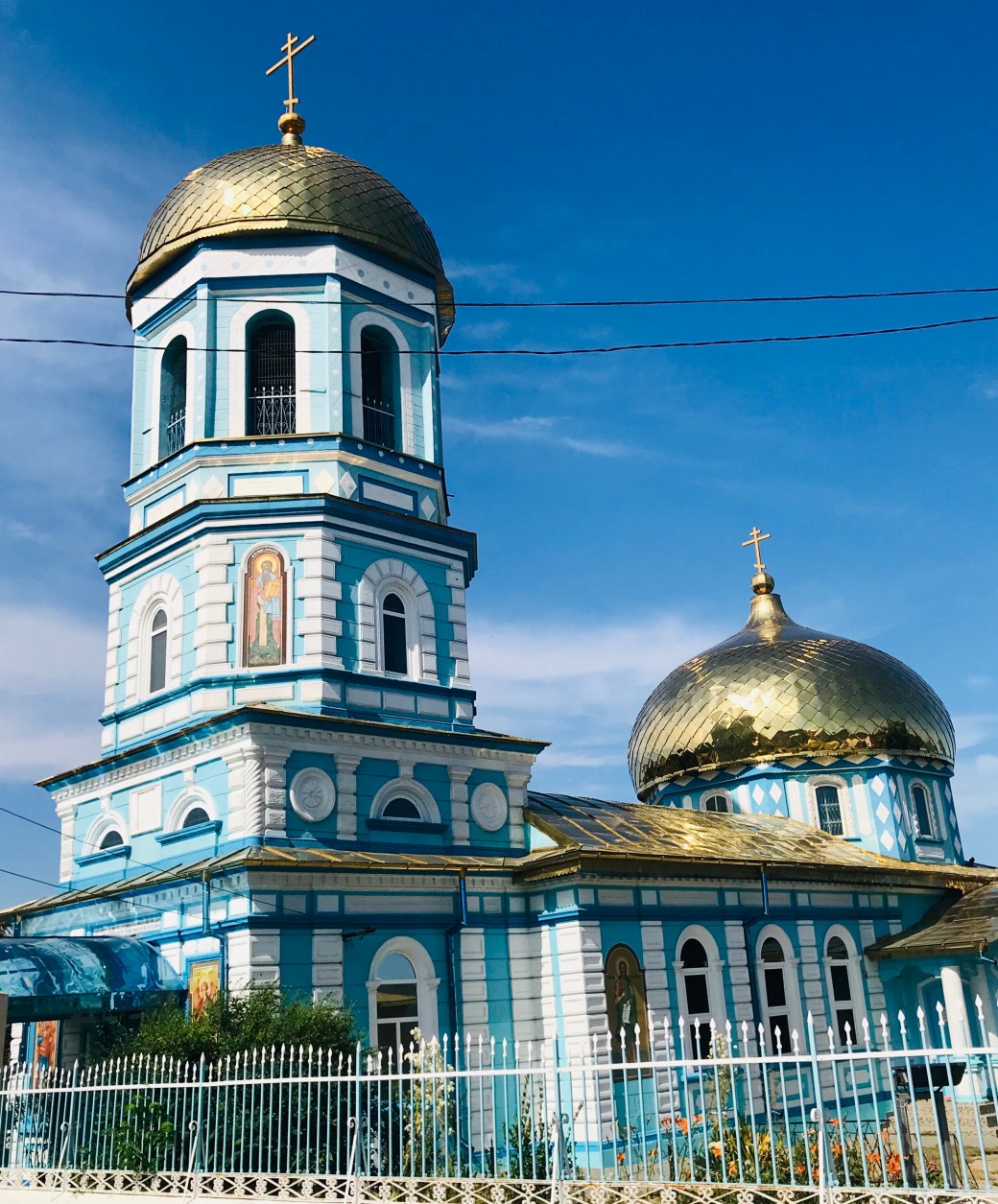 Turns out the blue communities are the descendants of Russian-Ukrainian Lipoveni, the dissenters (Old Believers) from the Russian Orthodox Church, who in the 18th century wanted to escape the persecution of their sect.
 To avoid the tourist trail and explore the smaller channels we first drove a good way on the banks past old homesteads and haystacks
 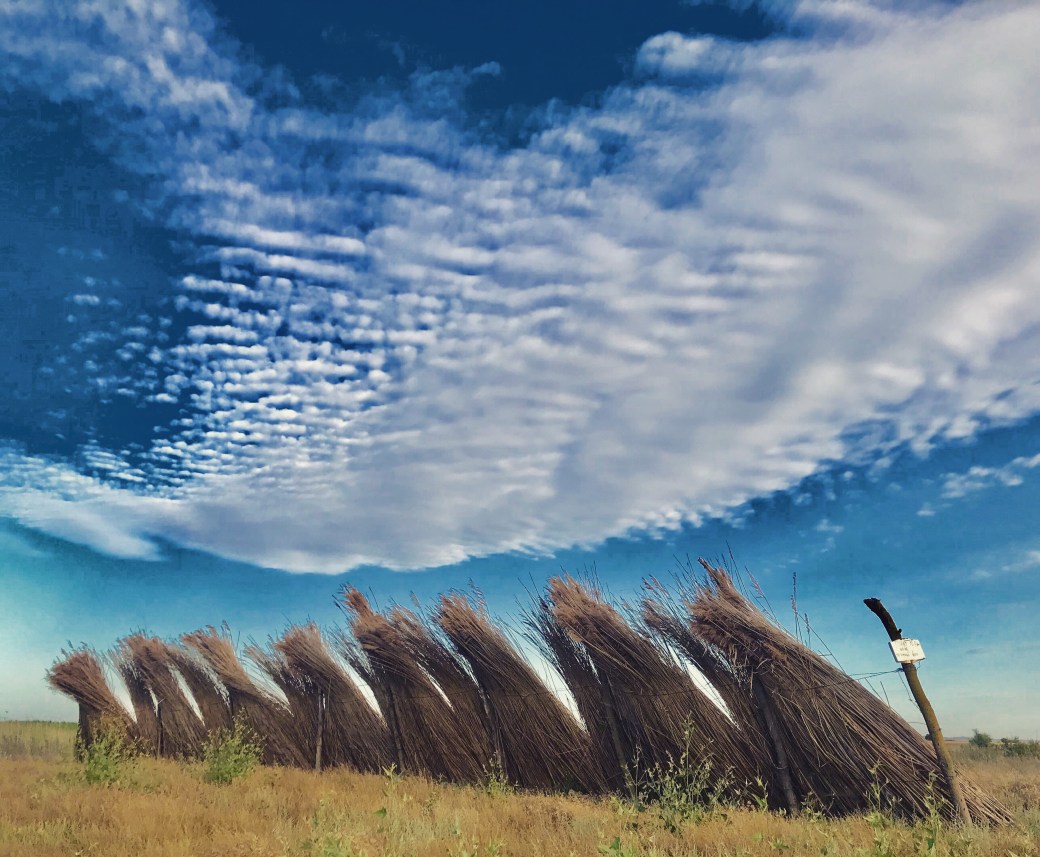 to the edge of the water.
  As we climbed into our small floating boat
  all the troubles were forgotten and our hearts expanded reveling in Nature’s beauty.
  We soon turned into smaller and smaller channels
  Some were so narrow we had to watch for reeds and grasses hitting our faces. We saw water snakes and otters, but it was the abundance of bird life that Delta is famous for that had us transfixed. We were in good hands with our naturalist guide Alma,
 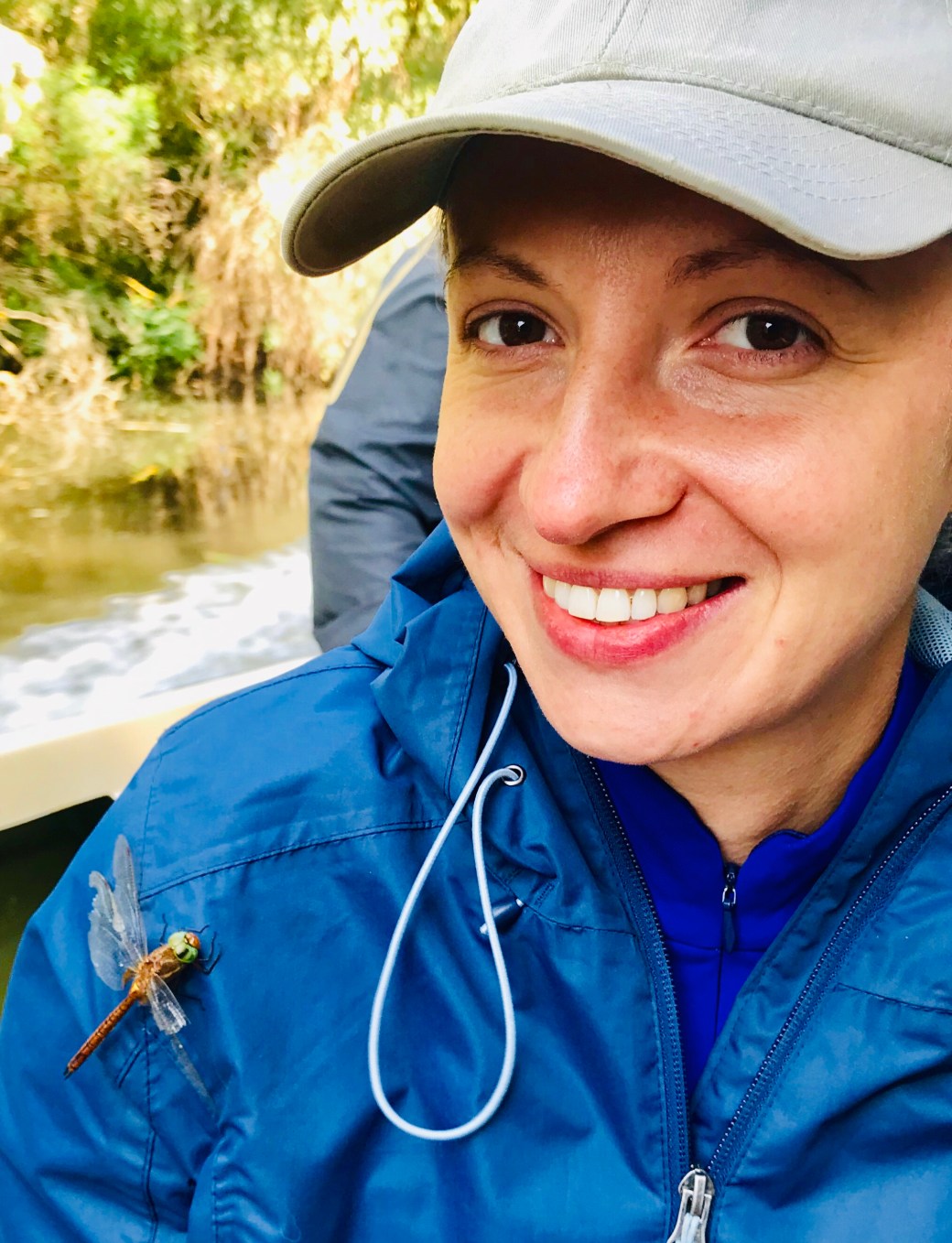 who seemed as excited for every even small encounter as us.
 Even for non binocular clad non birders the bird encounters are easy and frequent. From small colorful bee eaters to large white tailed eagles birds abound in the quiet of the morning. There are around 300 bird species
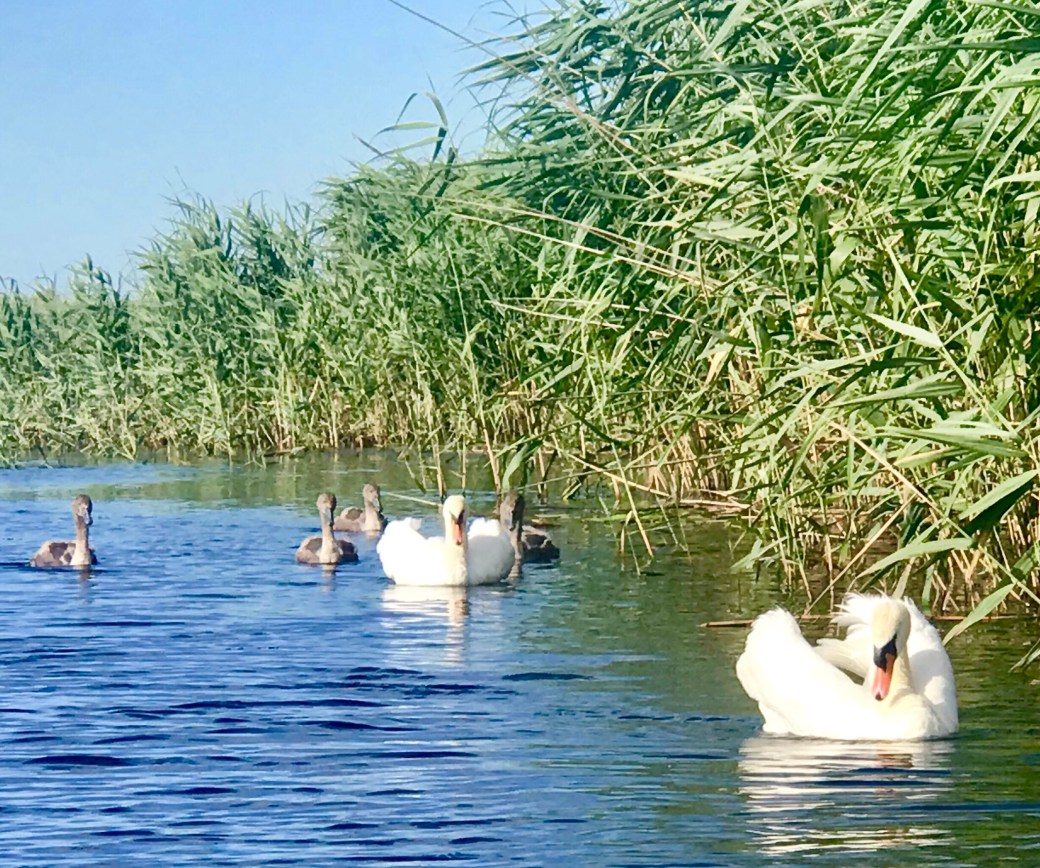 Did you know nearly 30 bird species mate for life, amongst them three kinds of swans?
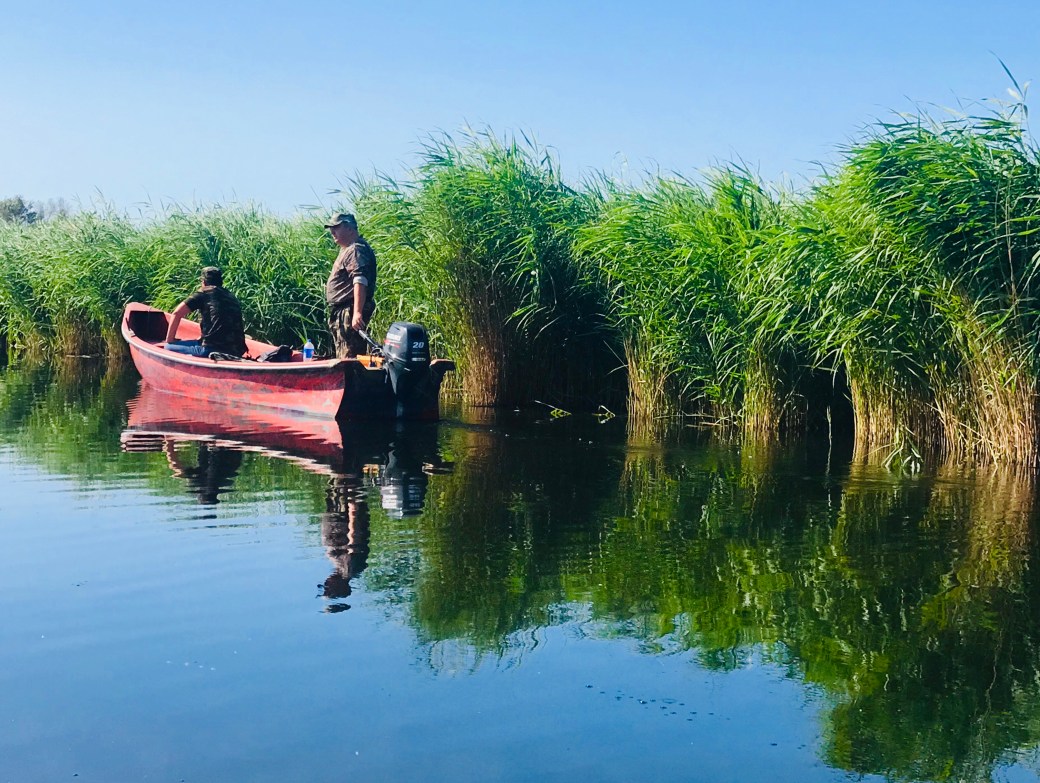
  Listed as a UNESCO World Heritage Site 60% of the Delta is protected from human development and indeed we encountered nary a human being except for a few fishermen.
  After an exciting day in the Delta appetites are sated by all fish specialties: sliced, diced, smoked, pickled, fried and rolled into phyllo dough.
  How lucky we have been with the weather! Looks like some rain is coming in.
 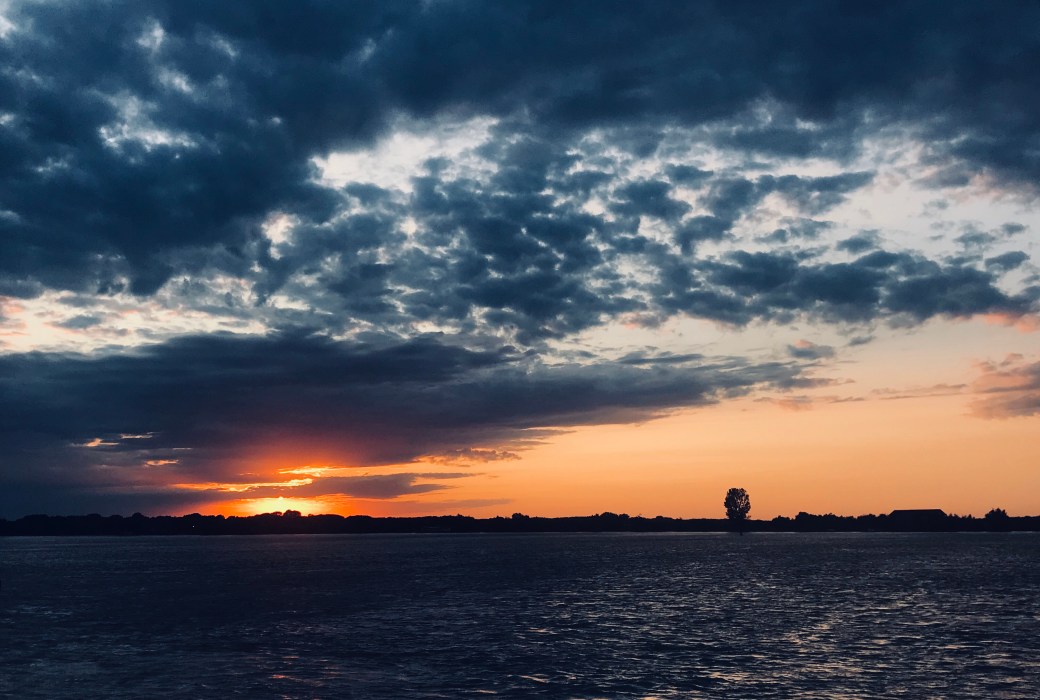 Leaving the Delta it catches up with us just before the Moldova border in the town of Braila on the Danube River.
 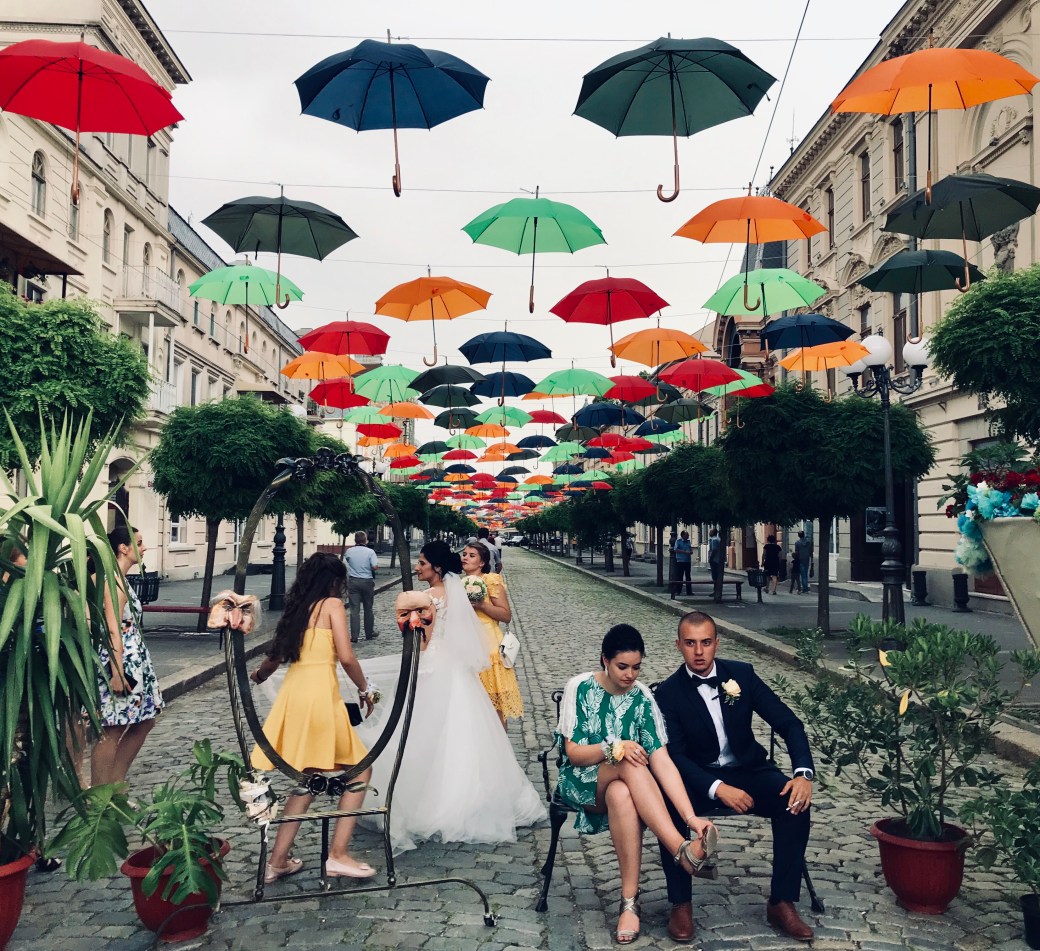 We watch the bride and bridesmaids quickly ushered into a limo and are left with the umbrellas just (singing and) dancing in the rain…


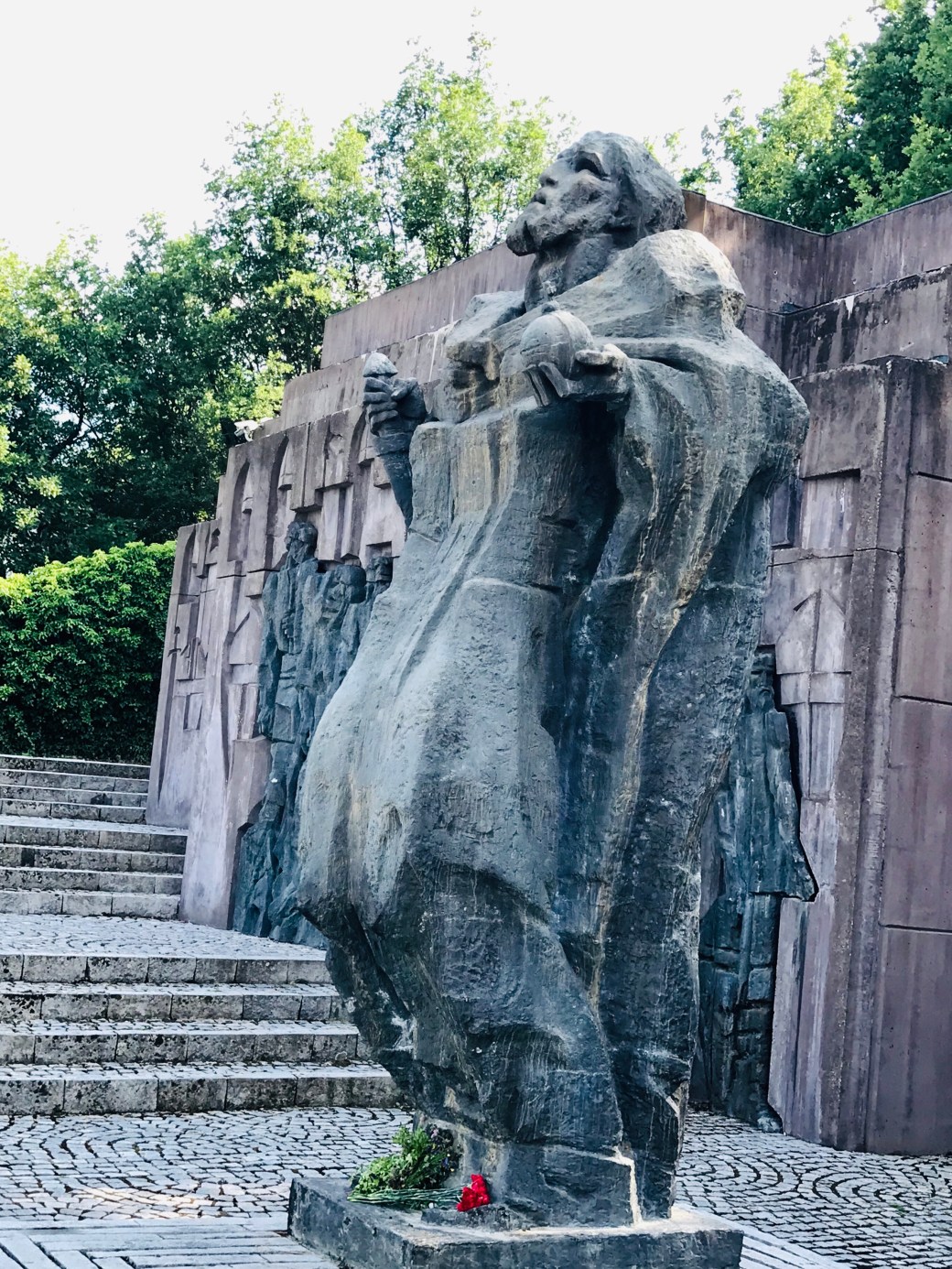




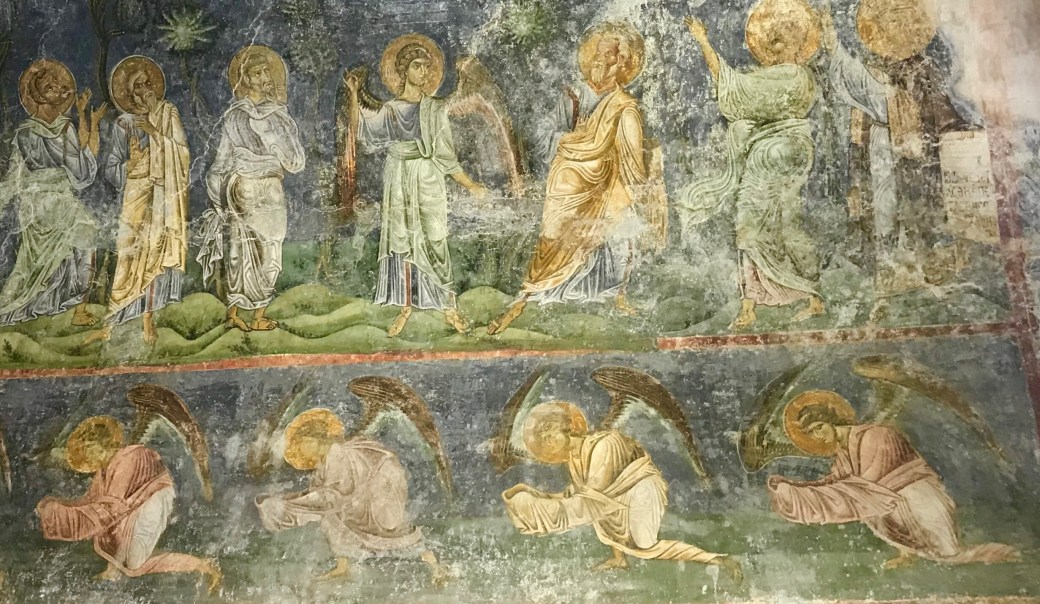
 We wondered if the angels imbibed some as they naughtily snatched crowns away from royalty.


 I was
I was 

 Plovdiv


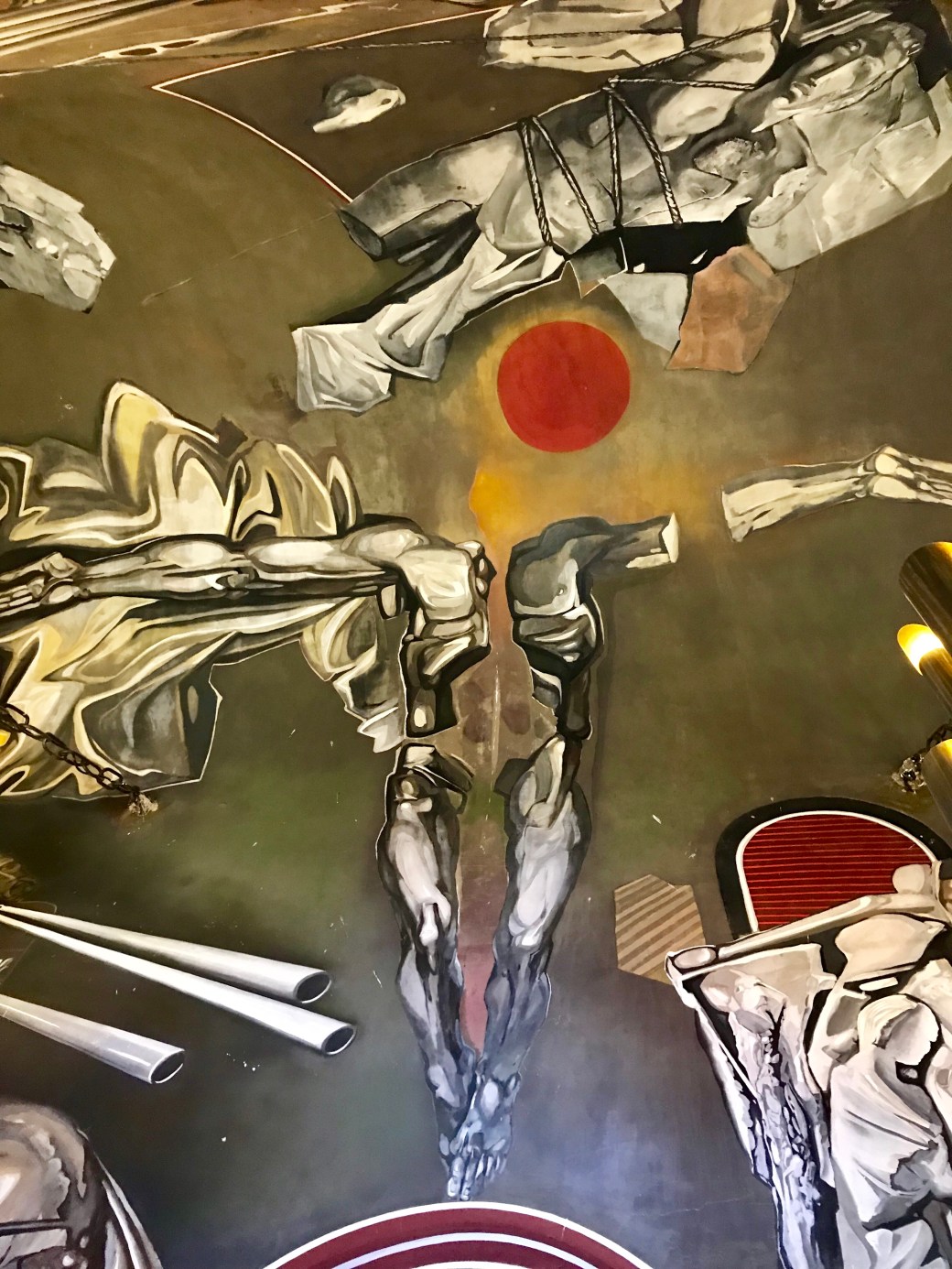
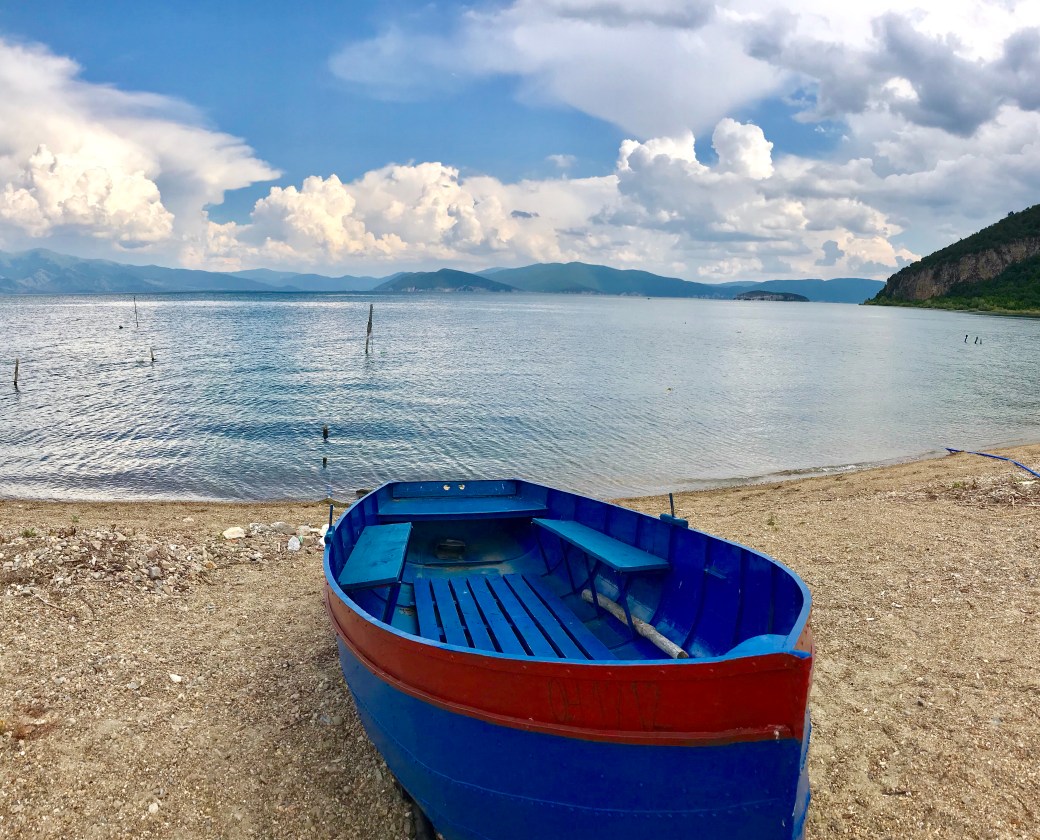
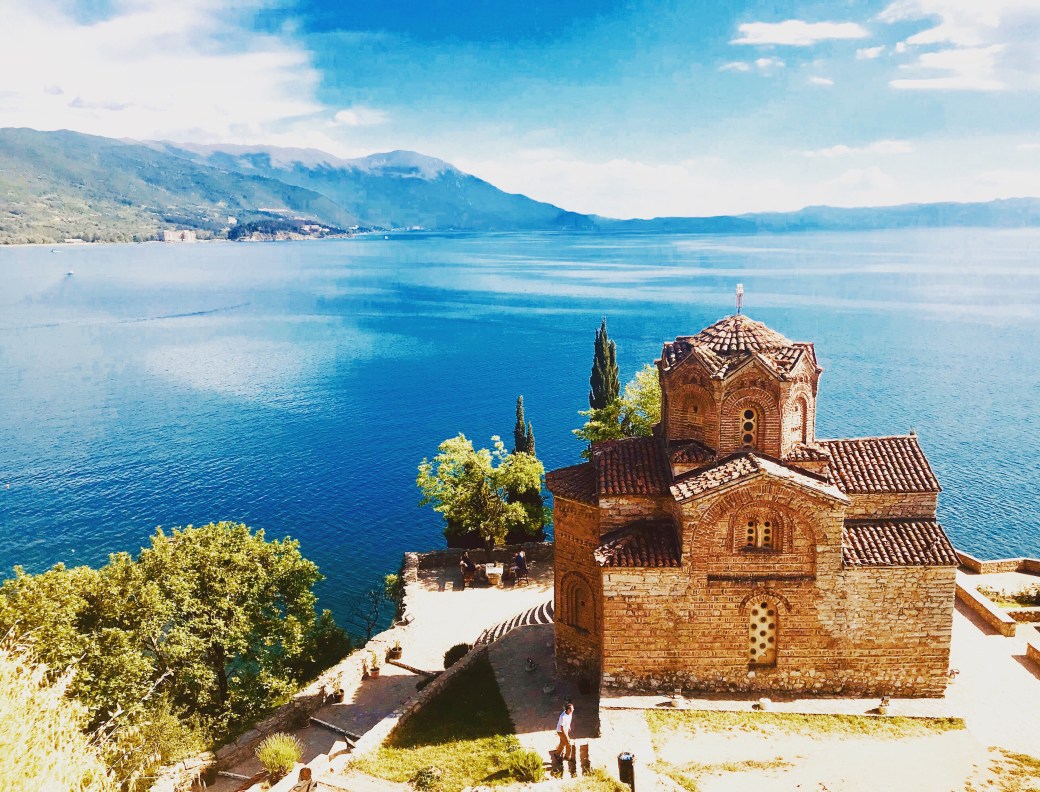 As a young penniless student of art history nearly 40 years ago, I came to see firsthand the beautiful medieval frescoes in the Lake Ohrid monasteries. I dragged along a boyfriend and as he was just as penniless as me, we often hunkered down for the night in our sleeping bags by “cultural monuments”, hoping to get sanctuary and protection. If we were lucky and the monasteries were inhabited, despite the communist crack down on religion, the kindly nuns in age old tradition, utterly surprised and delighted by young visitors, would offer a bed and some home made bread and cheese.
 In fact there were some spectacular sunsets to revel in.



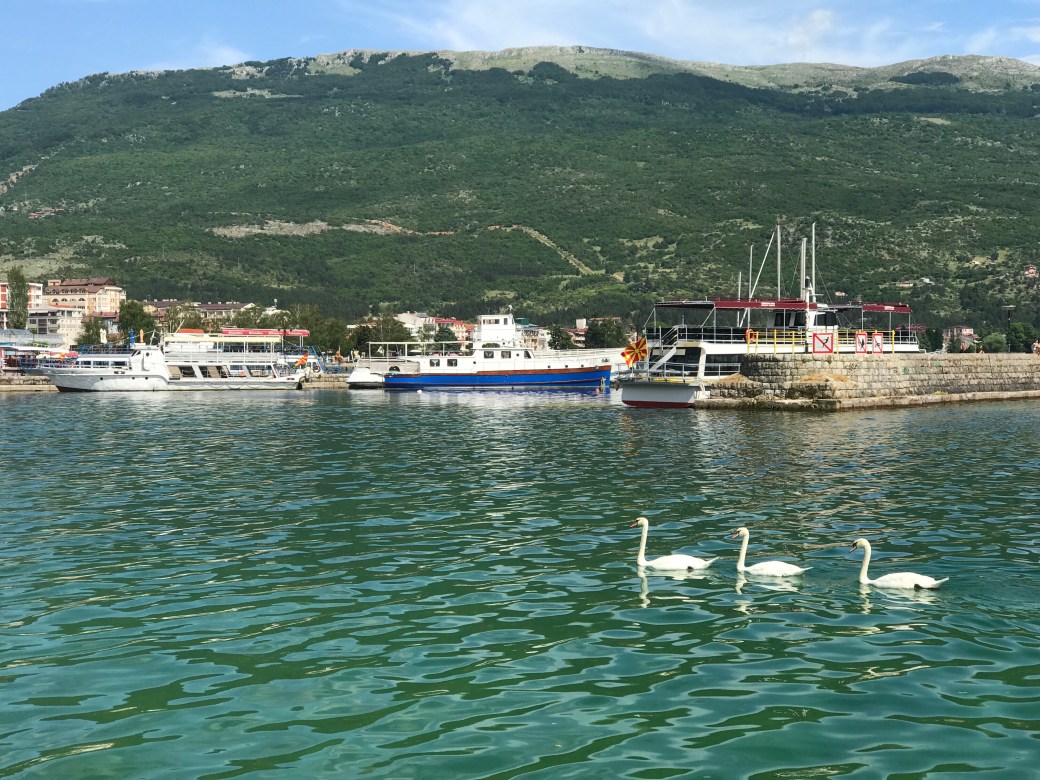

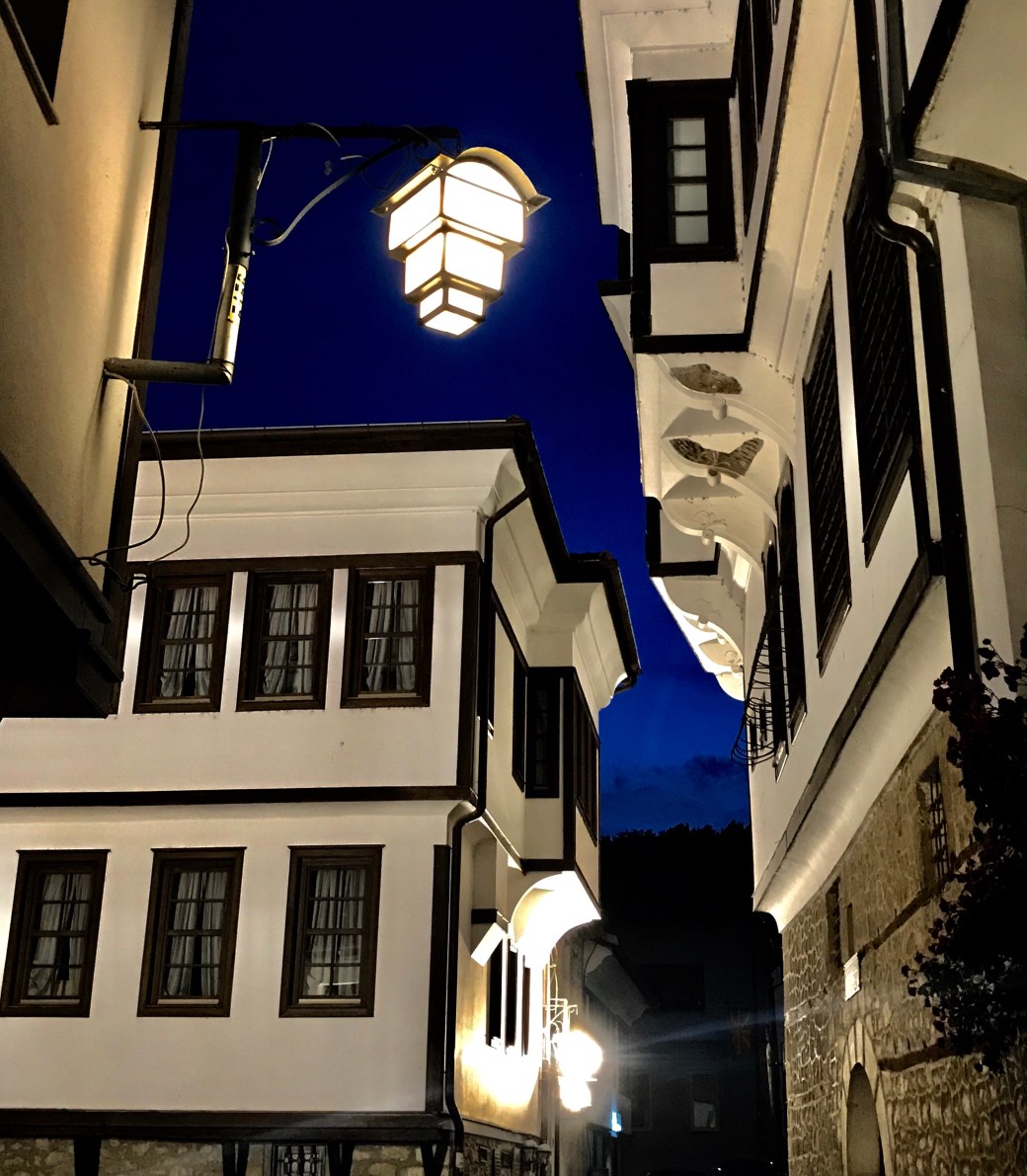
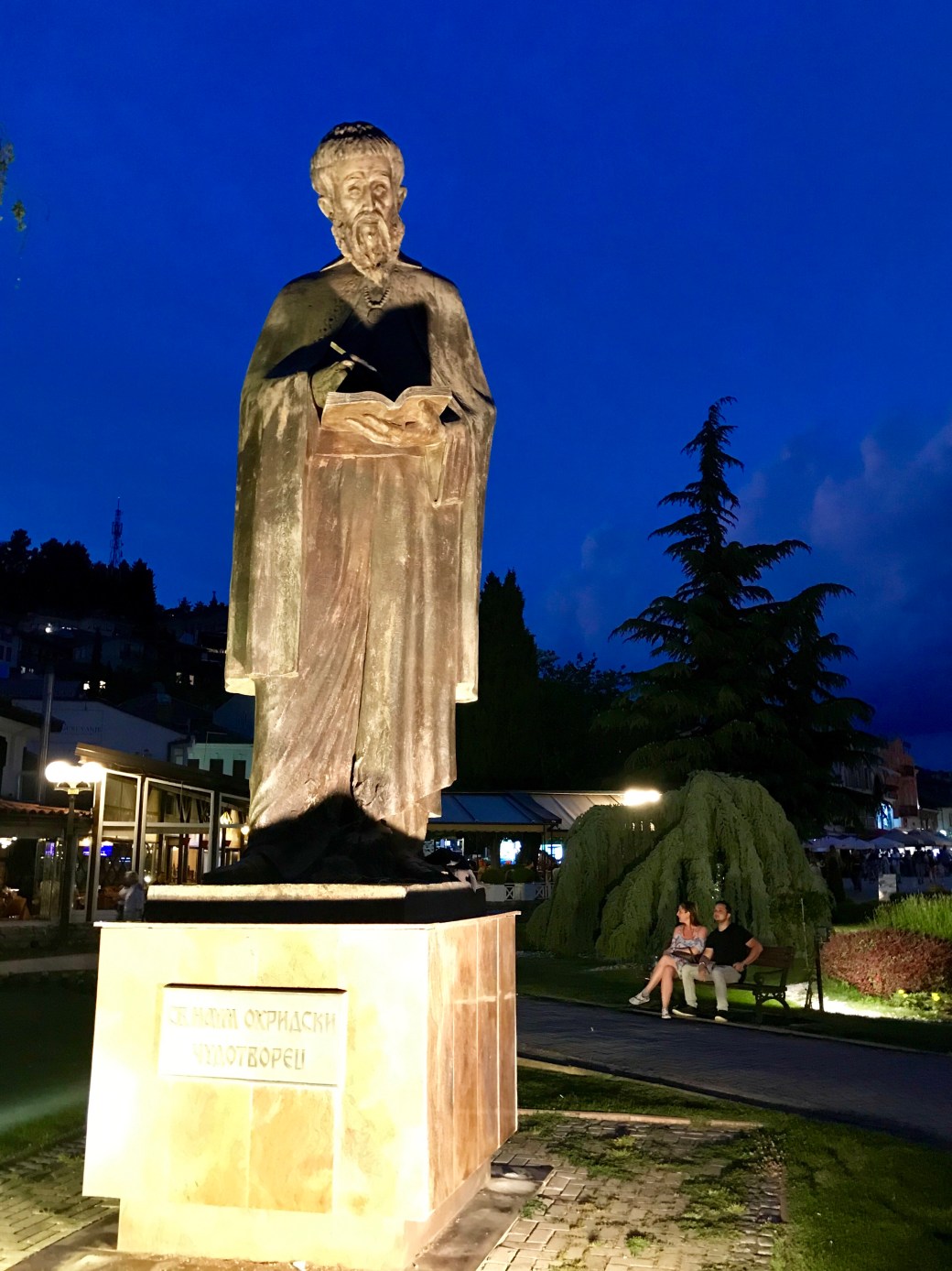 is associated with creation of Cyrillic alphabet.


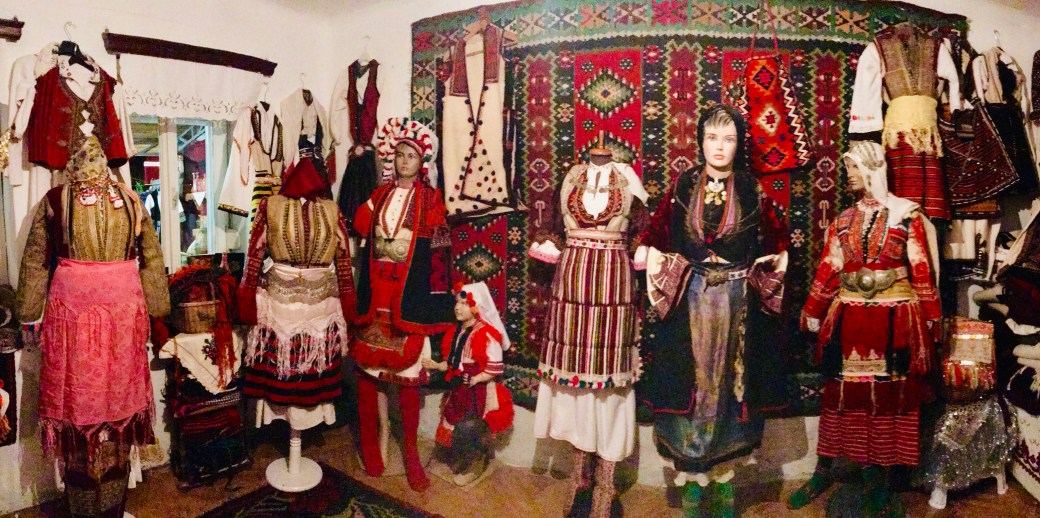 I
I
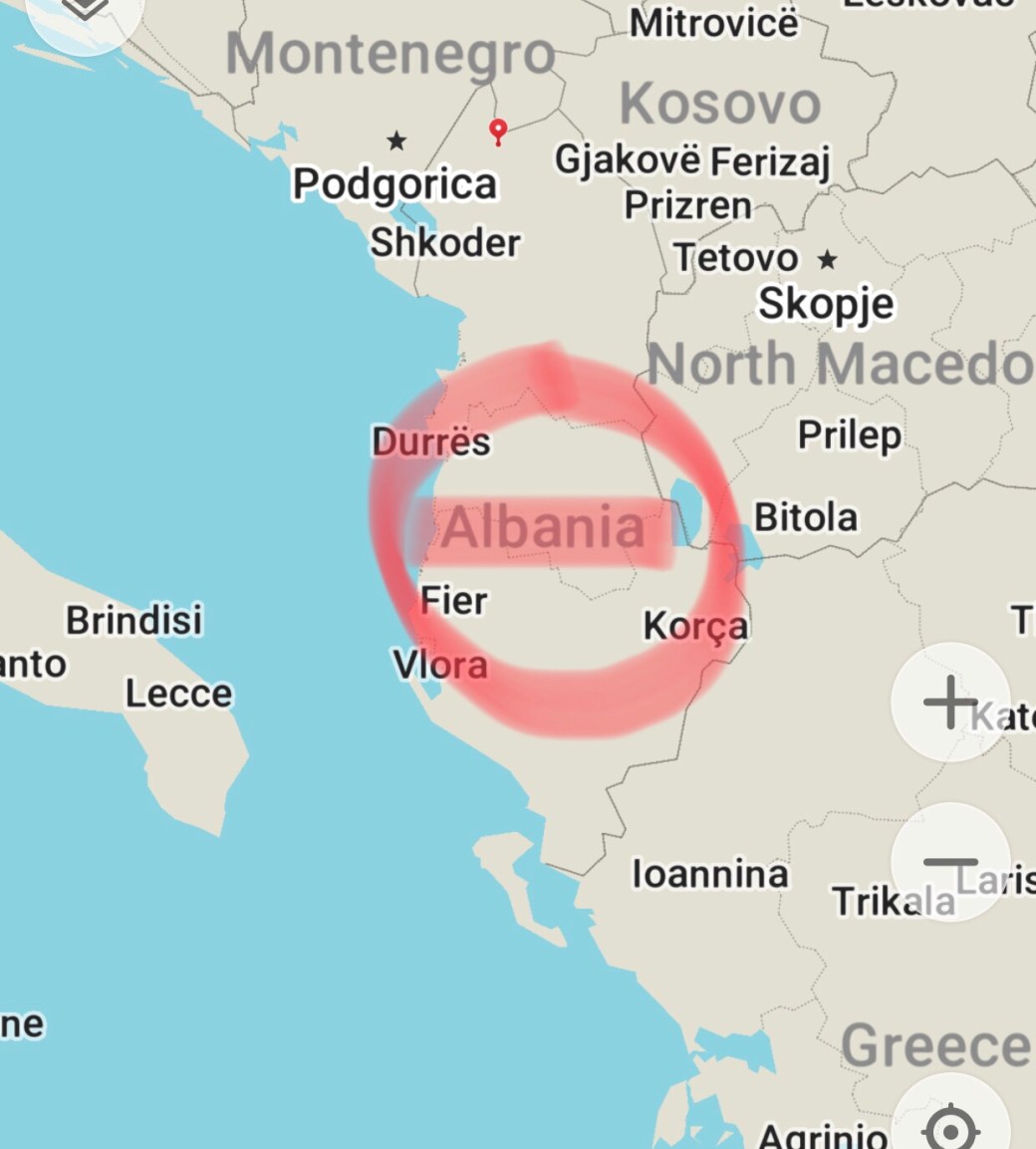 the one country in Europe I have always wanted to visit, my decision was easy. Albania,
  has been on my bucket list since my first trip to the region in 1968. I barely brushed the border of Albania then, as I passed through Kosovo, and under Enver Hoxa Albania was hermetically closed to the outside world for many years to come. When they finally opened their doors we were tempted to go, but we put it off because of its Wild West reputation.
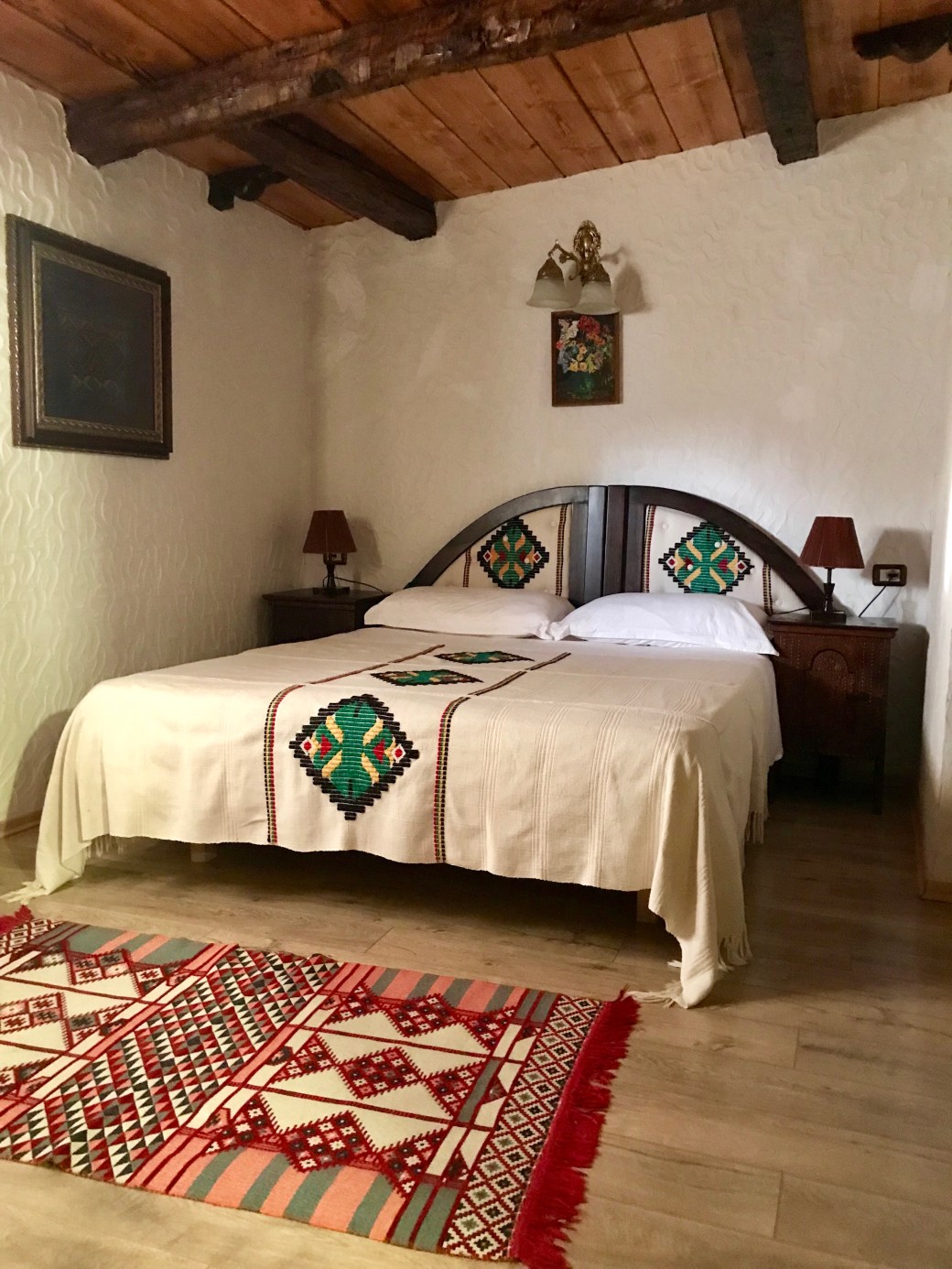 With the recent history of unrest and wars in religiously diverse Balkan places like Bosnia and Kosovo, I was especially curious how this country passed through transition from communist dictatorship to some sort of civil society.
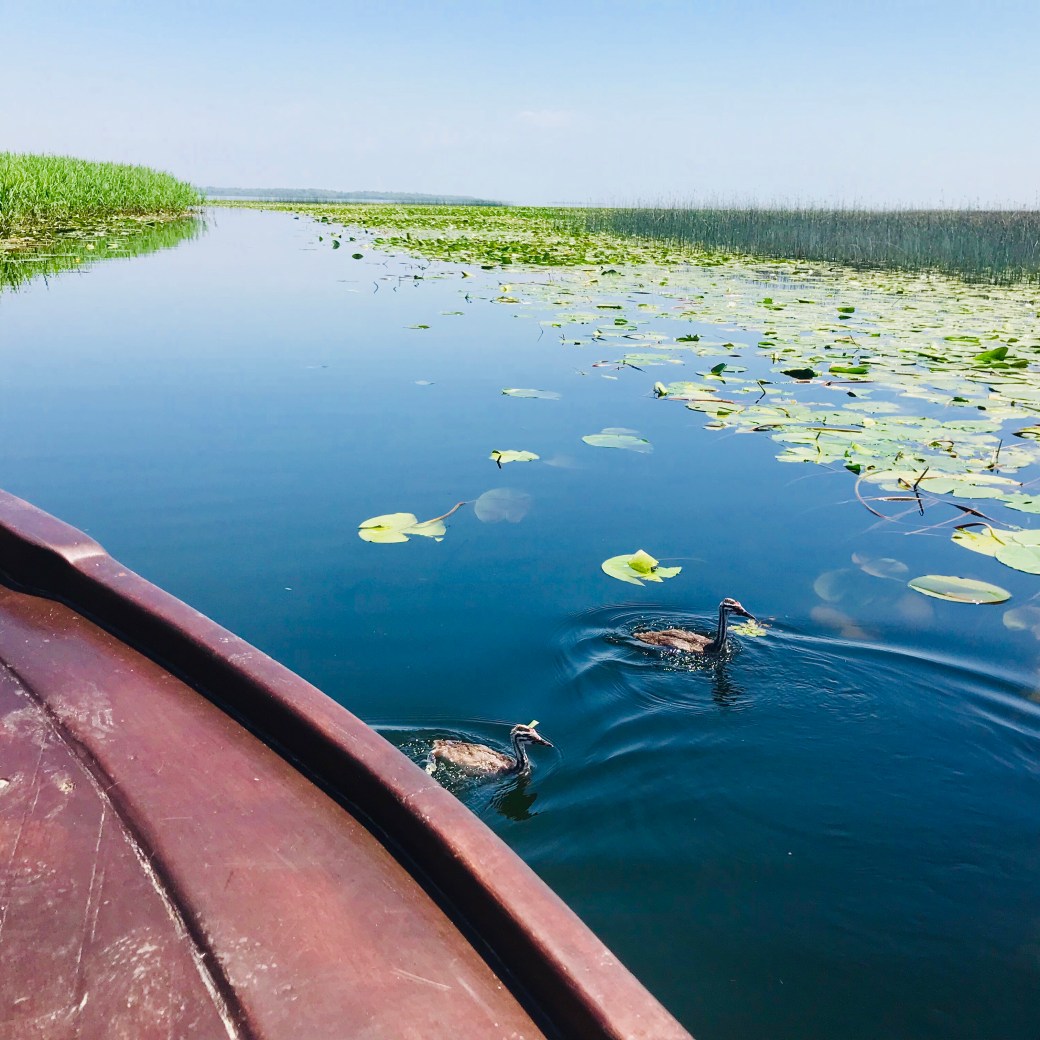
 we crossed to the Albanian side of Lake Shkodër and well, we are happy to report that the water in the lake is still the same on both sides of the invisible border. Not only that; the fish in the water, plentiful birds
 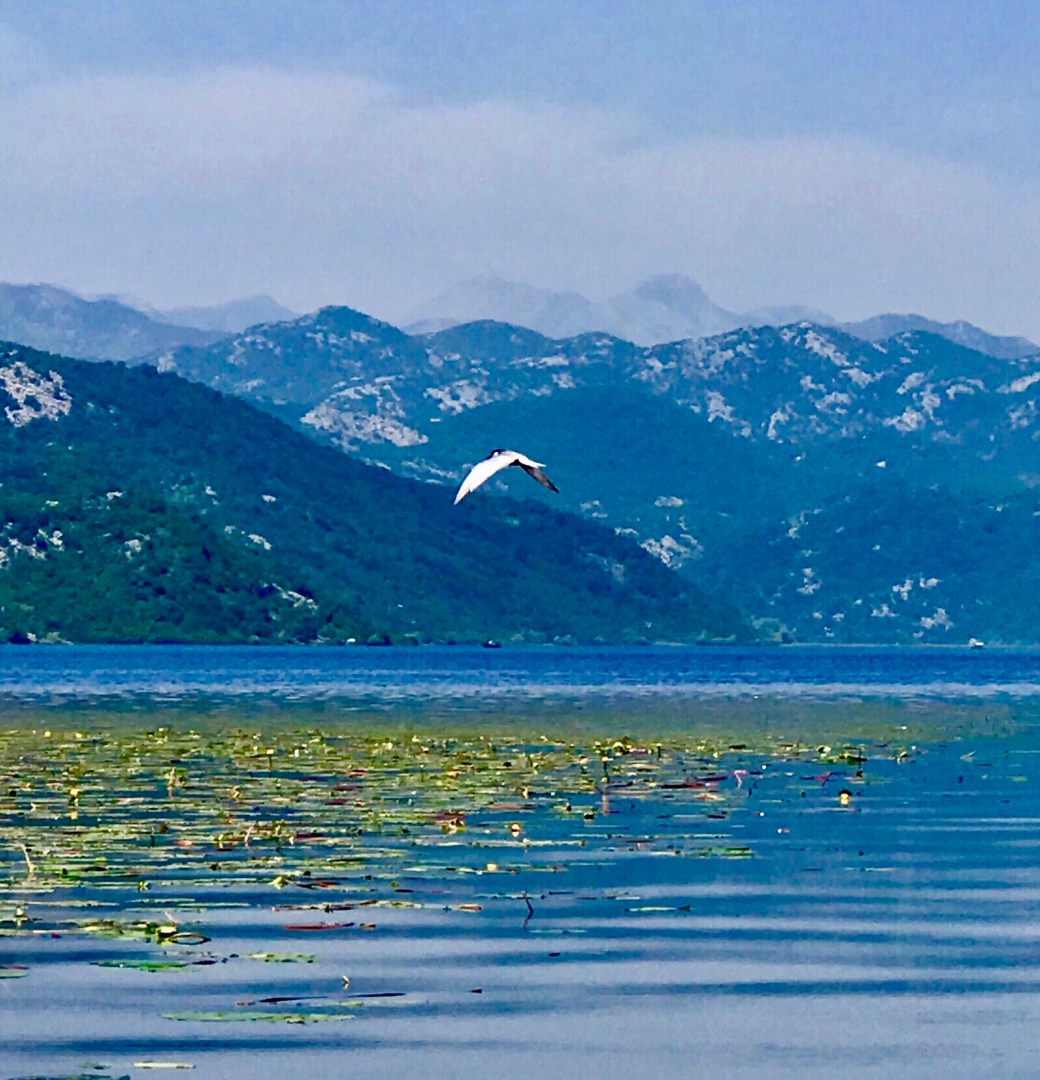 and fowl
  and blooming water lilies
 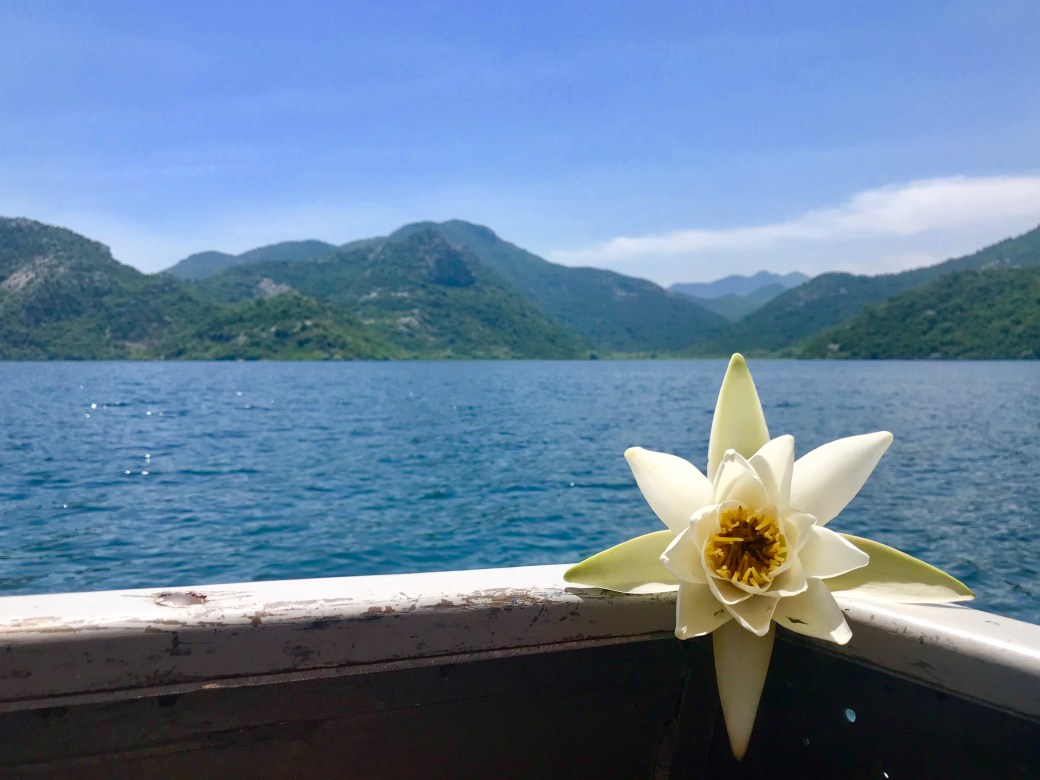 are the same as well. Nature finds its own sensible ways!
 Albanians love their cars, but not just any car. It must be a Mercedes Benz! And the newer (latest models apply only, please) and bigger, the better! Even if I do not know what was their starting point in 1989 when the regimes of Eastern Europe crumbled, the most significant item needed for a satisfying way of life of any Albanian was ultimately the right to own THE CAR. And everybody had to own the car the very next day. As our guide in Tirana told us: “I had no idea that my grandpa could even drive a car, but the morning after government issued a decree that people could own cars, I saw him happyily driving without the driver license through my hometown in the car of unknown origin!”
 Of course, if you have a car you have to ride on the roads and, it was a pleasant surprise, the roads were not only empty (of car traffic),
 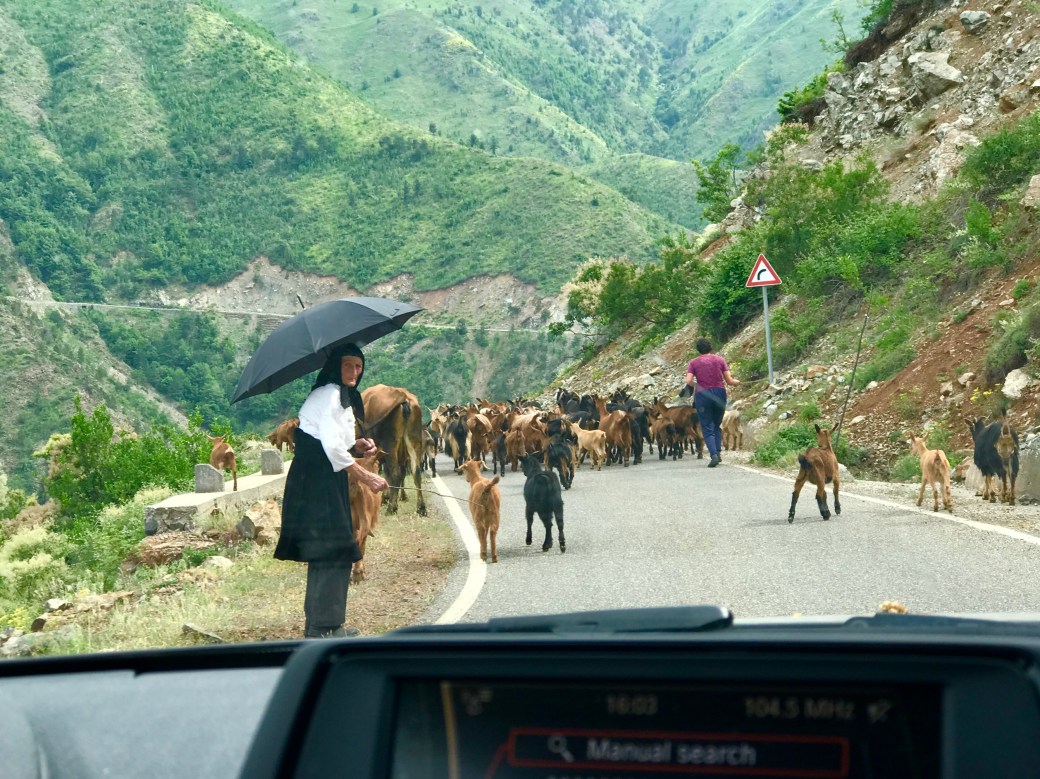 but were much better than expected.  I would dare to say they are in much better shape than in the country of our car’s registration, (Czechia), where the roads are under permanent state of repair, and definitely better than in the town of our own permanent residency, (Orinda, California) where the roads are left in a state of permanent disrepair.
 and our driver right off the bat offered to take it back with him and send it to them on the first bus next morning. Proving what people have noticed in their blogs that Albanians are helpful and generous people. Of course if they are not part of the Albanian mafia, which is successfully taking over the world’s underworld.
 and helped them leave for safety. Albania was the only country where after the war the Jewish population was bigger than before the war.
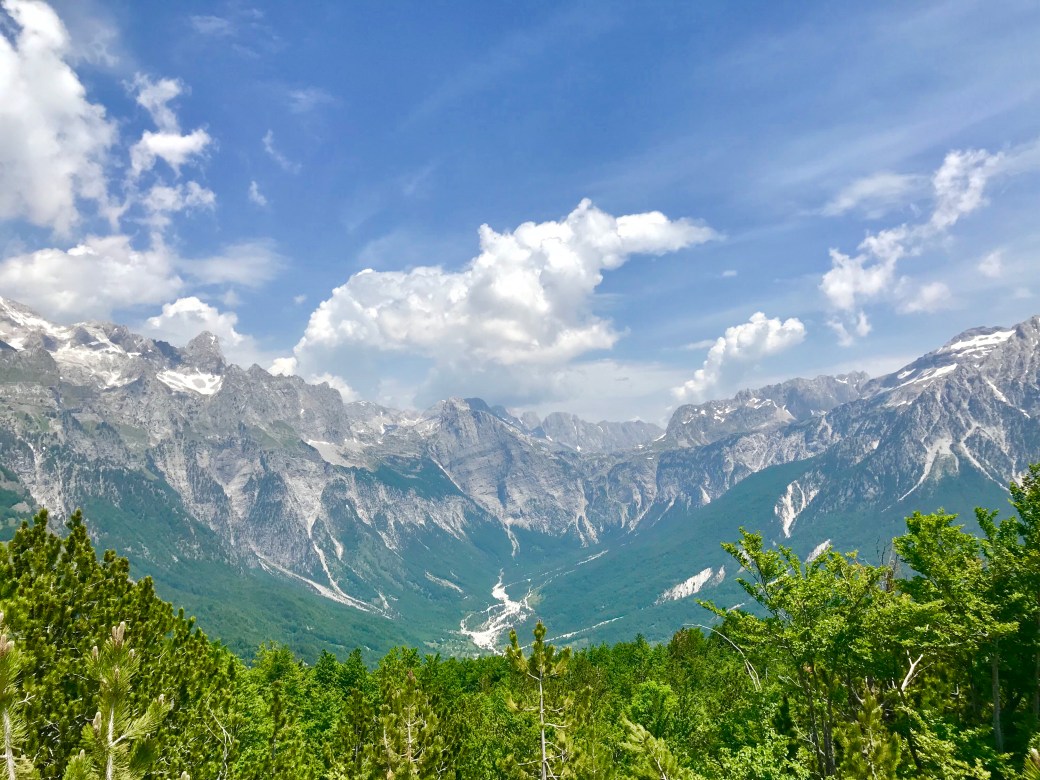 The mountains remained surprisingly Catholic
  for centuries of Ottoman rule as they were too remote and the people too fierce for occupying Turks and they left them largely in peace.
  With intrepid travelers just discovering Albanian mountains and shores, there is a sense of camaraderie that we so fondly remember from our early days of travel. Looking into your smart phone for information is simply not enough and travelers do talk to each other, comparing notes, asking questions and sharing tips.
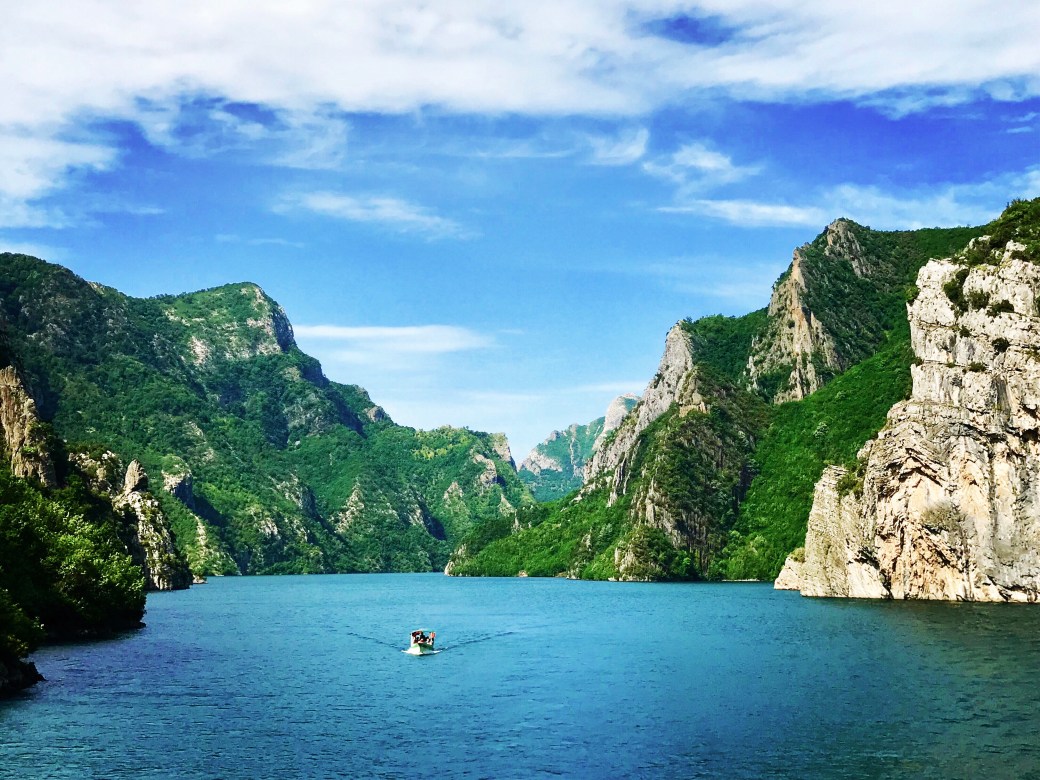 At the other end an additional hour drive on a new road brought us to Valbonë, the beginning (or end) of the hiking trail. The mountains on this side were majestic as well
 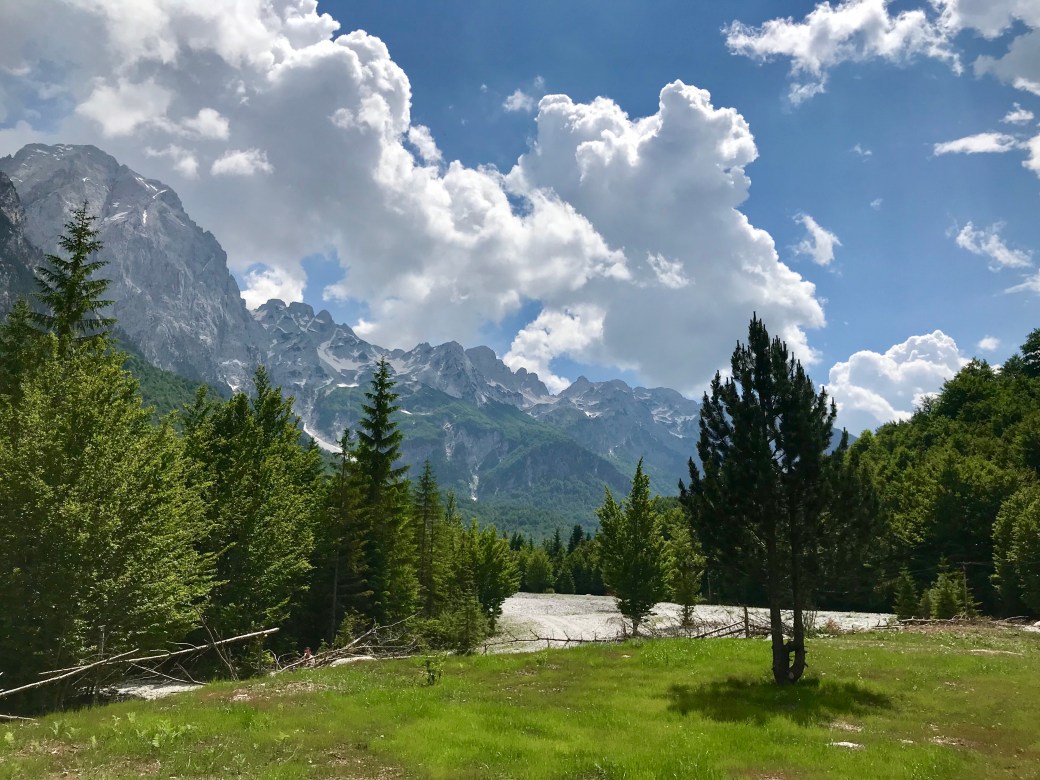 and the rivers ran clear.
  But with a good road, the development was quicker and some larger, uglier hotels started creeping up. So were the first mosques.
  Nevertheless there seemed no issues about the coexistence of different religions in the mountains or in Albania overall. As a matter of fact Albanians we talked to emphasized this fact and they were clearly proud of it. Just as the American ambassador in 1934 exclaimed that there were no religious problems in Albania, the same has been assessed today. I only wish their neighbors and others further around the world who can’t help but claim their religion is the only right one and can not help but keep killing each other, could learn from Albanians.
 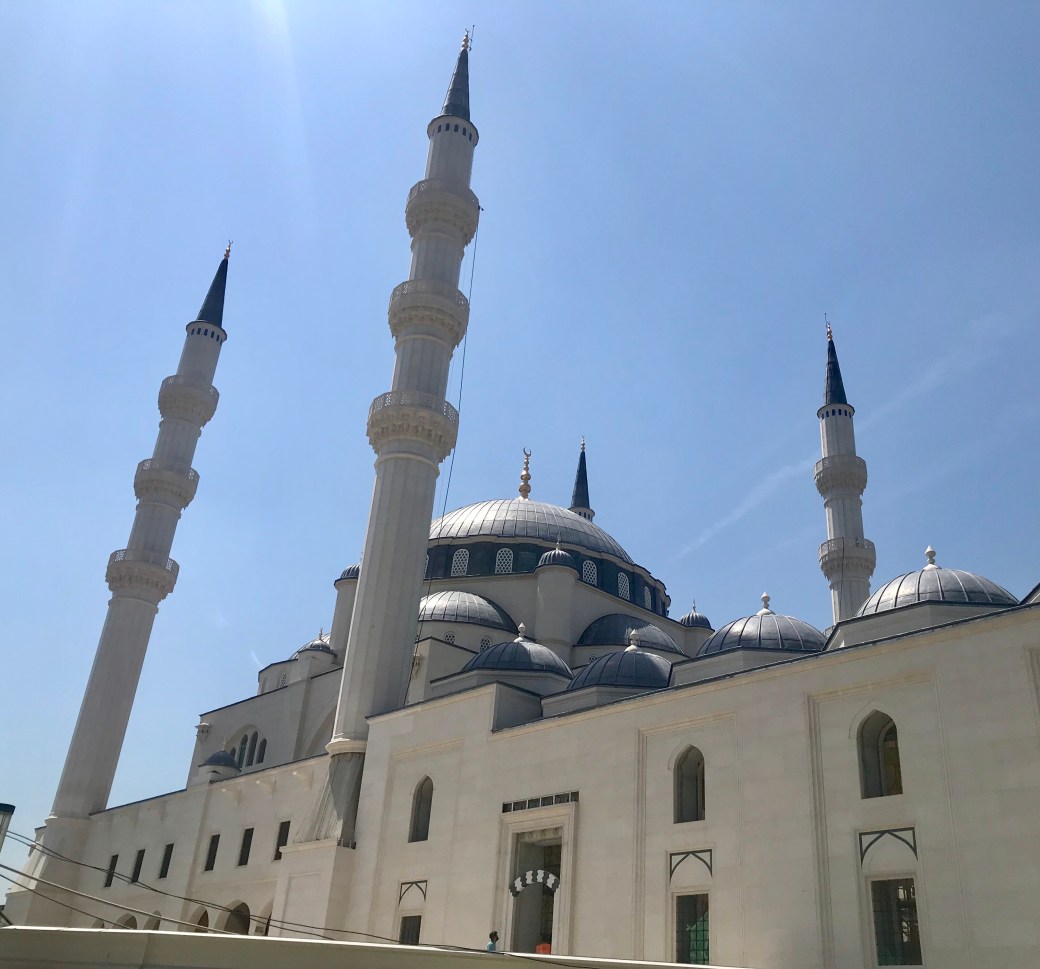 not far from the Catholic Church of Mother Teresa’s fame
 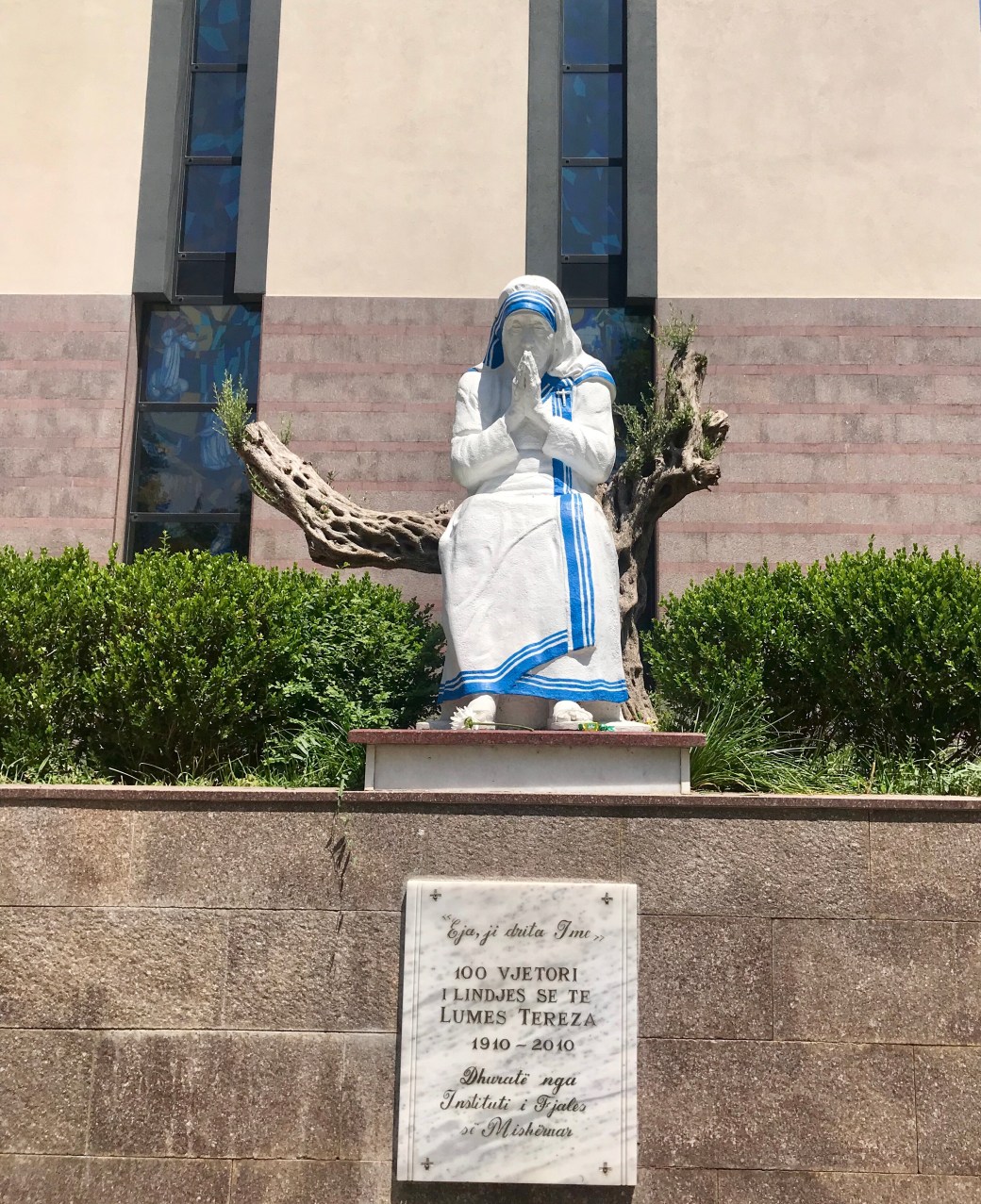 (she was Albanian born in North Macedonian capital Skopje) serving as a counterpoint to a beautiful Orthodox Church
 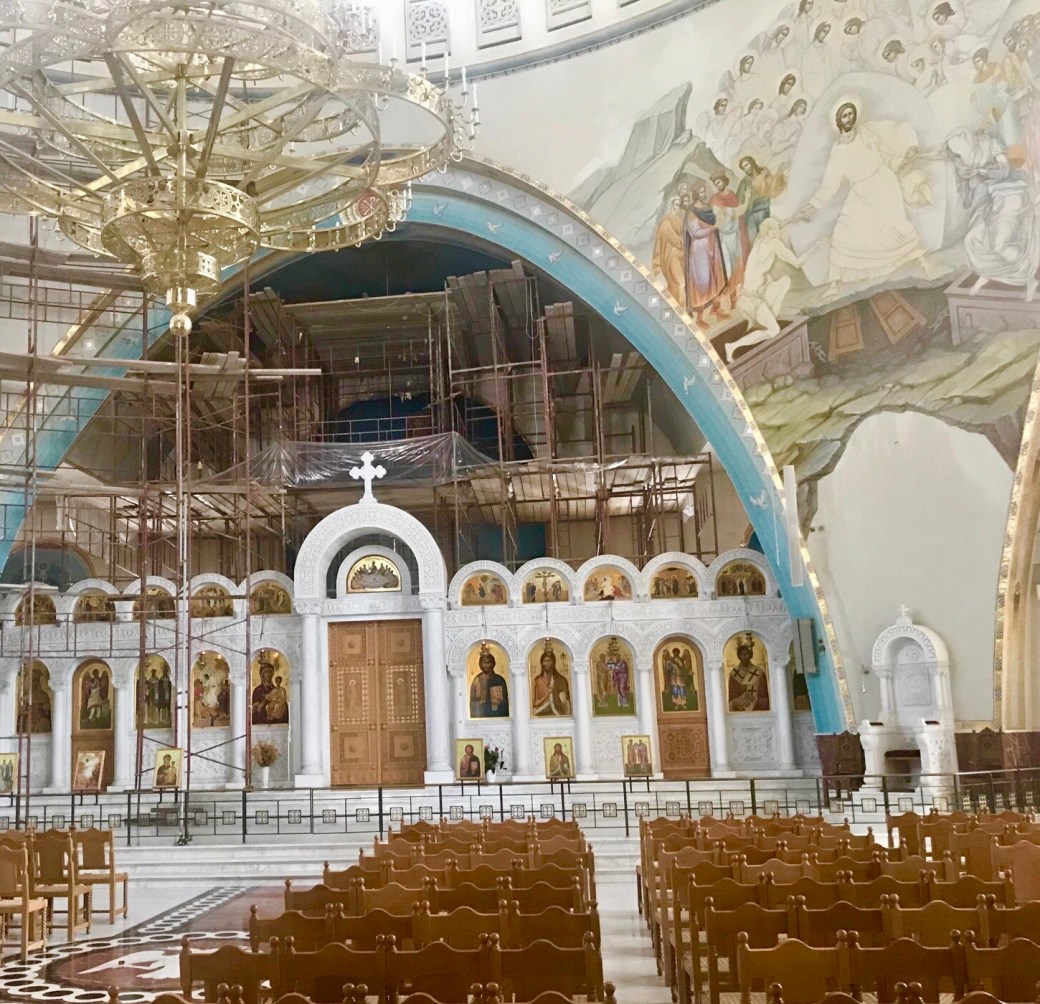 on the other side of Tirana’s Main square.
 to fight increased population of this animal in Albania. We were happy to help. As always!
 and slim minarets.
 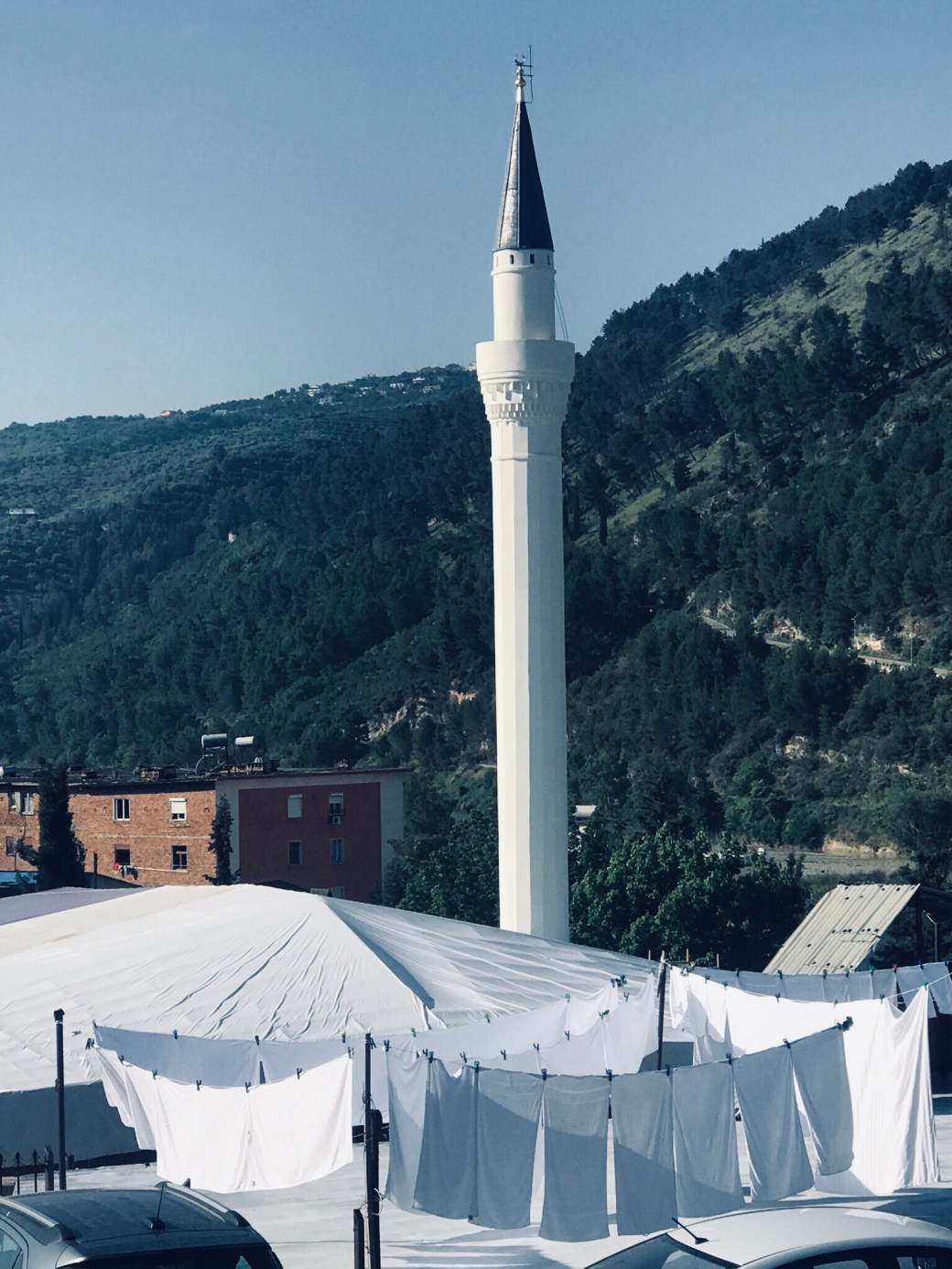 But at the Berat Castle there are churches galore and a Museum of Ikons.
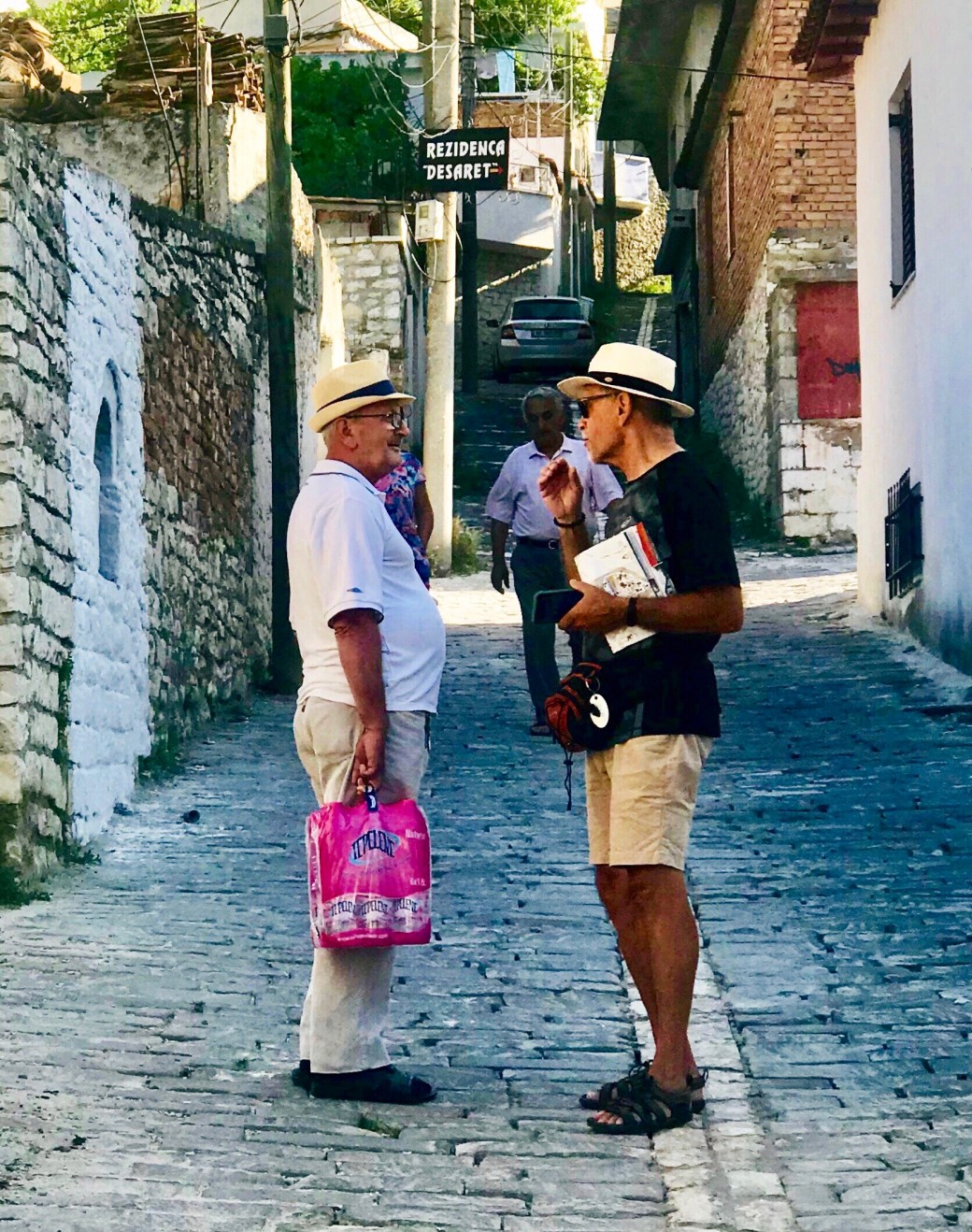 Here just leaving our Residenca Desaret hotel for a cobblestone stroll, I was stopped by a local chap and invited home for a morning shot of raki. I apologized for the hour was too early for drinking, but I did ask him how he enjoyed last night’s women World Cup soccer game in France.
 It was still a pre season calm, but thousands upon thousands of lounge chairs told a story, we did not want to be part of.
 No surprise it is designated a UNESCO World Heritage site. Surprises abound around every curve of the very narrow road above the Bay. And there are many tight hairpin curves, a delight for a seasoned driver and a thrill for the motorcycle riders. For some passengers – not so much.
 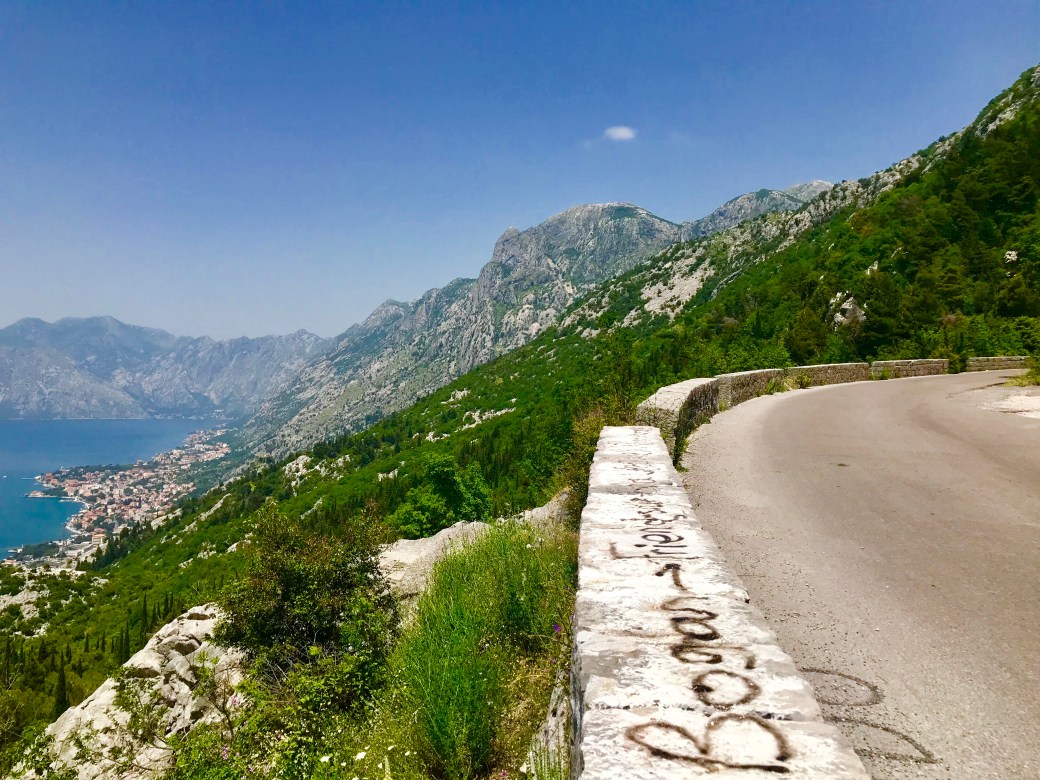 An experienced friend said to us, “The only way to really see Kotor Bay is from the water!” And he was right. It is especially thrilling on a speed boat.
 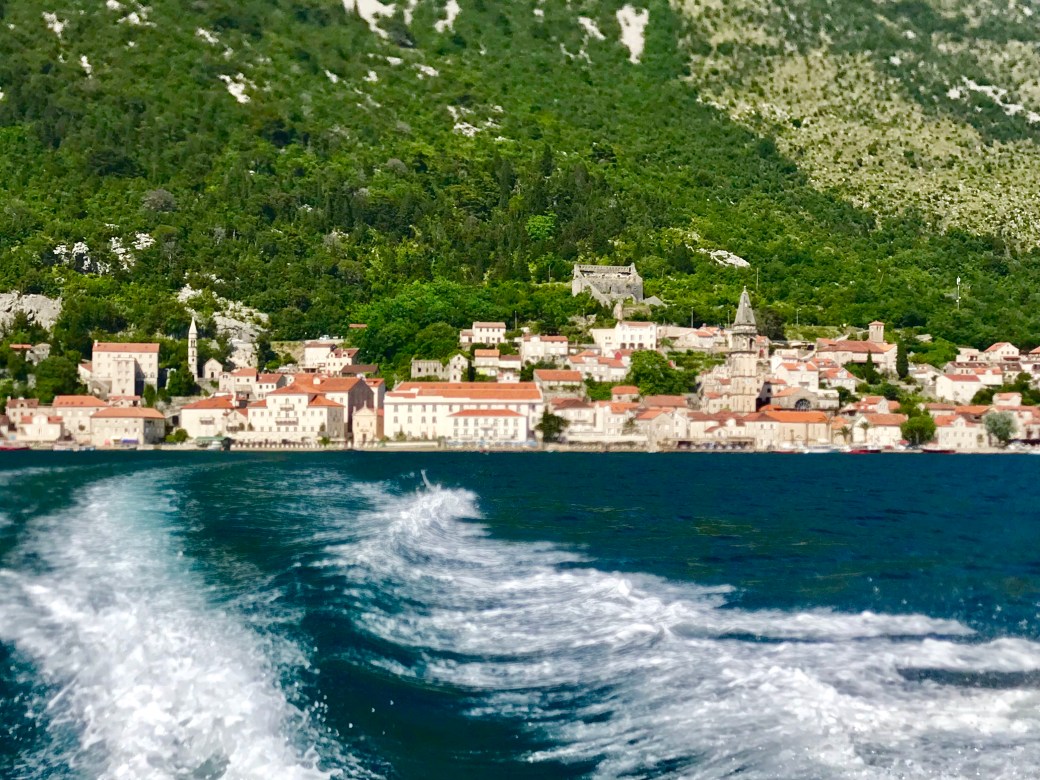 In a few hours you can explore the whole bay and see things you might not even notice from the shore. Like secret tunnels used to hide partisan boats and submarines. Talk about history coming alive when you enter one of those.
  For a special treat you can swim in a Blue Cave.
 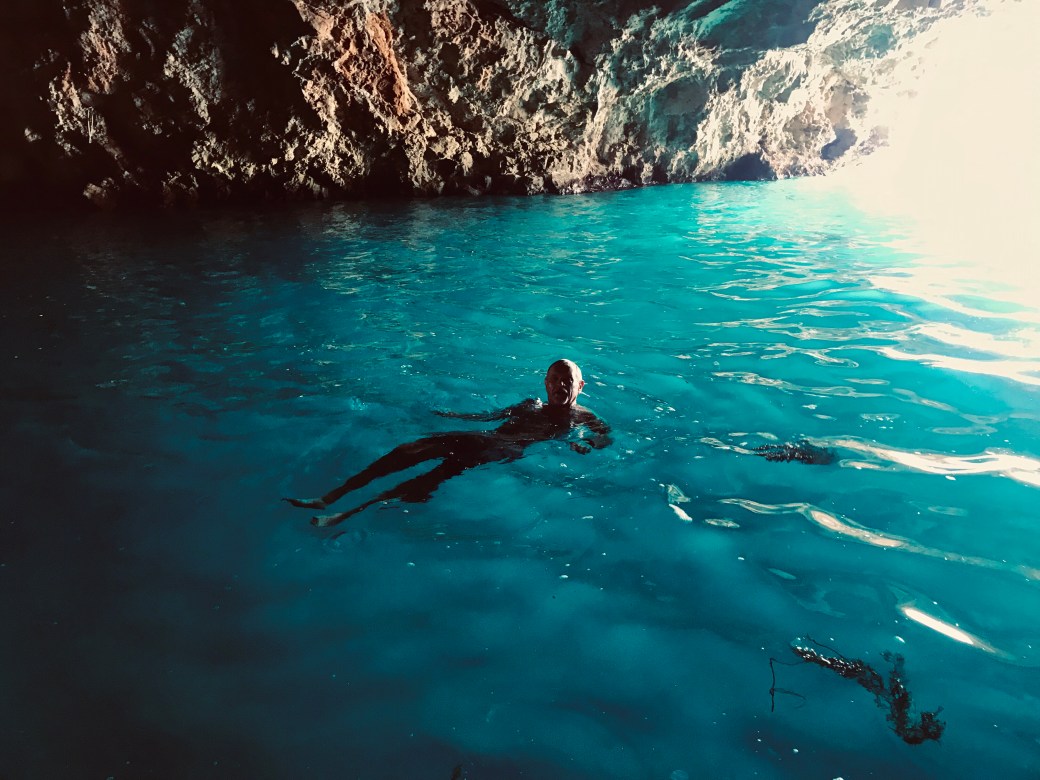 In the Bay there are islands with churches and cemeteries.
 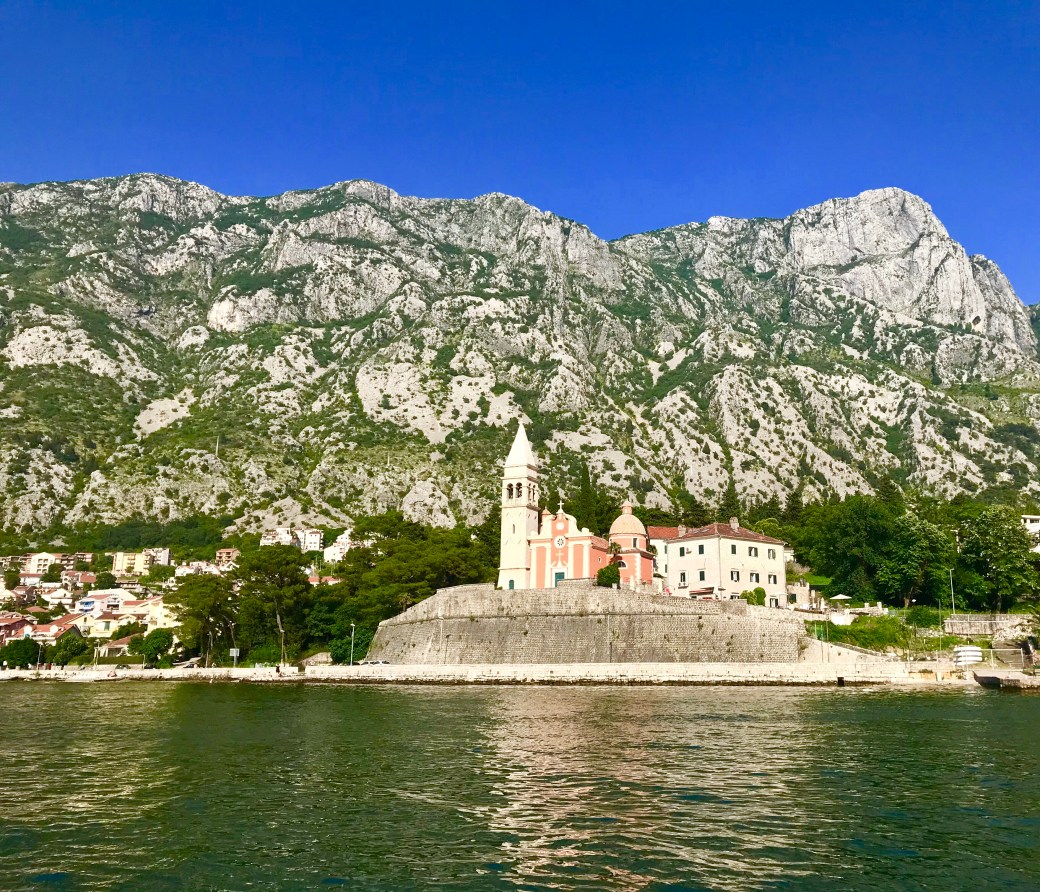 When you return to the port, you need to go past the impressive old fortifications
  to explore the old streets of Kotor town.
  Early in the day and early in the season is best as they can easily get clogged by eager tour groups.
  It must have been laundry day when we visited.
  Have you ever wondered how the fancy clothes were laundered in the old ages when there was no dry cleaners?
  I asked this guy but he didn’t have a clue.
  In more comfortable attire he enthusiastically explored the Kotor cathedral
 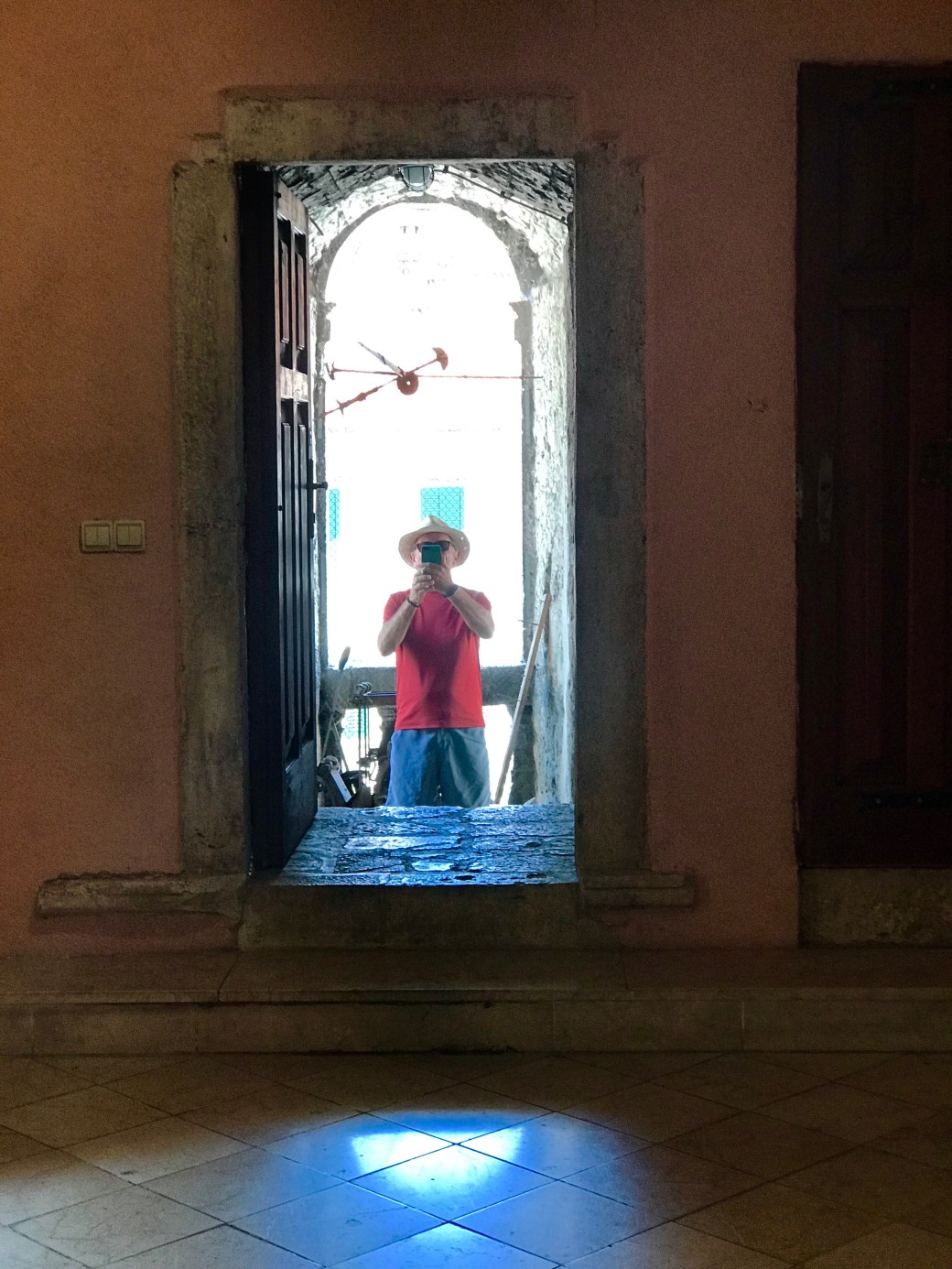 From top to bottom
  no details escaped the avid photographer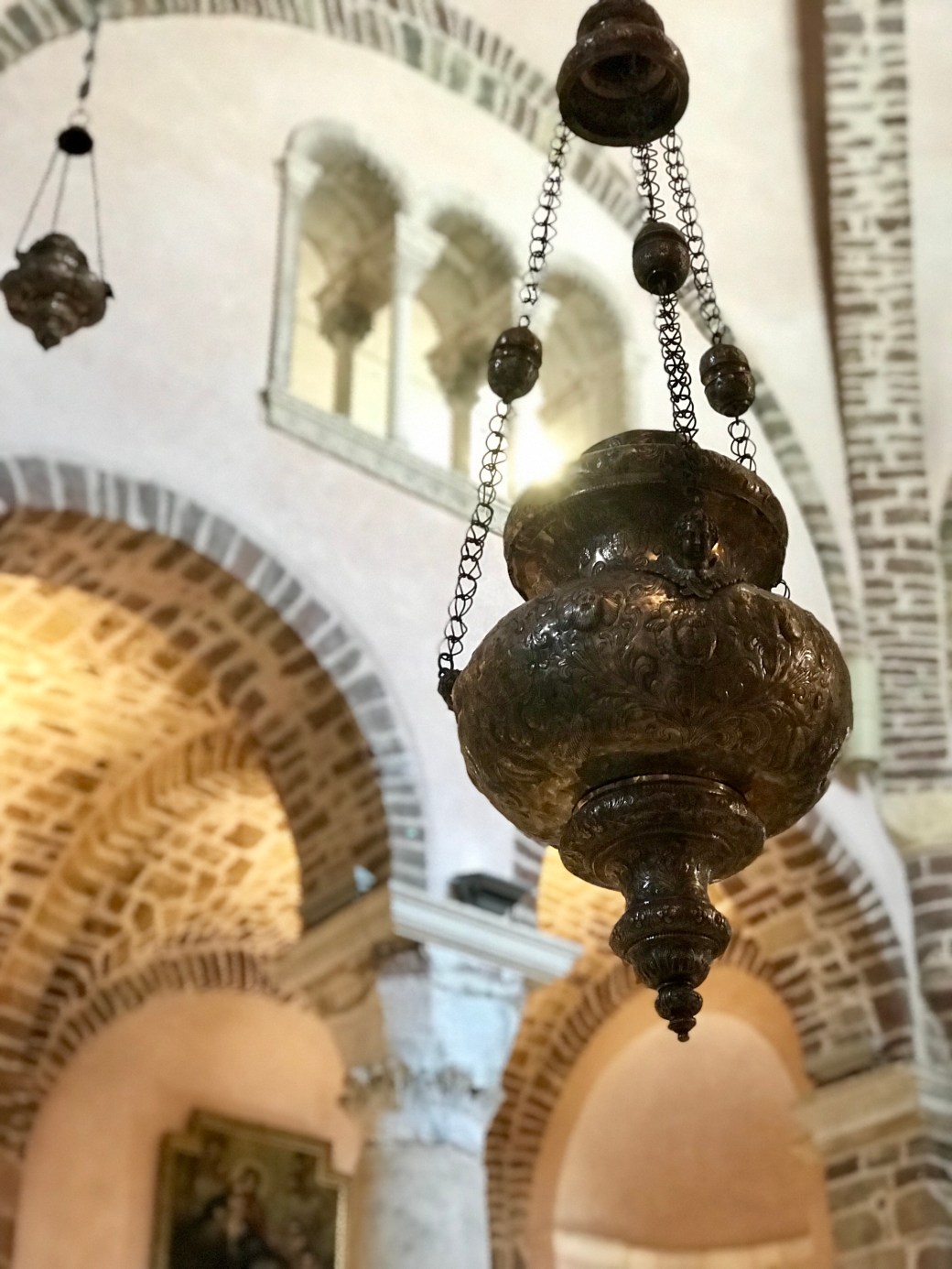
 and no sacrifice was too big when he worshiped at the altar of his art.
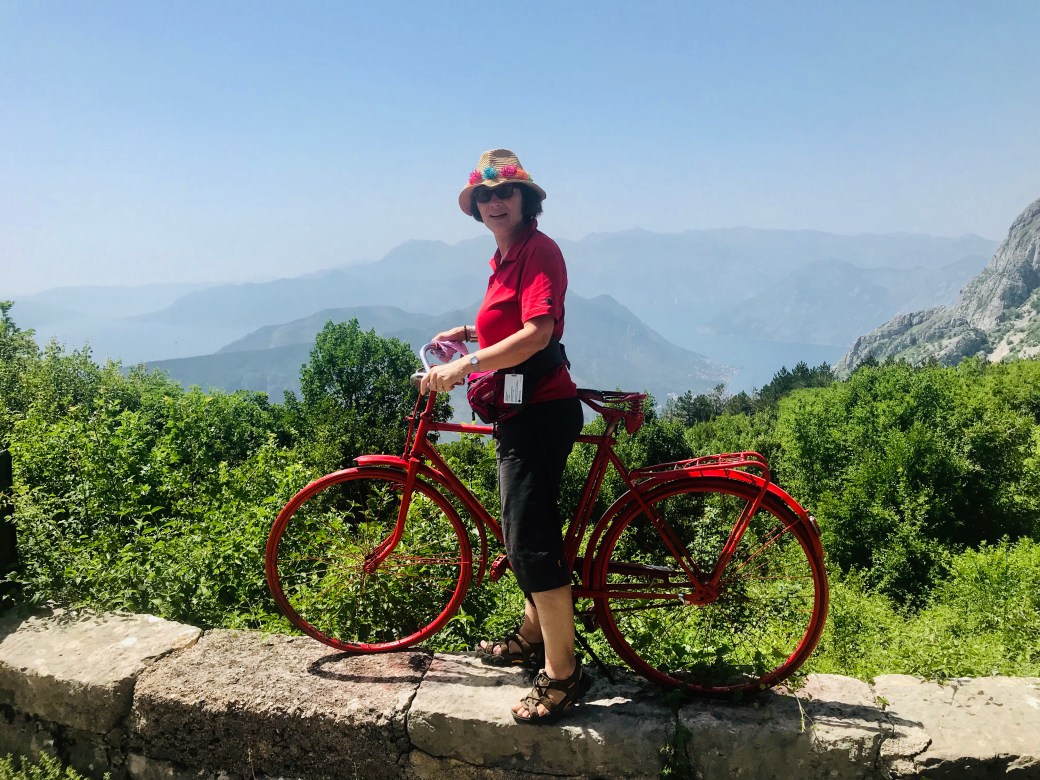 you will discover more hidden treasures, like prehistoric rock art, mini chapels,
 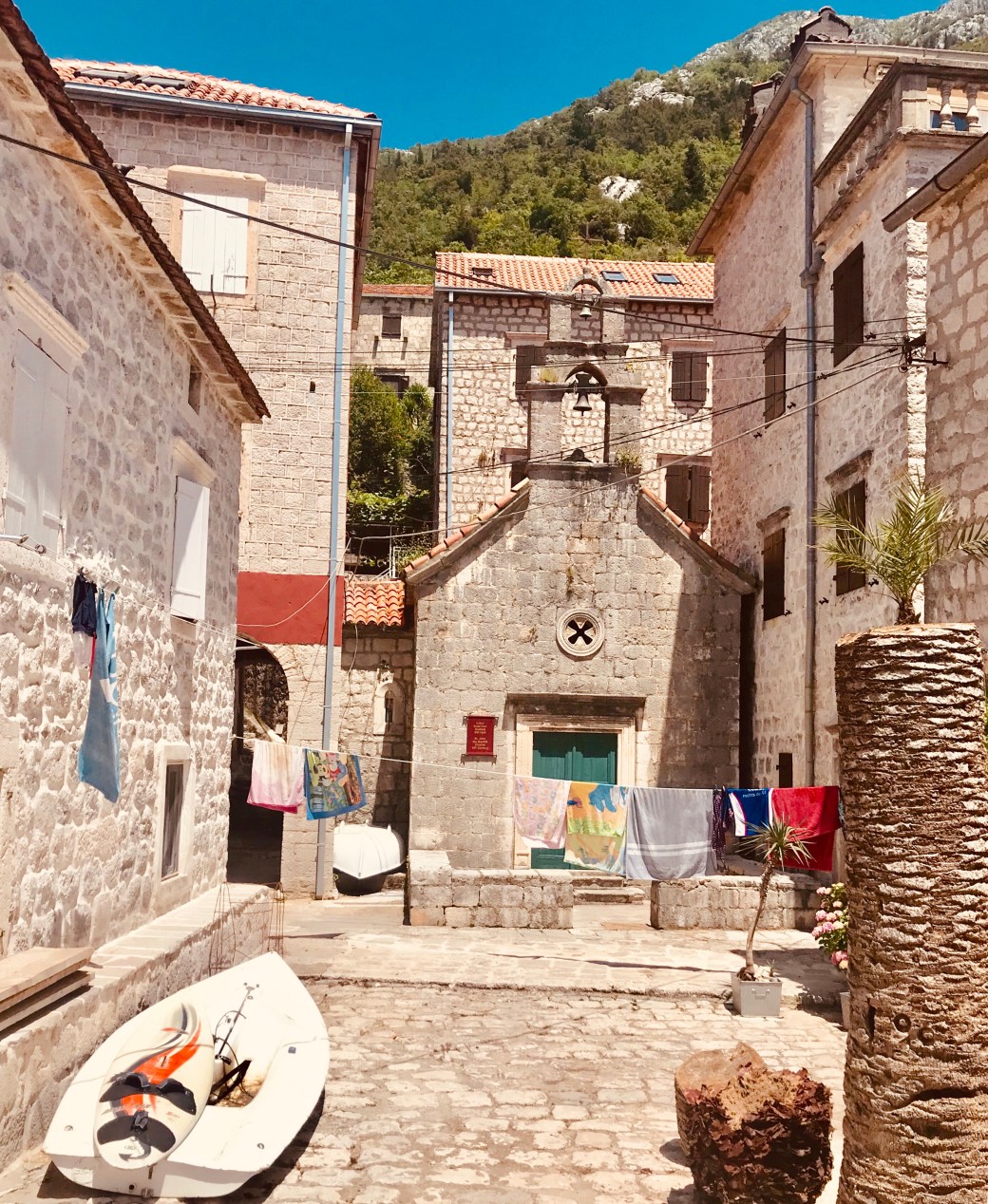 newly thriving nunneries
 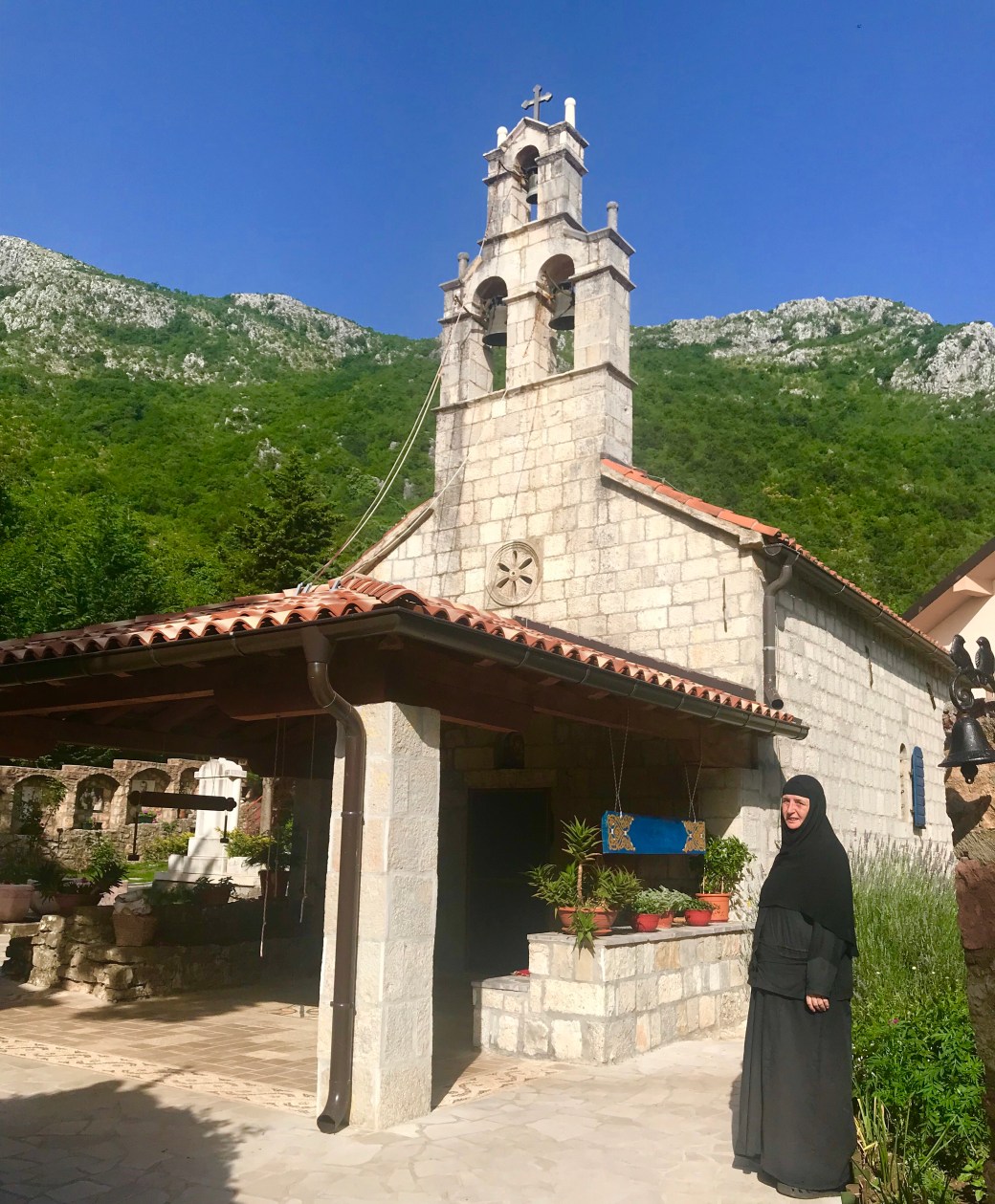 and more great views, like the Sveti Stefan bellow.
 You will surely be welcomed in with open arms!
 There is travel baggage and then there is travel baggage. We both bring our own very old Balkans travel baggage, mine going back 40 and my husband’s 50 years, when we were both here for the first time.
 like this one in Belgrade, the Capital of Serbia. Defended by all kinds of heavy canons.
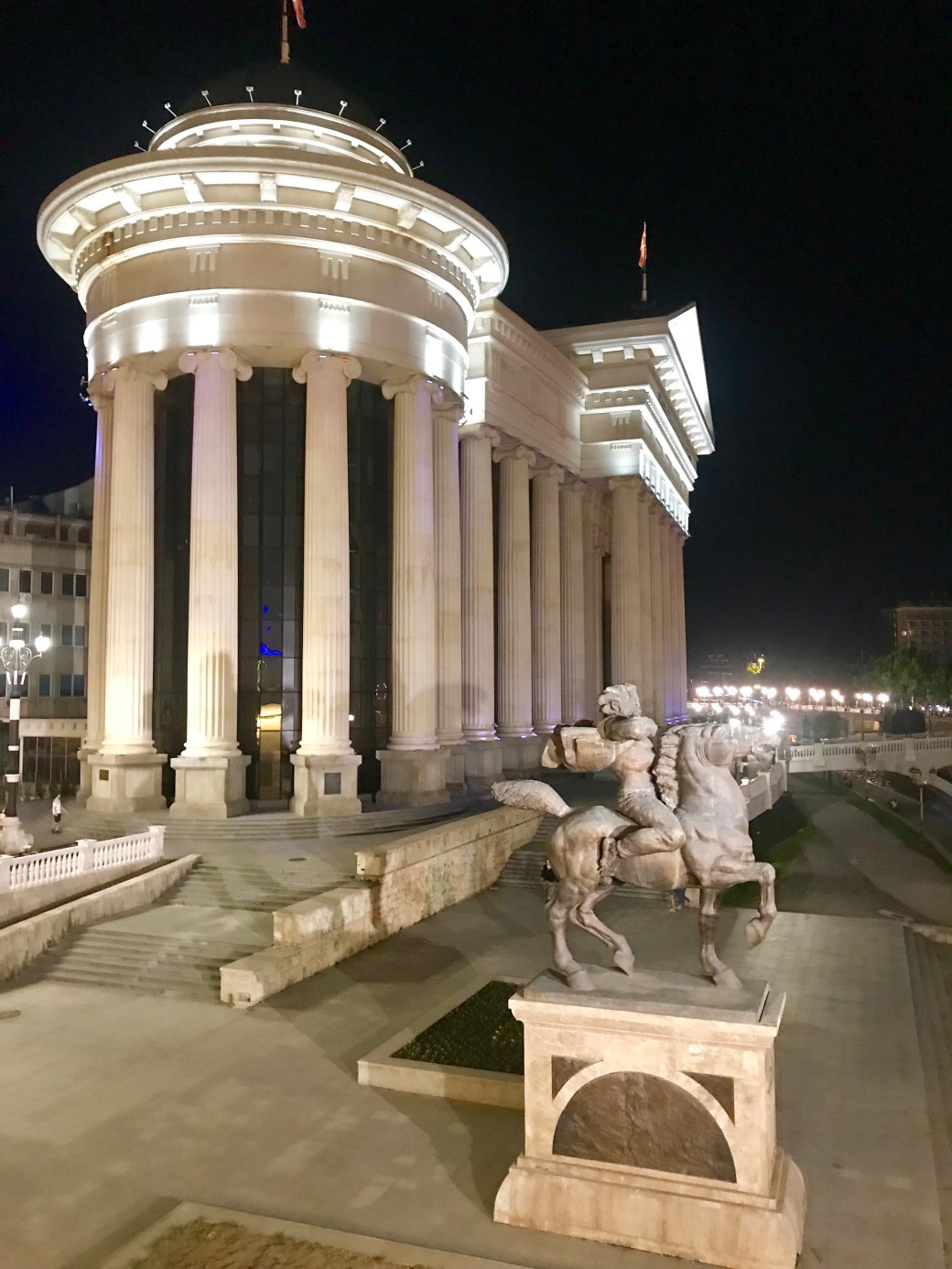
  You will also find a lot of new, not necessarily always charming or tasteful. The capitals of newly minted countries want to show off with palatial new buildings, lighted up brightly all night.
 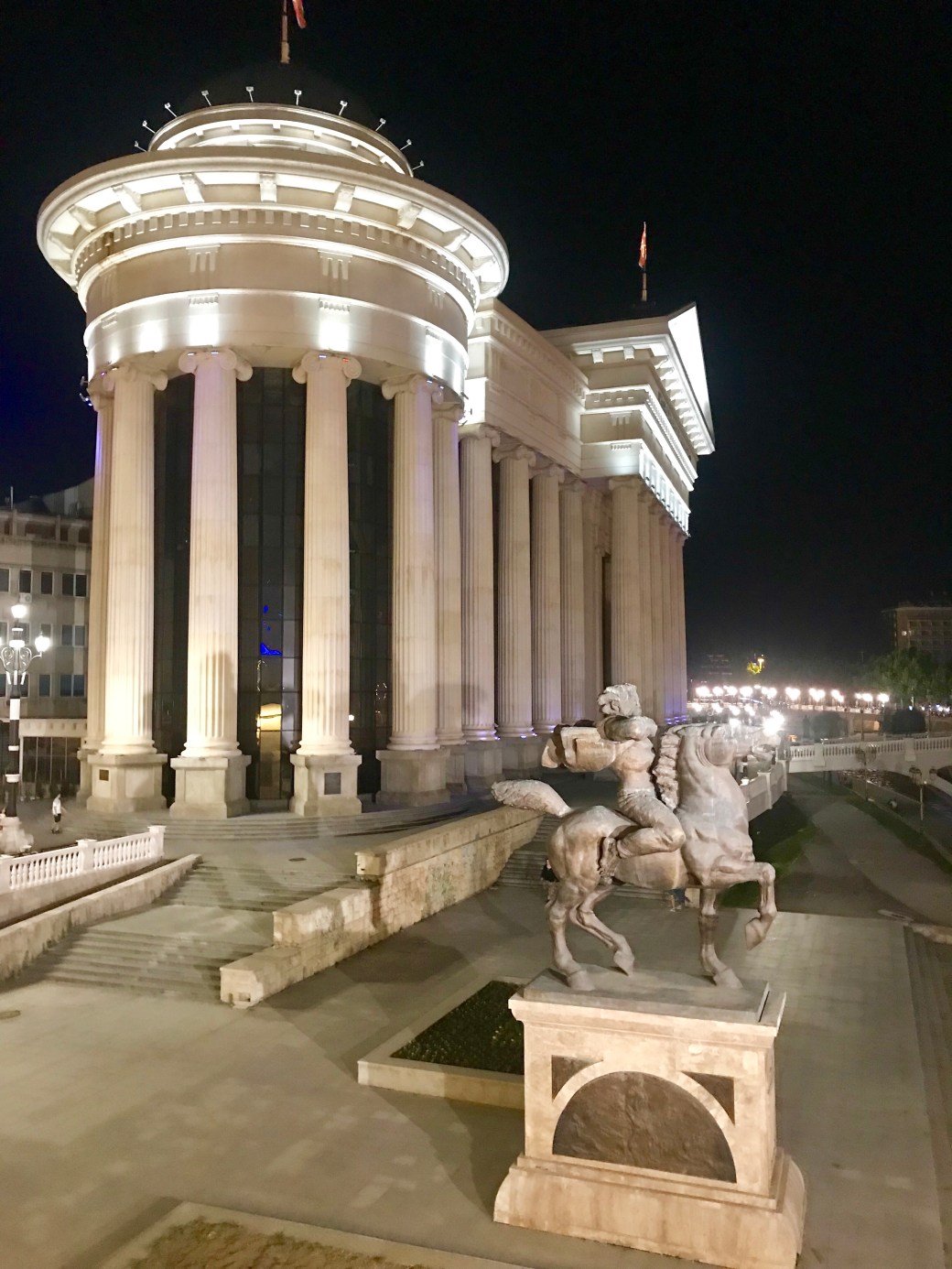 Macedonian capital Skopje is particularly insane in this aspect. Did you know that it just recently changed its name to North Macedonia? It was the Greeks who insisted on the name change. They also forced the renaming of the Skopje airport. It is not called Alexander the Great anymore. Alexander III of Macedon certainly wasn’t Slavic from Northern Macedonia (the Slavs came in much later) but he also wasn’t Greek Greek. He was of a Macedon tribe with its own language. He studied under the Greek philosopher Aristotle in classic Greek. Oops, I said no history lessons!
 Certainly you won’t go hungry, but it won’t be that easy if you are a vegetarian as meat of all sorts is the main ingredient do most Balkan meals.Besides your typical pork, beef and lamb, you will also find on the menus specialties like tripe, calve’s liver, rabbits, and sheep’s brain. Expect your plate to be overflowing and the your wallet only slightly diminished. Food and alcohol is extremely affordable and generally of great quality. We especially appreciated the ripe, red, juicy tomatoes and the early summer fruits of cherries, apricots and peaches.
  Much appreciated by all guests!
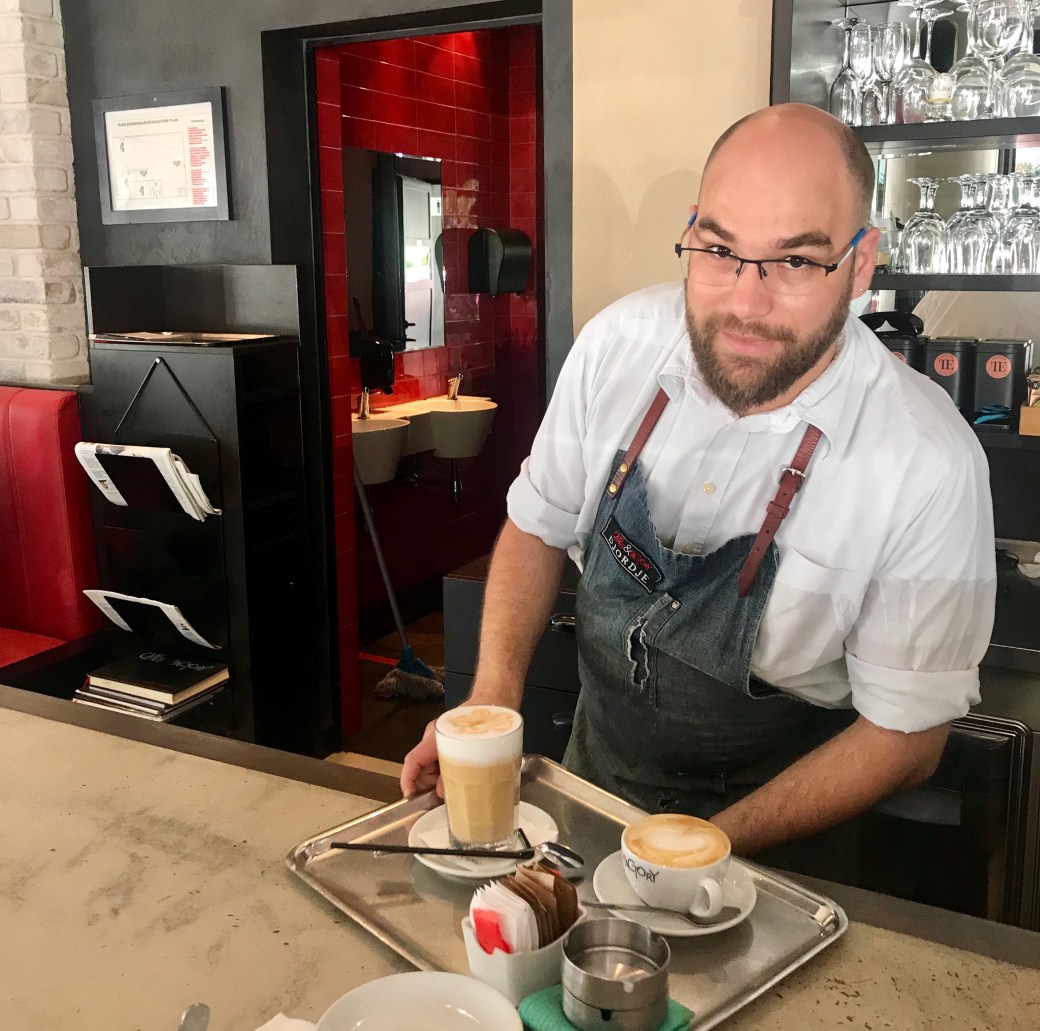
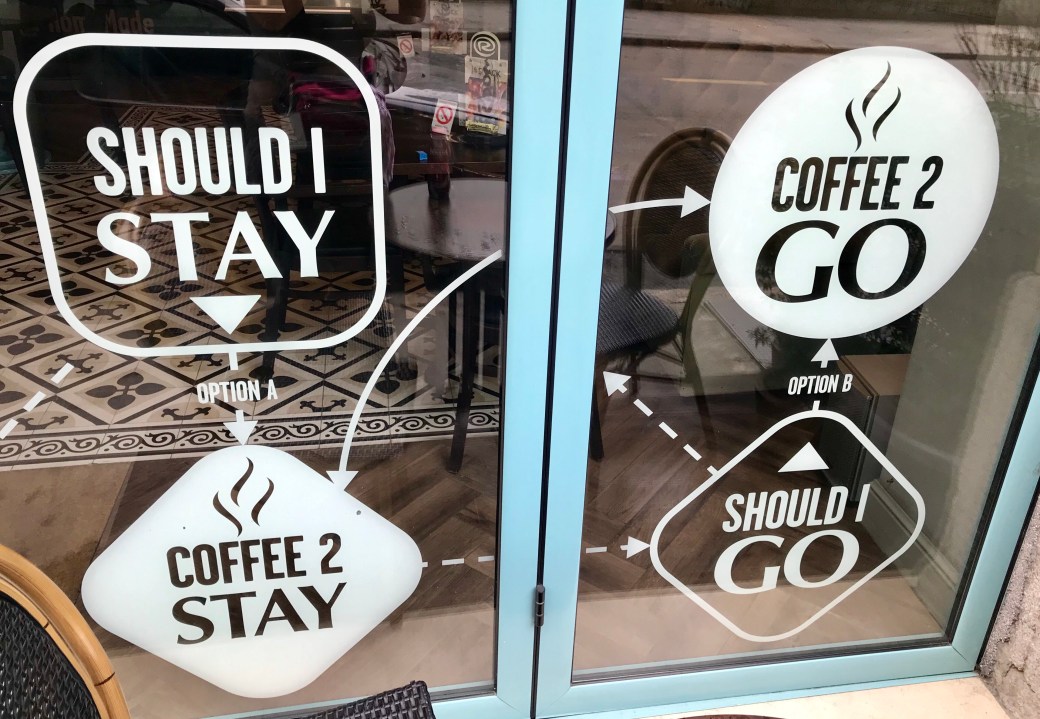 But coffee is more than coffee, it is a ritual and an offering of hospitality and friendship. In some places it is also a way of life, especially for older men, who meet in coffee houses killing time until lunch or dinner, prepared at home by their wives, who certainly had invited a neighbor or two for a cup of their own. Interestingly, for the longest time Turkish coffee (thick, mud on the bottom concoction with lots of sugar) was the poison of choice. Nowadays the cappuccinos and the like have become very trendy, especially amongst the younger crowd.
  In some former Yugoslavian republics you might be surprised to find a certain amount of Yugonostalgia.
  Compared to Stalin and most other Communist leaders,
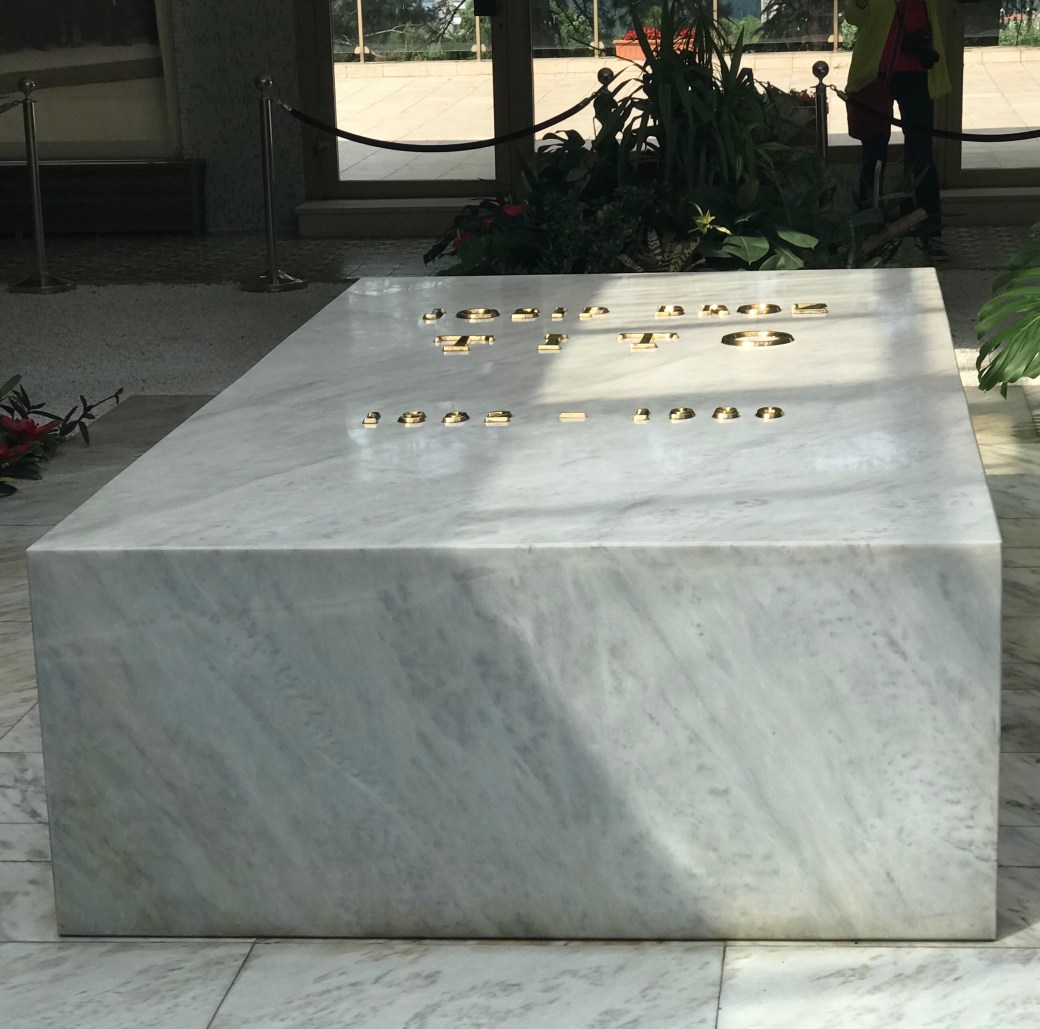
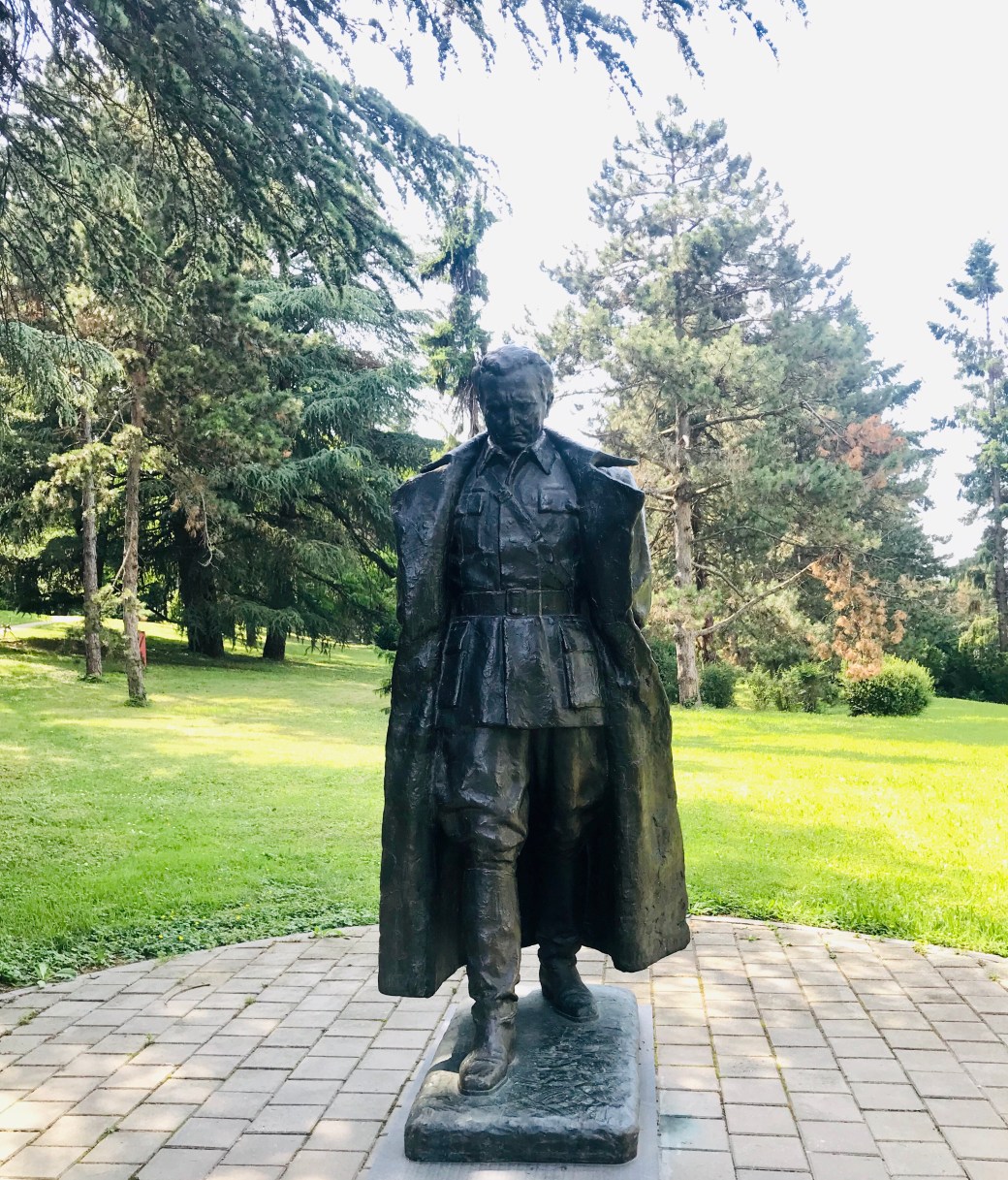 Tito was seen much more as a benevolent dictator and many people still remember him fondly and come to visit his quite modest marble grave in Belgrade’s House of Flowers .
  So let’s stay with the former Yugoslavian republics. We skipped a few like Bosnia and Kosovo. (Our car insurance wasn’t valid there, besides there were clashes with Serbs reported yet again). At the beginning of our 6 week trip around the Balkans we drove on the freeways from Ljubljana via Zagreb straight to Belgrade and in quick six hours we were there.
  That’s were in my mind the Western (Austro Hungarian) and Eastern (Serbian Orthodox and Turkish) worlds come together.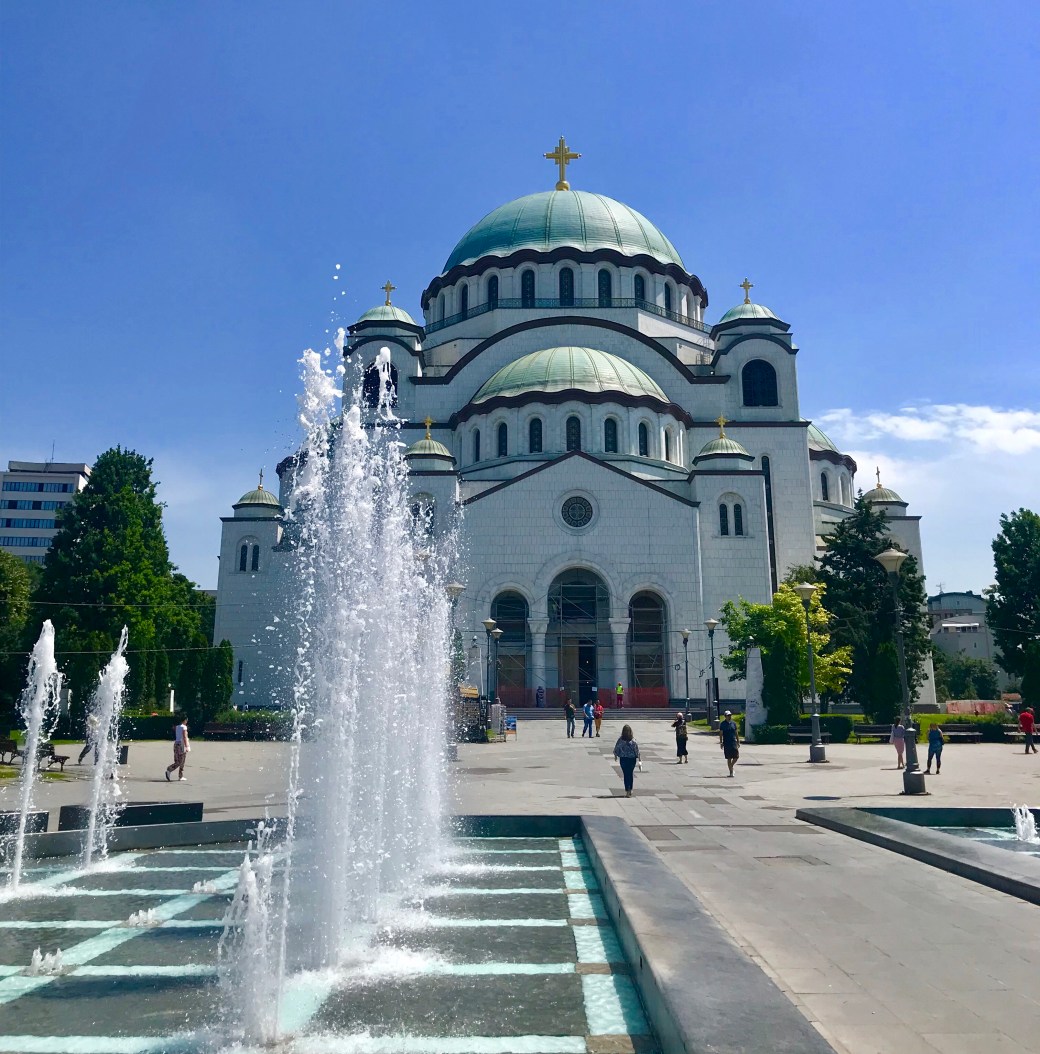
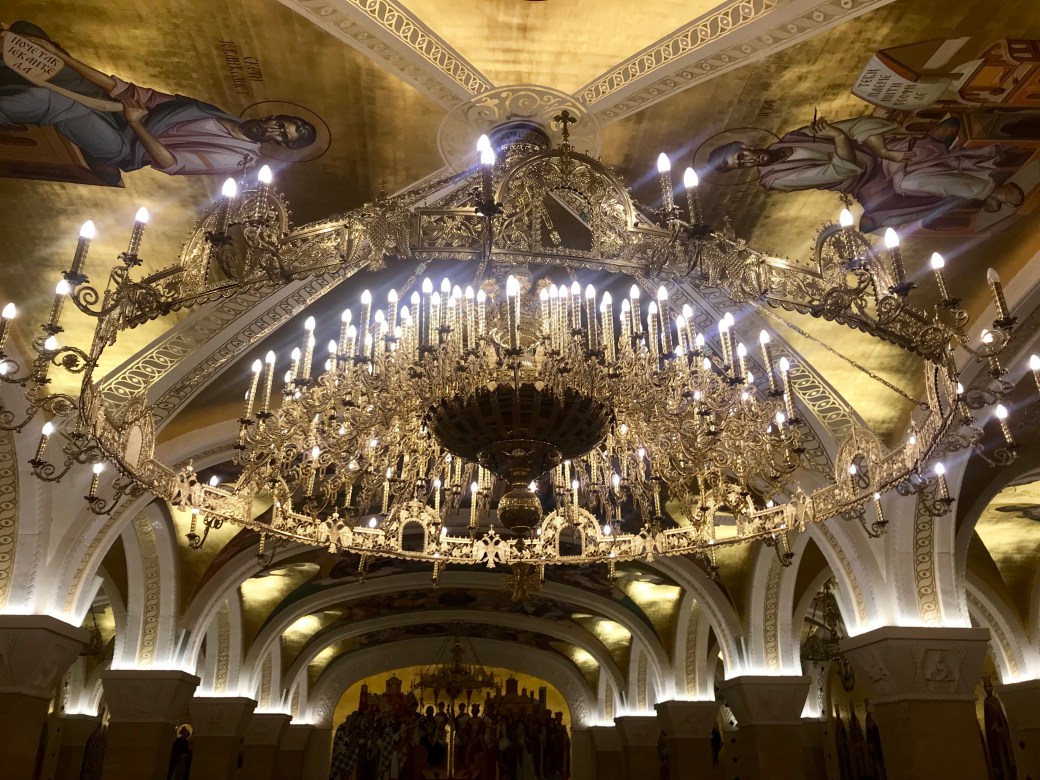 Enormous, new, but still unfinished Serbian Orthodox Church of Saint Sava.
 to say a quick hello to a famous White Angel
 This beautiful angel fresco has been recognized as a universal symbol of peace. It has been sent as a first ever satellite message from Europe to North America. It has also travelled into space a few times, hoping to convey the peace message to any possible interceptors.
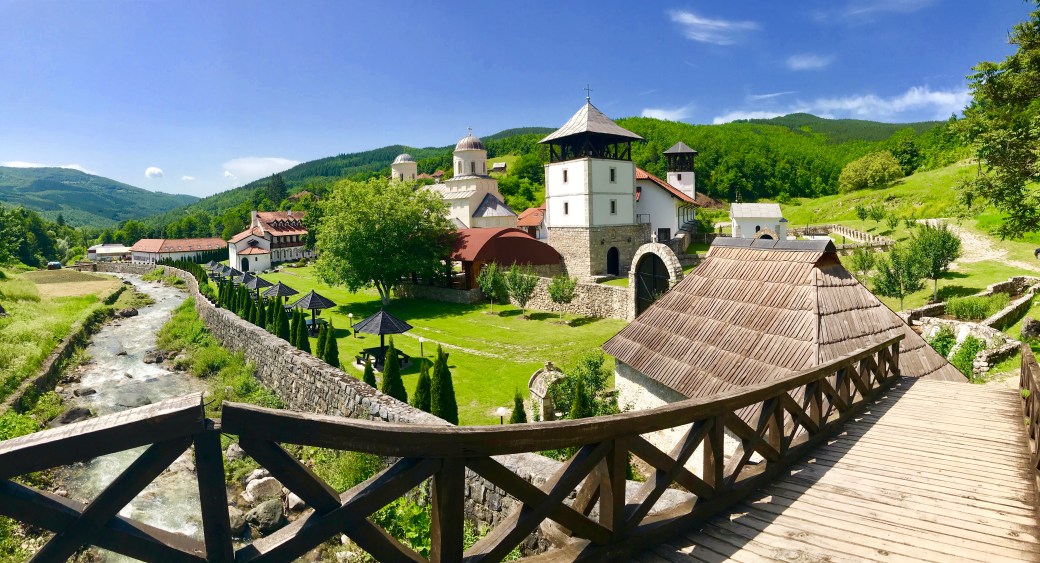
 Montenegro (=Crna gora=Black mountain) and everything became green! There was an extraordinary wet May and Nature exploded in a riot of leaves, grasses, and flowers. It was particularly spectacular from the high point of the bridge on Tara River.

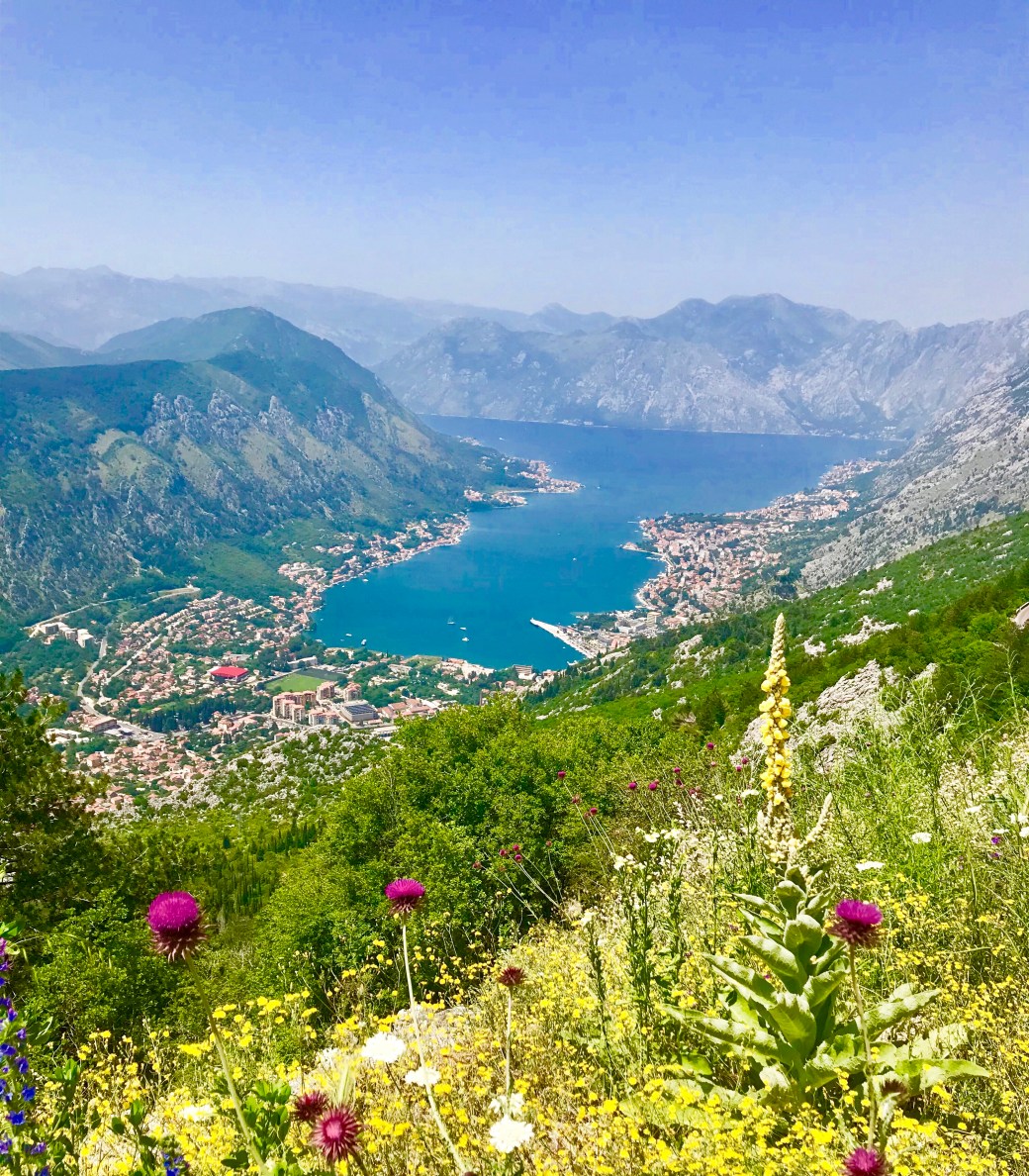 No wonder James Bond’s Casino Royal was placed in Montenegro (though, sorry, not a single scene was shot there).
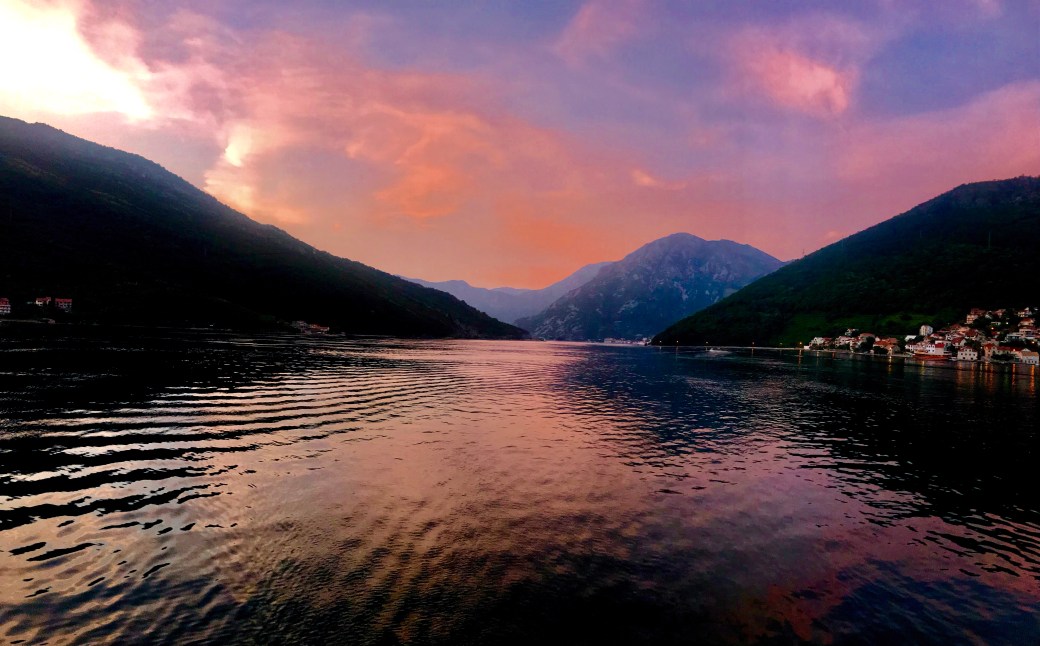 and pulled into the little town of Donje Lastovo, where our home away from home was waiting for us.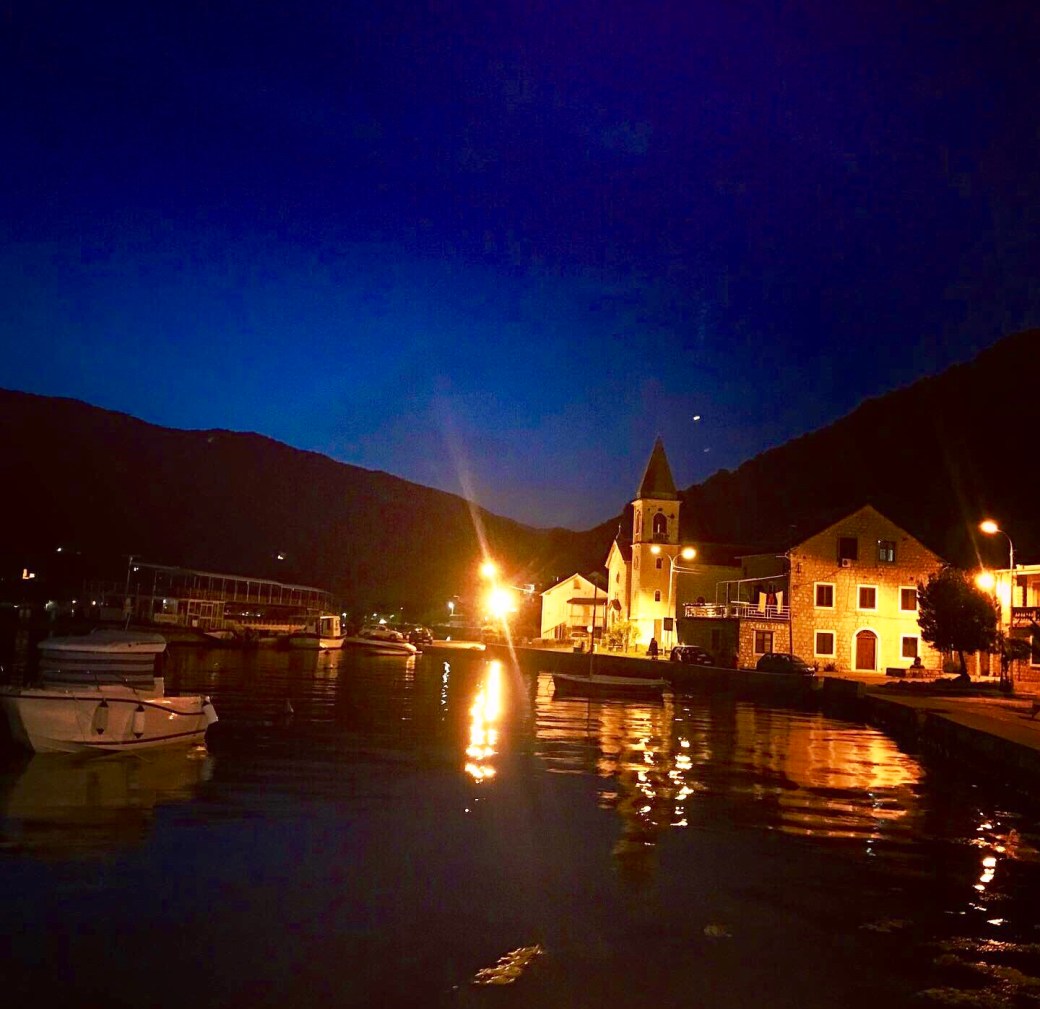

 A big part of why I love to travel is meeting diverse people (and robots!) I would never ever had a chance to meet otherwise. Sometimes they are interesting travelers, sharing tips and excitement of the road, but mostly they are locals sharing insights into their culture and way of life.
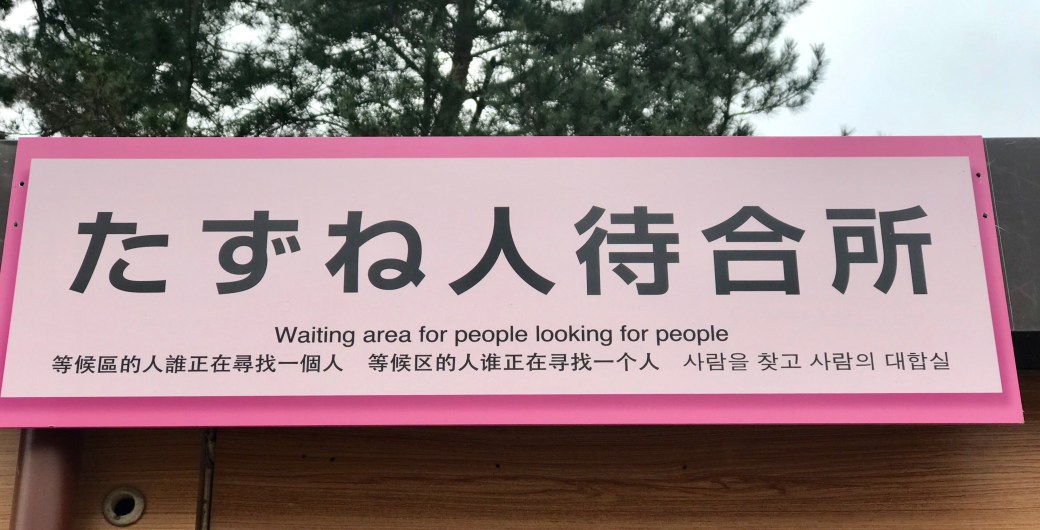 The tourist information centers are well stocked with English brochures and timetables even if sometimes you have to
  and people manning them have a very limited spoken English capability.
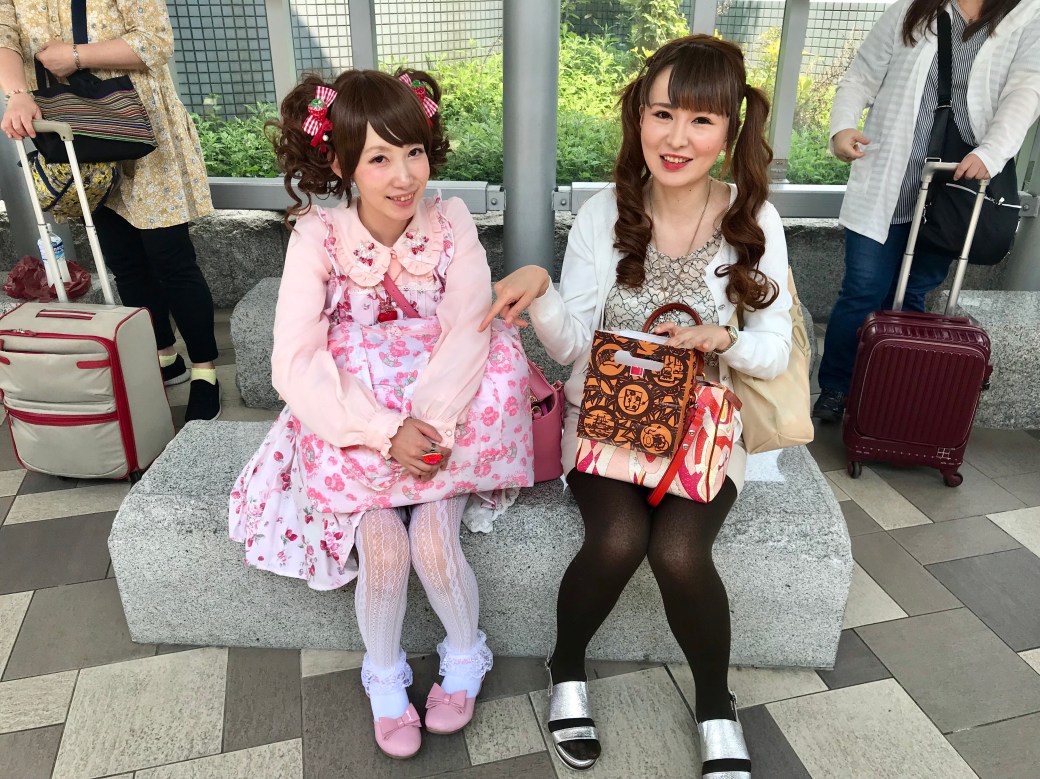 I still do not have a full answer. It has something to do with Japanese obsession with cuteness called Kawaii, that can refer to things, people or toy characters that are charming, shy and childlike. Think Hello Kitty!
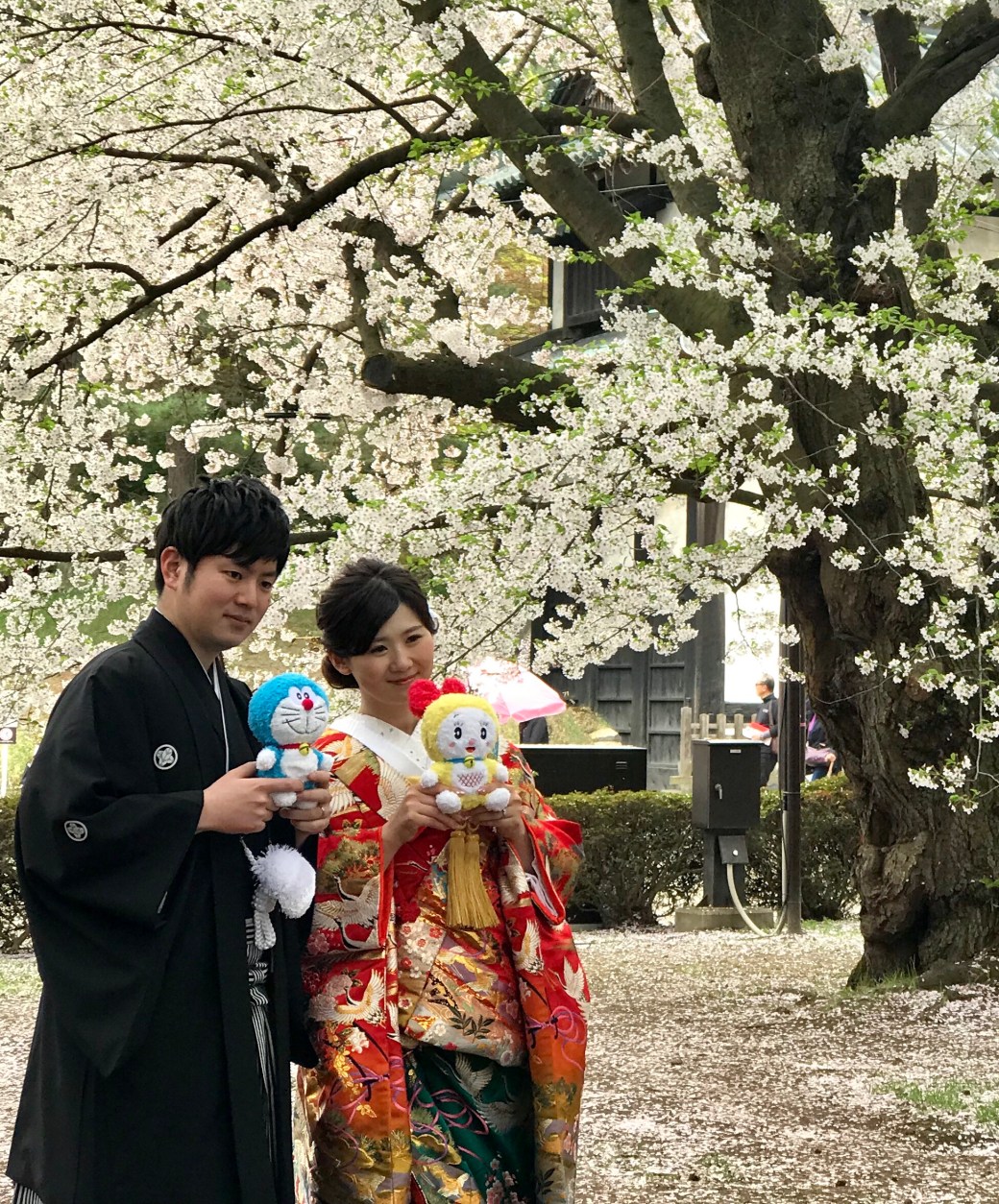 Huh? It would only make sense if they then ceremoniously flushed them down the toilet as a symbol of leaving all childish things behind. Didn’t happen.
 It is simply not acceptable to show any more and very impolite to “burden” others with having to watch you. What’s wrong with that? Well, the problem seems to be that this dispassionate approach to love does not diminish at the doorsteps of Japanese bedrooms. Japan has one of the lowest birth rates in the whole world.
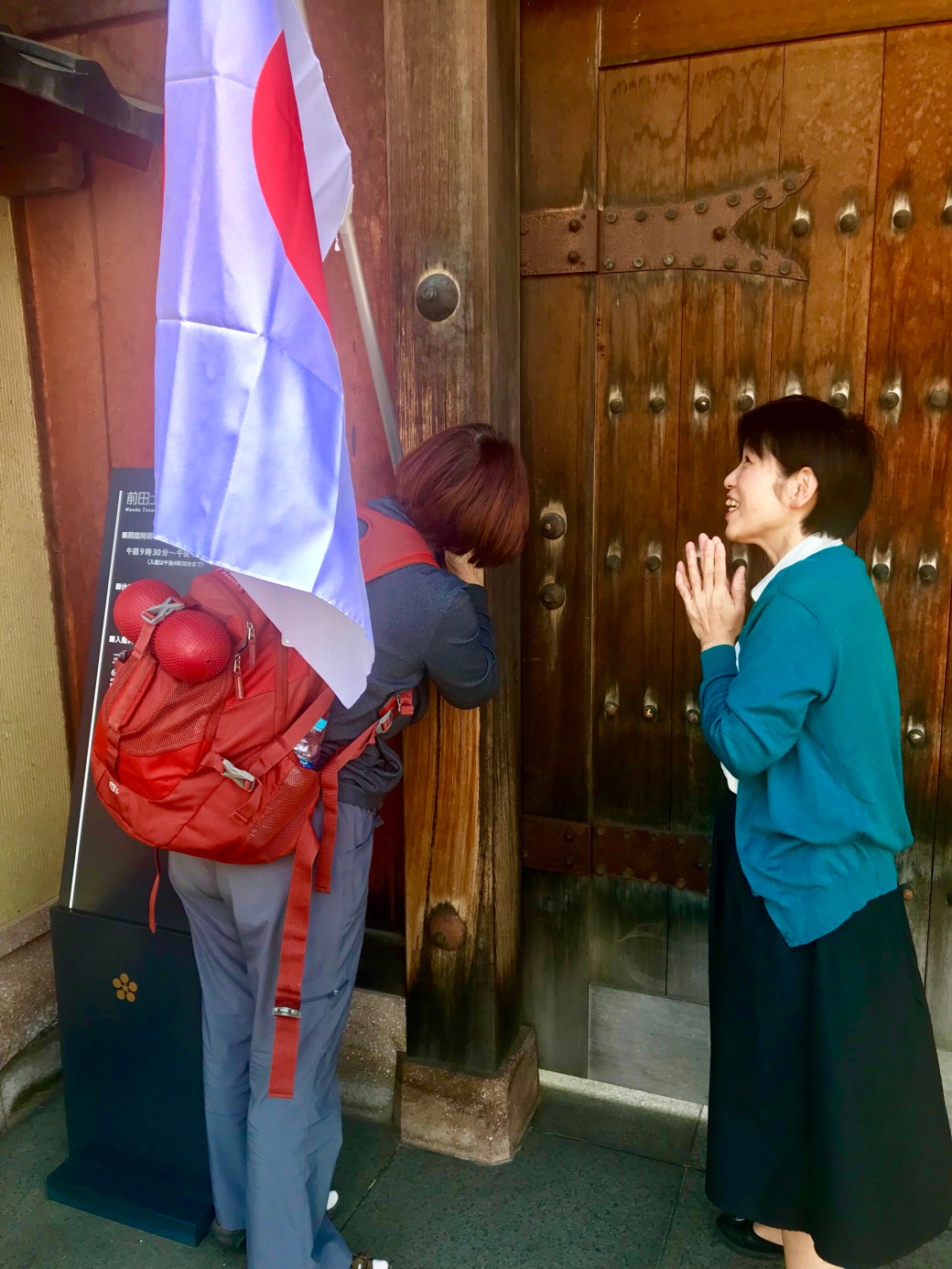 and she in turn mobilized the staff of the museum to brainstorm on our breakfast options.
 My understanding is that isolation is a really big challenge in Japanese society, especially for young men. I wager that overuse of technology does have a role to play. Riding local trains we could frequently observe school kids on their way to school. While the girls would be engaged in some conversations and giggling together, the boys invariably just played (violent) video games on their smart phones.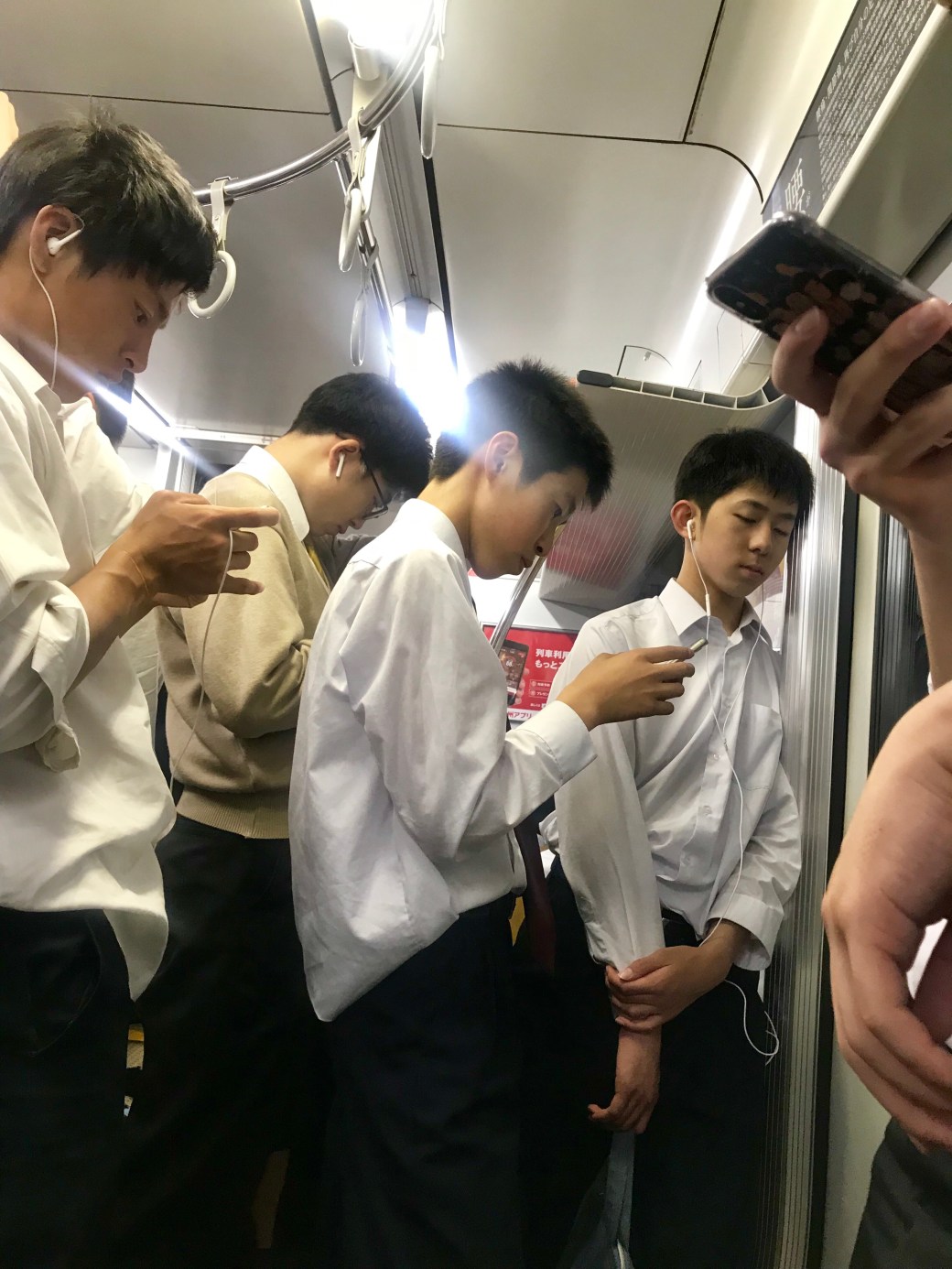
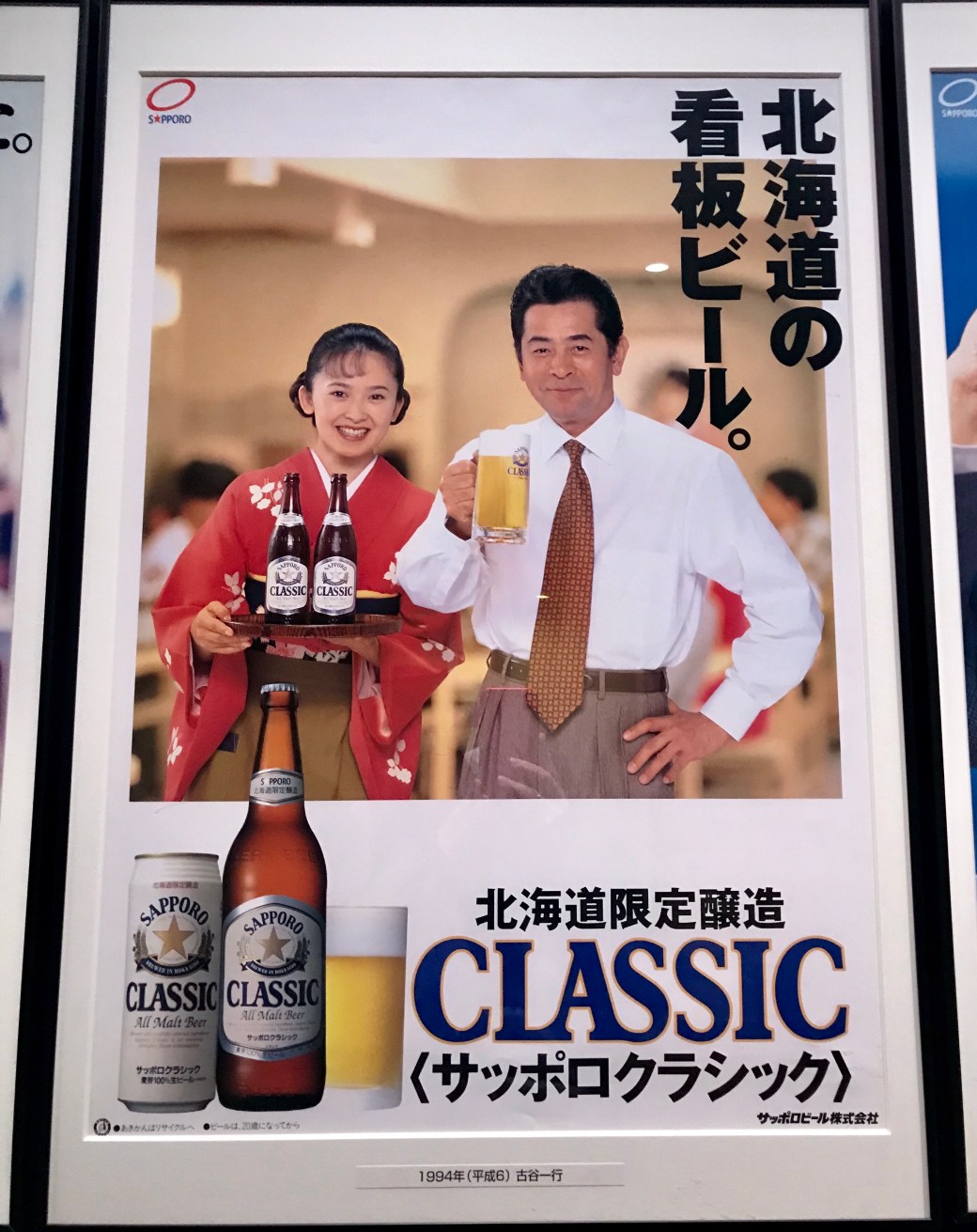
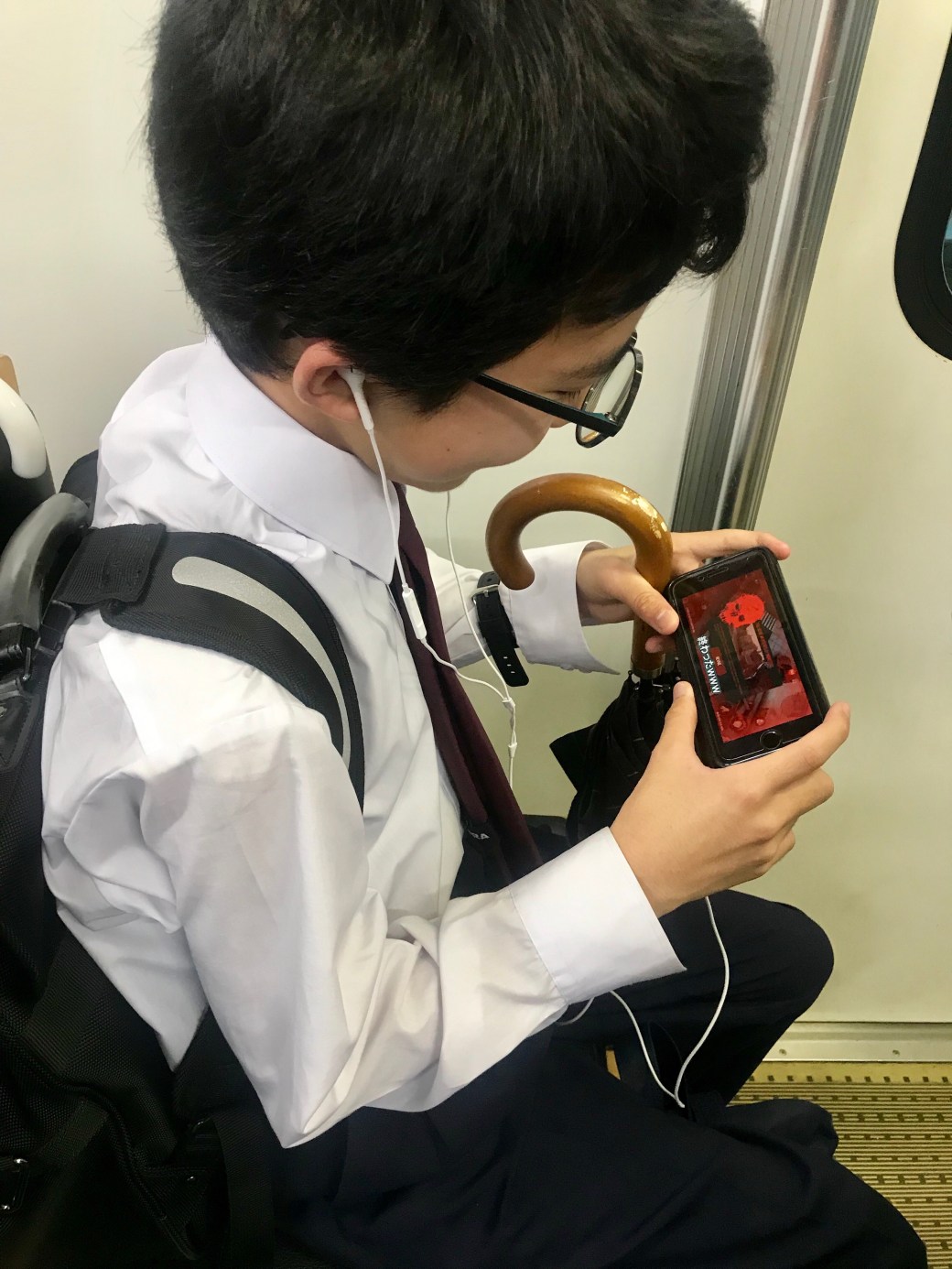 Indeed, it seems that in general girls are doing much better in Japanese society these days than boys. As they grow up they tend to be more confident, educated, enjoying their life, shopping and traveling. They are in no rush to get married. Because of the very traditional gender values and expectations, the pressure on men, especially first sons is exacerbated. Men are supposed to be responsible breadwinners, working extremely long hours, while women should stay home alone minding the house and kids. Very clearly depicted in this beer ad:
 Rejecting those norms has initiated a worrisome phenomenon called Hikikomori whereas adolescent boys and even middle aged men shut themselves in their rooms and refuse to come out for years. On the low end the estimate is that about 1 million Japanese are modern day hermits.
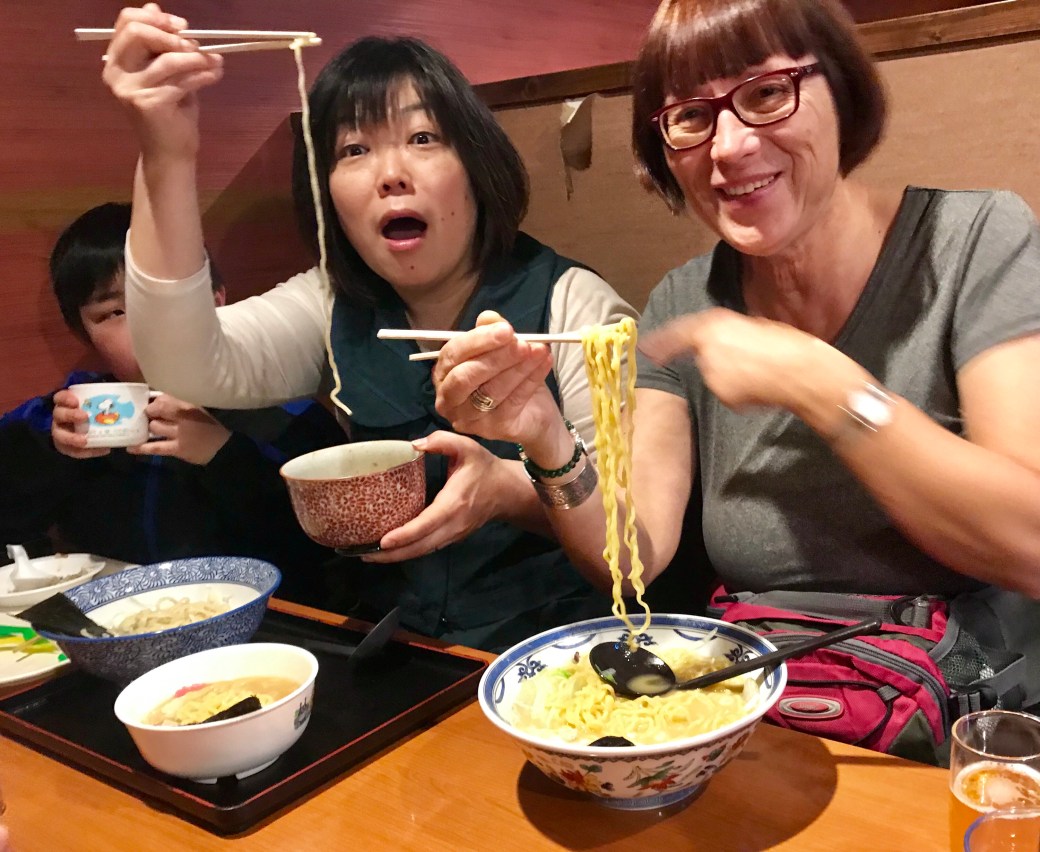 with just the right amount of appreciative slurping and arranged for free tickets to a grand concert of community wind orchestras. Who knew classical music was so popular in Japan? With the high level of professionalism and prevalence of young musicians classical music has a secure future there.
 and a real home made Japanese dinner feast with lots of kanpai (=cheers!) toasts. It is surprising how easily family secrets and complaints surface after a few drinks!
 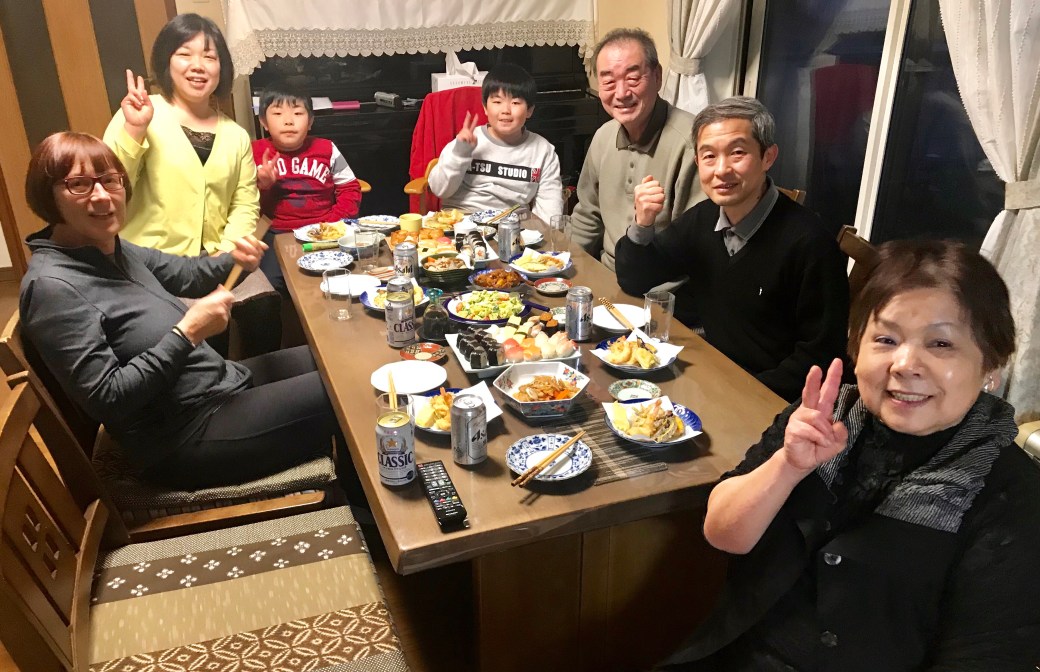 Our second host was a divorced woman living with her elderly parents in a house they built after their 130 year old traditional home was totally destroyed in the 2016 earthquake, burying the parents underneath for many hours.
 What are the chances that the first morning of our stay a strong earthquake of 6.3 on the Richter scale magnitude shook and swayed the ground. If I wouldn’t have believed in PTSD before, I would have been convinced, as our new friend jumped into my arms crying hysterically. Luckily there was no damage but frayed nerves.
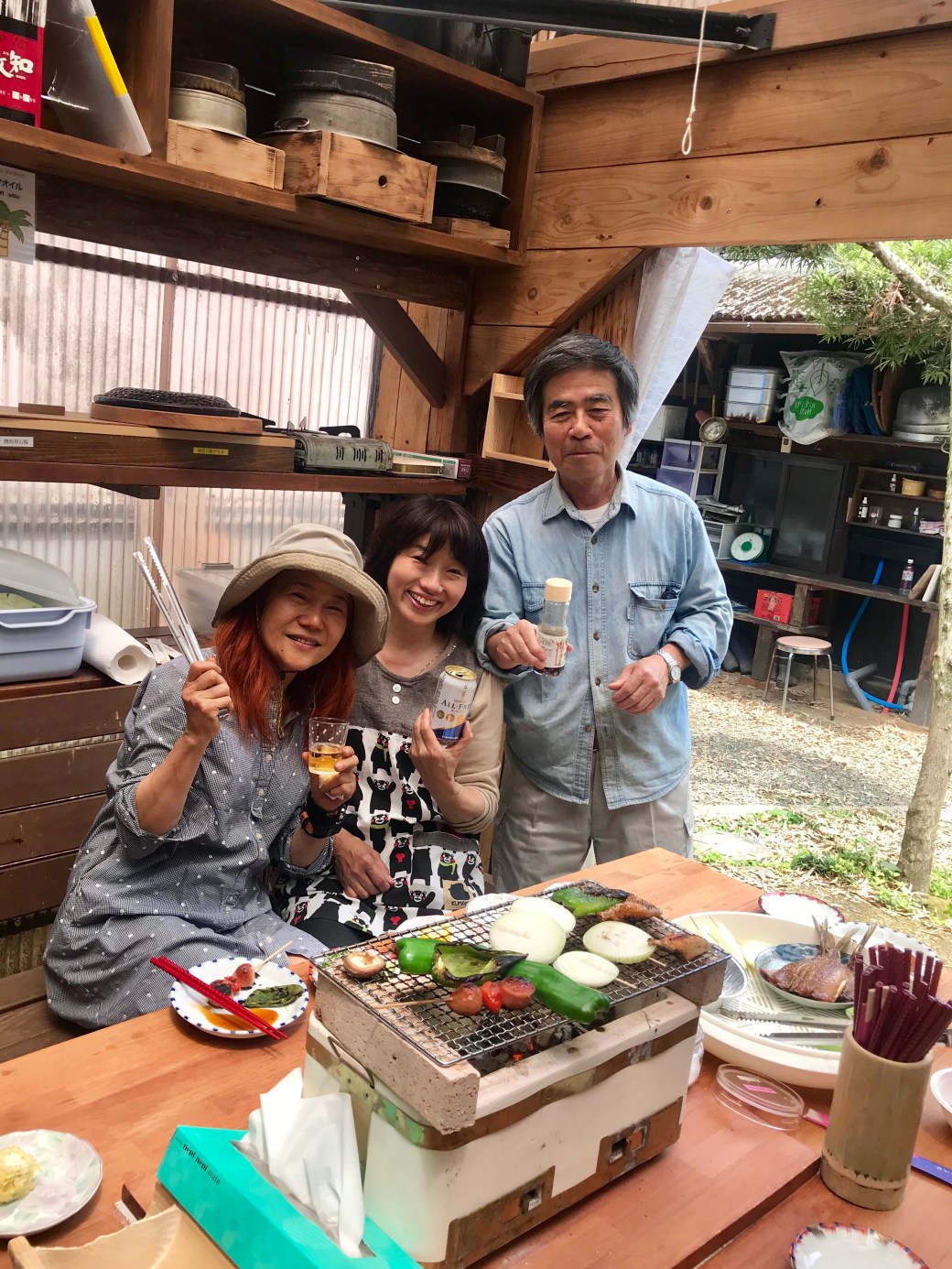 and showed us their old treasures. Upon departure they pressed upon us a few old lacquer bowls even though we protested we had no room in our luggage.
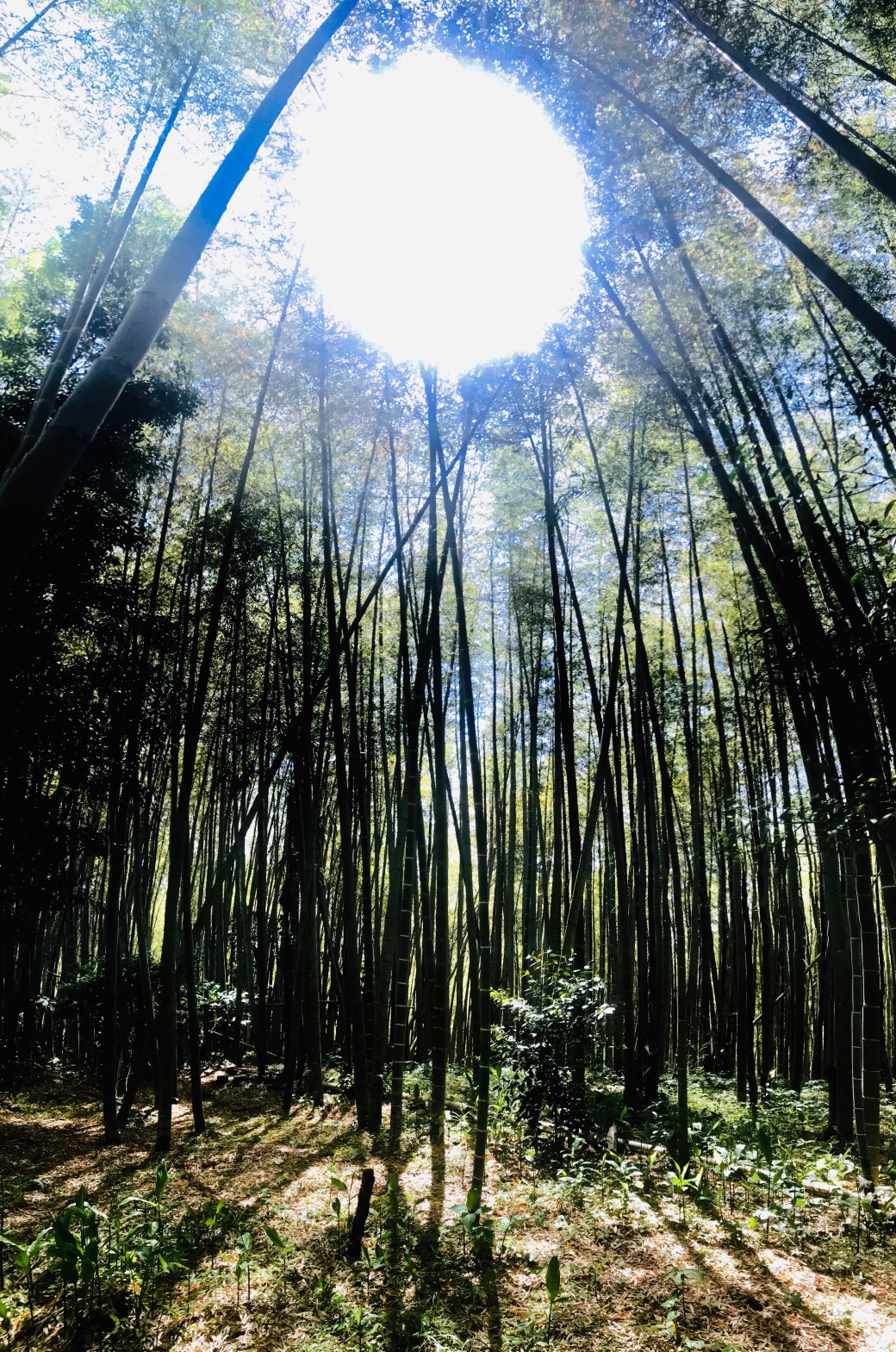
  The best part though was a peek into their thick green bamboo forest.
  The size of the trunks and especially of the fresh bamboo shoots was really impressive.
  As the friend was going through a divorce as well we had a chance to discuss this still rather taboo topic. Divorce continues to be very much frowned upon in Japanese society.
 If in agreement, a couple can get easily divorced by mutual consent, simply filing a form with the local government office. But there are much less simple solutions for their children after a divorce. Or rather there is only one simple solution. As there is no joint custody of children, if the parents can’t agree, the court decides whom the children shall live with and it can be the mother, the father or even the relatives. The divorced father or mother then pretty much looses any right to see his or her children. And the children who are not seen as individuals with legal rights, but as belonging to a family, have no right to access their non custodial parent. This might be one of the major factors why the divorce rate in Japan is quite low.
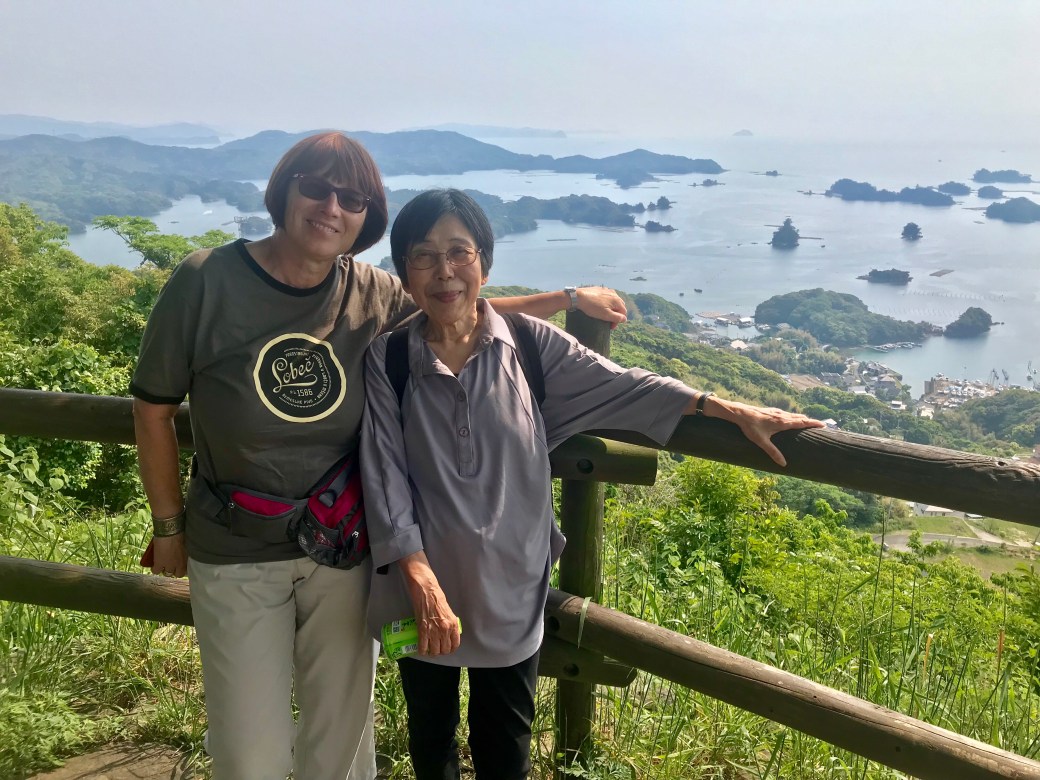 Our third host was Tomoko, a 75 year old retired High school English teacher, who returned with her husband to her small home town of Sasebo, Kyushu, where they built a beautiful house made of fancy wood and filled it with books. She picked us up from the train station and immediately took us sightseeing. Her English was wonderful, so our conversations were the easiest and most enjoyable. You bet we had discussions about challenges of having retired husbands! If anywhere in the world it is in Japan that husbands literally live for their job and they are lost without it. She said that Japanese retired men simply refuse to learn anything new, like using a smart phone. But, she noted, at least her husband, contrary to many of her friend’s husbands, even though he does not want to travel, does not object to her going off on her own. So much so that we will reunite with Tomoko in September in Europe.
 Did I mention how much I adore any and all Japanese kimonos?

 I also love Ikebana – the art of Japanese flower arrangement. I have taken many classes and found much creative enjoyment with my limited artistic skills in Sogetsu Ikebana school. Turns out Tomoko’s cousin is an Ikebana Instructor, from a different, Ikenobo school. So of course we had to pay a visit and she gave me an introductory lesson! Her house and garden, too, were full of flowers – what a treat!
  While these were all well planned visits through Servas organisation, it is a chance encounter with a special 80 years young lady that we cherish even more. We came across the big traditional house of Ishikawa International Exchange Center on our stroll around Kanazawa. The Japanese garden was beautiful and the special exhibit of a rich collection of Japanese fabrics even more so, but the crowning glory was the woman runing the show. Seeing our interest, she took us to the off limits upstairs to show us some secret features of the old house. She was a big U.S. enthusiast, having sent both her daughters to the U.S. for high school and university studies. Her love for America was triggered when she was 5 years old and the American soldiers came to war torn Japan. “We couldn’t believe how nice the soldiers were; big, strapping guys, with pockets full of candy and chocolate. truth be told Japanese husbands don’t have a great track record, so I am really glad both my daughters have American husbands!”
 On the way out the door she gave us a hand made Temari ball, which is a traditional gesture of friendship with the symbolic design of the crane, the bird of happiness.
 One of the few books that has escaped numerous moves and decluttering of our home is a 35 years old book called Japanese Style. It has influenced our aesthetics and inspired our home style, from the purchase of our first family size futon when we were a really broke young family to the attempt to design a Japanese inspired garden when we were a little less broke or at least the bank was willing to give us a home equity loan.
 gravel in Japanese dry gardens
  or the exquisite shapes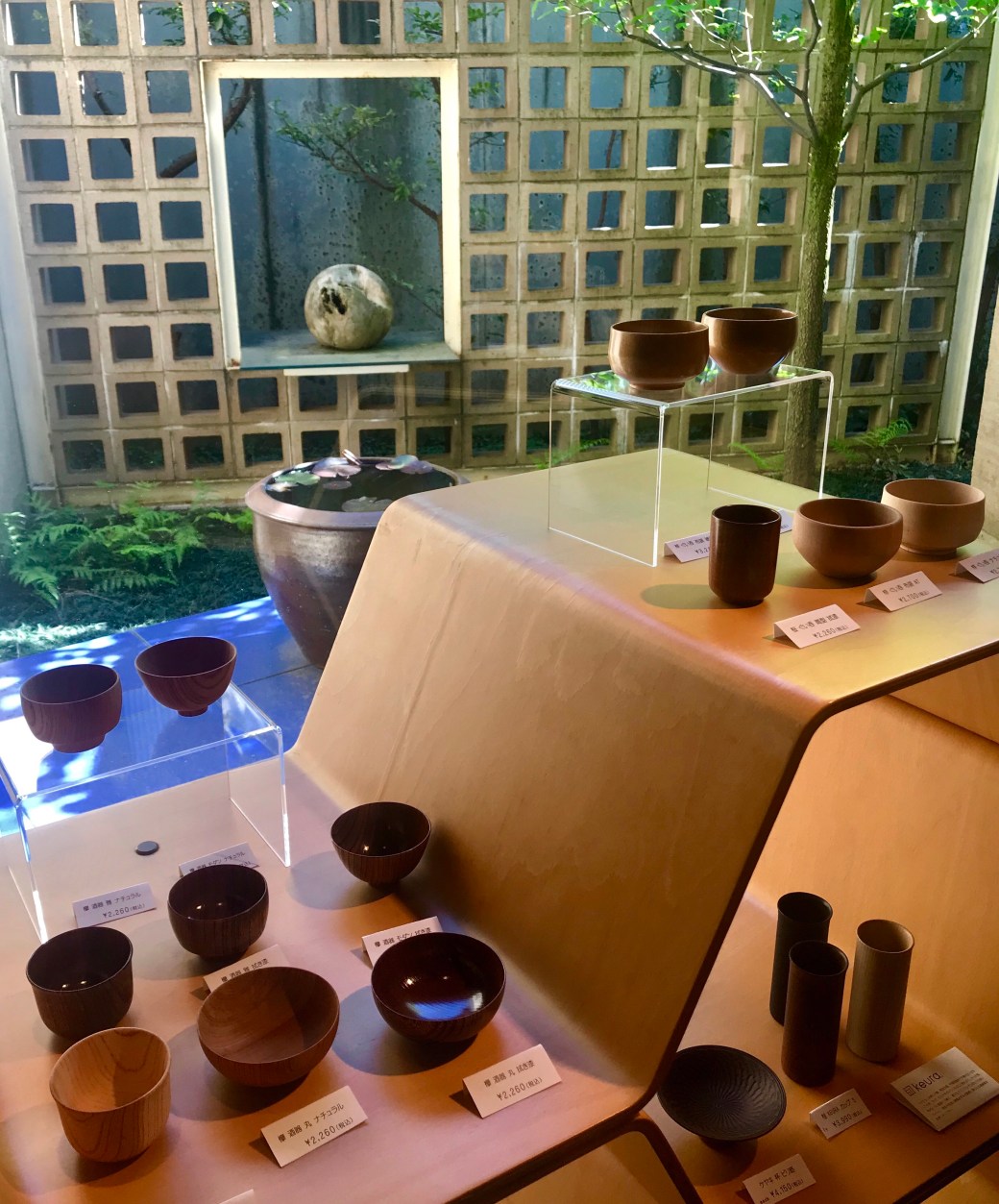
 and colors of Japanese pottery or lacquerware.
 attention to detail, and the mastery of craft that extends from the gold leaf splattered imperial finery of an ink box
 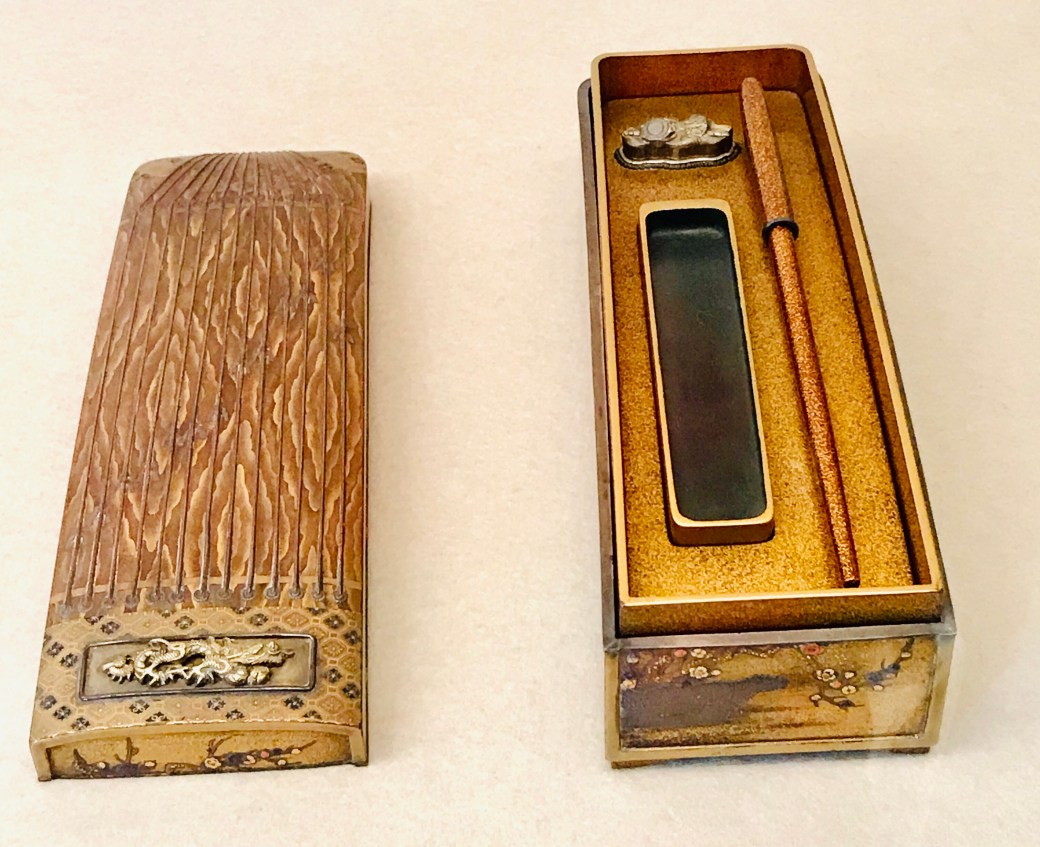 to a humble toothpick
  or just a simple bamboo fence.
  A wooden door
 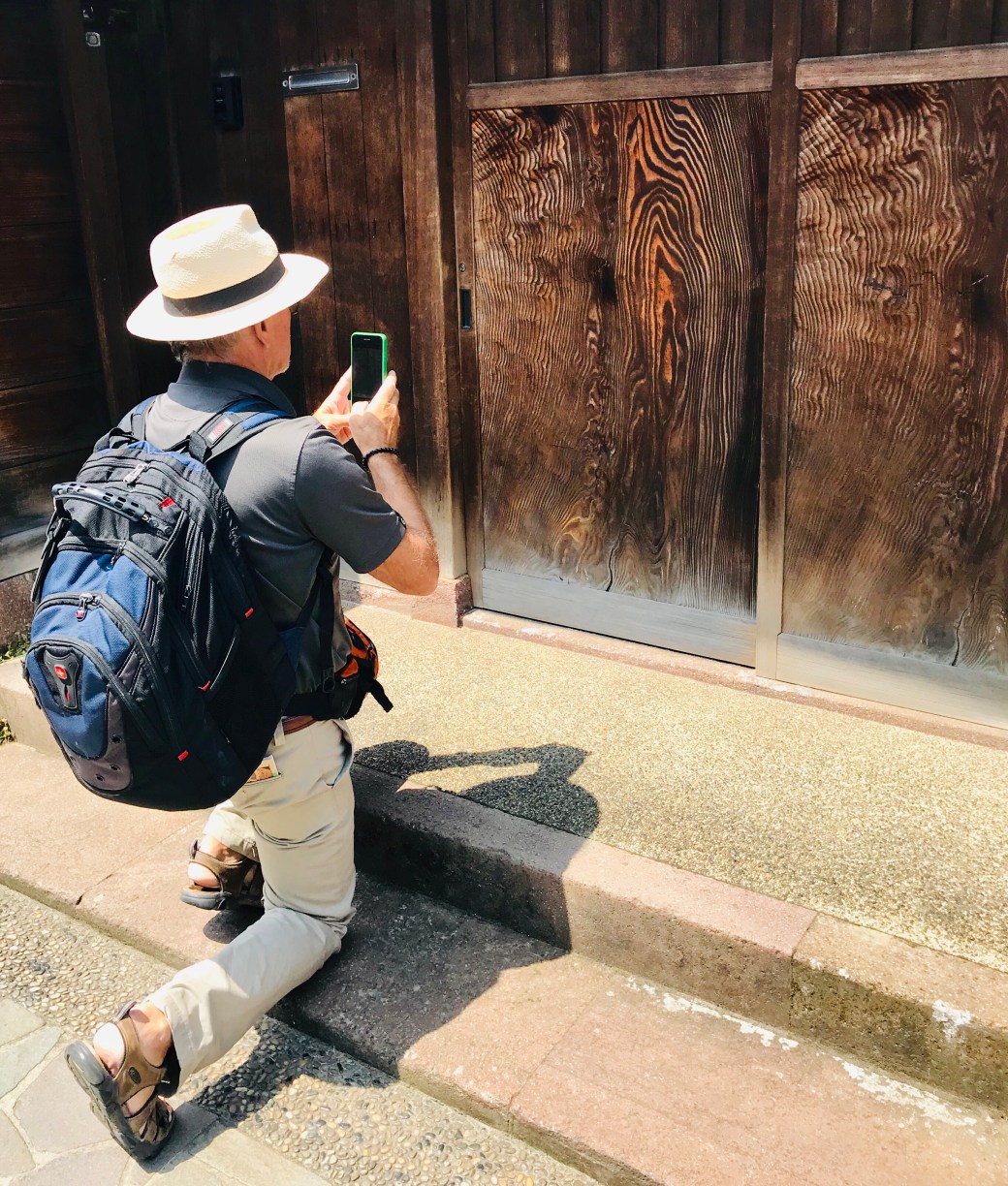 becomes an intriguing piece of art or a canvas for the rain
  to draw a masterpiece on. Nature is also coaxed to perfection in Japanese gardens. Initial garden inspiration came from China, but as in many other things the Japanese took an idea and developed and molded and mastered and perfected it to unreachable heights. It takes a great knowledge of Feng shui and care and skill to set up a Japanese garden and then it takes hard work, patience and attention to details to keep it growing well. Japanese gardeners are in my book the unsung heroes.
 with large bodies of water that are wonderful for strolling,
  especially in the evenings under romantic lighting.
 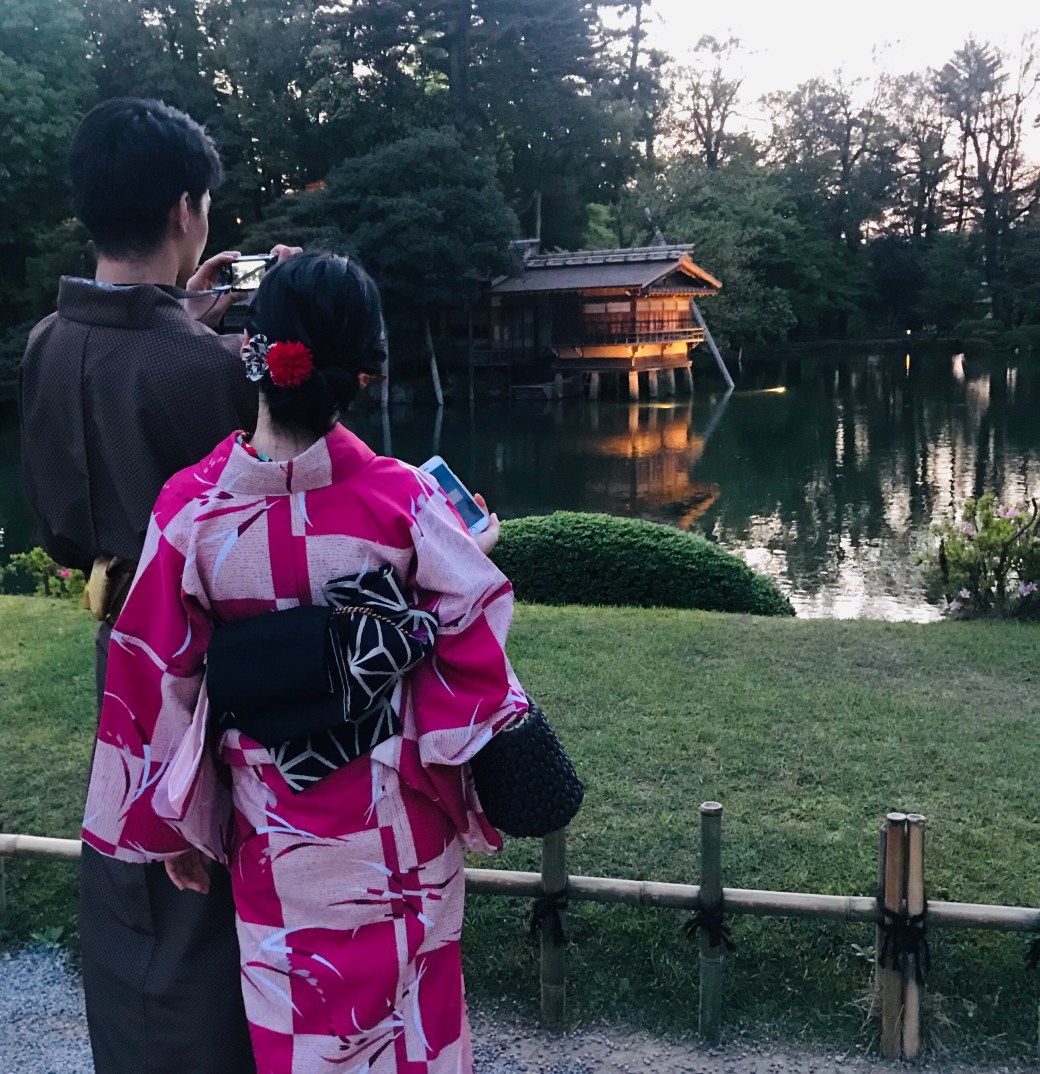 Where you have water, you must have bridges.
  They come in different shapes and colors, but my favorite is a cheerful red.
 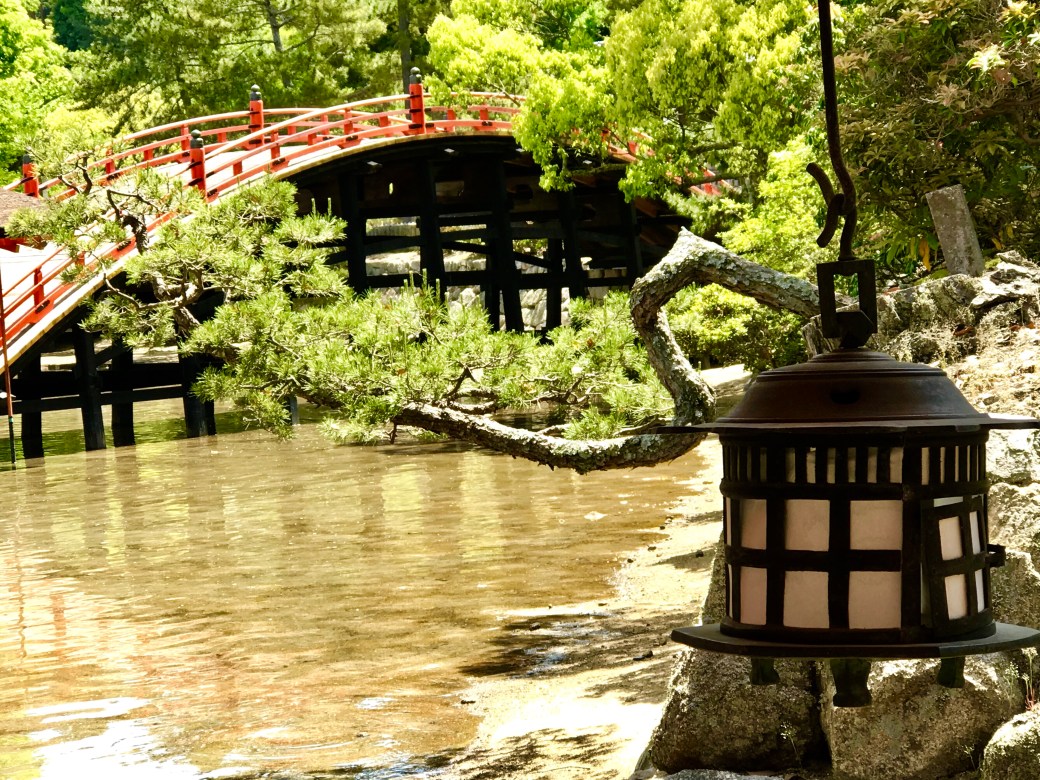 Under the bridges giant black, golden, and orange koi fish are swimming happily.
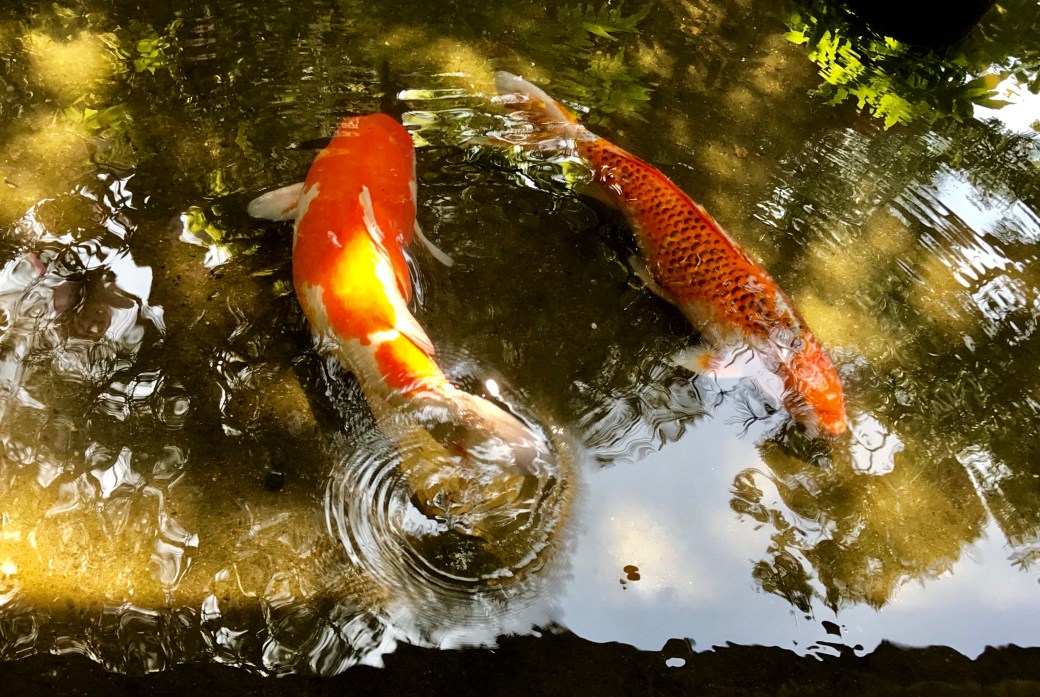 Sometimes the water is not water at all, but is represented by white pebbles that flow like a river. And the fish are a ceramic rendition.
  How fun!
  The reflection of the trees in the water is replaced by the black shadows on white gravel river.We first encountered this concept at the spectacular Adachi Museum of Art Garden, considered by many the best garden in all of Japan. It certainly is the best and the cleverest set up for six gardens in total, because they blend in perfectly with the surrounding hills and while you can’t walk through them at all, you can watch large landscape tableaux through the contemporary museum windows,
  changing through the seasons.
 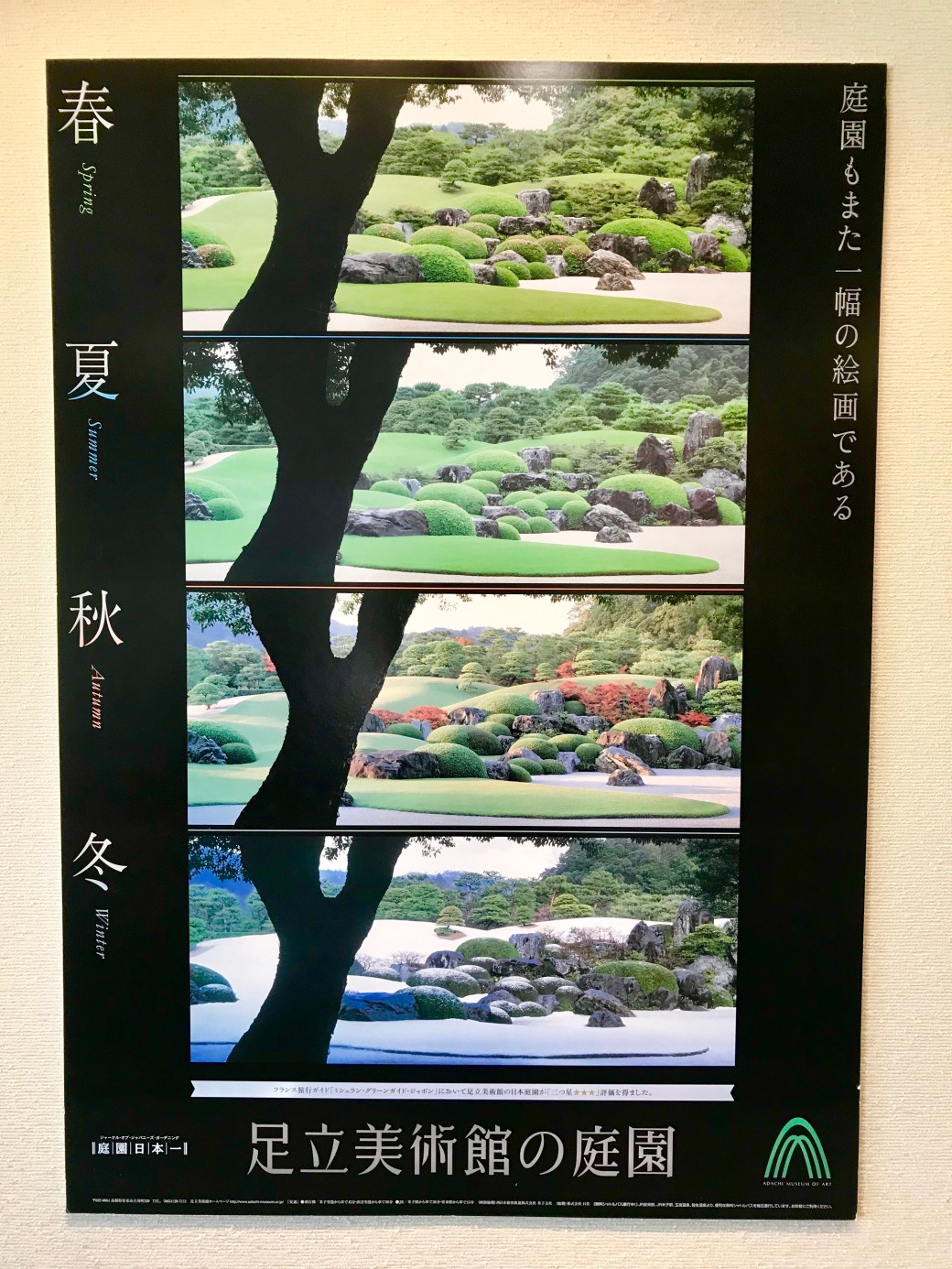 A very different experience of a garden, indeed! We had a few quiet moments at Yuushien Garden coffee shop that employs a similar wall window garden view idea.
 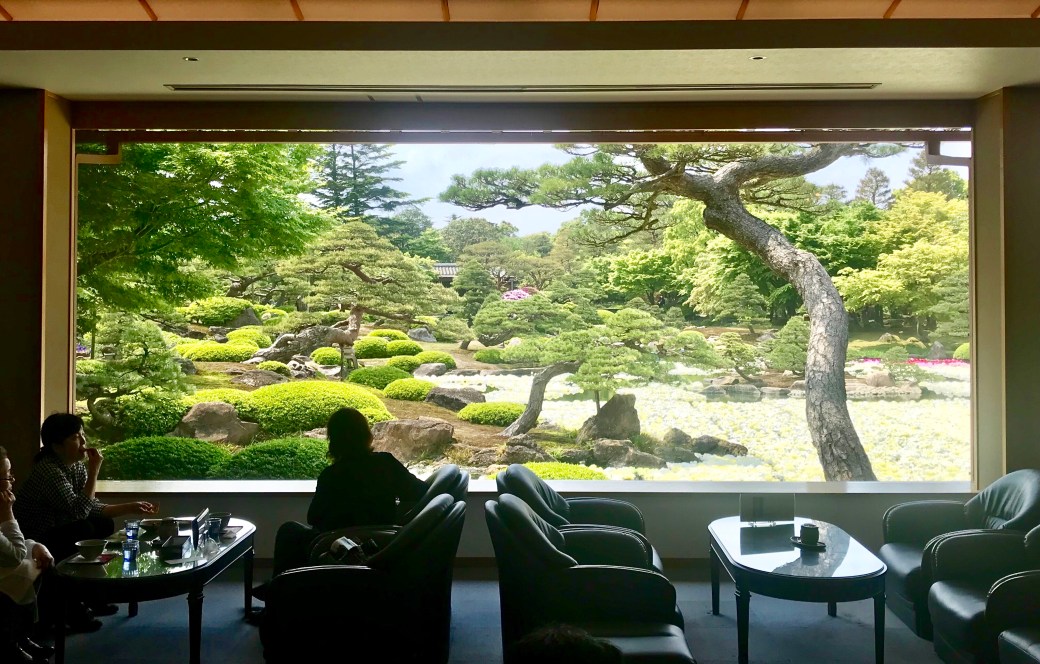 For a short time in spring time you can watch thousands upon thousands of yellow and pink peony flowers floating on the water.
 Water and modern architecture were also combined well in the D.T. Suzuki Museum, celebrating the life of the Japanese philosopher who introduced Zen Buddhism to the Western world. Fittingly it was very minimalist, inviting the visitors to quiet reflection or
 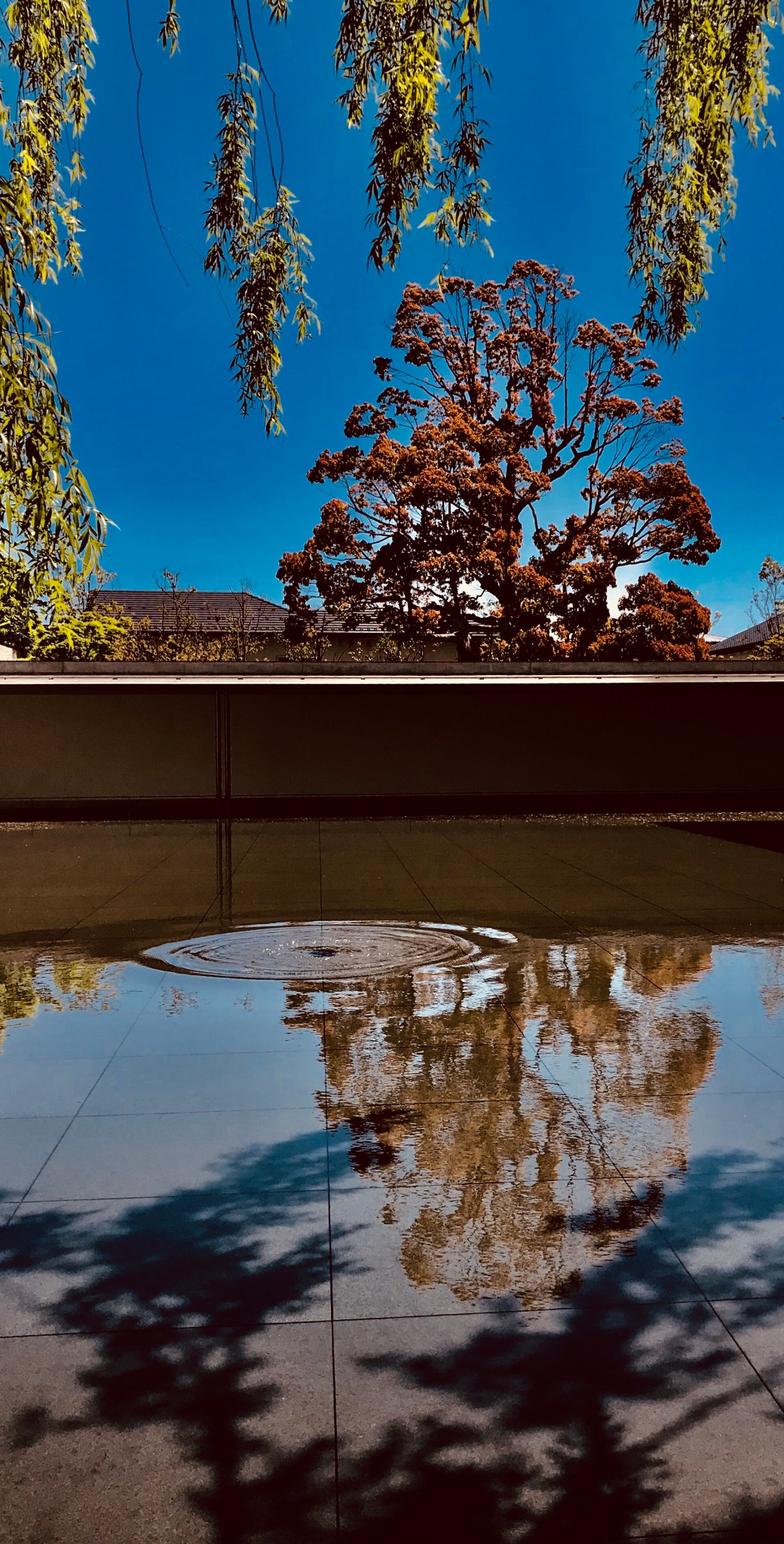 shall I call it Zen meditation?
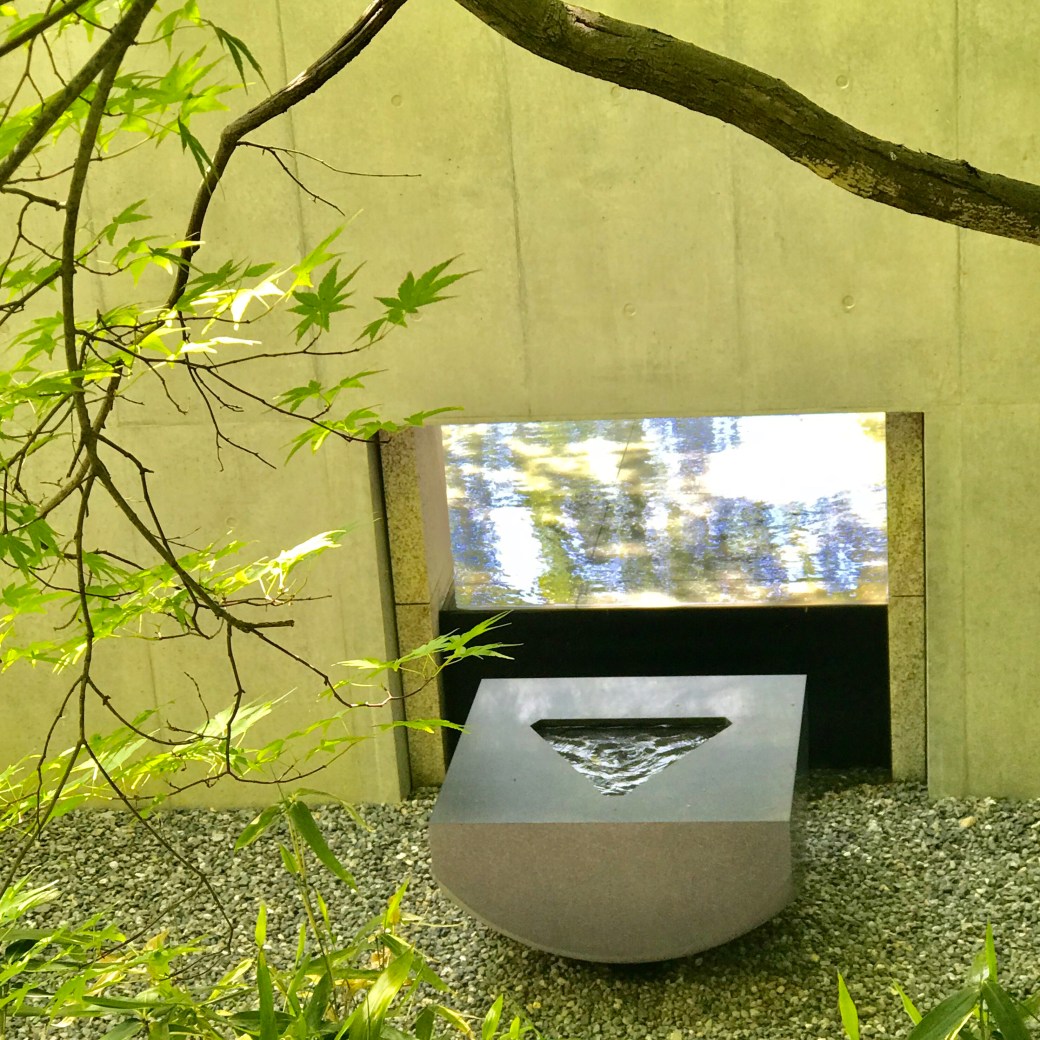 For us though, it was the smaller, more intimate garden settings, that we enjoyed most. We stumbled upon the Namura Residence garden in the old samurai district of Kanzawa, not knowing that it was no. 3 on the list of the best. It is a tiny garden, but fits in all essential Japenese garden elements:
 and a cube shaped water feature beautifully reflecting the surrounding trees.
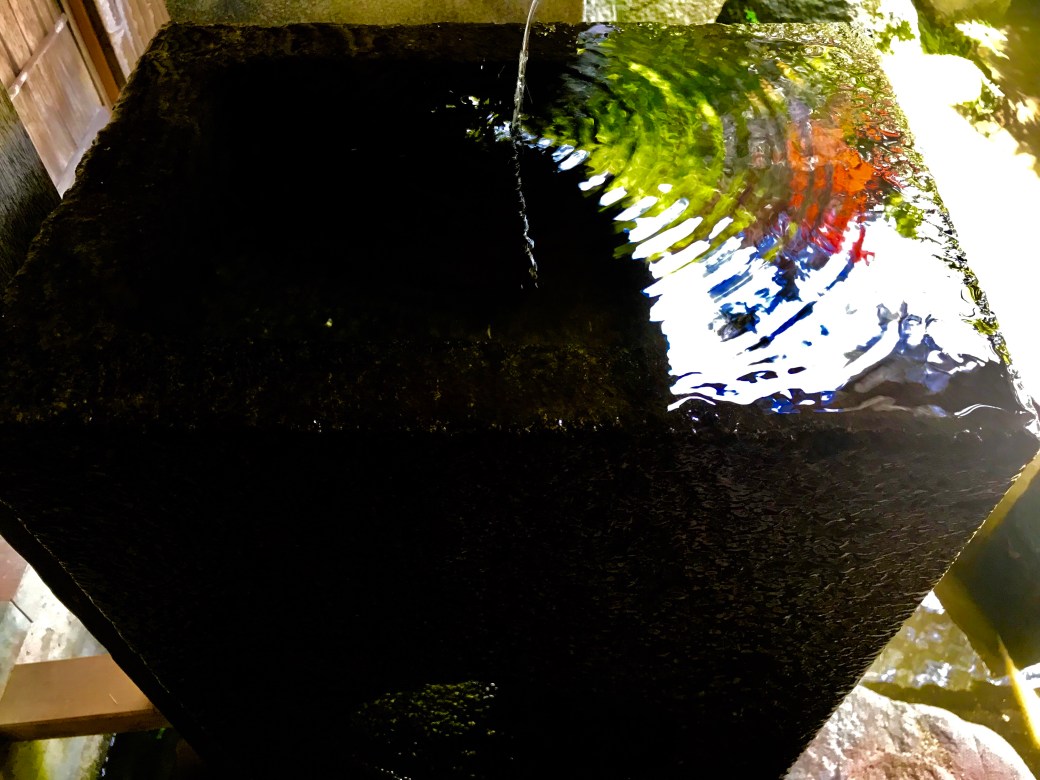 Water features are probably my favorite element of Japanese gardens.
 Mirek really likes stone lanterns in all their shapes and forms. Especially if accompanied by beautiful women,
  or shapely trees,
 or vibrant leaves.
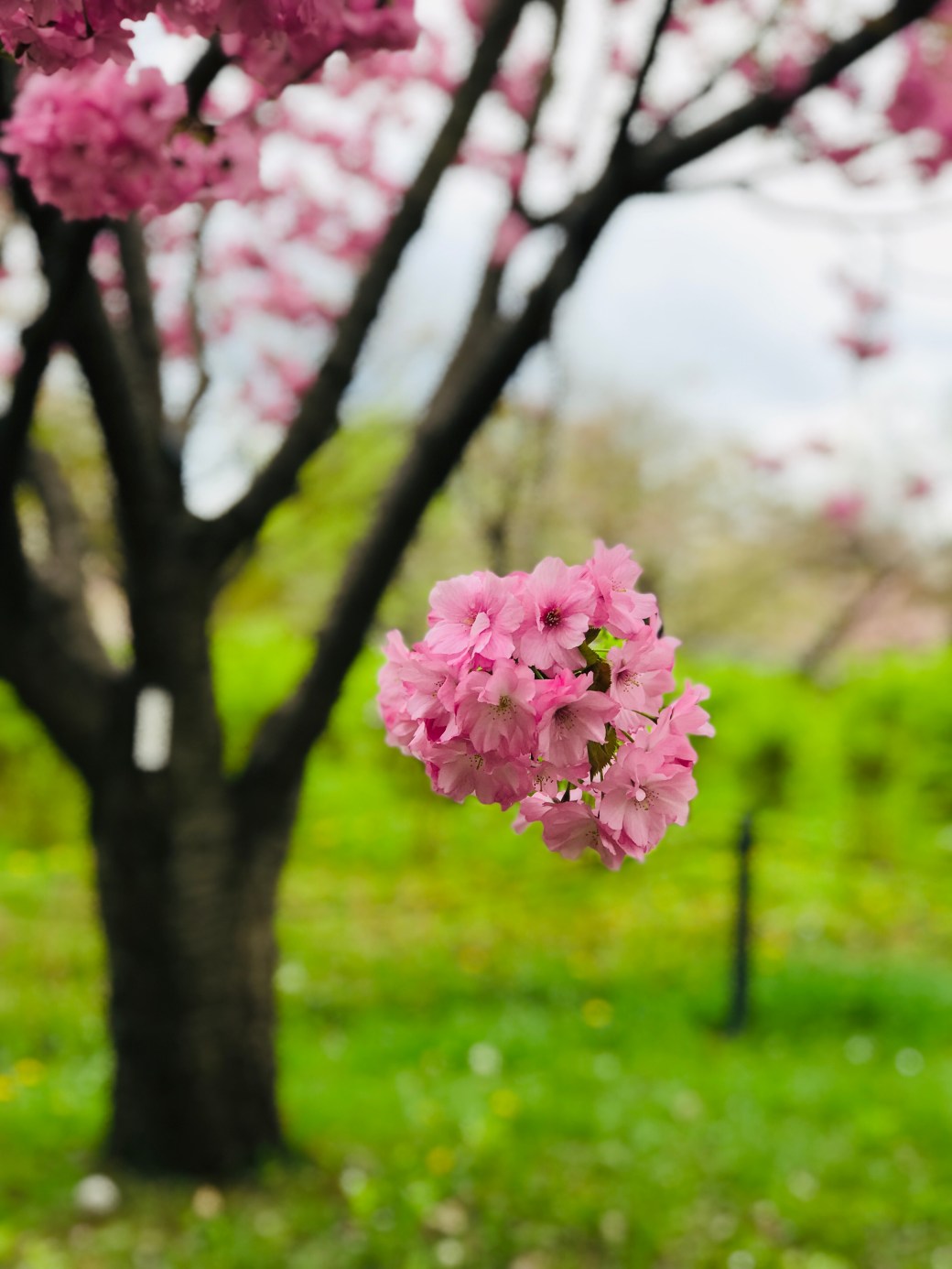
 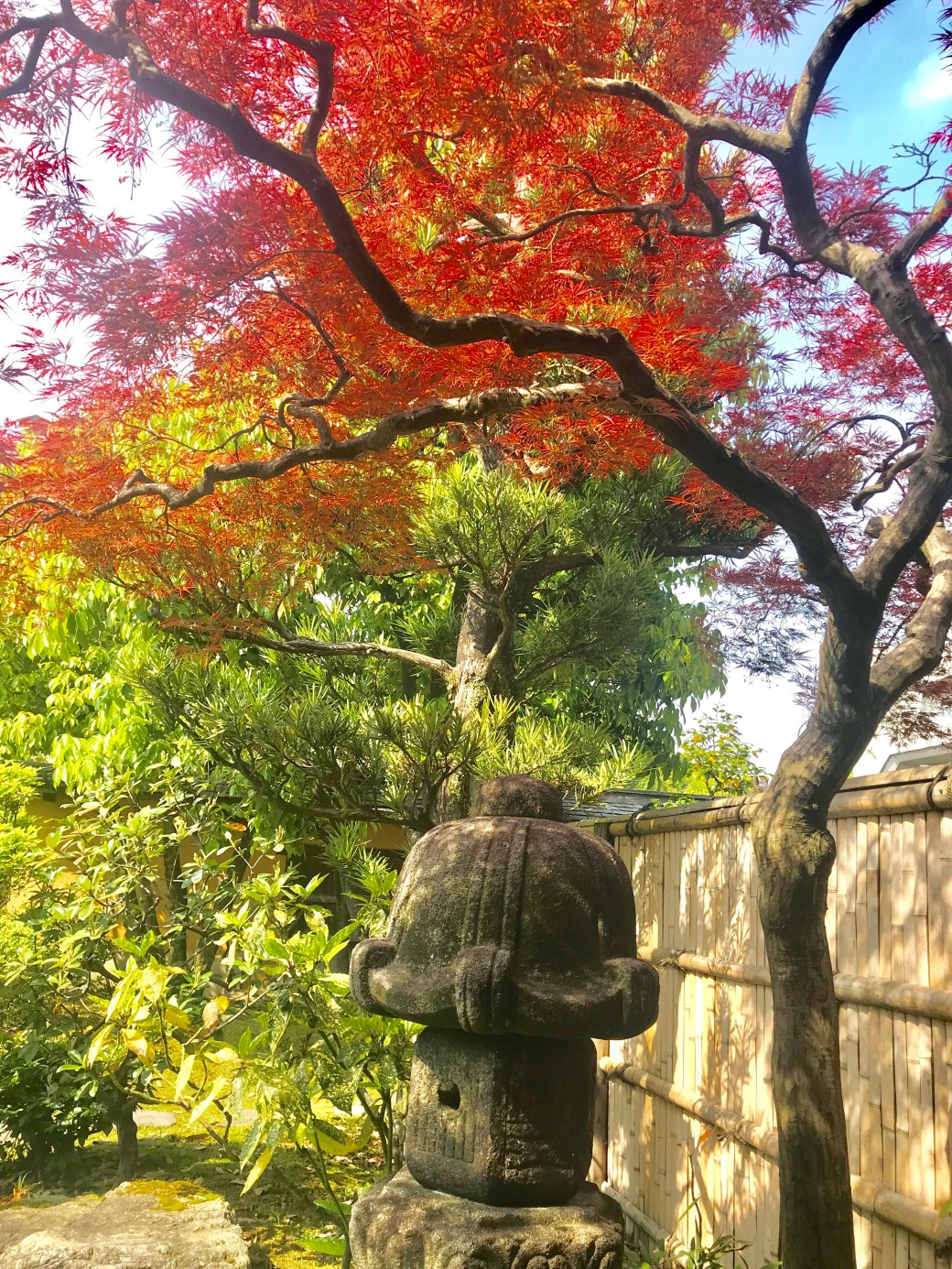 Oh, the trees! What can be more Japanese than the flaming Japanese maples? Only flowering cherries, if you please!
  Yoo-hoo, what about bamboo?Of course. Green, black, variegated? Tall, for sure!
  What I like about Japanese garden approach is that even if you don’t have a castle or a house, you can still plan a tiny Japanese garden in a corner by your front door or at least a mini one on a tray.
  If all else fails, you can always hang a garden painting on your wall.
 reading and spend your time more productively by looking through the window observing the clouds in the sky.
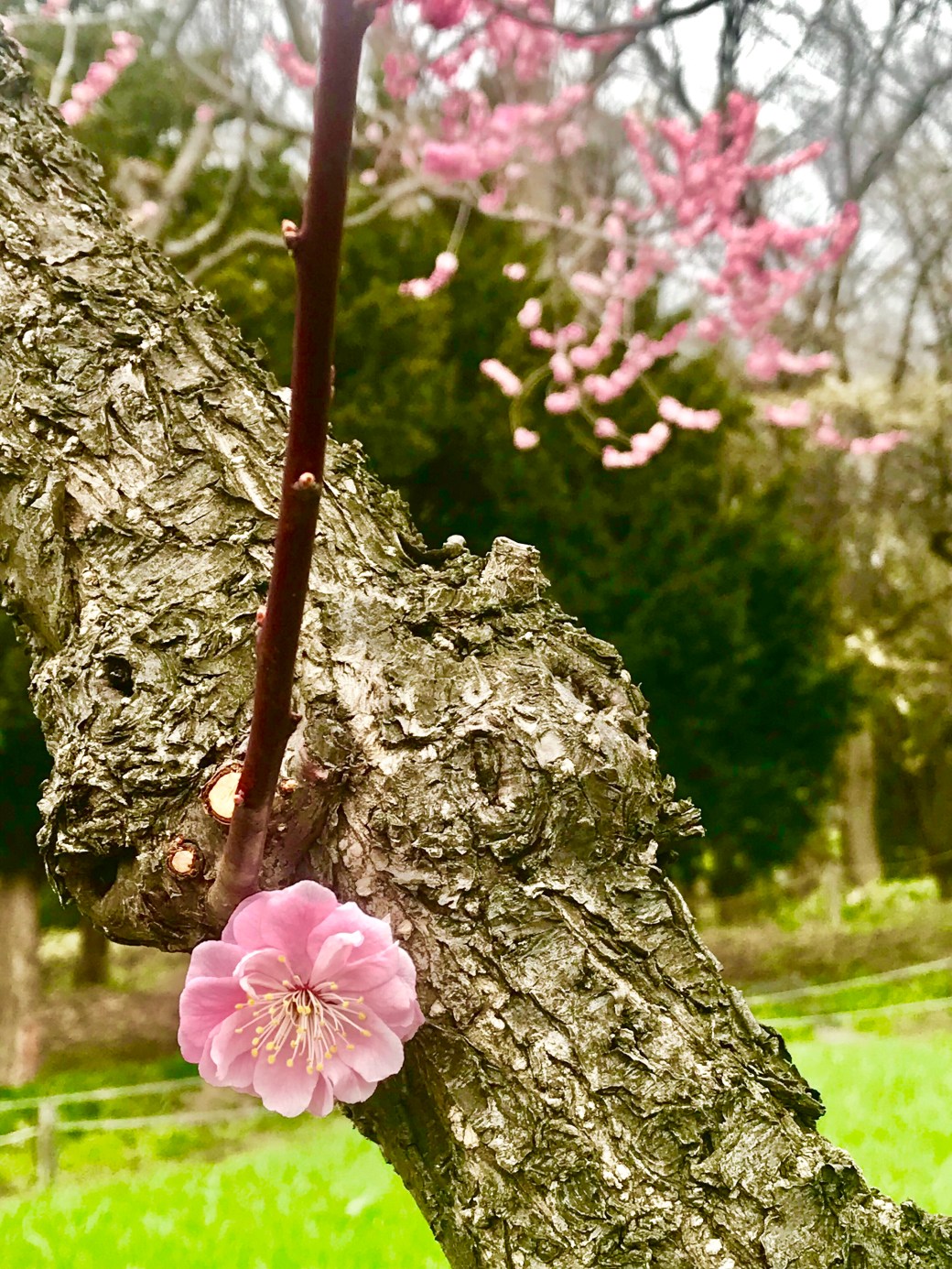 As it is difficult to predict where and when the cherries would bloom, we contrived a plan to outsmart them.
 was put on rails by Mr.Stevenson and run some 200 years ago (1825 to be exact).
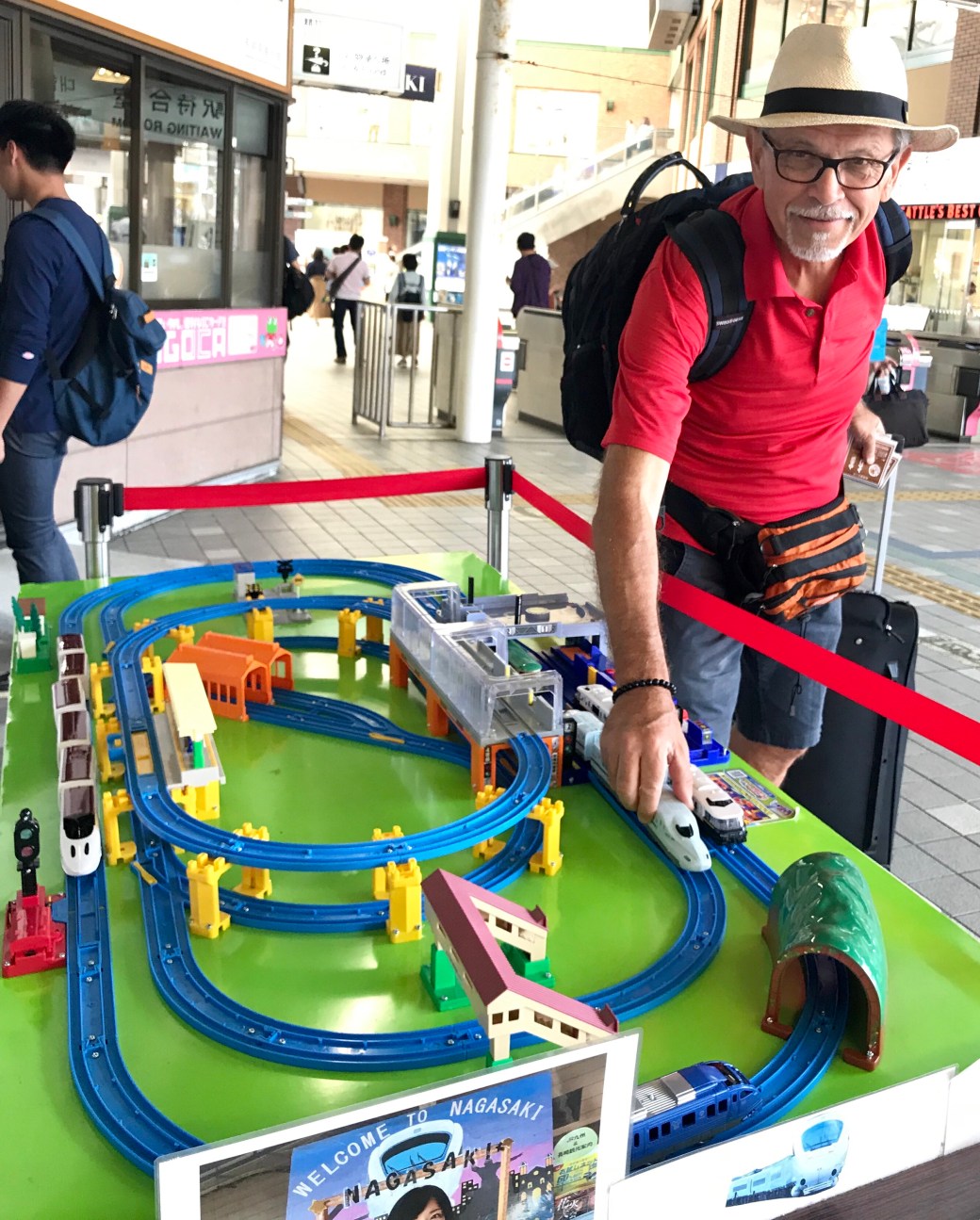
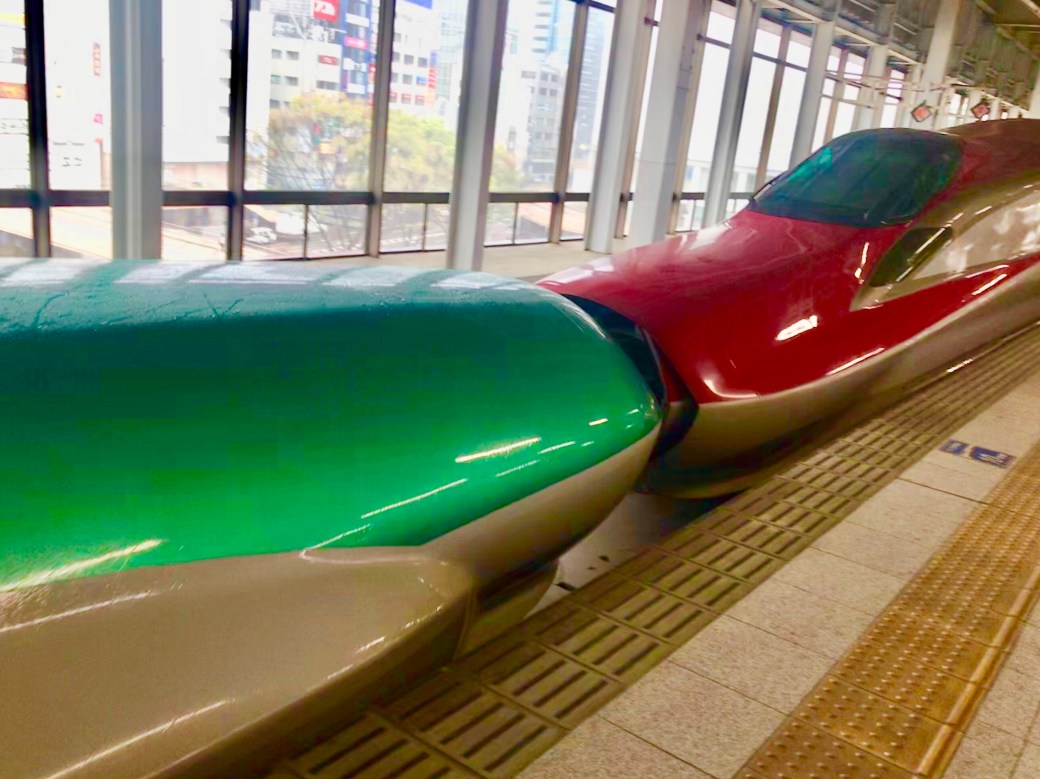 As for our travel plans the rails went where we wanted to go and not the other way around. We had to look for our accommodation to be as close to the rail stations as possible so we would not have to drag our luggage around or rely on expensive taxis. (No cheap Uber in Japan). Fortunately, in a country like Japan, where businessmen use fast train transport, there are always clusters of hotels in easy walking distance from the stations. With 3 weeks of unlimited rail travel we (read I) figured we could pretty much cover the whole of Japan from the North to the South, avoiding the most popular and tourist infested areas of Tokyo, Osaka and Kyoto, where we have been before anyways.
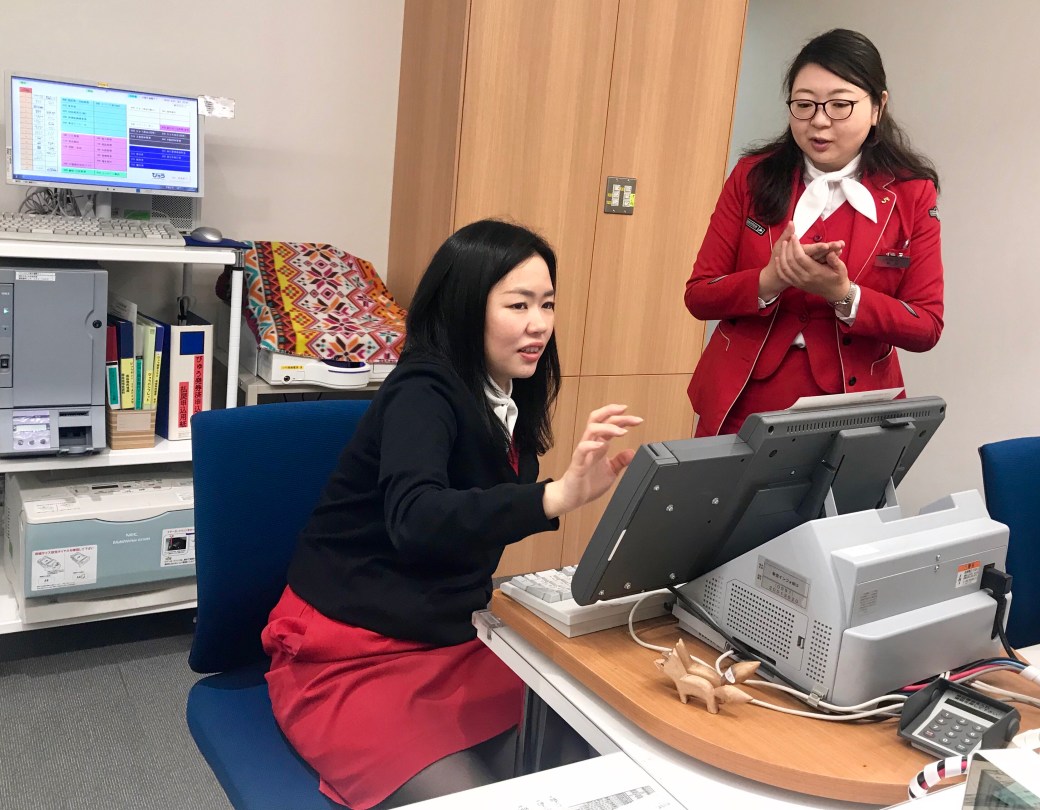 We were ready to jump on our first train. Hurrah!
  Our Great Japanese Train Adventure had just begun! My excitement could not be significantly marred by the disappointing fact that the Shinkansen network has just one Hokkaidó station. It is in Hakodate, a temporary terminal in southernmost tip of this island. The further northern reach of Shinkansen is still under construction through mountains of Hokkaidó and will not be open till March 2030. While sad that my complete Shinkansen experience may have to wait beyond my useful life expectancy, I do hope in the improbable case of beating the odds, I will report to you on riding the newly open section if I am still able to hear, see and write.
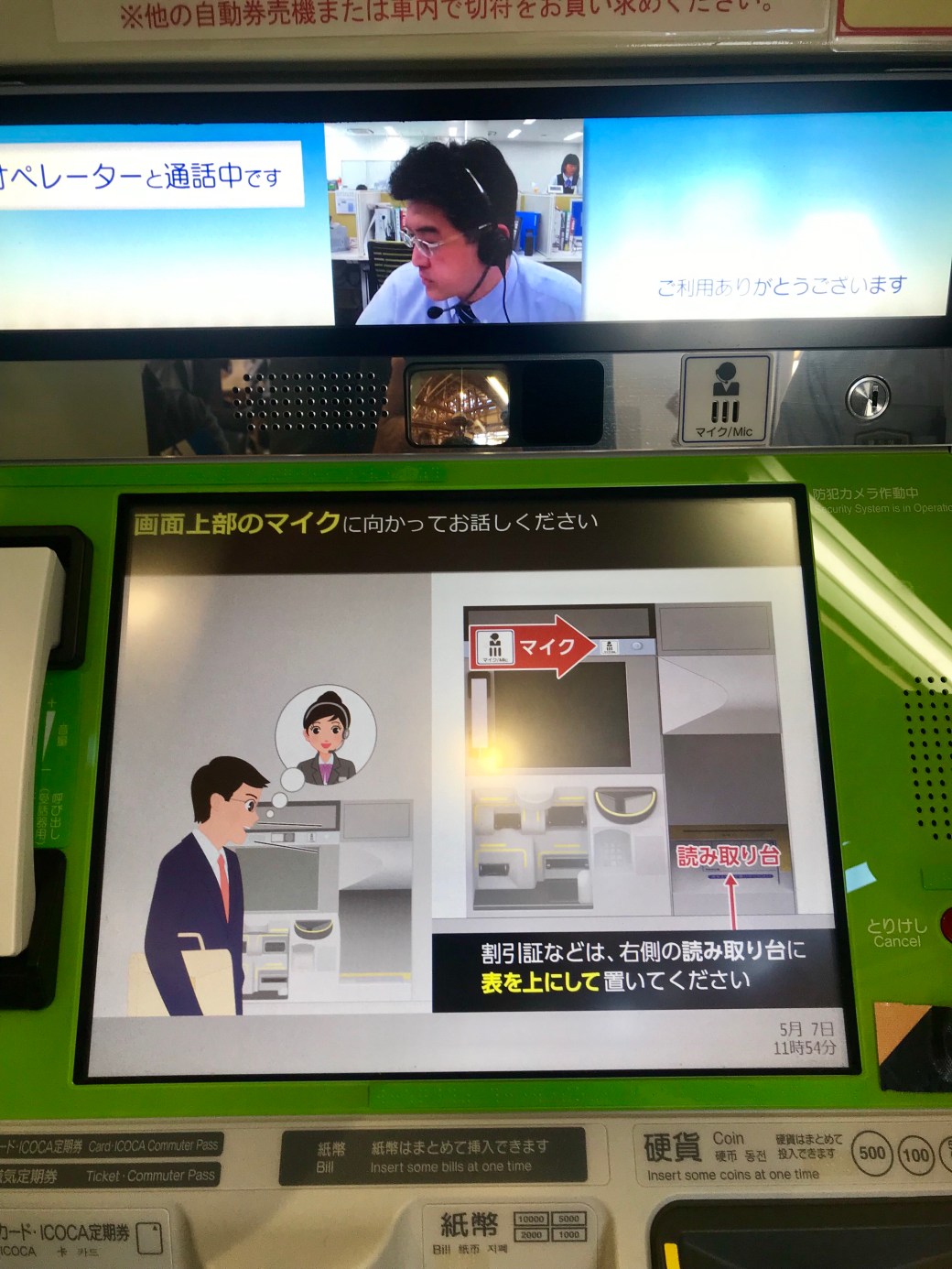 but it involves a conversation with the JR person in the Central JR office in Tokyo and at least rudimentary knowledge of Japanese language.
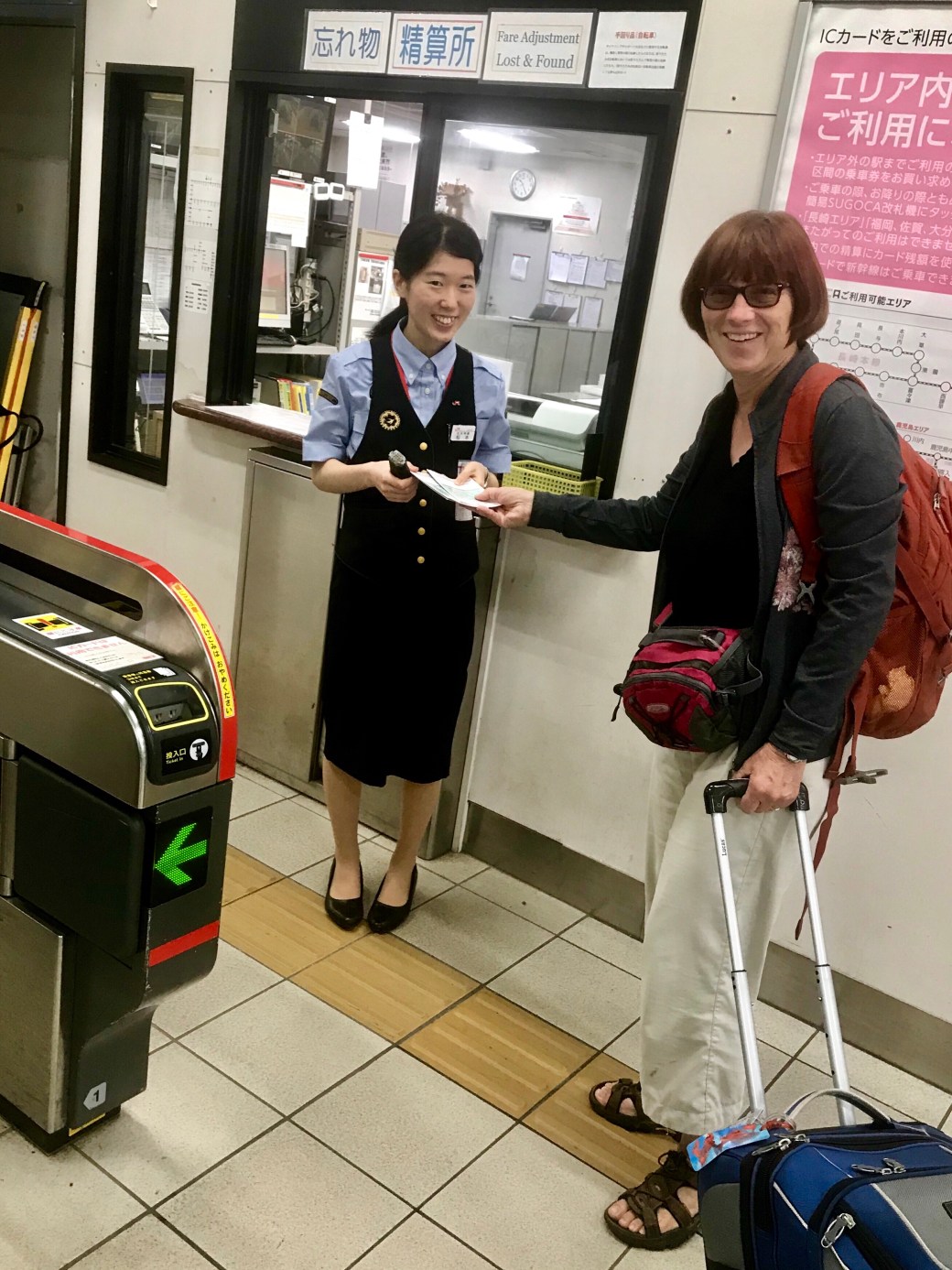 Please note on this picture the essential differences between women of East and West. The petite Japanese girl is the epitome of the demure cuteness with her toes pointed inward while the Western sturdy feet are firmly planted in a outward conquering stride. The speculation and our unproven theory here is that after centuries of wearing a tight kimono and mincing her steps, the Japanese woman walks pigeon toed, and men find this attractive, while in the West the open feet ballet stance is more in vogue.
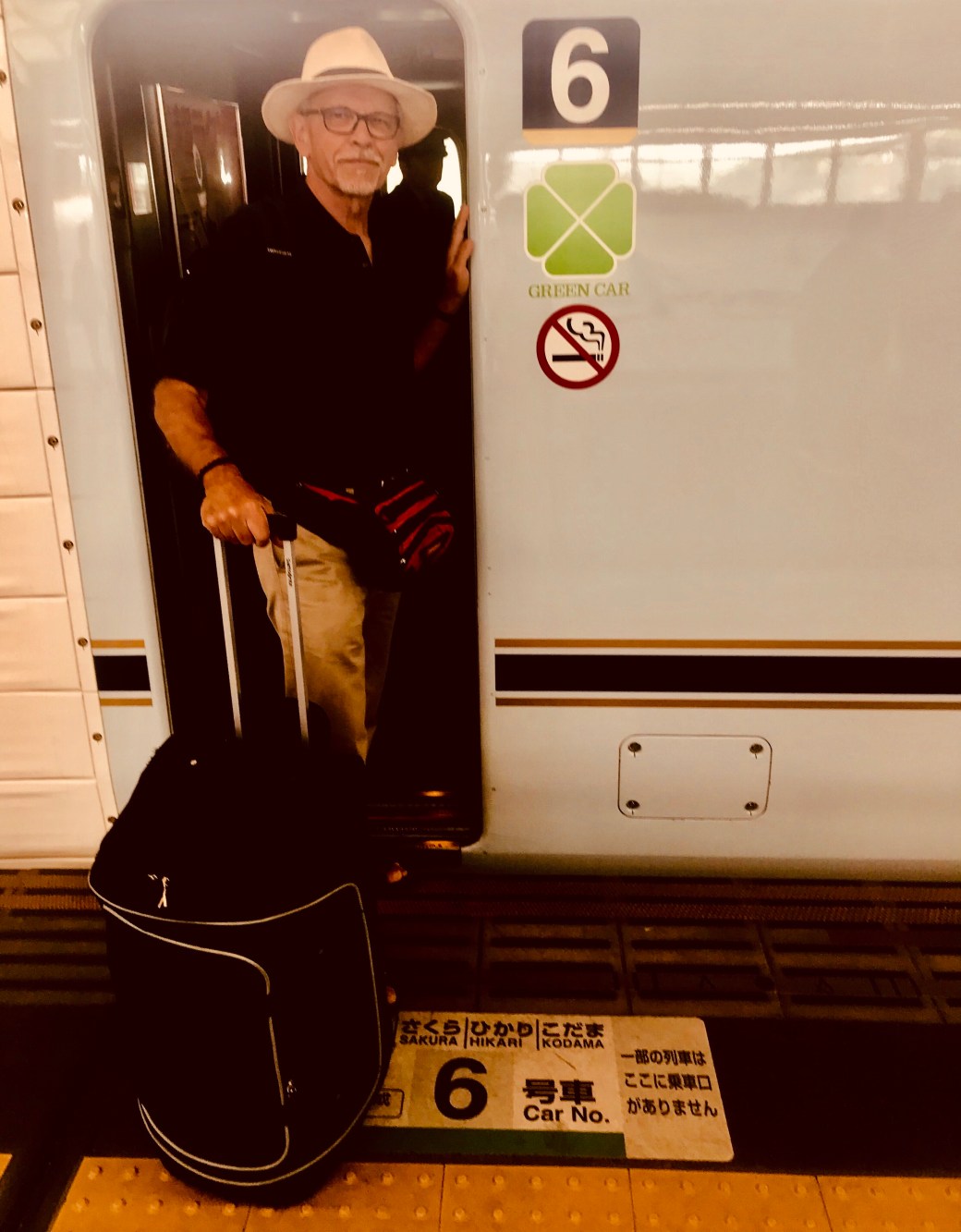 Look down on the floor and up on the hanging signs and then line up at the marker. But before you embark on your train, do check carefully that you are indeed on the right platform.
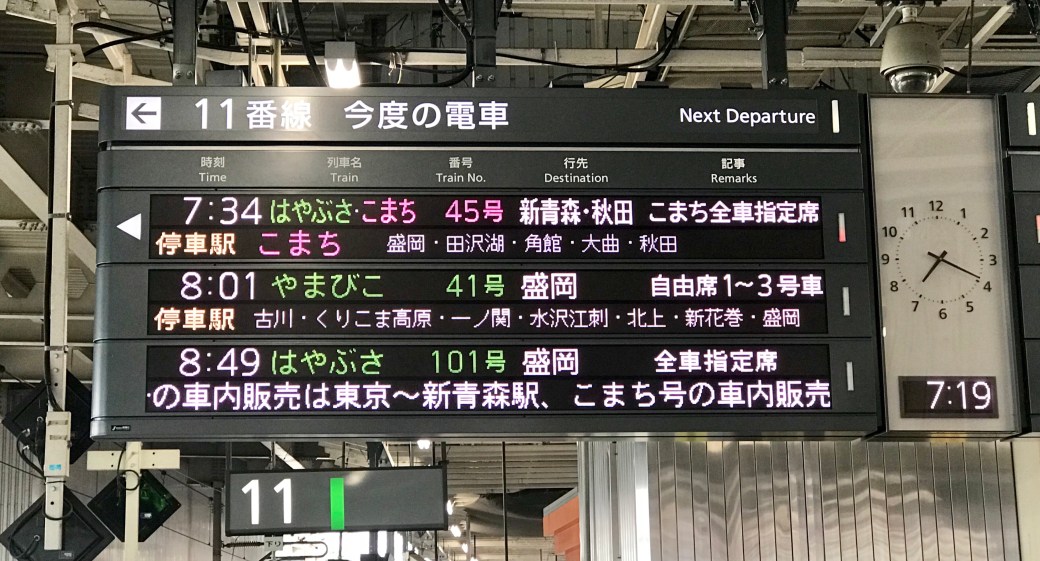 We once got misled by recognizing the time of our train departure and blindly followed to the wrong platform with our luggage in tow, only to discover there were two different trains leaving at the same time and our train was on the other side of the station. A feverish run ensued and we barely jumped into the last car of our train, totally out of breath, but with a big grin on our faces.
 and on this two car train in Kyushu where we were the only representatives of traveling public.
 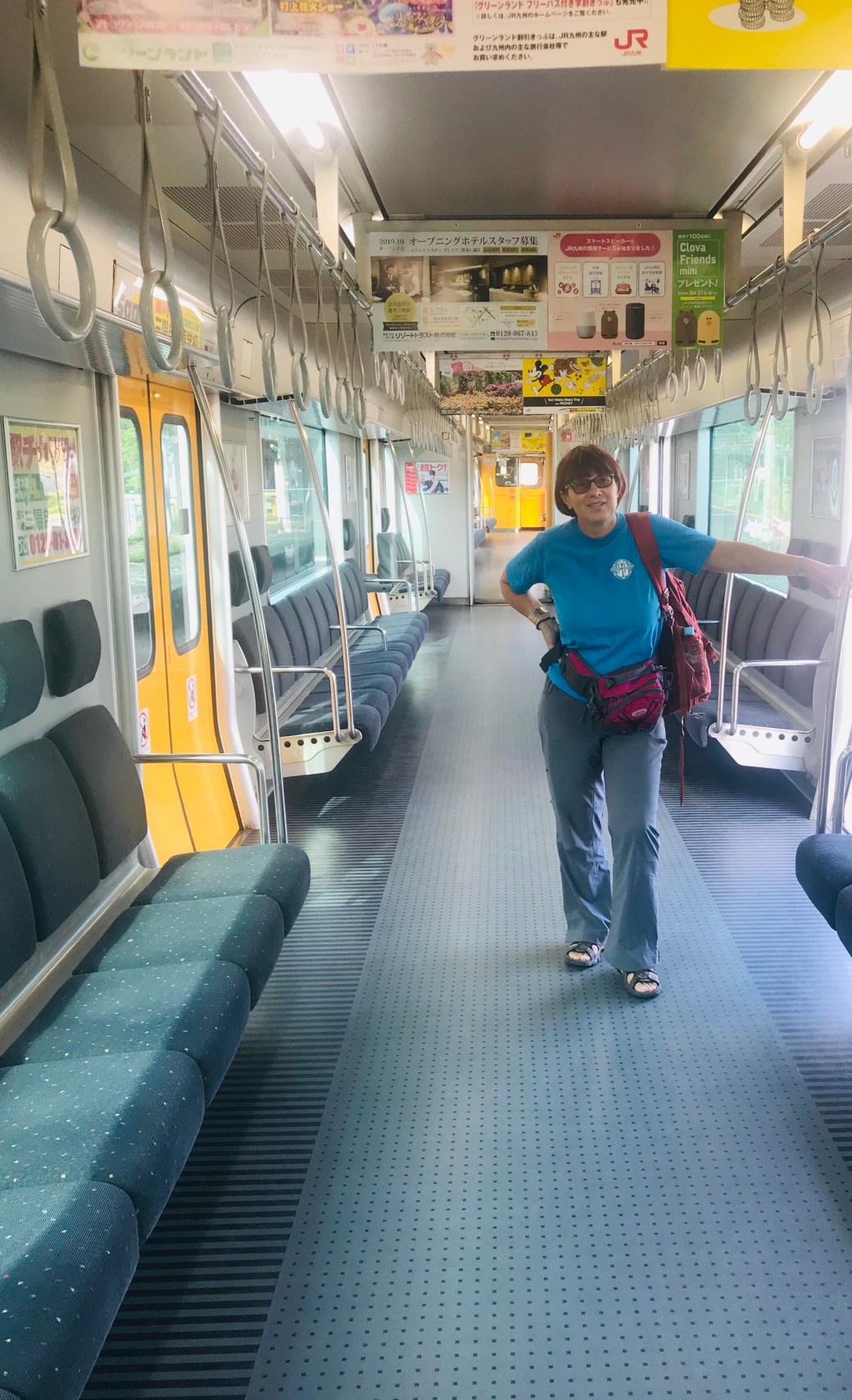 Except for the busy Golden Week where it looked like all of Japan was traveling and on a few trains taking high school students to and from their very long days at school, the trains have been surprisingly empty. Perhaps not as surprisingly, for our Japanese friends complained about the high cost of train travel and were quite envious of our Rail Passes. It is indeed unfar to local residents that a similar Pass is not offered to them. Our running tally says we would have had to pay three times the cost of what we had to pay for all our train rides as individual tickets!
 If I add to this the beautifully designed new Kanazawa Rail Station I am really feeling
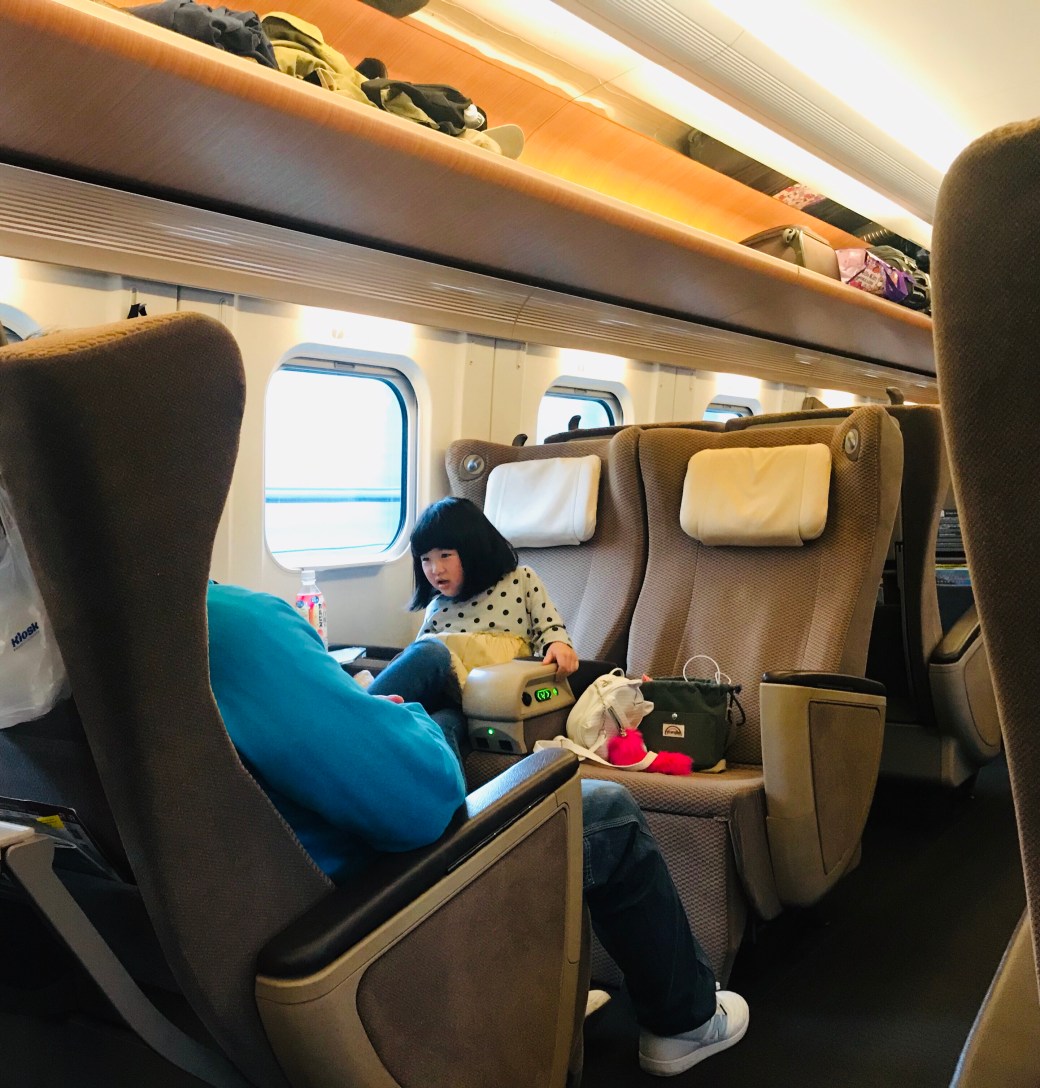
  like in a sci-fi movie. The interior design is very cool, too. The seats can be easily configured so that families can sit face to face.
  Some private line sightseeing trains were built for scenic excursions into Japanese countryside. A train like this bird watching beauty
 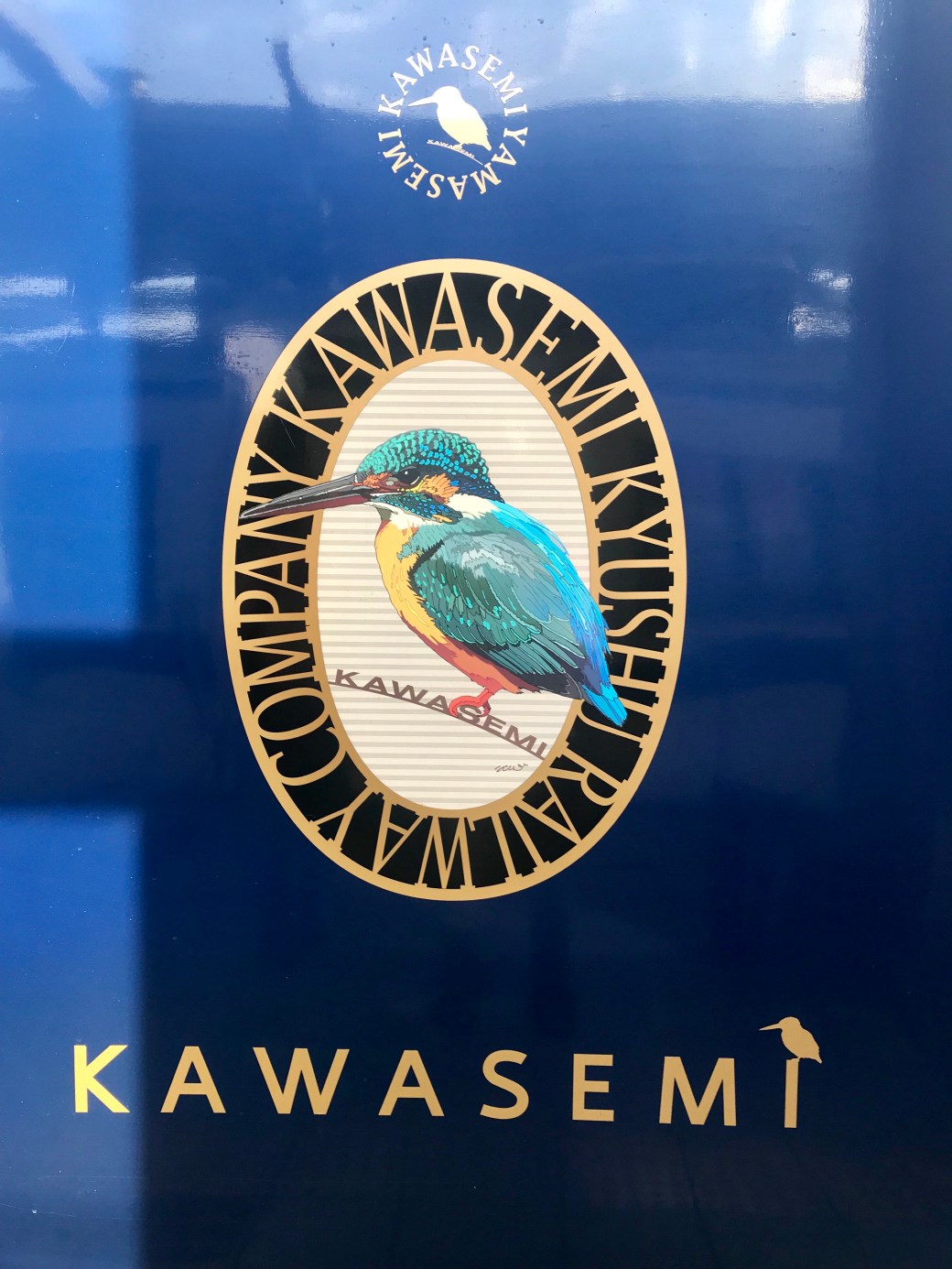 runs three times a day and provides the bird lovers comfortable seating with plenty of opportunity to sharpen their eyesight with enough drinks, so no one would be sorry for binocular forgotten at home.
 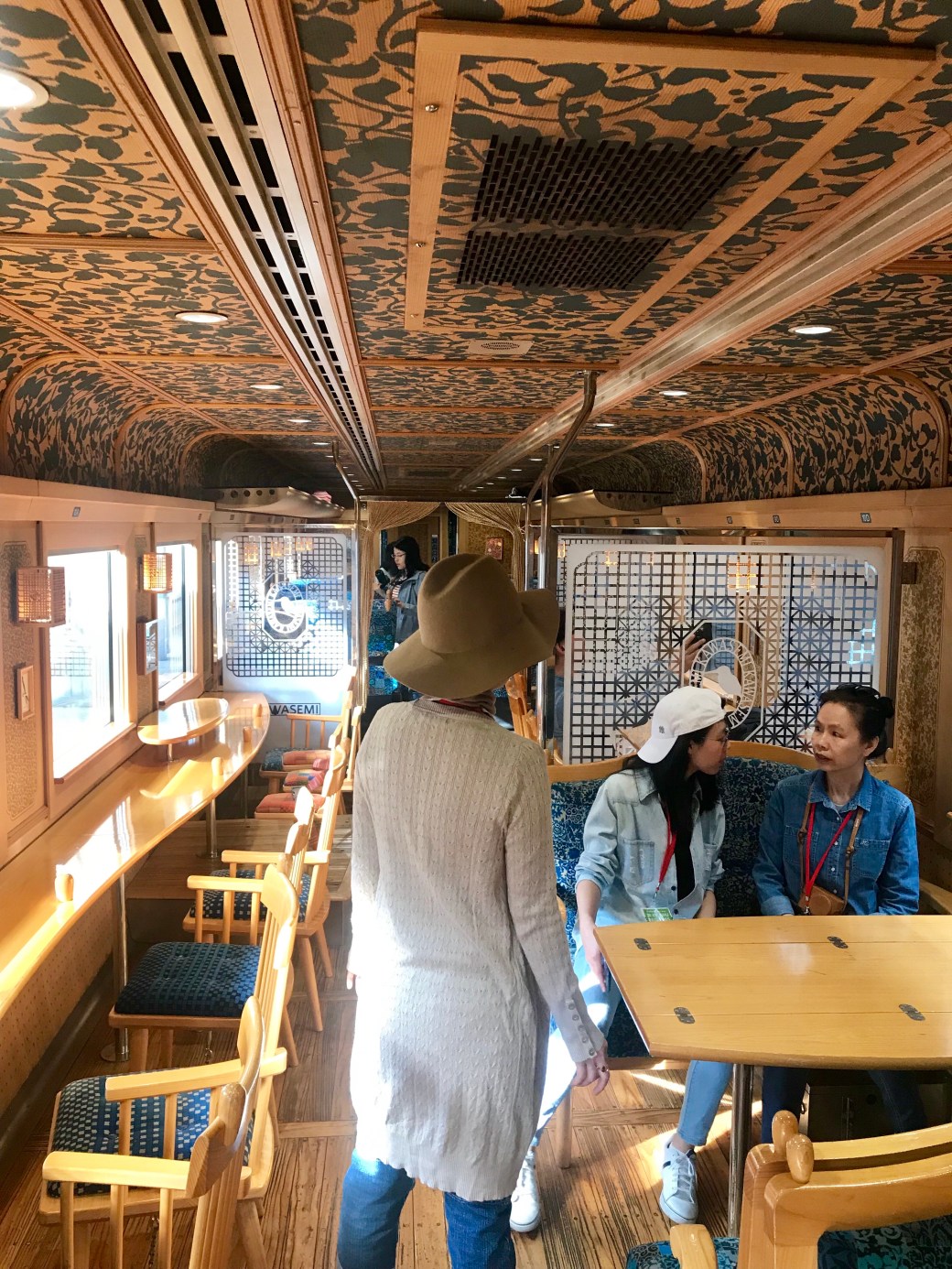 What all of the Japanese trains have in common is their admirable accuracy, frequency and cleanliness. The bane of my wife’s (train) existence – toilets are modern and immaculate, much nicer and roomier than any airplane bathroom, which, of course, is not saying much. The service too, is much better. You can order some
 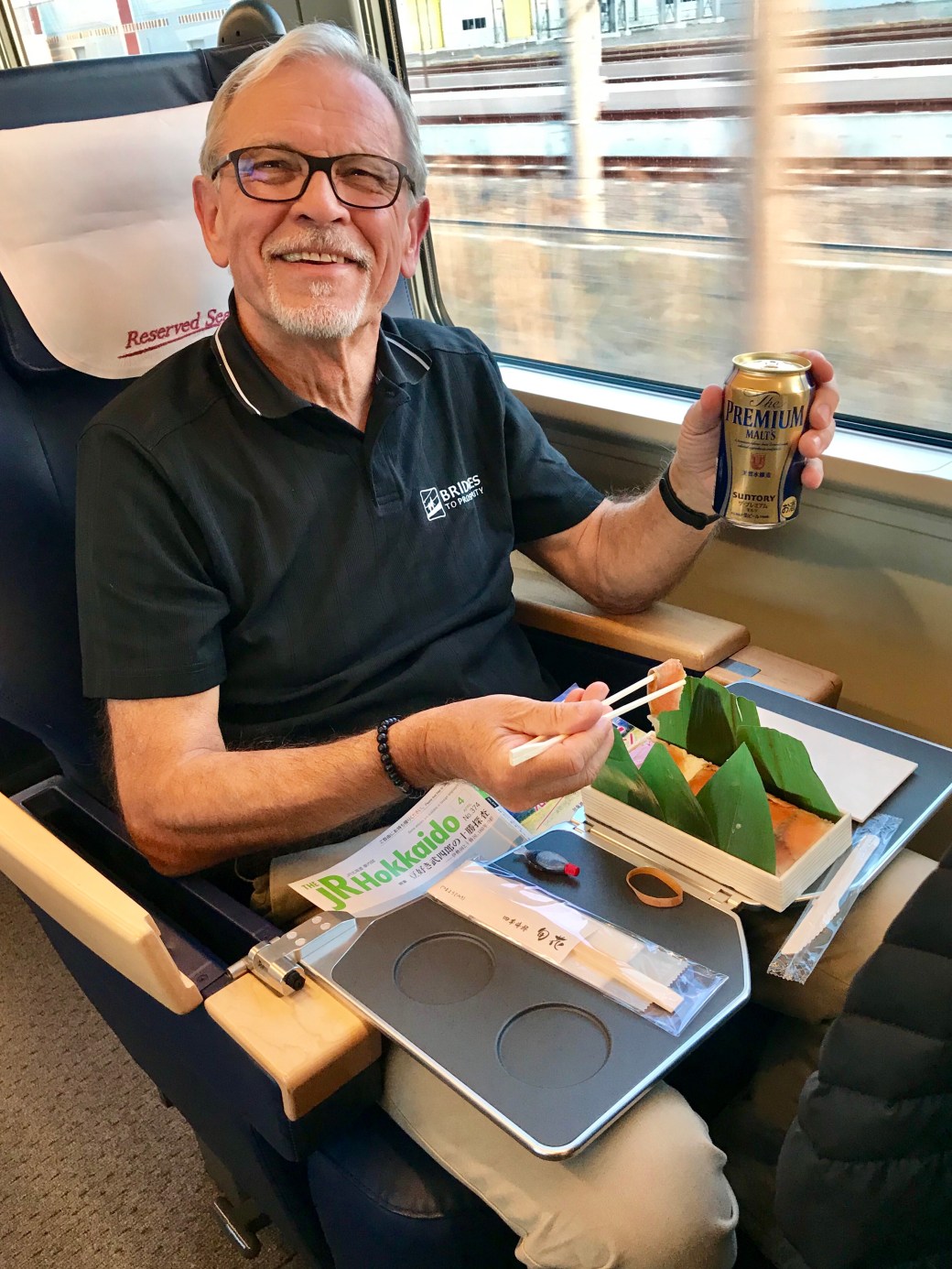 food and/or booze from lovely, young, smiling train attendants.
 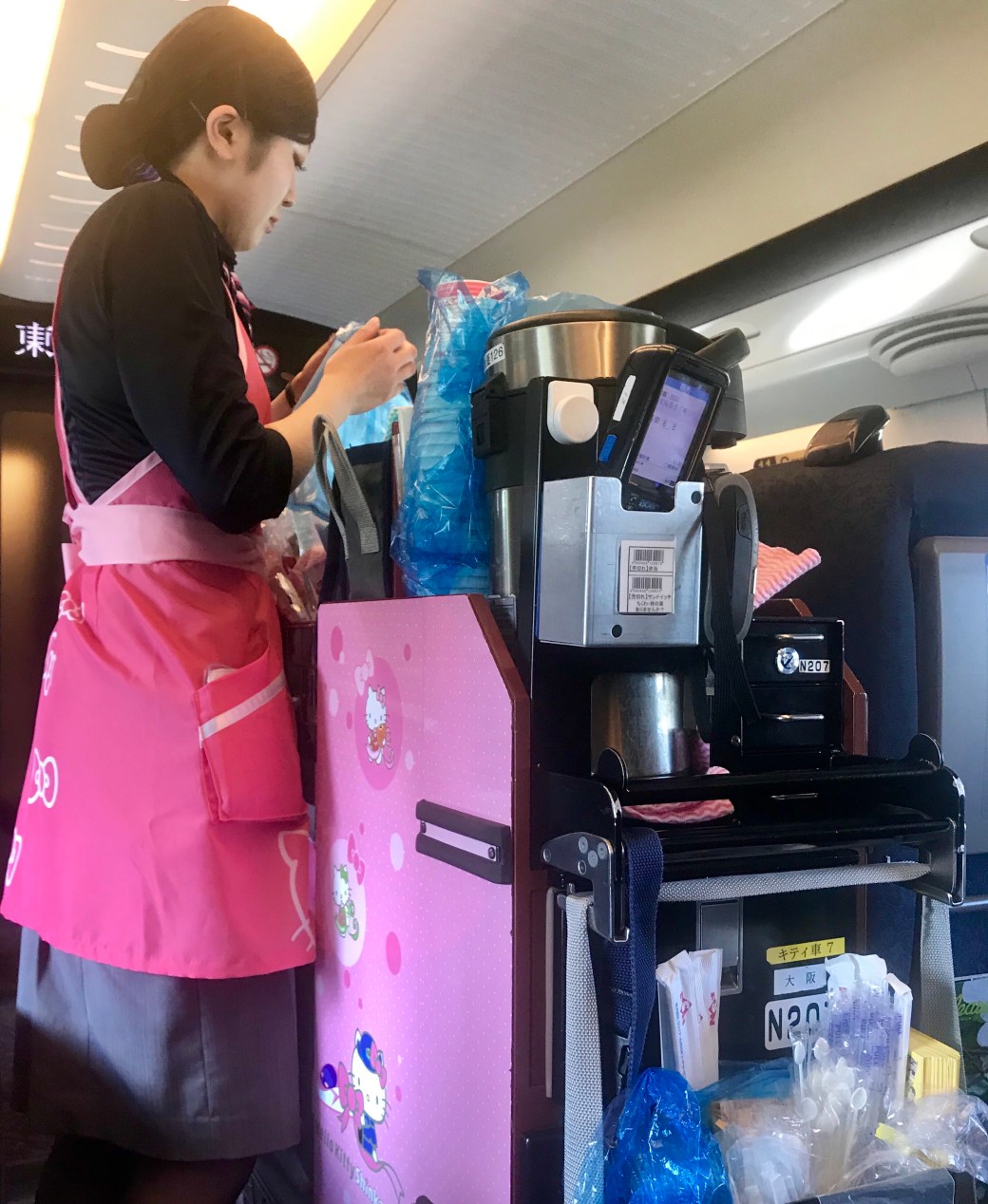 When not chatting up the attendants, one can enjoy the fleeting images of Japan rushing past the window.
 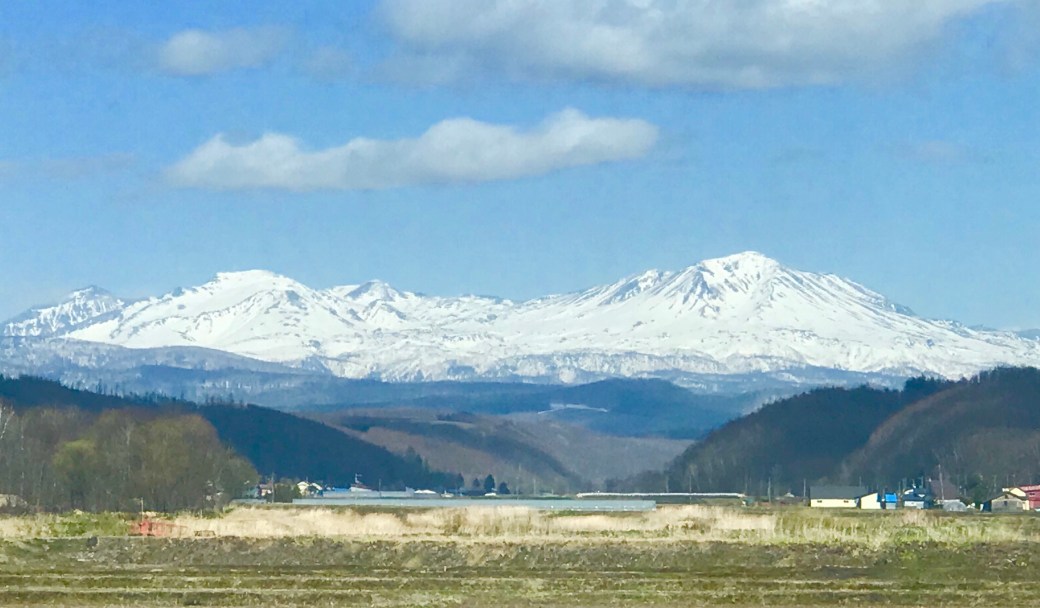 From snow capped mountains of the North
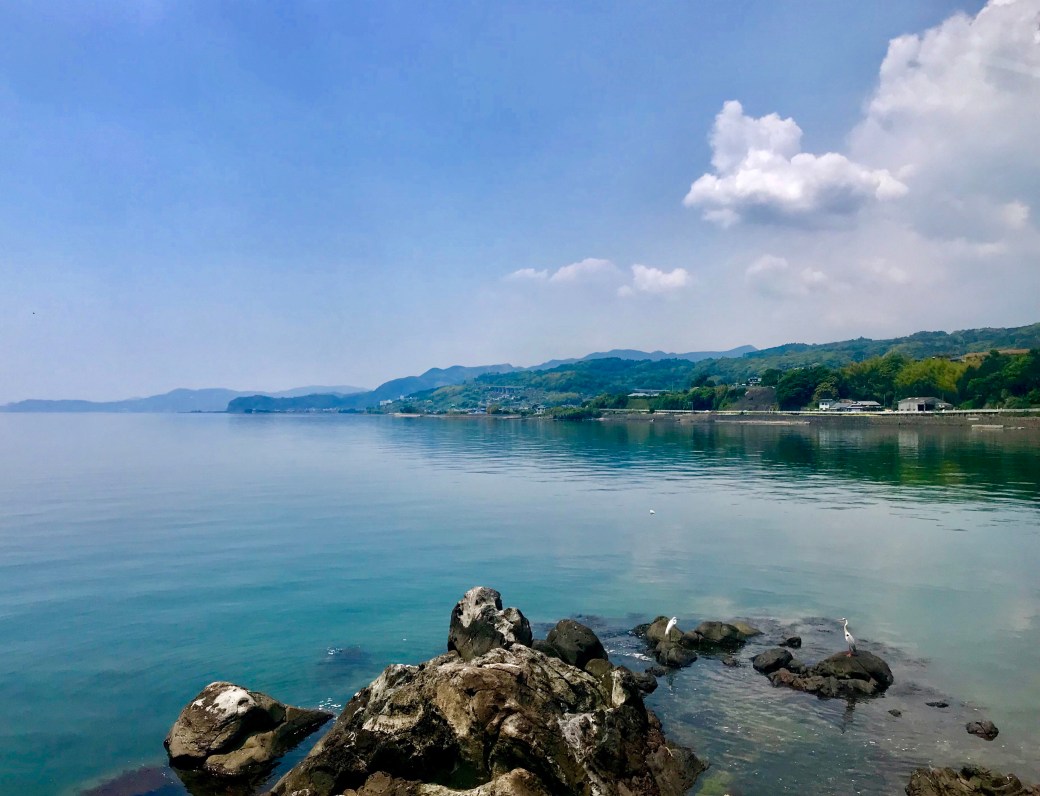 to warm sea and shore line of the South,
  or most exciting engineer’s view of the tunnel.
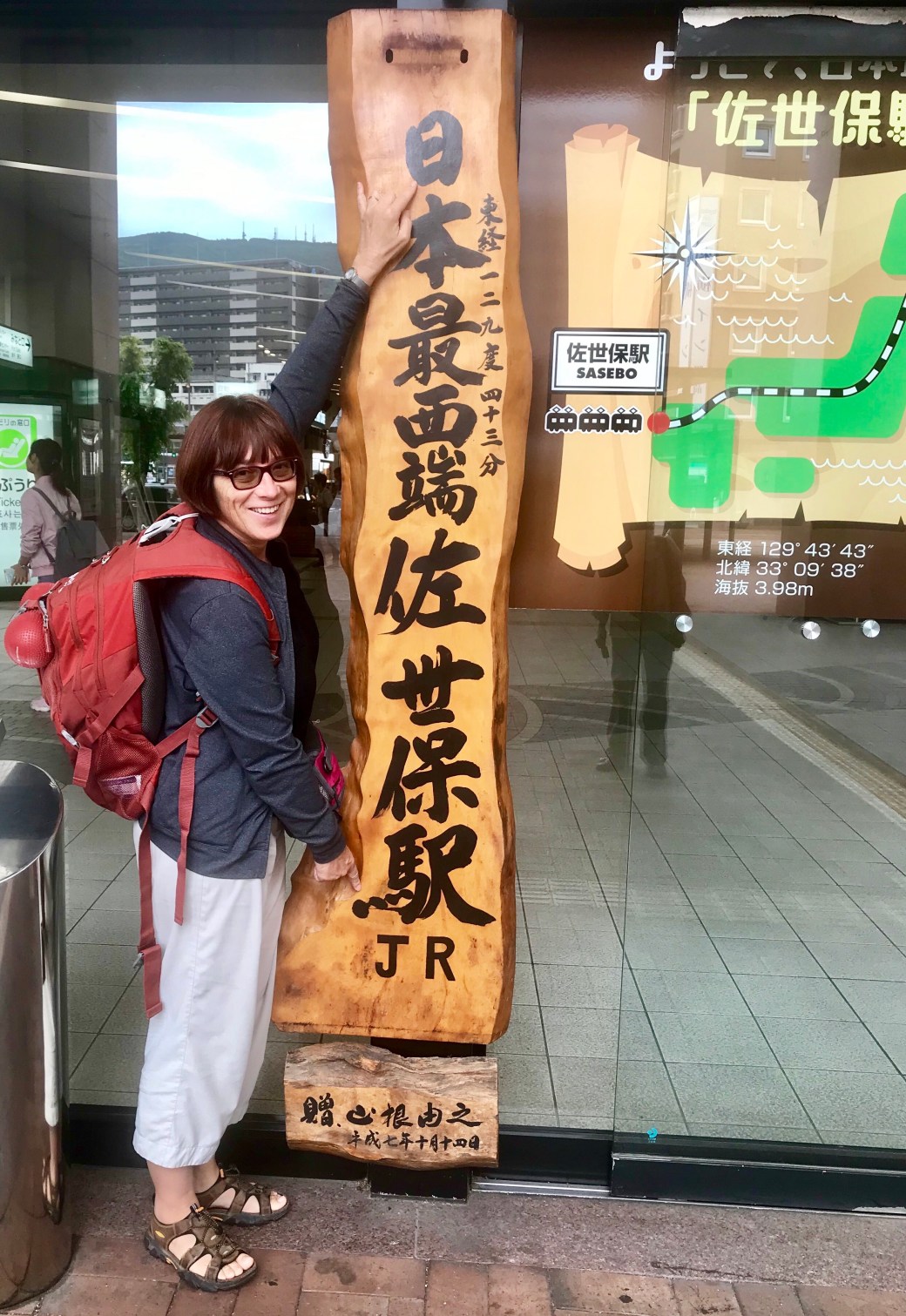 We are on Hikari 476 Shinkansen arriving just before expiration of our Passes at midnight. As I am browsing I discover the fresh news:
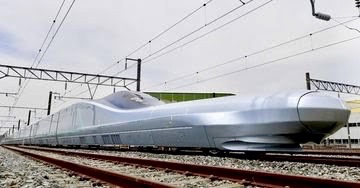 Good! It looks when I come back in 2030 I will be riding a new faster Shinkansen to Sapporo and beyond.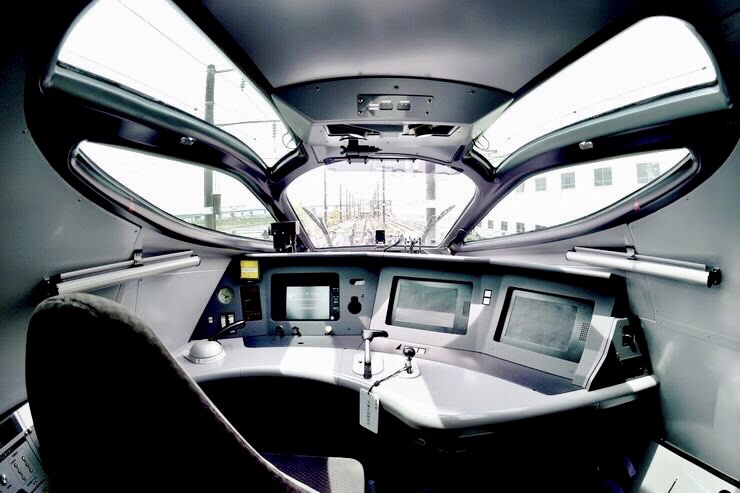
 Crazy Parents Travel